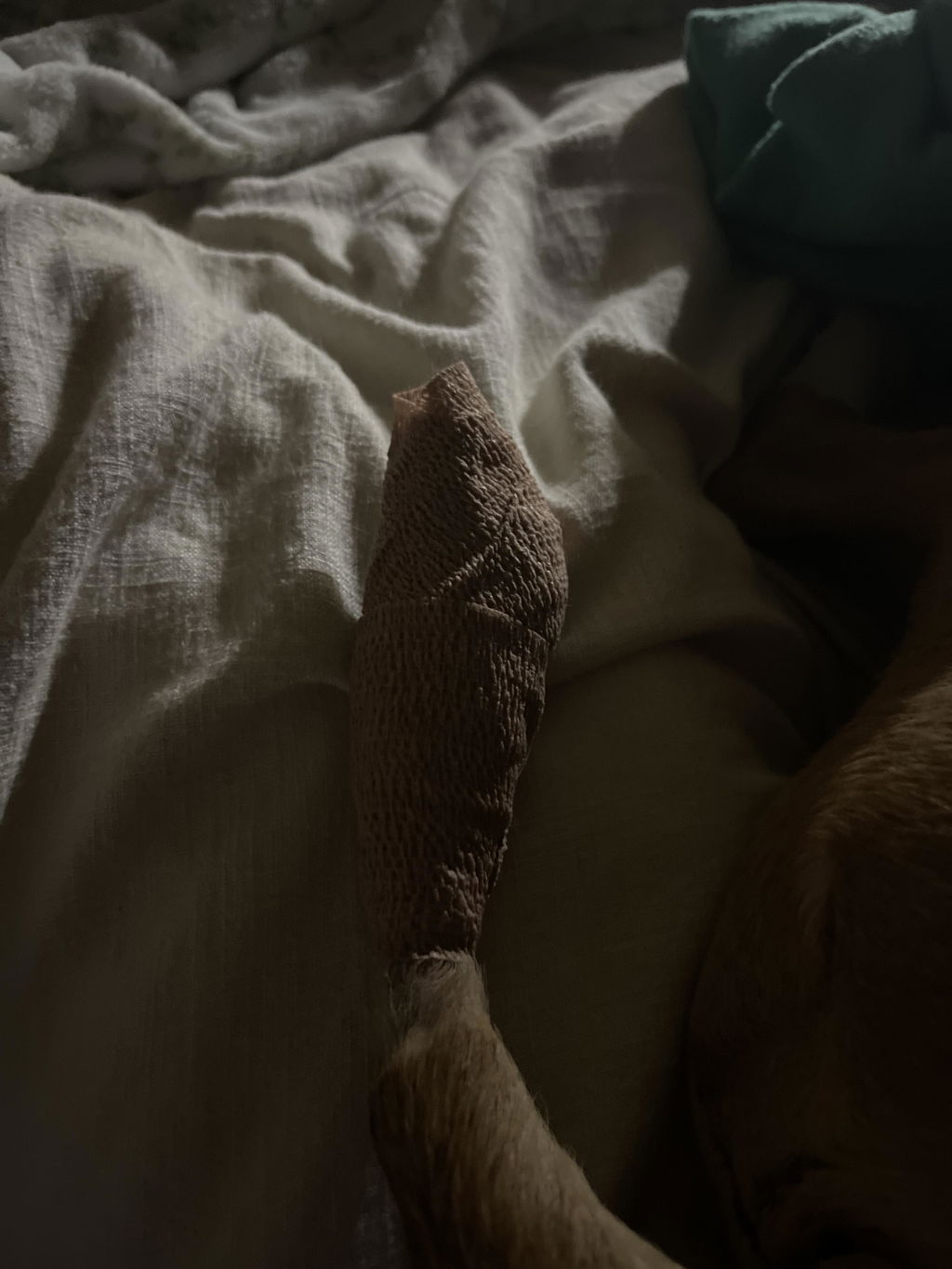
Dog Tail Amputation Alternatives: What to Try Before Surgery
Dog Tail Amputation Alternatives: Conservative Treatment Before Recommending Surgery
Partial tail amputation — surgically removing the damaged tail tip at a healthy tissue margin — is a valid and definitive treatment for refractory Happy Tail Syndrome. For dogs that have exhausted conservative options, it is often the right choice. However, many dogs are presented as surgical candidates before conservative treatment has been given a fair trial. The interventions described on this page have resolved documented Happy Tail cases that were scheduled for amputation. They are worth attempting under veterinary supervision before proceeding to irreversible surgery.
Why Tail Amputation Is Recommended Early — and Reconsidering
Partial tail amputation is straightforward technically and definitively solves the mechanical problem. Veterinarians recommend it early for several understandable reasons:
- Standard conservative treatments (bandaging alone, E-collar, restricted activity) genuinely fail most of the time for Happy Tail. When vets have seen many failed bandaging attempts, amputation looks like the practical answer.
- Repeated wound management visits and failed bandage attempts are costly and time-consuming for owners. Amputation, though a one-time procedure with its own costs and anesthetic risks, resolves the problem in one event.
- Some veterinary education on Happy Tail management is limited. Harness-anchored tail protection was not widely available until recently; many vets are not yet familiar with it as an alternative.
The important question is not "does amputation work?" (it does) but "have we given the best available conservative protocol a real chance?" If the answer is no, there is reason to delay surgery.
The Conservative Protocol Worth Attempting First
The critical element most prior attempts missed
The most common reason conservative management fails is that protection is not continuous. Owners bandage the wound at vet visits and the wound reopens at home. The wound must be protected 24 hours a day, 7 days a week, through wagging, sleeping, playing, and greeting, for a clinically significant period. If this has not been the case in prior attempts, it is not a fair trial of conservative treatment.
Step 1: Rule out (or treat) infection
A chronic Happy Tail wound almost always has bacterial contamination. Have your vet culture the wound and prescribe a targeted antibiotic course. Begin this before or simultaneously with the protection protocol. No wound covered by a bacterial biofilm will close reliably regardless of how well it is protected.
Step 2: Apply harness-anchored tail protection
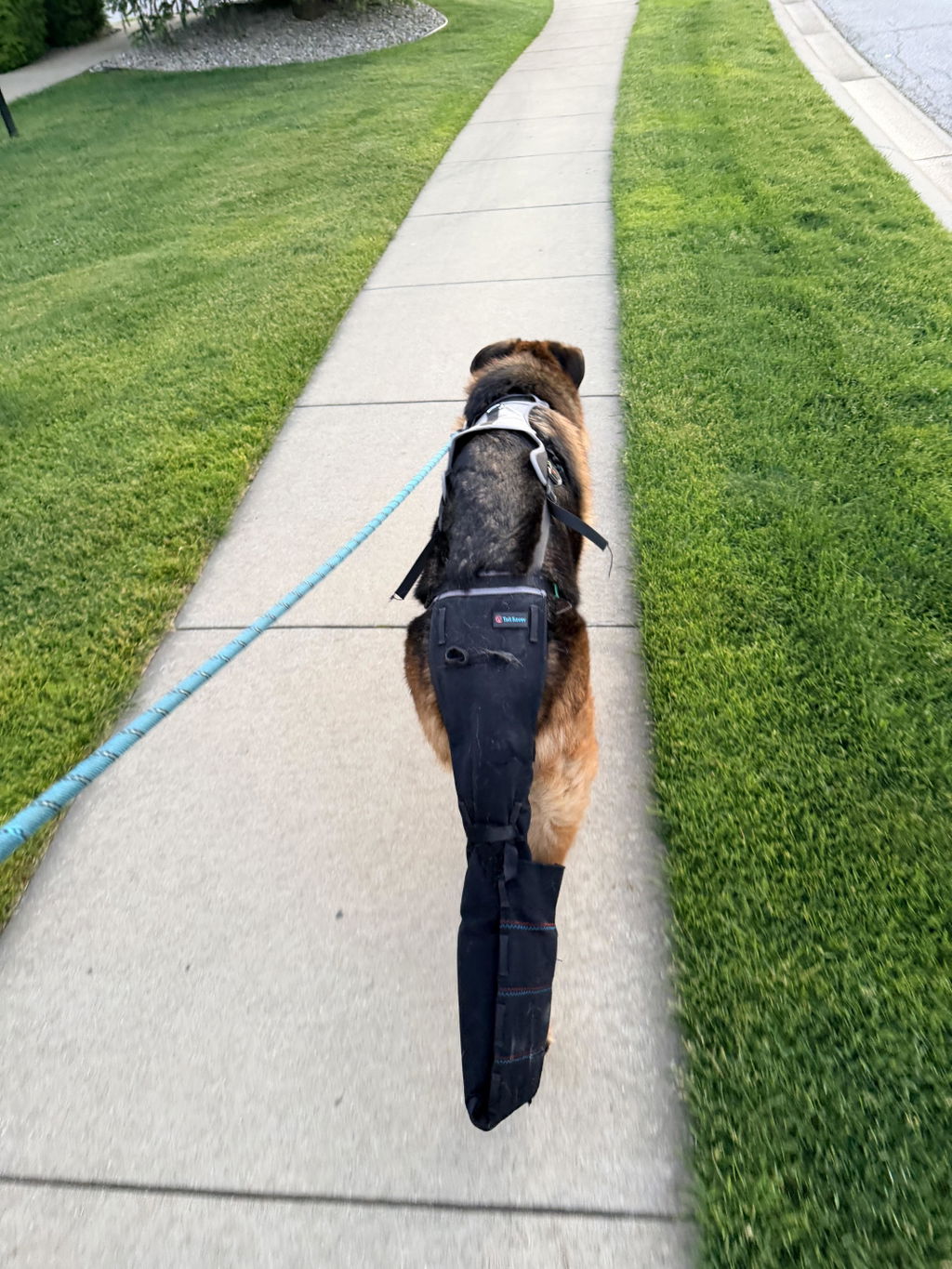
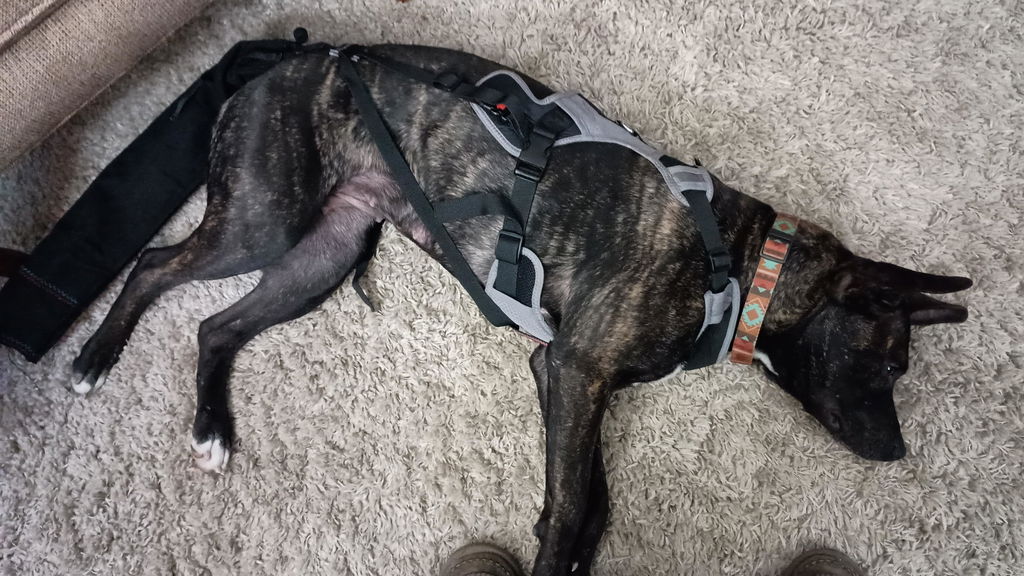
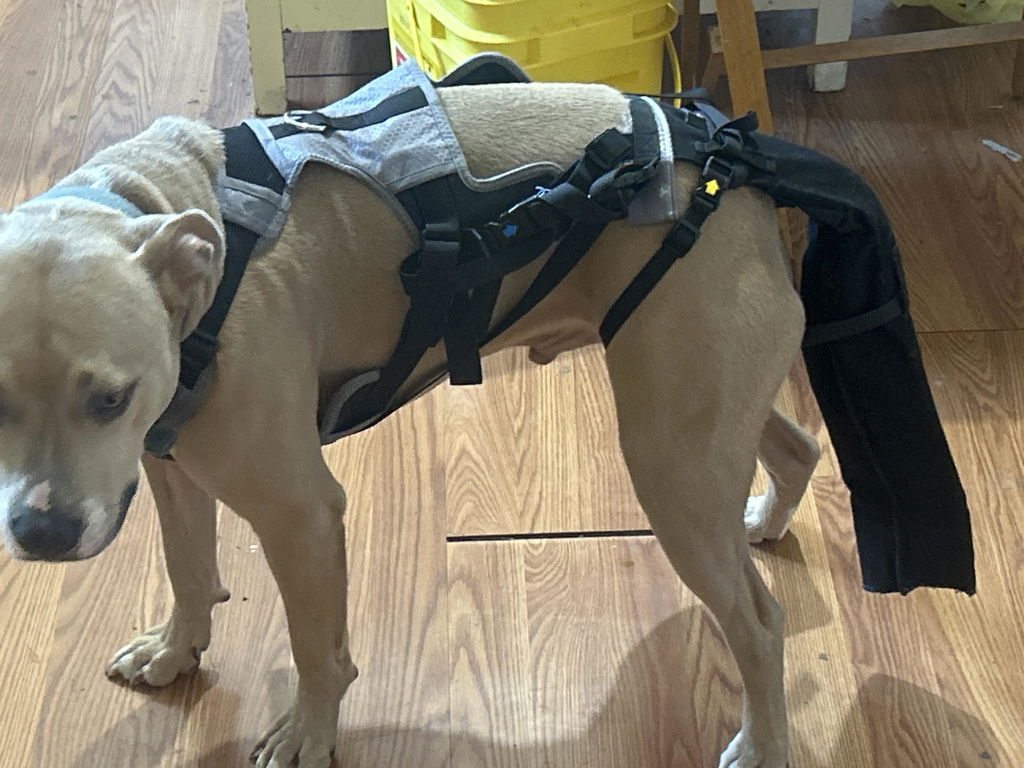
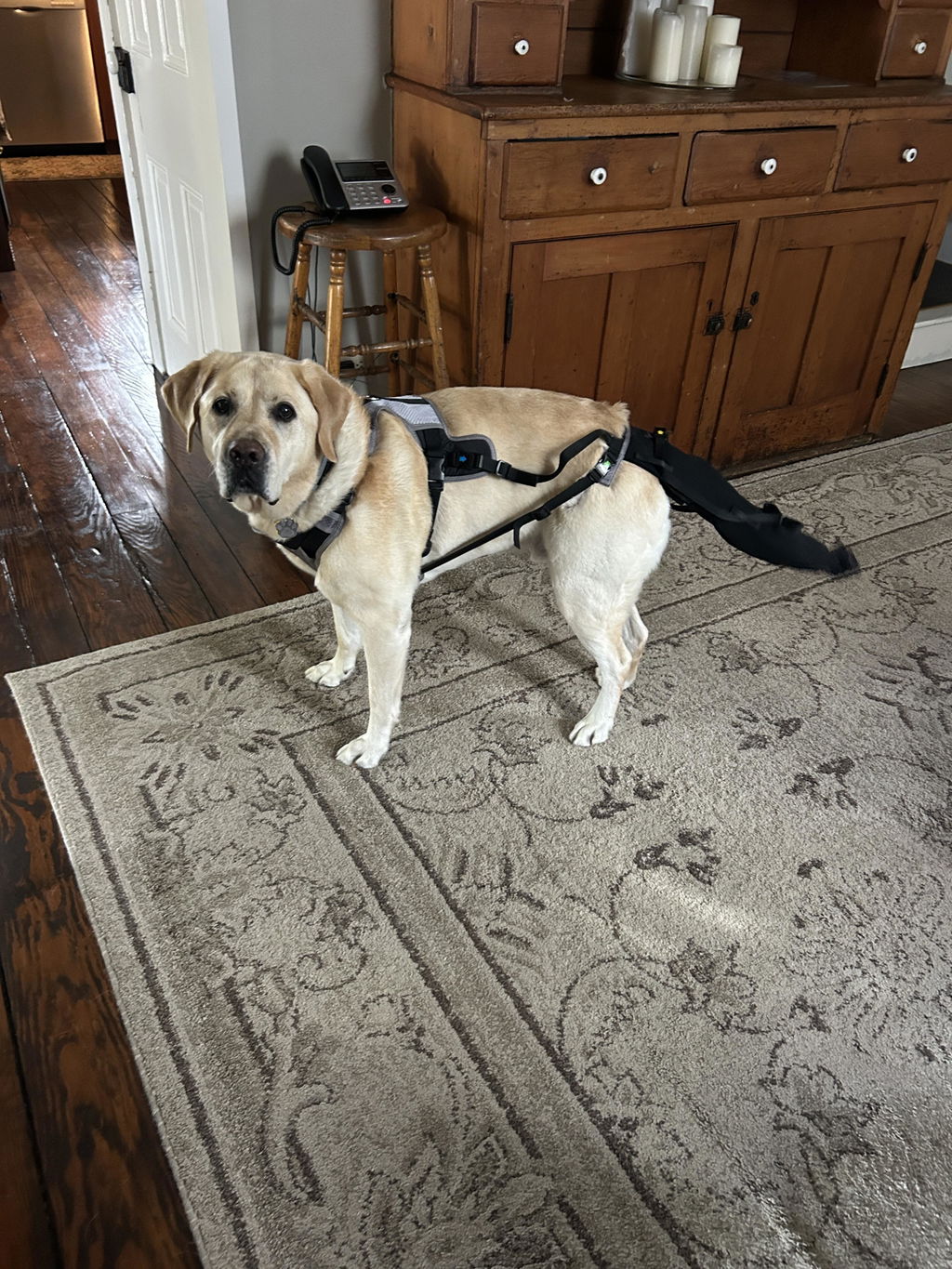
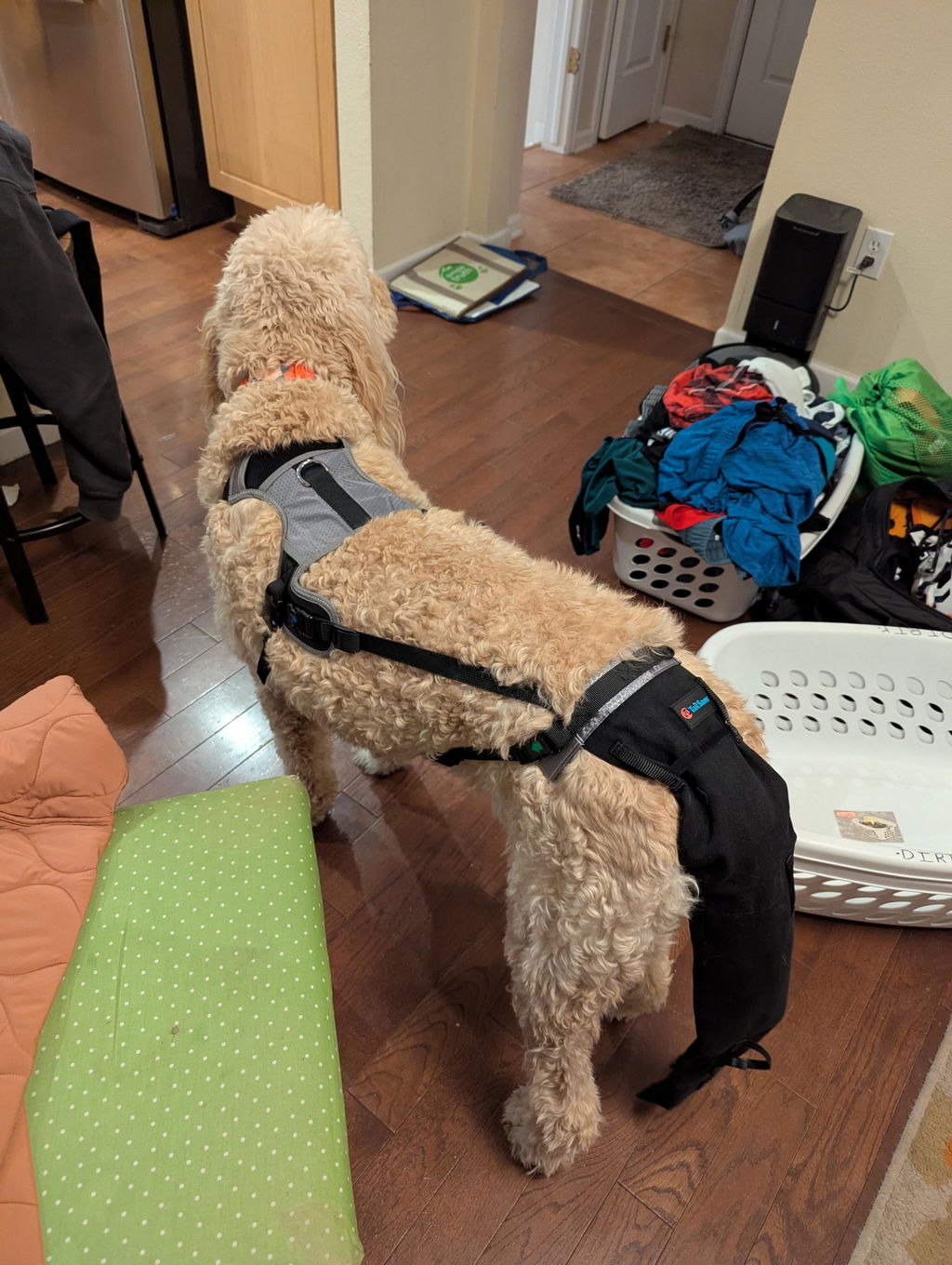
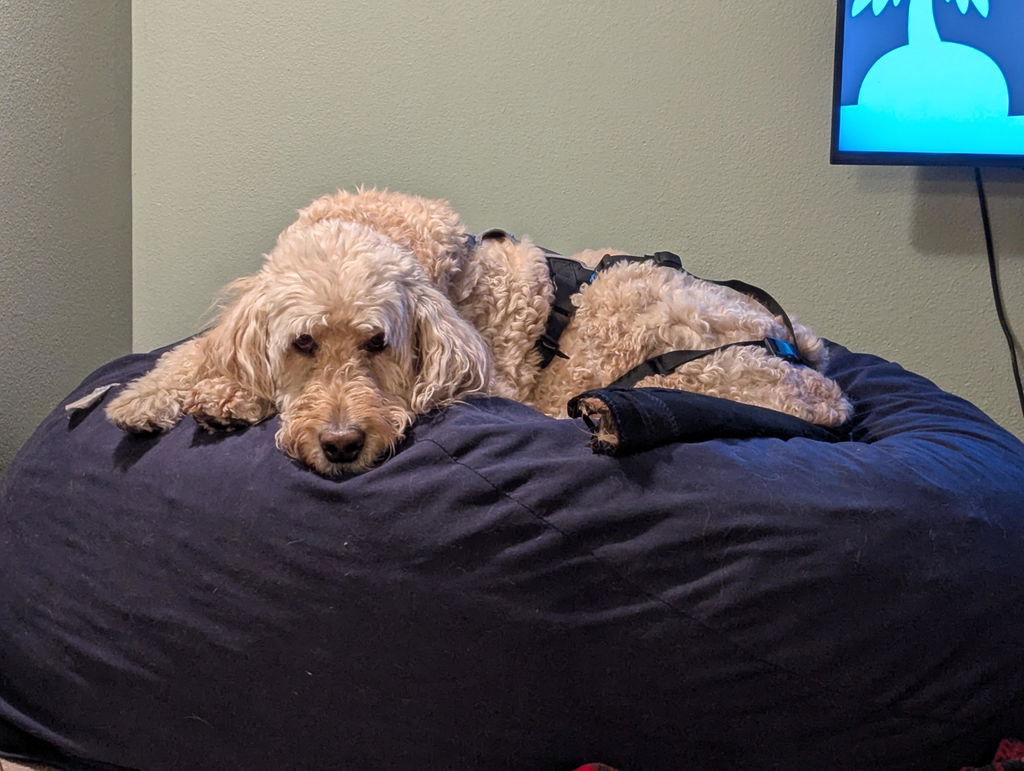
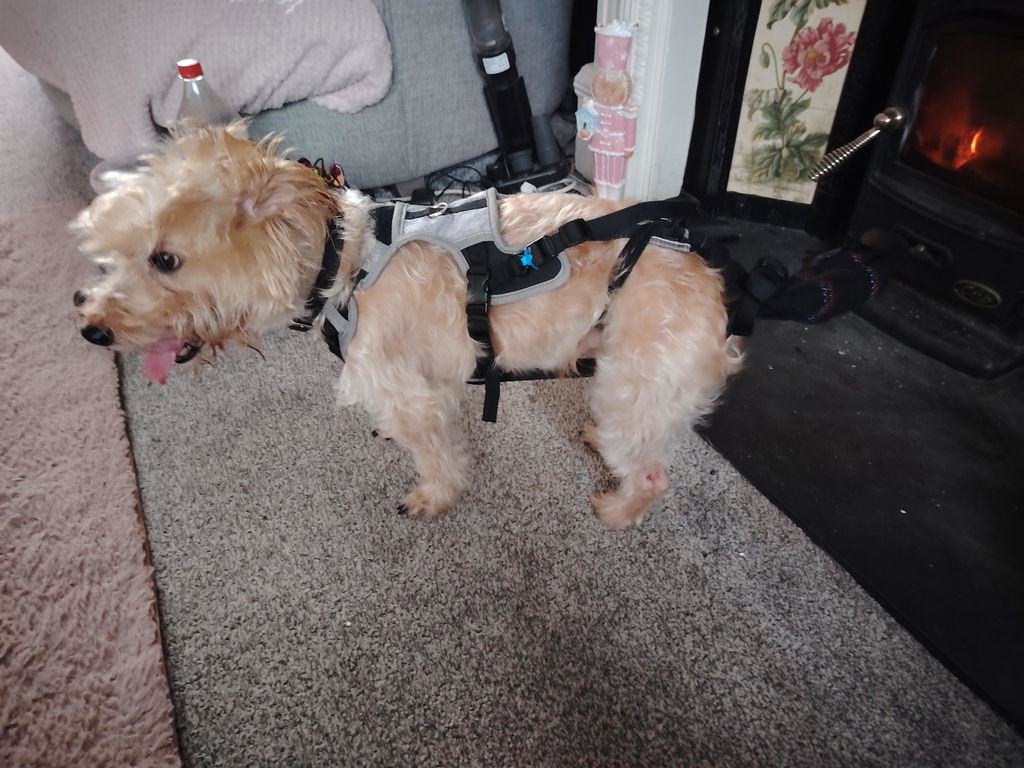
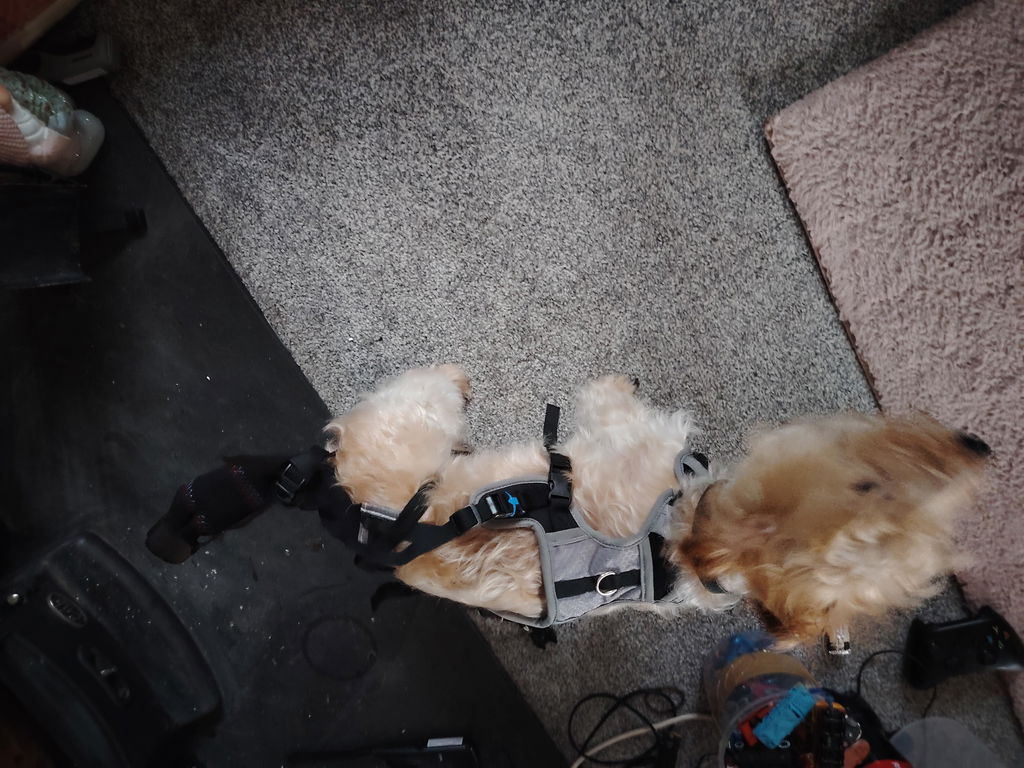
The K9 TailSaver® solves the core mechanical problem that makes Happy Tail bandaging fail: it uses a full body harness to anchor the tail sleeve, so the tail wag force does not shear the protective sleeve off. Standard cohesive bandage, tape, and E-collars cannot maintain protection through the wag forces generated by large, active dogs. A harness-anchored sleeve can.
Step 3: Commit to a defined trial period
Ask your vet to allow a 4–6 week trial with continuous K9 TailSaver protection before scheduling amputation. Take daily wound photographs to document progress. Return for a vet reassessment at 3 and 6 weeks. If the wound is not demonstrating consistent closure by week 4 of correct continuous protection, the conservative trial has genuinely failed and surgery is appropriate.
Step 4: Environmental modifications
Simultaneously:
- Replace wire crate with an exercise pen
- Pad wall corners at dog tail height
- Establish a calm greeting protocol to reduce peak-excitement wag events
These modifications reduce re-injury pressure during the protective trial and improve the probability of success.
When Amputation Really Is the Right Answer
Conservative management has genuinely failed when:
- 4+ weeks of verified continuous harness-anchored protection show no improvement
- Osteomyelitis (bone infection) is confirmed on imaging and is not resolving with targeted antibiotics
- The wound has exposed bone that cannot be covered by remaining tissue
- The dog is experiencing significant pain from recurring wound events that is impacting quality of life
- The owner cannot realistically maintain the management protocol required
In these cases, proceed with surgery without guilt. The goal is the dog's wellbeing, and amputation at the right tissue level produces an excellent long-term outcome for Happy Tail. Most dogs tolerate the procedure well and return to normal activity within 1–2 weeks.
Alternatives Under Veterinary Assessment: What Evidence Exists
| Intervention | Role | Evidence Level |
|---|---|---|
| Harness-anchored tail sleeve (K9 TailSaver) | Continuous wound protection through wag activity | Strong clinical case support |
| Targeted antibiotics (culture-based) | Clear biofilm for wound healing to proceed | Standard of care for infected wounds |
| Medical-grade Manuka honey wound gel | Osmotic antibacterial; supports healing in difficult wounds | Moderate (peer-reviewed veterinary wound care literature) |
| Silver-containing wound gel | Topical antibacterial for contaminated wounds | Moderate (veterinary wound management guidelines) |
| Environmental modification | Reduces impact frequency during healing | Supportive |
FAQ: Tail Amputation Alternatives
My vet says the only option is amputation. Should I get a second opinion?
If you have not yet attempted continuous harness-anchored protection for 4+ weeks
AND targeted antibiotic treatment for any infection, yes — seek a second opinion
or ask your current vet to support a supervised conservative trial. Bring information
about the K9 TailSaver and the protocol described on this page.
How do I talk to my vet about this alternative?
Request a defined trial period of 4–6 weeks with documented wound photography.
Frame it as gathering outcome data. Most vets will support a scheduled trial with
clear escalation criteria. See the Vet & Safety FAQ
for a guide to productive vet conversations about Happy Tail management.
If we do the trial and it doesn't work, does failing the trial make surgery more complicated?
No. A wound that has been correctly protected for 4–6 weeks is typically in
better surgical condition than one that has been repeatedly contaminated through
failed bandage attempts. Proceeding to surgery after a conservative trial does
not create additional surgical risk.