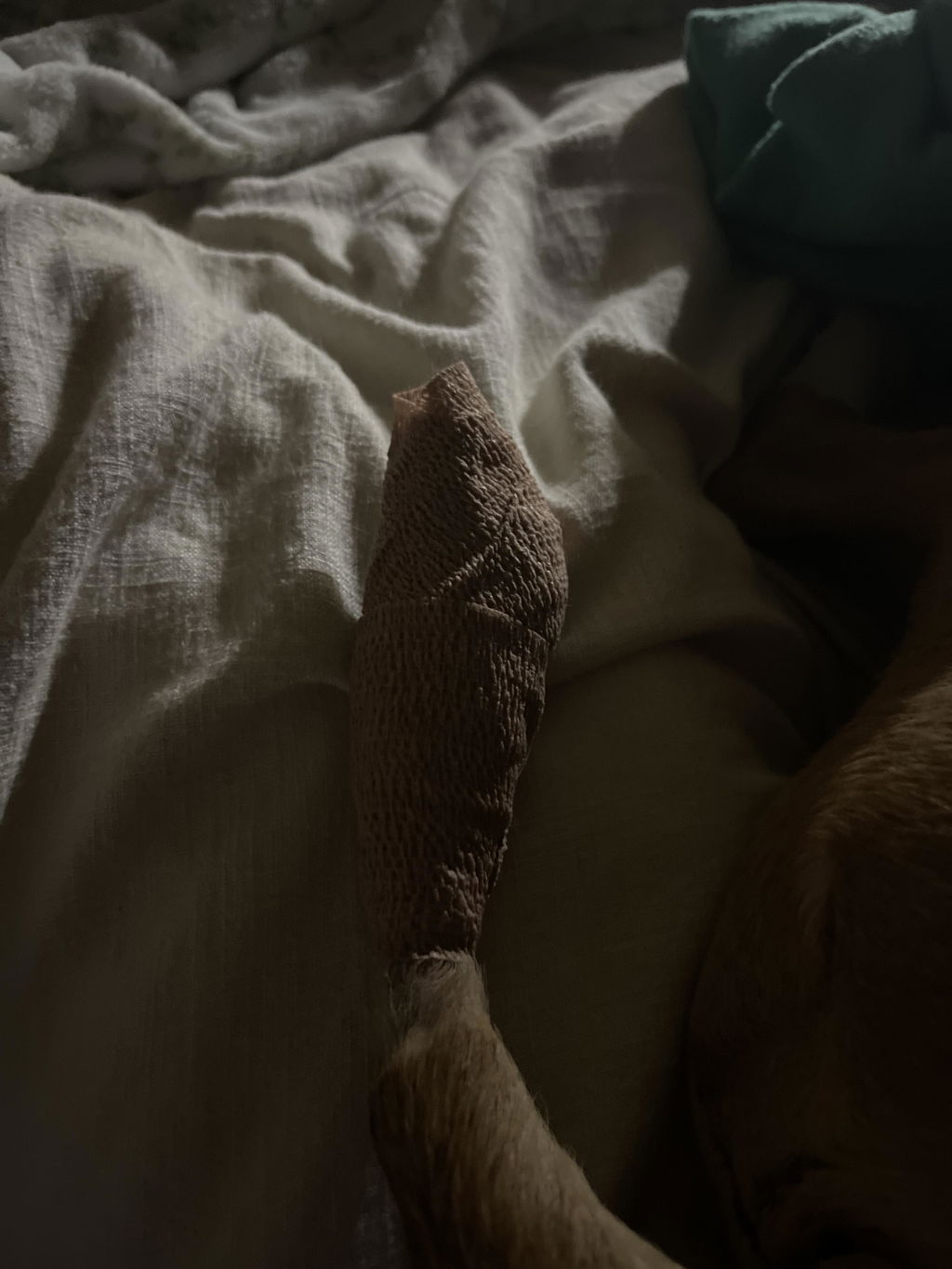
Golden Retriever Happy Tail Syndrome: Treatment and Prevention
Golden Retriever Happy Tail Syndrome: Why Goldens Keep Getting It and How to Stop It
Golden Retrievers may be best known for their friendly temperament and constant tail wagging, but for owners of active Goldens, that signature wag comes with a risk. Golden Retriever Happy Tail Syndrome is one of the most common tail injuries seen in veterinary practices serving large-breed dogs. The combination of a long, feathered tail, an enthusiastic temperament, and the constant indoor proximity to walls and furniture they experience as family dogs creates reliable injury conditions.
Why Golden Retrievers Develop Happy Tail
Tail anatomy and wag mechanics
Golden Retrievers carry a long, thick tail with feathering — longer guard hairs along the underside of the tail. The tail tip itself terminates in a narrow point where the feathering extends beyond the skin. This anatomy means the tail tip is both exposed and constantly in motion. During a full wag, the tip accelerates to high velocity and makes contact with walls, furniture, and door frames with sufficient force to shear thin skin open.
Enthusiasm and temperament
Golden Retrievers are bred for high sociability and responsiveness to people. They wag nearly continuously when humans are present. Unlike working breeds where drives can be redirected, a Golden's social wag is deeply embedded in temperament and cannot be managed by exercise or mental enrichment alone. The wag happens in the context of normal indoor life.
Forward-facing living environment
Goldens are indoor companion dogs. They share space continuously with humans, sleep in bedrooms, ride in cars, and visit public places. Each environment introduces new impact surfaces at tail height. A Golden at 60–75 lbs has a tail arc that sweeps across most standard furniture and wall heights.
Recognizing Happy Tail in Golden Retrievers
- Blood drops or smears on walls between 1 and 3 feet high after an active period
- Raw, scabbed, or split skin at the tail tip beneath the feathering
- Scab present in the morning but wound reopens during the first greeting of the day
- Dog licks the tail tip repeatedly, especially after impact events
- The feathering over the tail tip may be matted with dried blood or exudate
The feathering on a Golden's tail tip can conceal the extent of the wound. Part the tail hair to inspect the skin surface at the tip to accurately assess the wound.
Why Treatment Is Harder in Goldens Than It Looks
The Golden's constant social wagging means there is no quiet period long enough for wound closure unless the dog is sedated. Even during "rest," a door opening or a sound from another room can trigger a vigorous 60-second wagging burst that reopens a forming scab. Each re-injury event adds approximately 48 hours to the net healing timeline, meaning a wound that cycles daily will never make sustained progress without continuous physical protection.
Treatment Protocol
Step 1: Wound assessment
Part the feathering and assess the wound surface directly. For wounds with infection signs (odor, swelling, discharge) or bone/deep tissue visible, see your vet before beginning home management.
Step 2: Trim feathering around the wound
Carefully trim the tail tip feathering around the wound margin. Long hair contacting a moist wound surface introduces contamination and interferes with dressing adhesion. Use blunt-tipped scissors and trim conservatively.
Step 3: Clean, dress, and protect
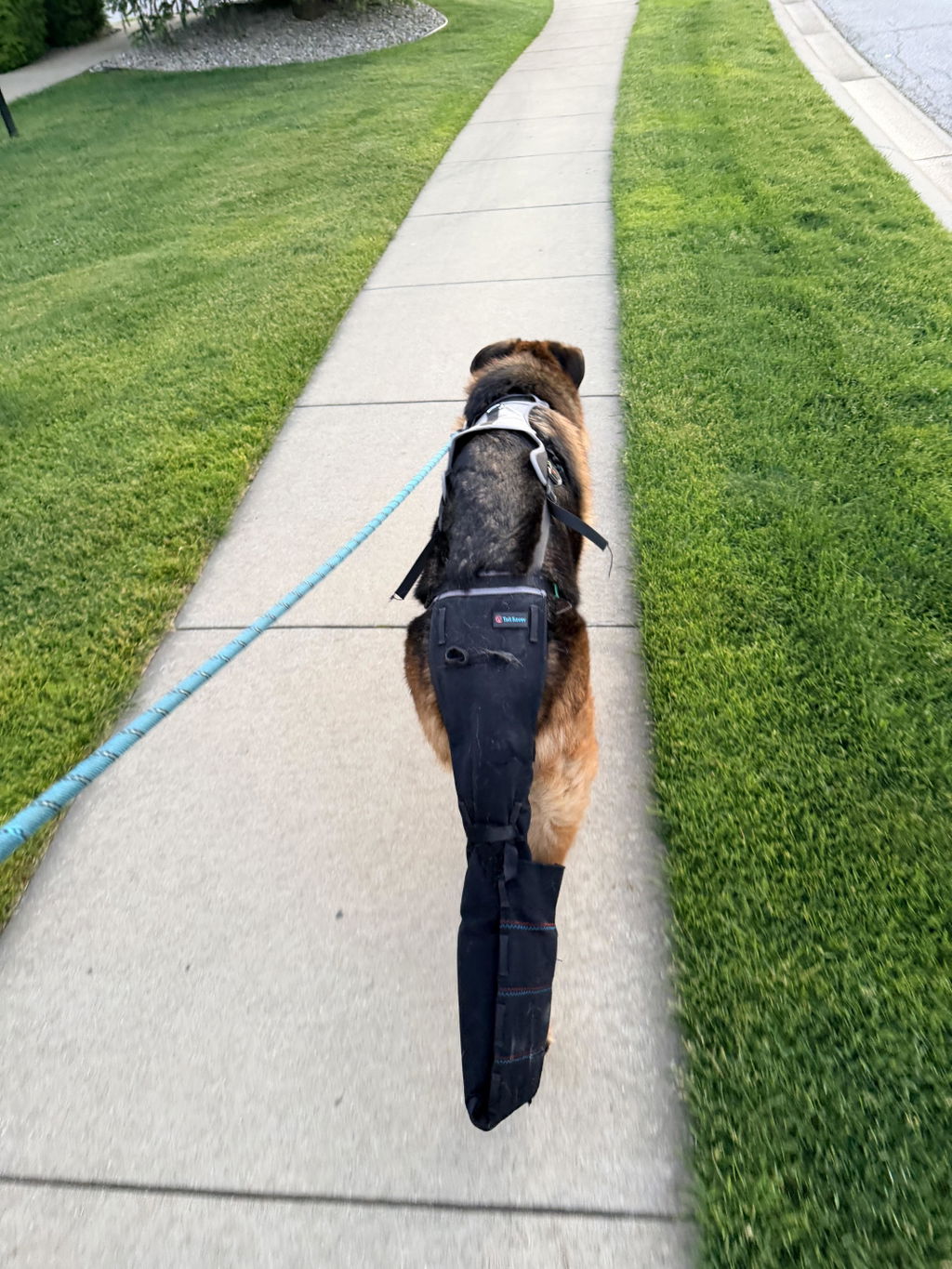
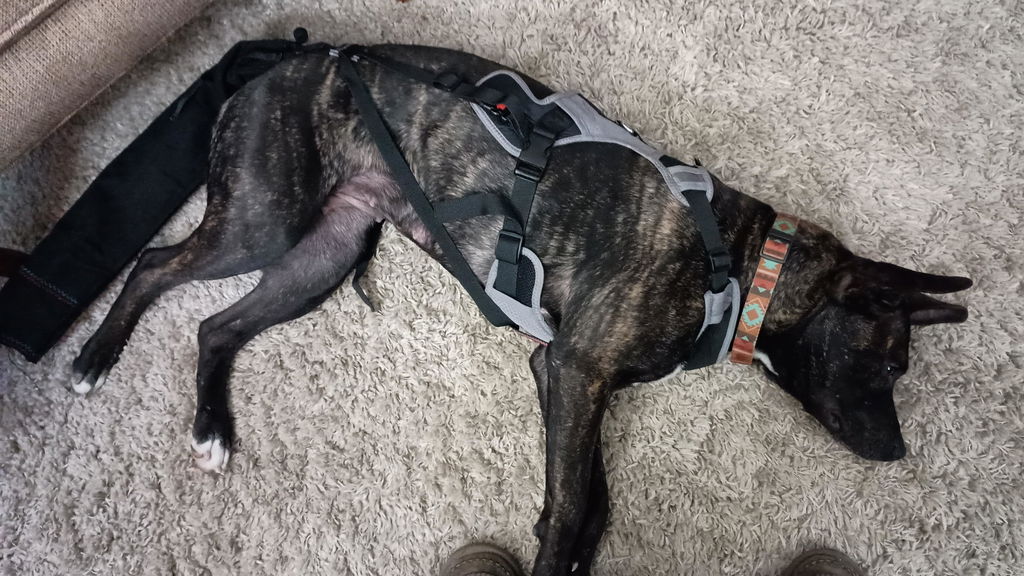
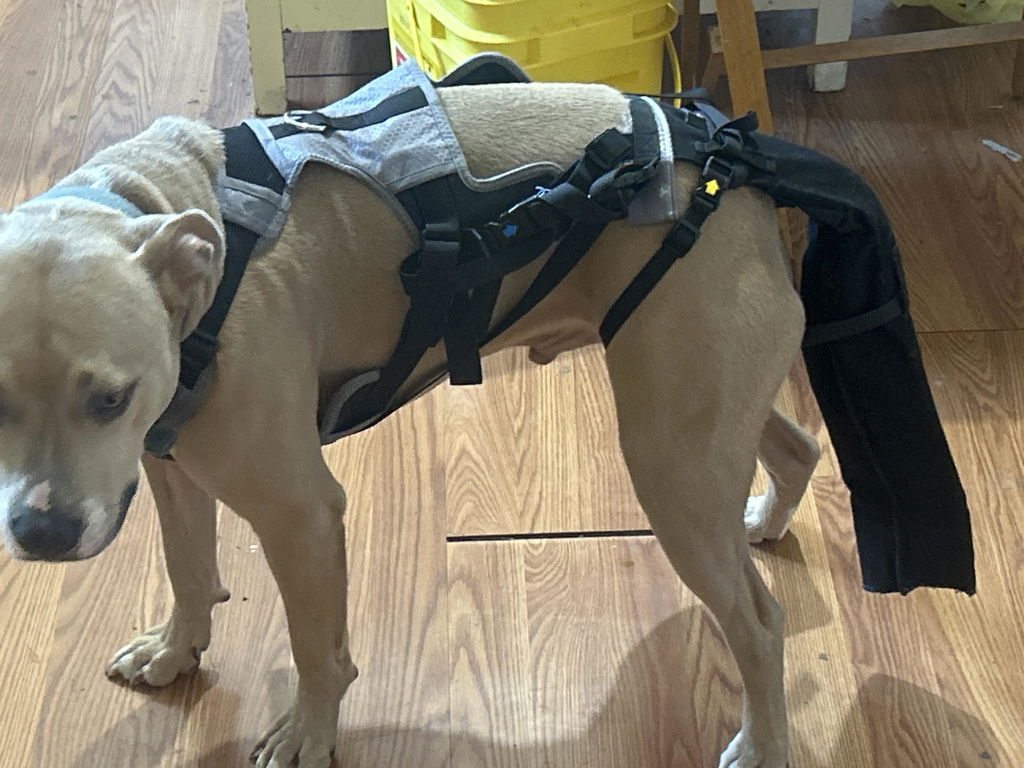
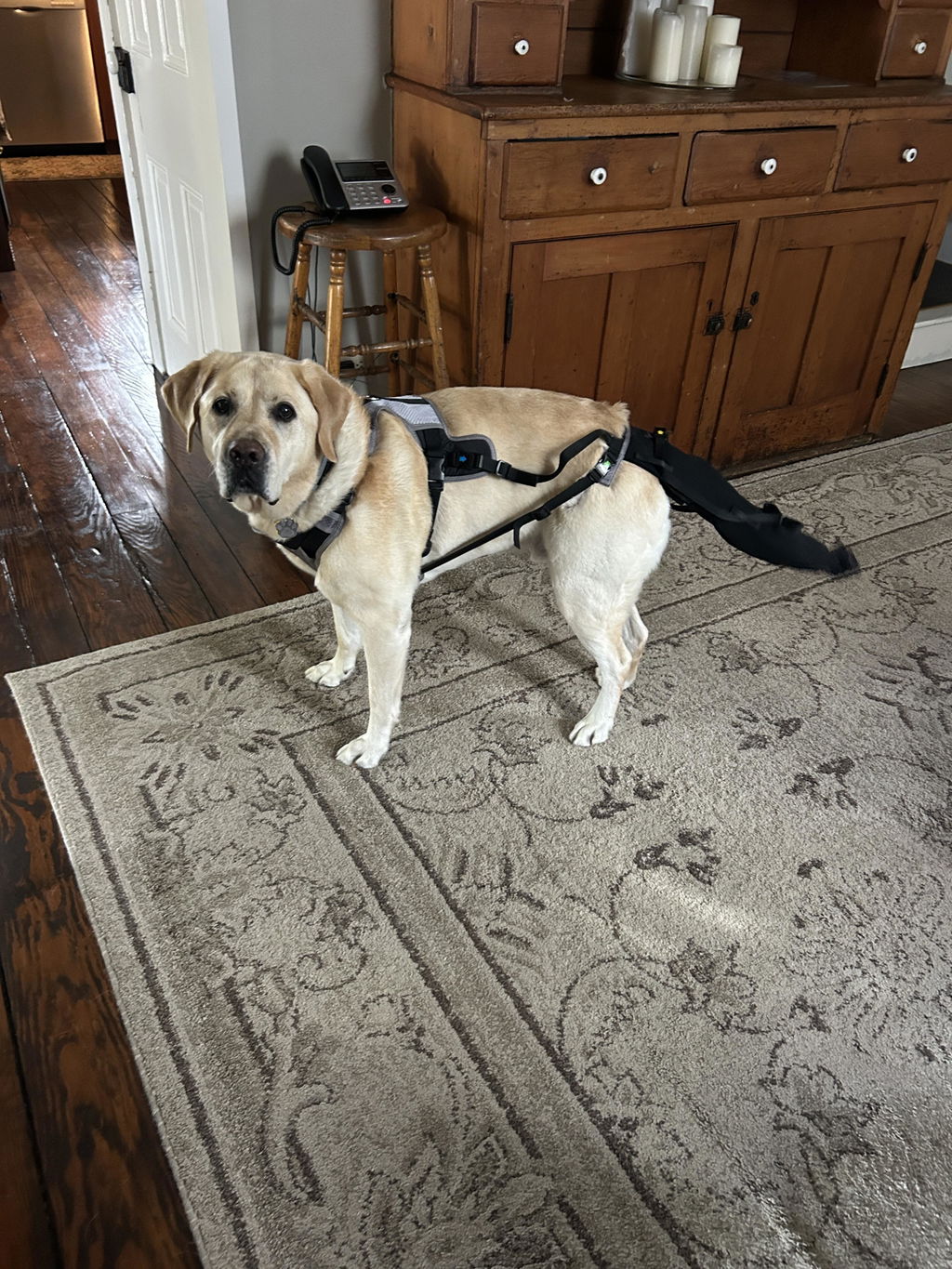
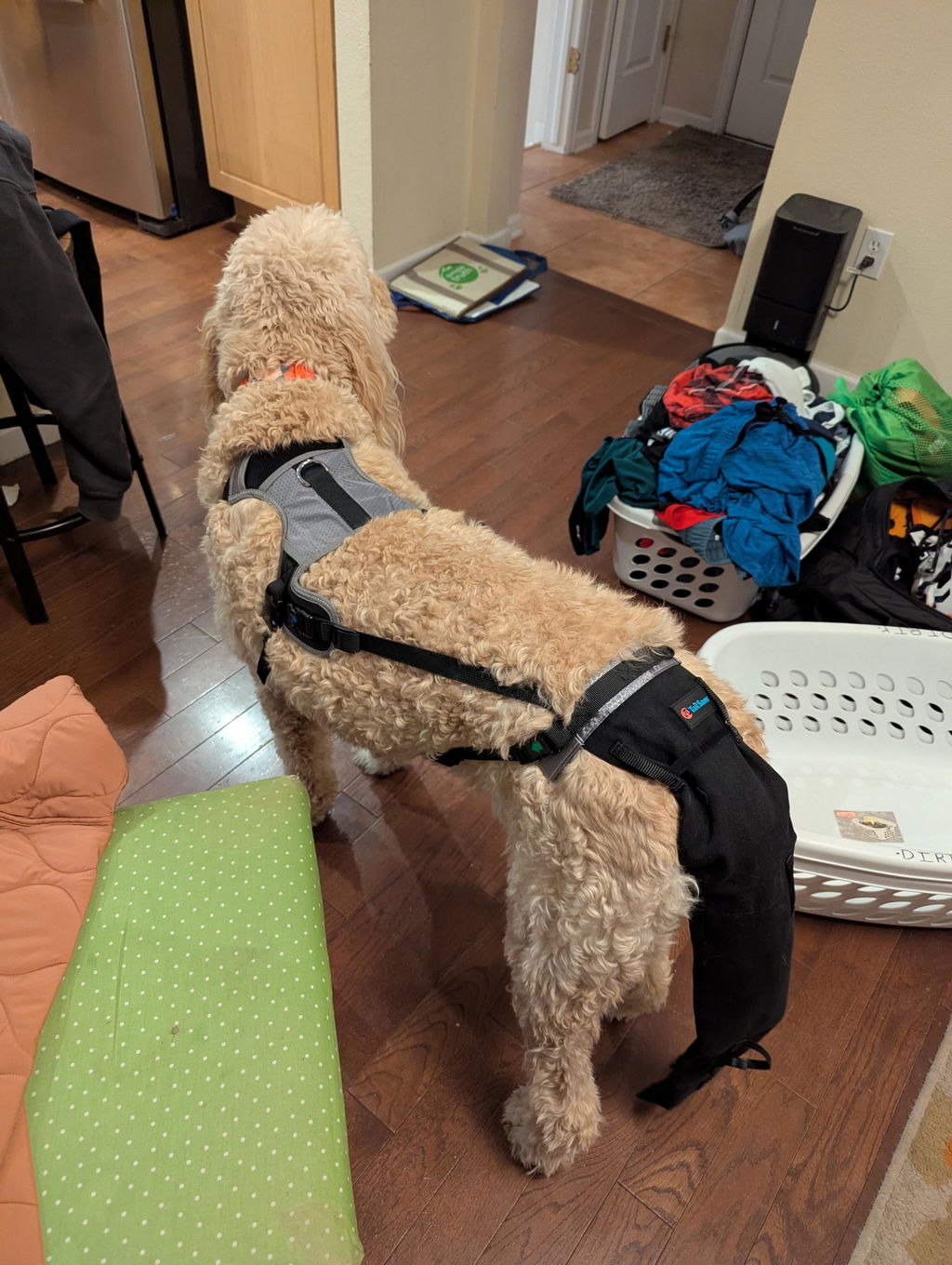
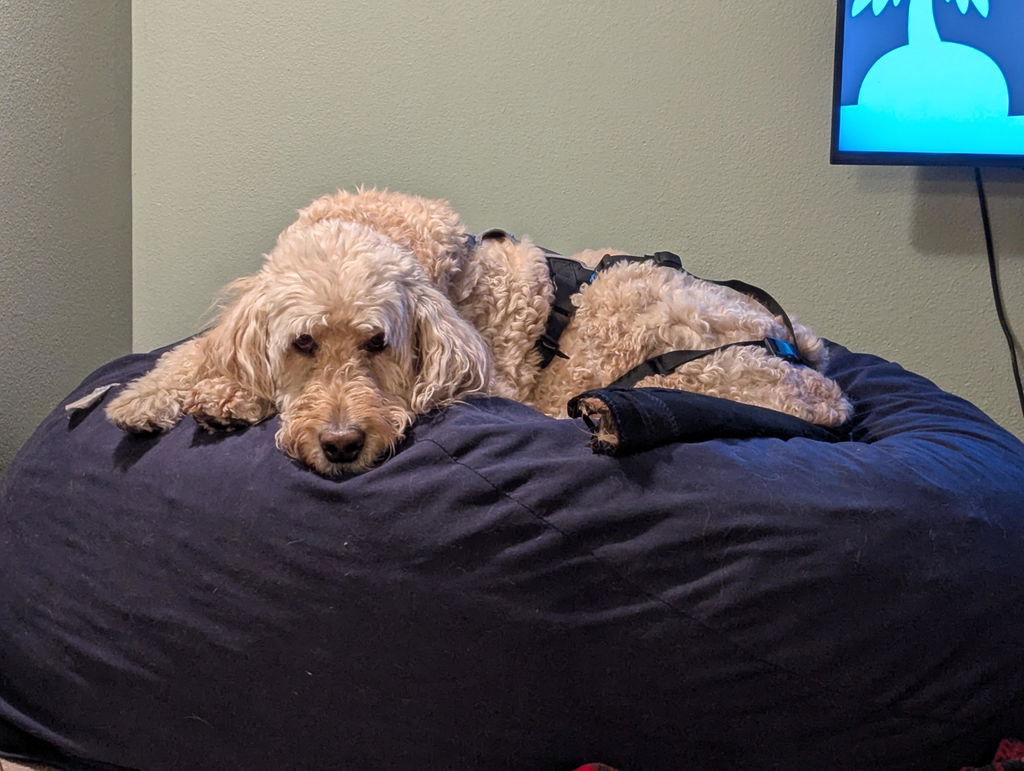
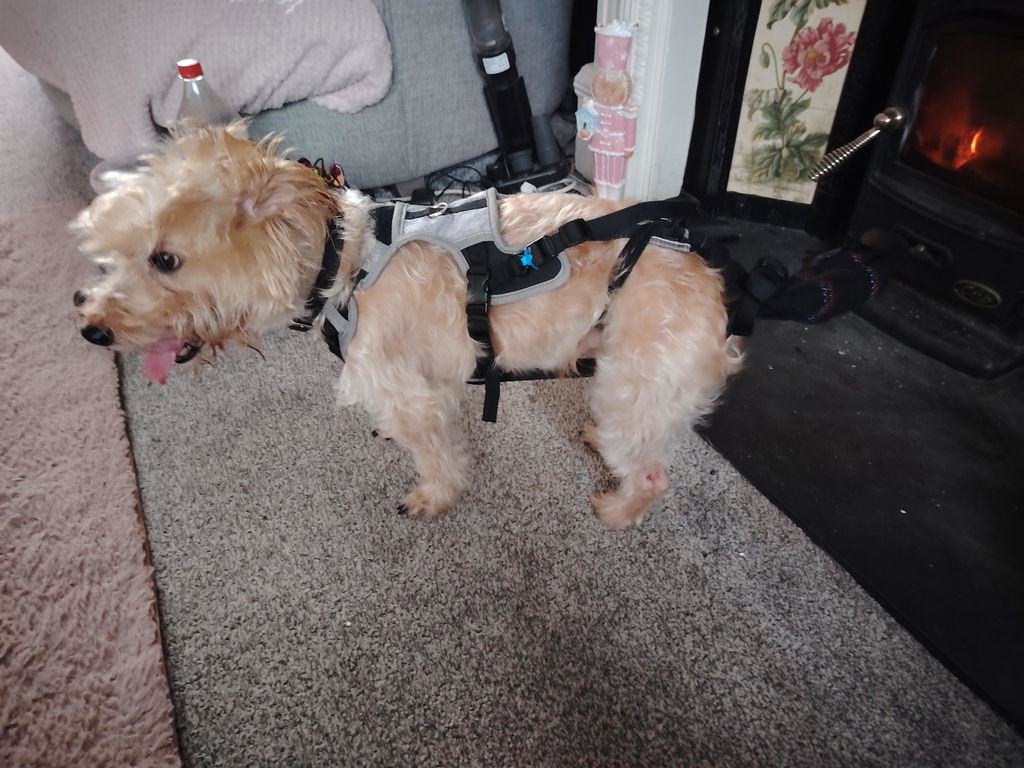
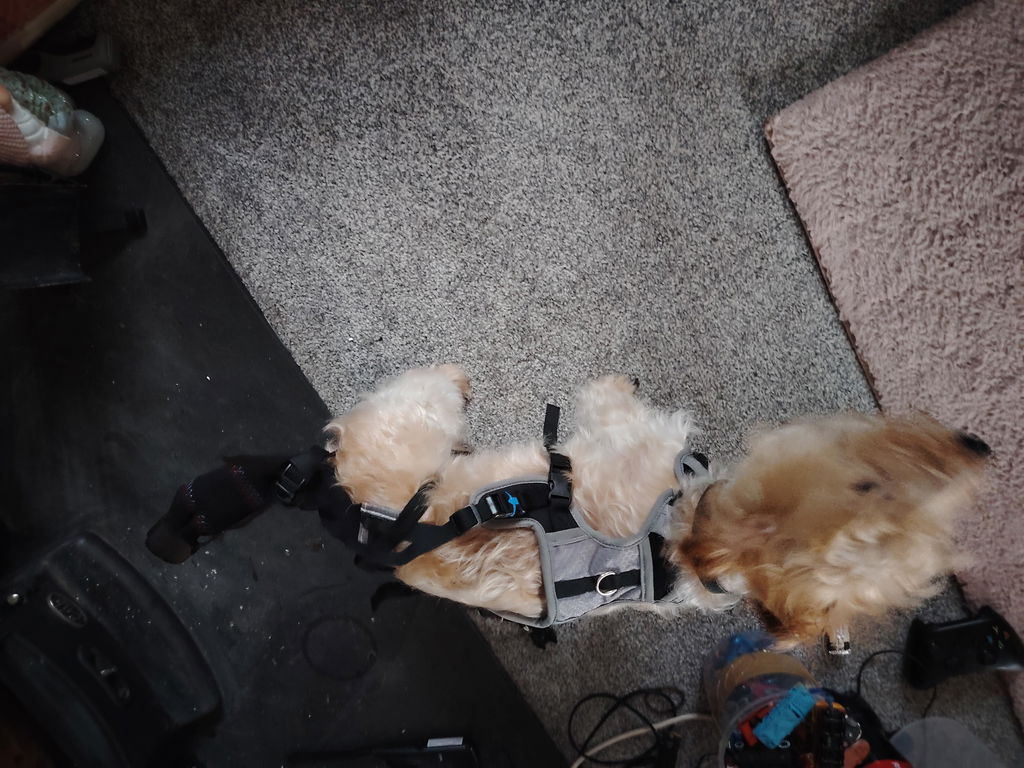
Rinse with saline, apply a non-adherent Telfa pad over the wound, and apply the K9 TailSaver® sleeve over the dressing. The body harness anchor holds the sleeve in place through continuous Golden-level wagging. Most Golden Retrievers accept the device quickly given their cooperative temperament.
Step 4: Daily cleaning; continuous protection
Remove the sleeve once daily to clean the wound and replace the dressing. Maintain protection at all other times. Do not make exceptions for visitors, walks, or nighttime. Consistency is the variable that determines outcome.
Expected healing at each stage
- Fresh wound (less than 5 days): 10–14 days continuous protection
- Cycling wound (5 days to 3 weeks): 3–5 weeks
- Chronic wound (3+ weeks): 5–8 weeks; vet antibiotic assessment recommended
Environmental Adjustments for Golden Retrievers
- Pad wall corners at Golden tail height (typically 18–28 inches from floor)
- Replace wire crates with exercise pens for any Golden with Happy Tail history
- Move low-profile furniture (coffee tables, baseboard corners) away from primary walking paths during the healing period
- Establish a calm greeting protocol — the biggest single reduction in daily impact events
Golden Retriever Happy Tail FAQ
My Golden is 10 years old and never had this before. Why now?
Older dogs often see reduced activity and more indoor rest, paradoxically increasing
excitement intensity during wag events when they do occur. Arthritis may also cause
the dog to wag with less body movement and more tail-only motion, concentrating
the energy at the tail tip. Start the management protocol as if this is a first event;
age does not reduce healing success with appropriate protection.
The feathering around the wound is matted and pulling at the scab. What do I do?
Soak matted feathering with warm saline to soften it before attempting to separate
it from the scab. Never pull dry, matted hair from a wound. If the feathering is
incorporated into the wound margin, have your vet assess whether it needs to be
trimmed under sedation.
How do I size the K9 TailSaver for my Golden?
Measure chest girth and back length and compare to the
sizing guide. Most adult Goldens fit
M or L depending on sex and body type. Female Goldens often fit M;
males with broader chests typically fit L.