Irish Setter Happy Tail Syndrome: A Feathered Tail, Compounding Risk
Irish Setter Happy Tail Syndrome: Long, Feathered Tails and High-Energy Wags
Irish Setters are one of the more visually striking breeds affected by Happy Tail Syndrome. Their long, elegantly feathered tail is a breed hallmark — and also a significant contributor to Happy Tail difficulty. The feathering conceals early wounds from detection, mats over healing tissue, and creates moisture-trapping conditions that encourage secondary infection. Combined with the Irish Setter's exuberant and athletic temperament, tail tip injuries in this breed are both common and notoriously difficult to manage without the right protection system.
Irish Setter-Specific Risk Profile
Long tail with high end-velocity
Irish Setters carry a long, flowing tail held nearly horizontal during excitement. At full extension, the tail arc covers a wide radius and the tip reaches high velocity at its outer end. Irish Setter tails are long enough to strike ceiling-level obstacles when the dog is fully excited — an unusual characteristic for most breeds.
Feathering that hides and complicates wounds
The silky feathering on an Irish Setter's tail grows at the tail tip as well as along the tail's underside. This feathering:
- Conceals early wound formation — owners may not see the wound until Stage 2 or later
- Mats with dried blood or exudate, creating a crust over the wound that interferes with wound assessment and daily cleaning
- Provides a path for bacteria to wick toward the wound from the environment
- Acts as a physical impediment to bandage application and sleeve fitting
High-drive sporting temperament
Irish Setters were bred for all-day field work and have the energy and drive to match. They do not rest quietly under normal circumstances, and their greeting and social behaviors involve intense, full-body excitement wagging.
Detection: How to Check an Irish Setter's Tail Tip
Given the feathering, routine inspection is important for Irish Setter owners in high-impact environments. Weekly inspection protocol:
- Grasp the tail tip gently and part the feathering with your fingers to reveal the underlying skin
- Look for any area of raw, red, or scabbed skin — even a coin-sized area is an early Happy Tail wound that should be managed
- Check the feathering for matting, which may indicate dried blood or exudate that has been present for days undetected
If you find matted feathering, soften it with warm saline before attempting to part it. Never force matted hair from a wound surface.
Pre-Treatment Grooming Step
Before beginning wound management, carefully trim the tail tip feathering around the wound margin. Use blunt-tipped scissors (not clippers, which can startle the dog and cause accidental cuts) and trim conservatively — no more than is needed to expose the wound margins for dressing and assessment. Trimming the concealing feathering is essential for accurate daily wound monitoring and for secure application of the wound dressing and protective sleeve.
Treatment Protocol for Irish Setters
- Trim wound-area feathering (as described above)
- Assess the wound: Confirm no bone exposure or visible infection. For any wound present for more than 5 days, veterinary assessment is recommended.
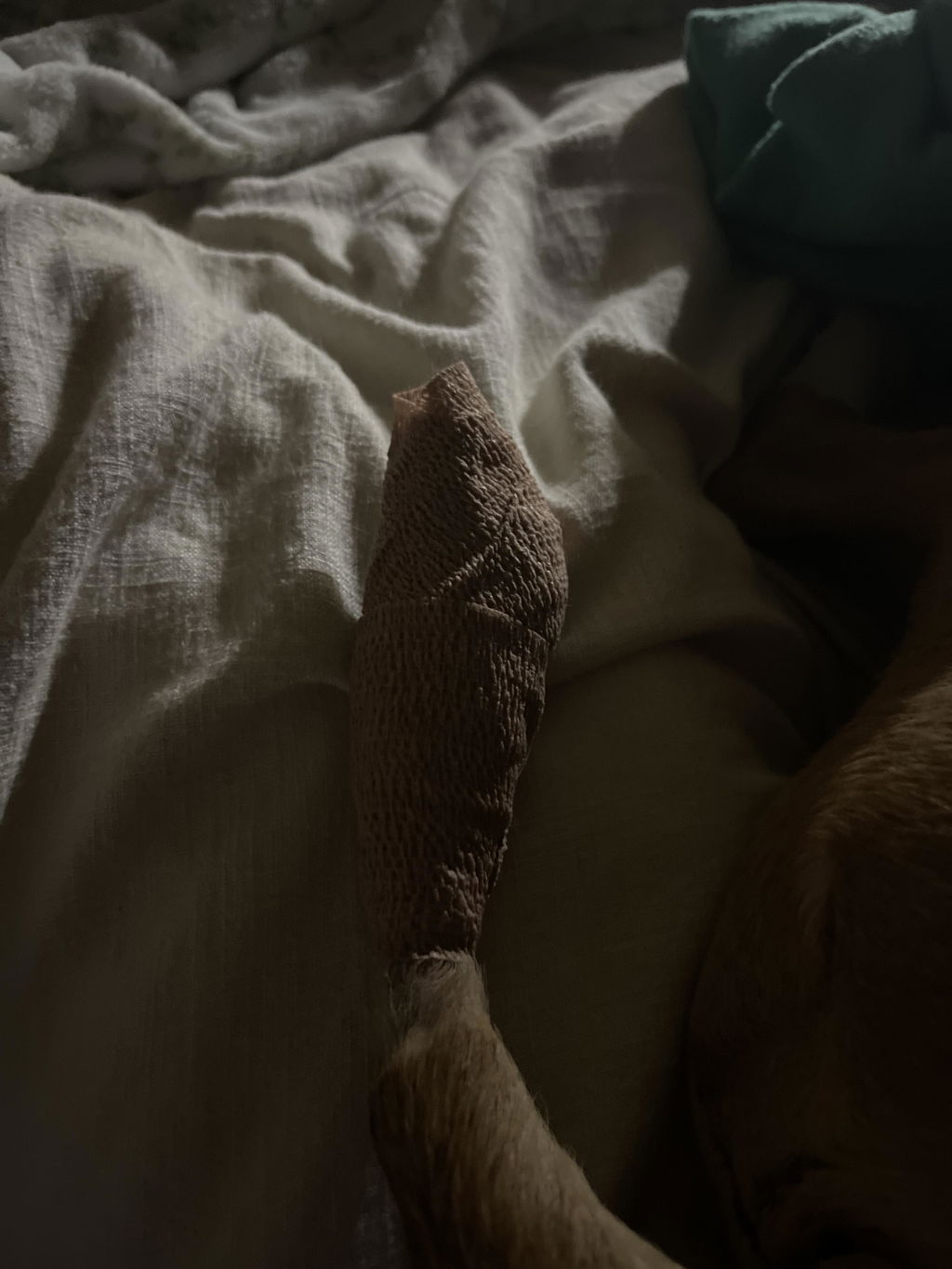
- Daily cleaning: Saline rinse; non-stick Telfa pad dressing
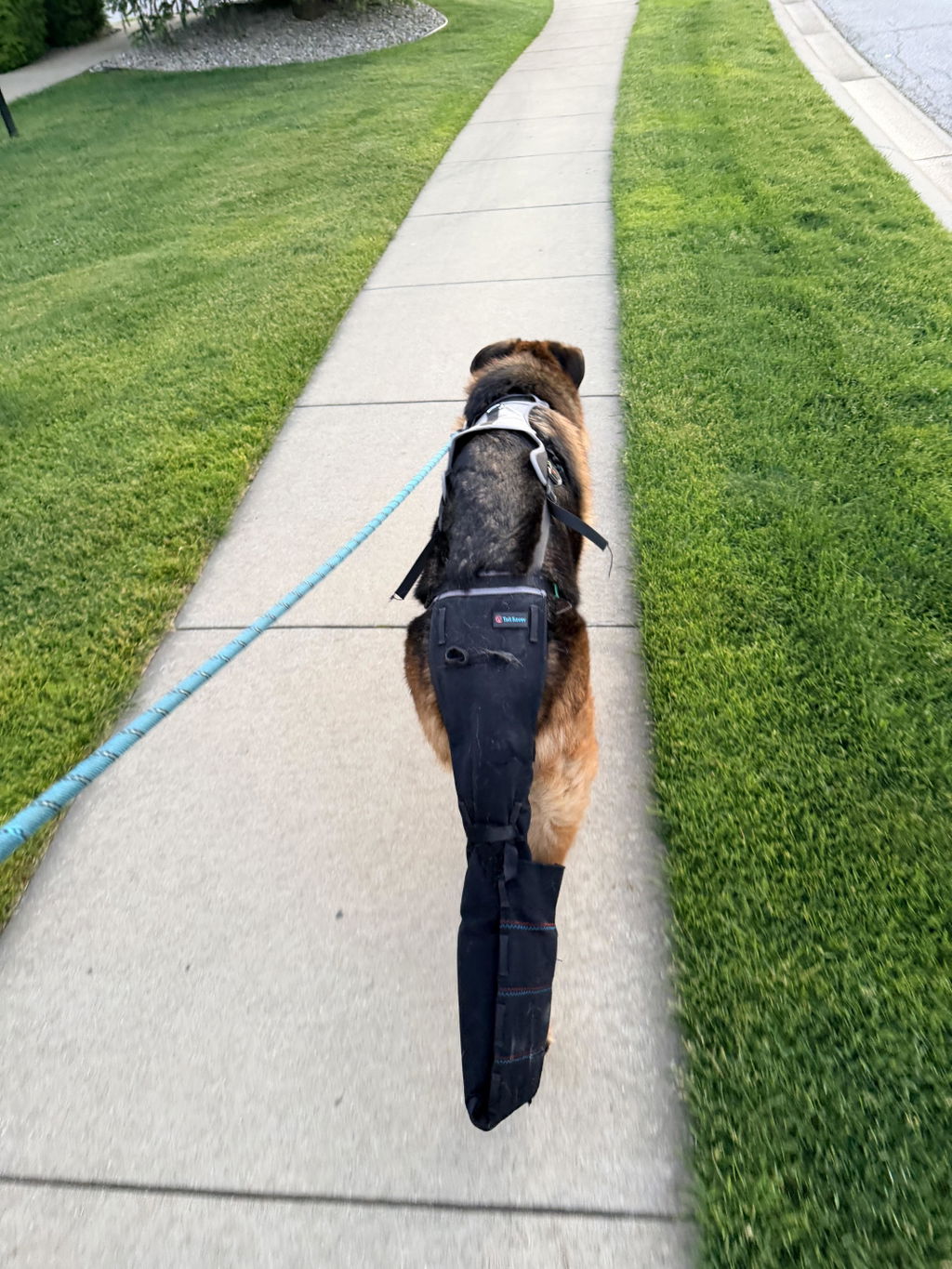
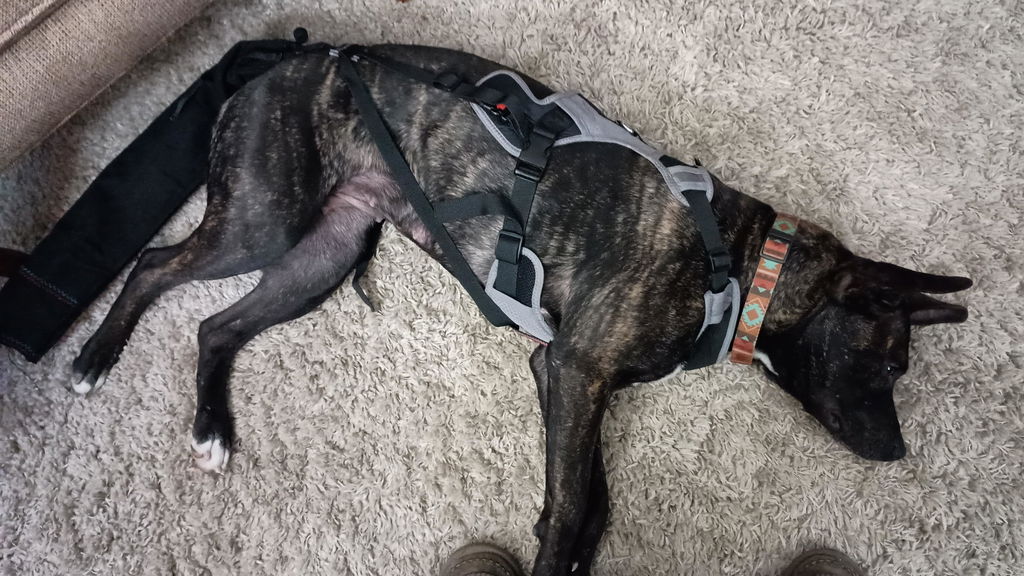
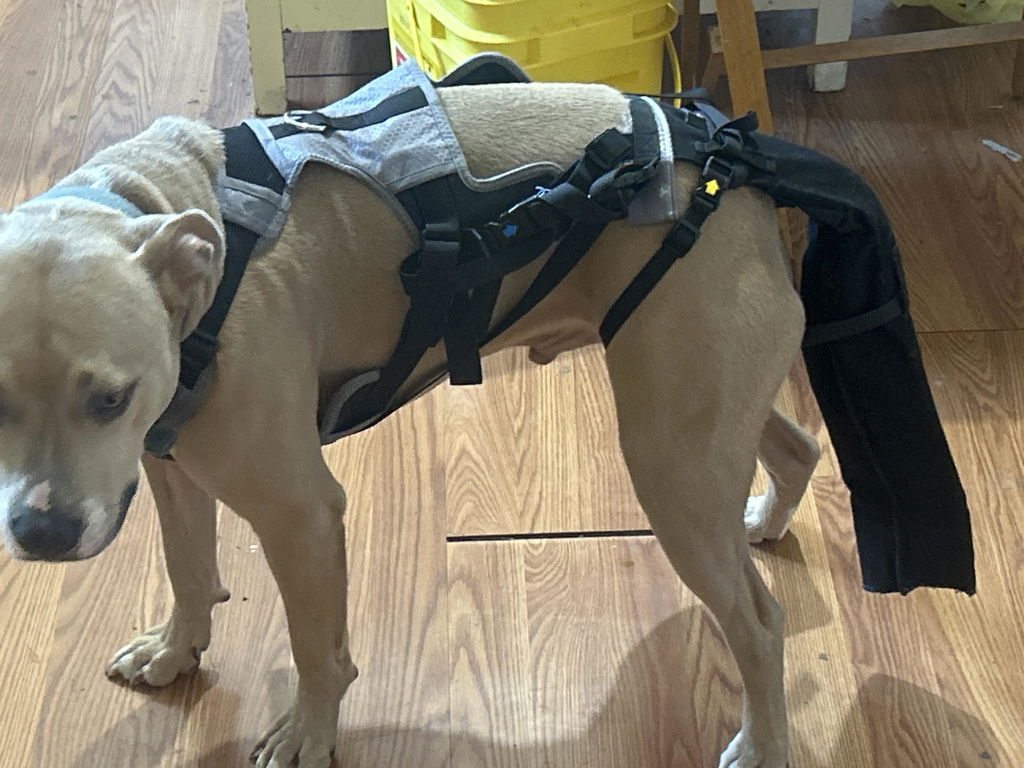
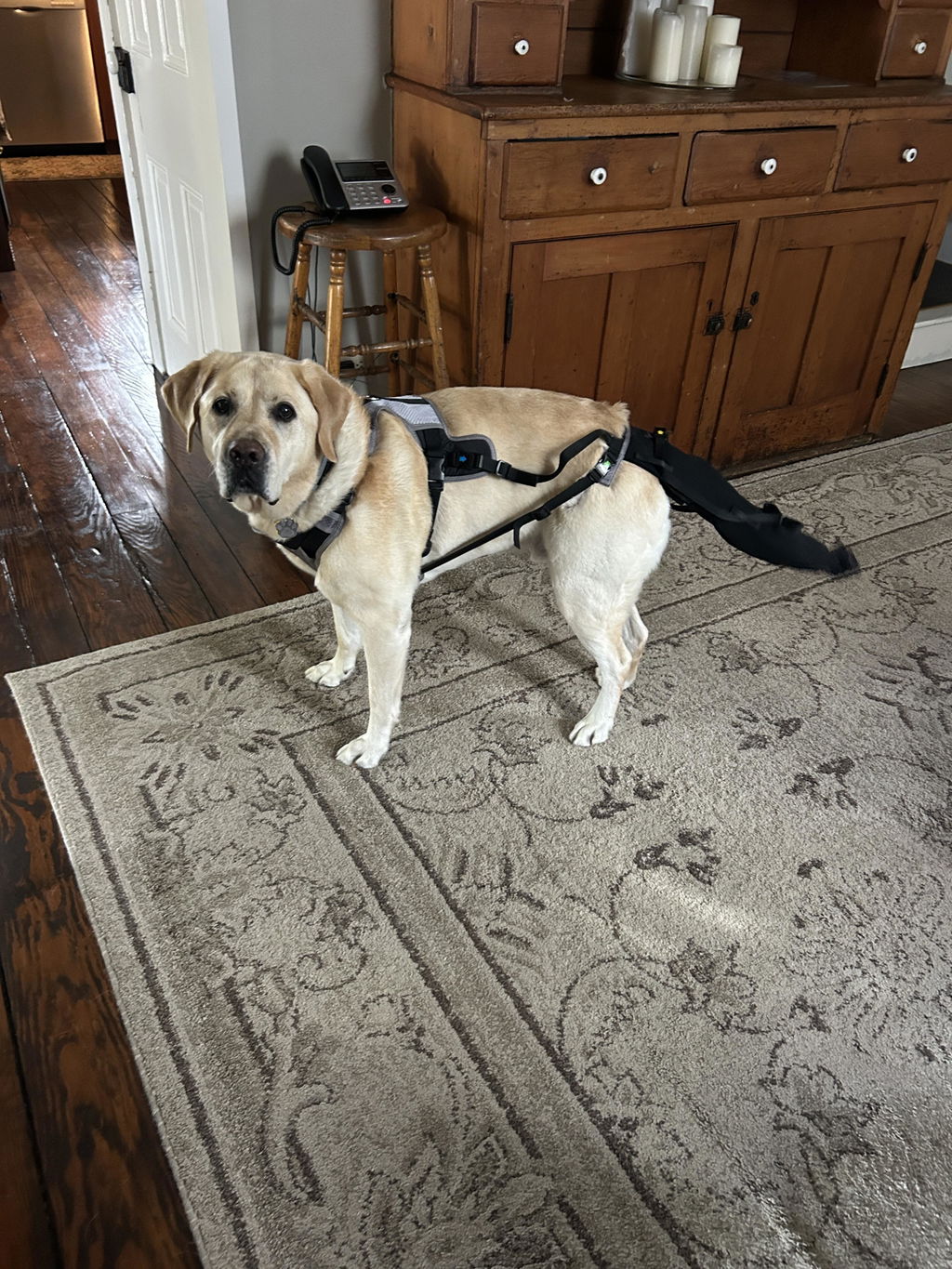
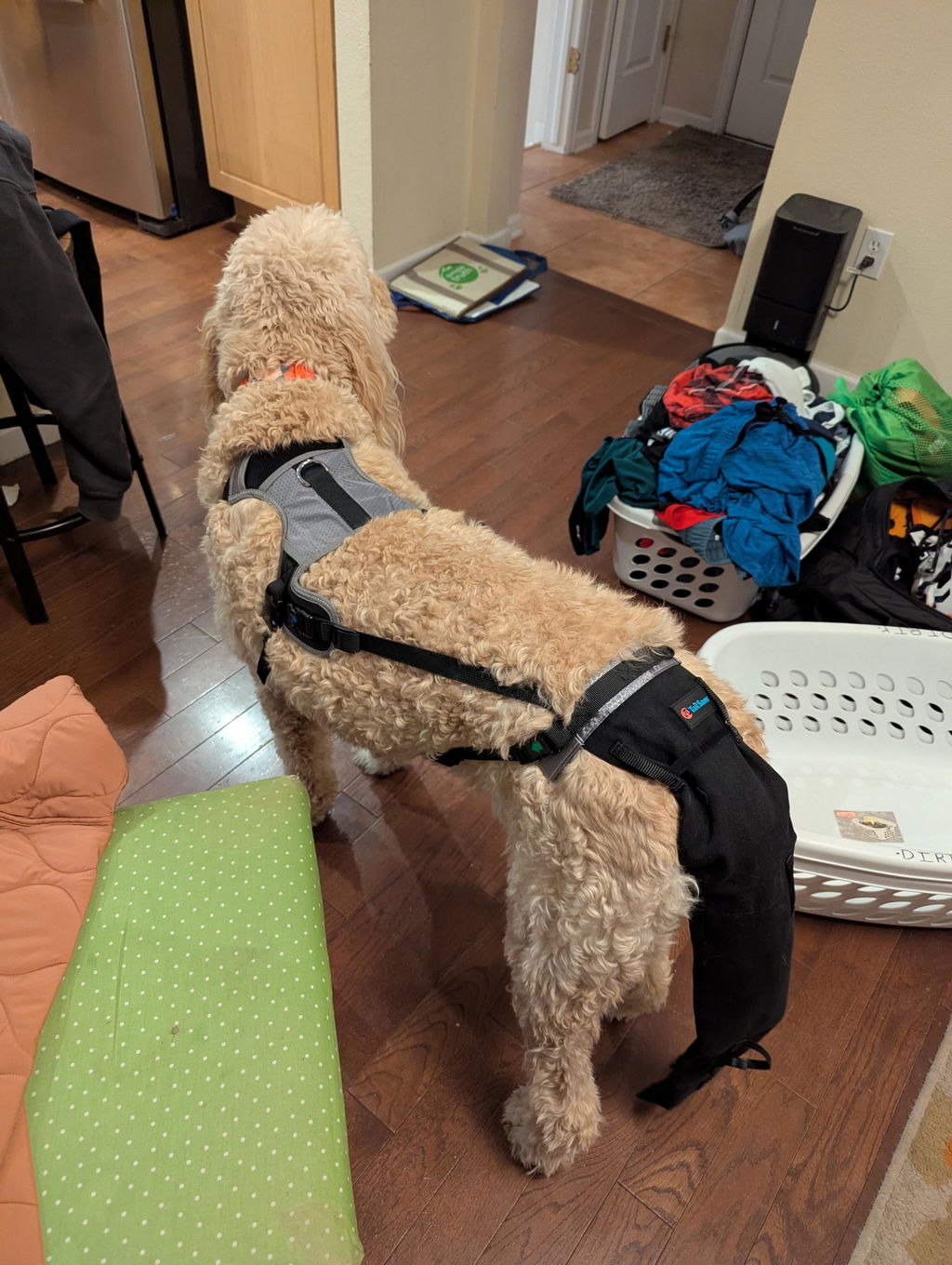
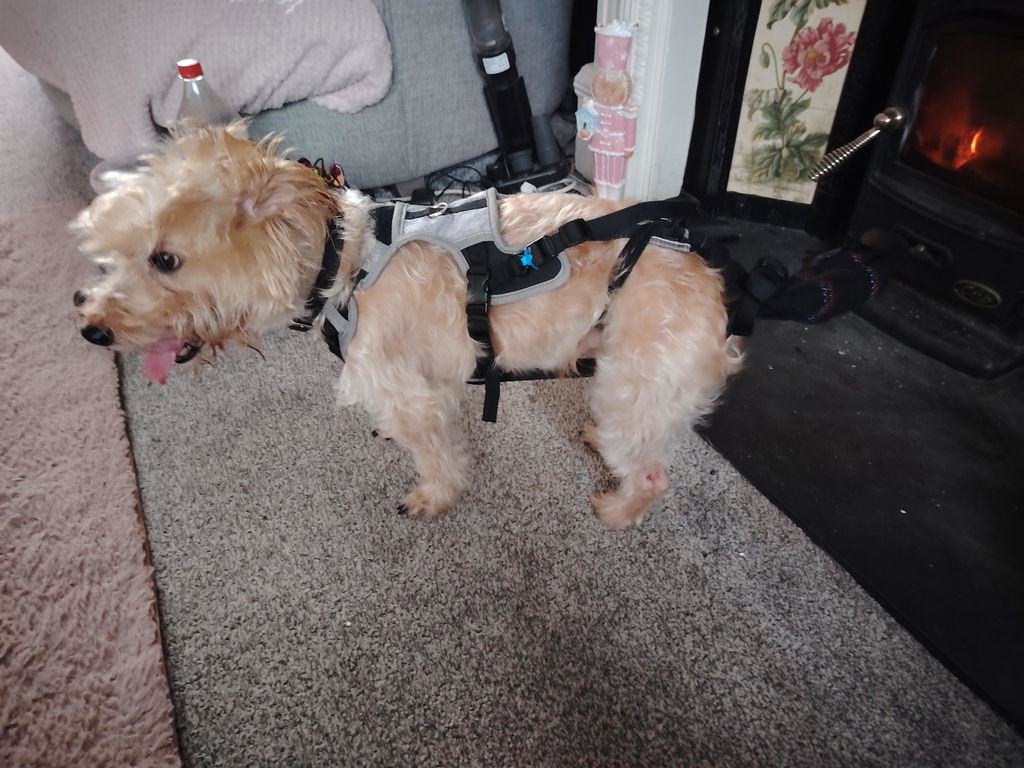
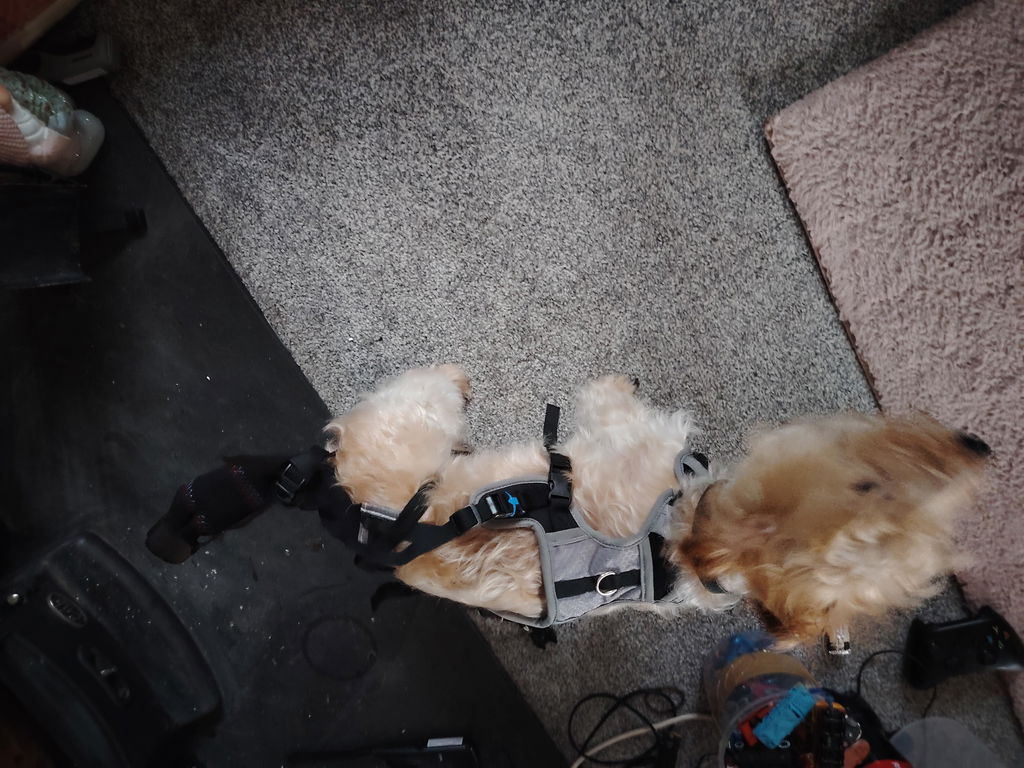
- Apply K9 TailSaver: The K9 TailSaver® sleeve covers and protects the wound dressing, anchored by the body harness. Irish Setters are typically compliant with harness-style equipment given their gundog training background.
- Replace dressing daily until wound is fully closed with new skin
Irish Setter Happy Tail FAQ
The feathering around the wound is very long. How much should I trim?
Trim only the hair within approximately 1 inch of the wound margin — just
enough to allow the dressing to contact the wound surface cleanly and to allow
clear daily inspection. You do not need to trim the entire tail tip.
My Irish Setter is a show dog. Will trimming affect show eligibility?
Discuss this with your handler or breed club. In most cases, the small amount
of feathering trimming required for wound management grows back before the
affected exhibition season. The wound itself poses a greater show eligibility
concern than any trimming.
How do I size the K9 TailSaver for an Irish Setter?
Irish Setters are elegant, flat-muscled dogs with a moderate chest depth.
Measure chest girth and back length per the sizing guide.
Most adult Irish Setters fit M–L. Females typically fit M.