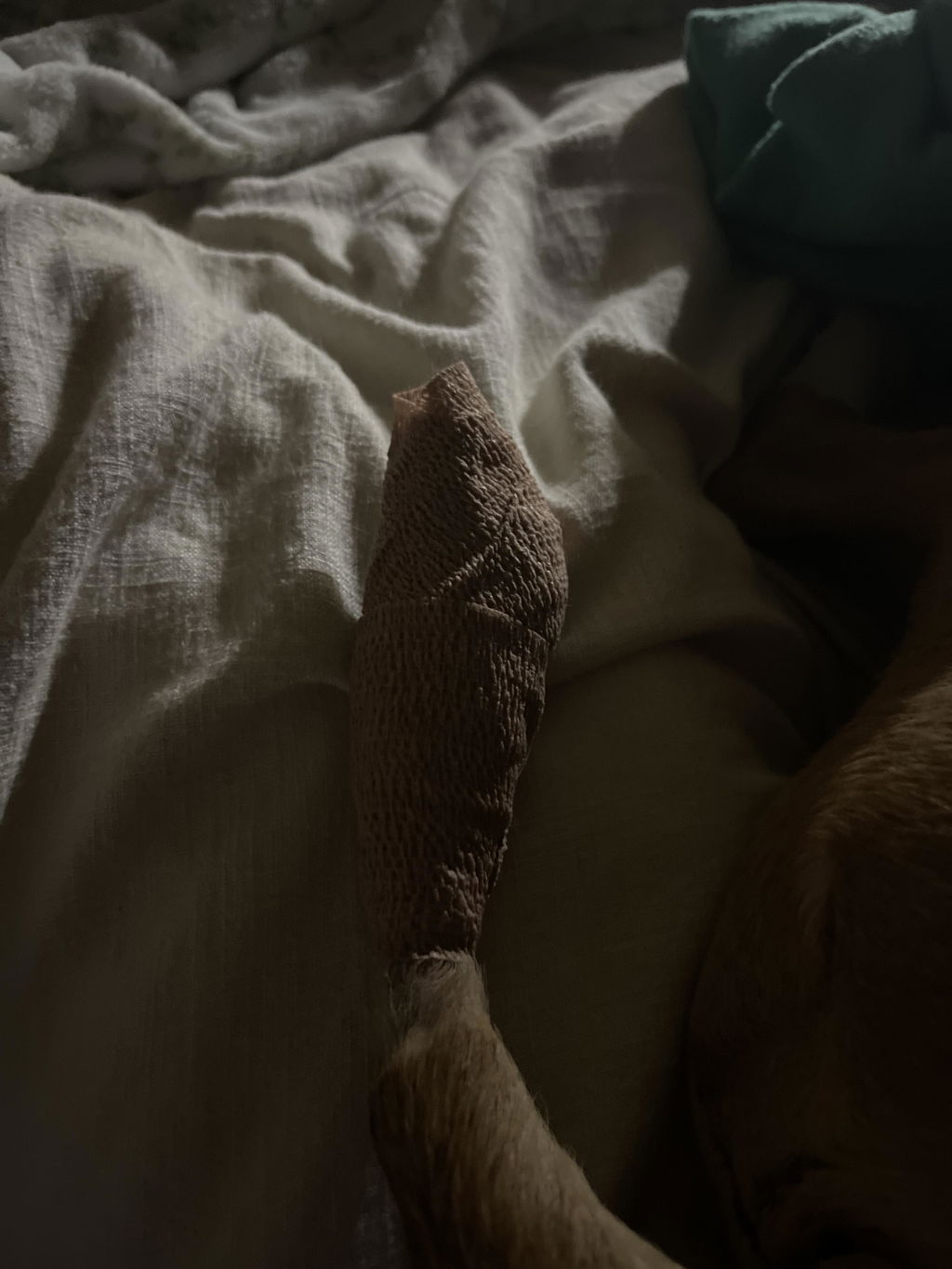
Weimaraner Happy Tail Syndrome: High-Energy Breed, High Risk
Weimaraner Happy Tail Syndrome: High Energy, High-Velocity Wag, High Risk
Weimaraner owners know the breed's tail well: a naturally docked tail in many countries, but in the United States a full-length, thin-coated tail that wags with extraordinary speed and force. Weimaraners are one of the most energetic and athletic sporting breeds, and their tail wags with a speed and intensity that reflects their overall drive level. The result is one of the highest-impact wag forces of any breed — making Weimaraners significantly prone to Happy Tail injuries that progress rapidly compared to more moderate breeds.
Weimaraner-Specific Risk Factors
Thin coat with no cushioning
Unlike the Golden Retriever's feathered tail or the Labrador's dense otter tail, a Weimaraner tail is covered with very short, thin coat with minimal subcutaneous cushioning at the tip. There is essentially no padding between the tail skin and the tail vertebrae. A single hard impact that would leave a minor bruise on a thicker-coated breed splits Weimaraner tail tip skin immediately.
Extreme wag velocity
Weimaraners are high-drive hunting dogs. Their wag behavior reflects their general arousal level. An excited Weimaraner wags their full tail with rotational speed that generates significantly higher tip velocity than the average companion breed wag. Clinical Happy Tail injuries in Weimaraners are often described as looking like impact injuries rather than abrasions — because that is functionally what they are.
Indoor life despite athletic build
Weimaraners are bred for all-day field work but kept in standard houses. They have energy suited to running for 4–6 hours daily but live in the same wall-bounded spaces as smaller companion dogs. The intensity of their indoor wag excitement events is proportional to their athletic drive.
What Weimaraner Happy Tail Looks Like
- Wound at the tail tip that opens quickly — often within the first day of occurrence rather than after days of cycling
- Blood spatter at high velocity; owners frequently describe being splattered when standing near the dog during a wag episode
- Wound that appears deeply split rather than superficially abraded
- Dog shows some pain sensitivity at wound site on direct pressure, unlike the typical indifference of Lab or Golden Happy Tail cases
Treatment Approach for Weimaraners
The speed at which Weimaraner Happy Tail wounds progress from Stage 1 to Stage 3 makes early, aggressive intervention critical. Do not wait to see if the wound will heal on its own after the first incident.
Immediate priority: impact cushioning
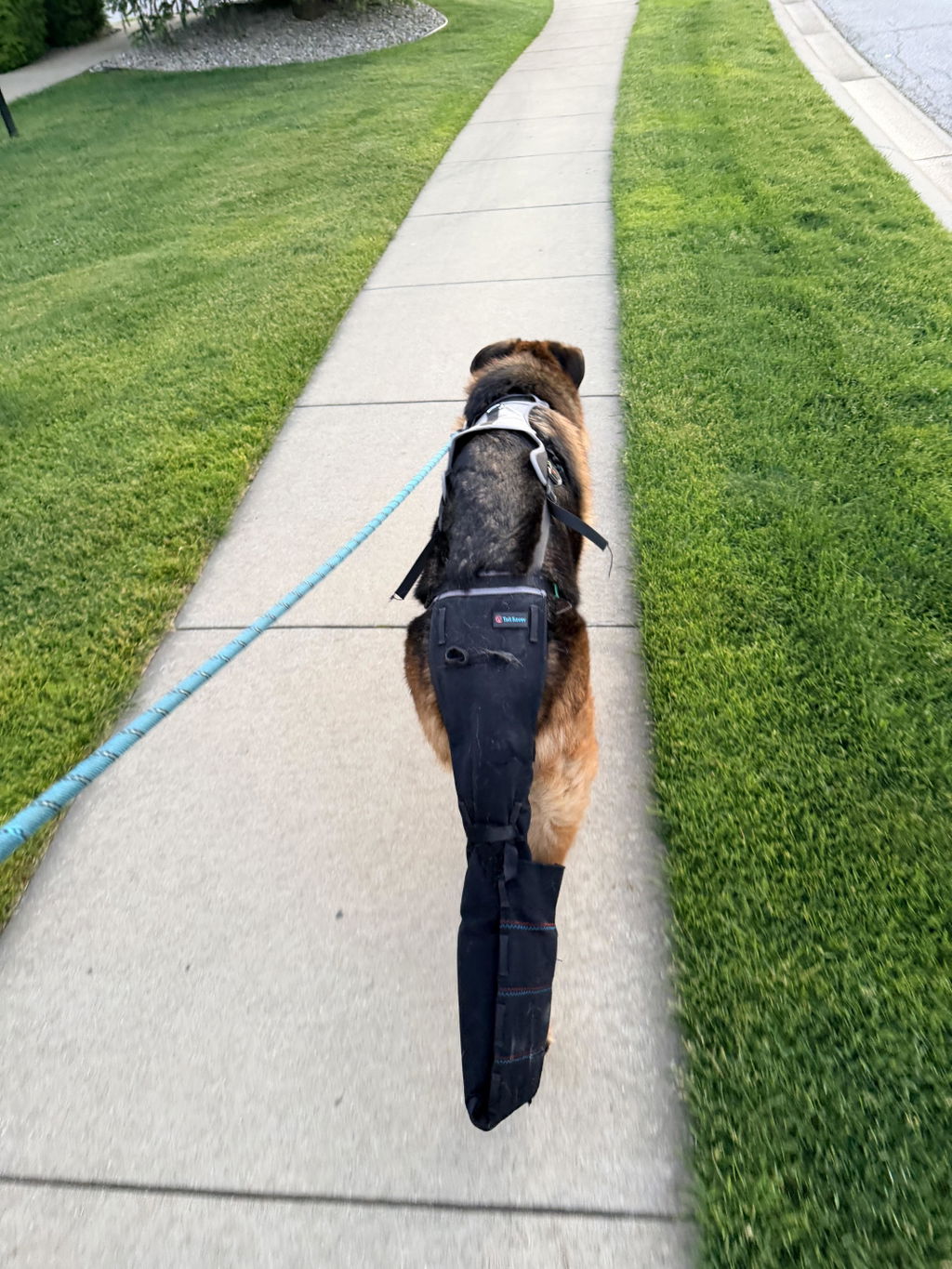
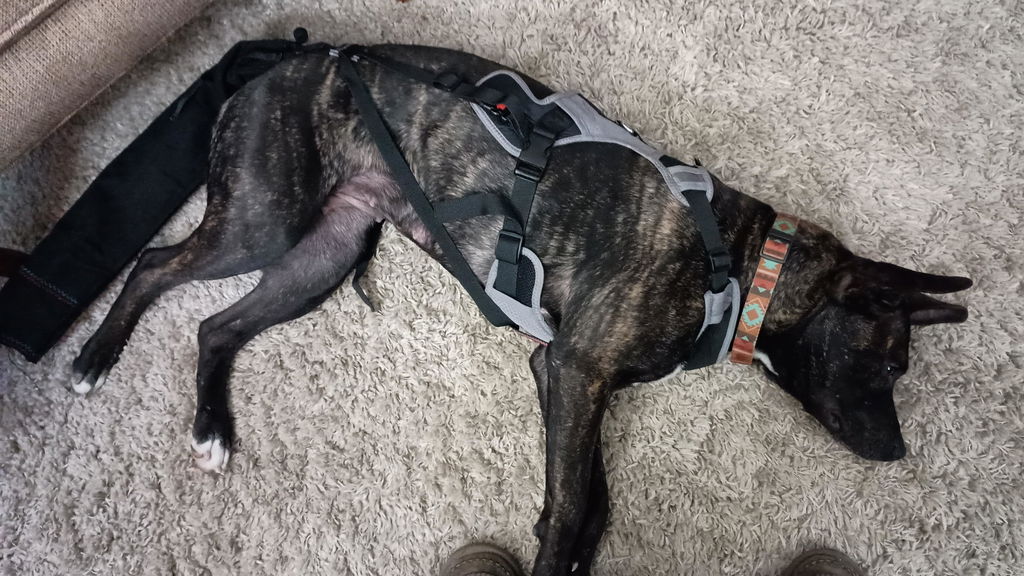
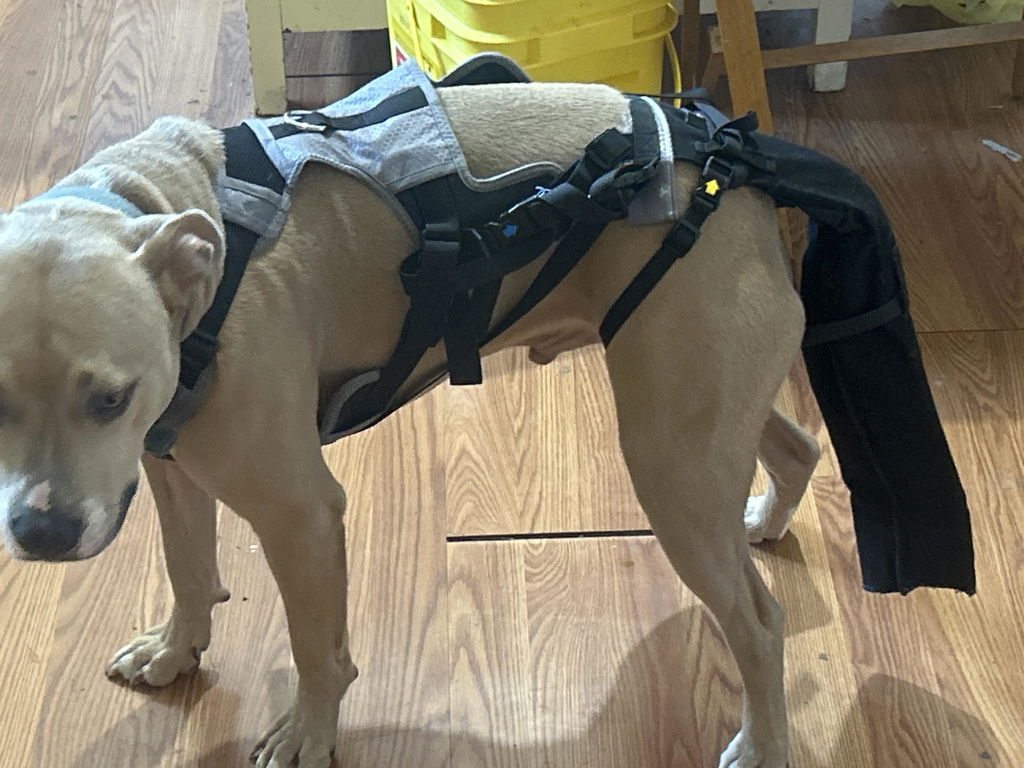
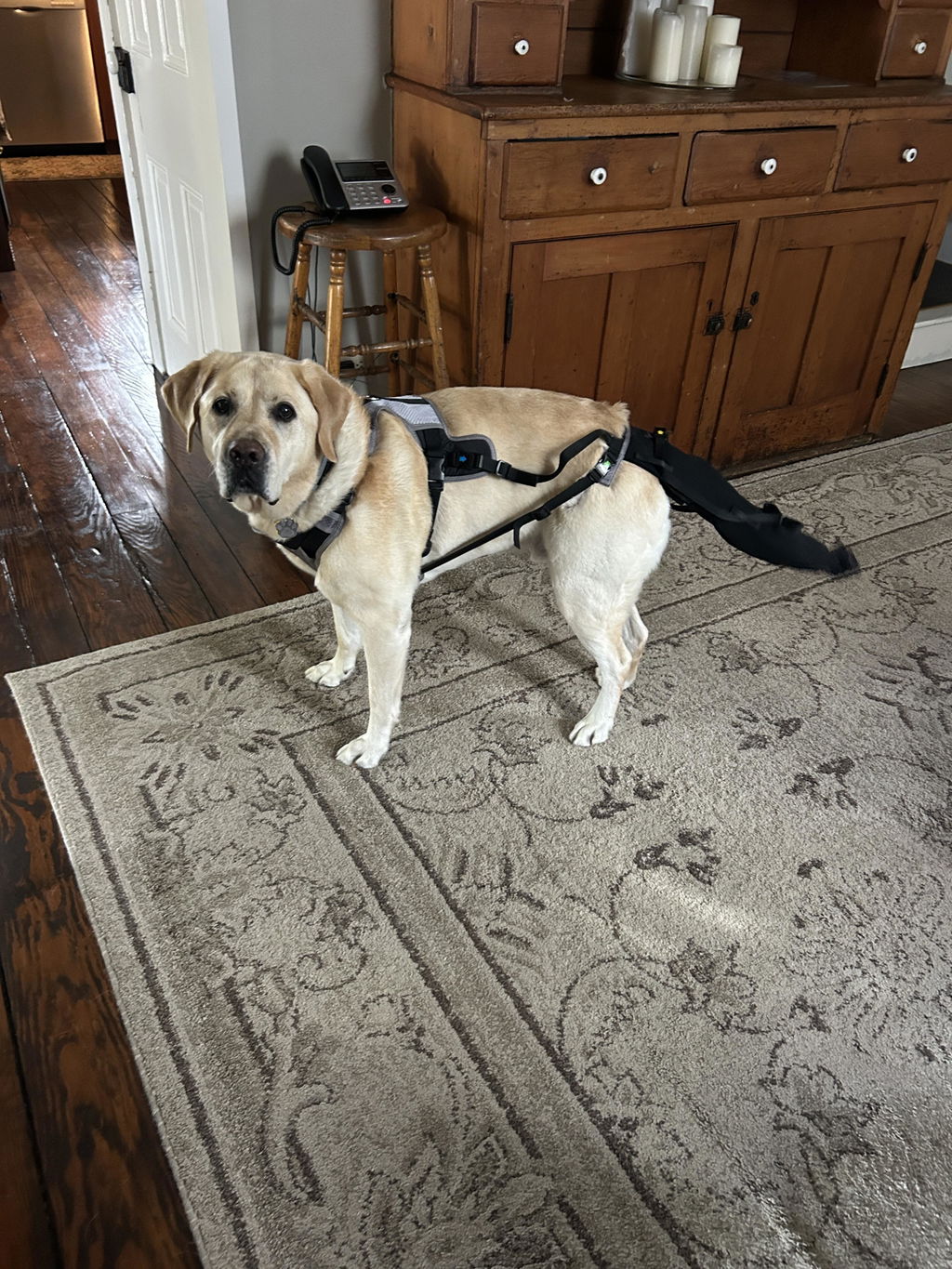
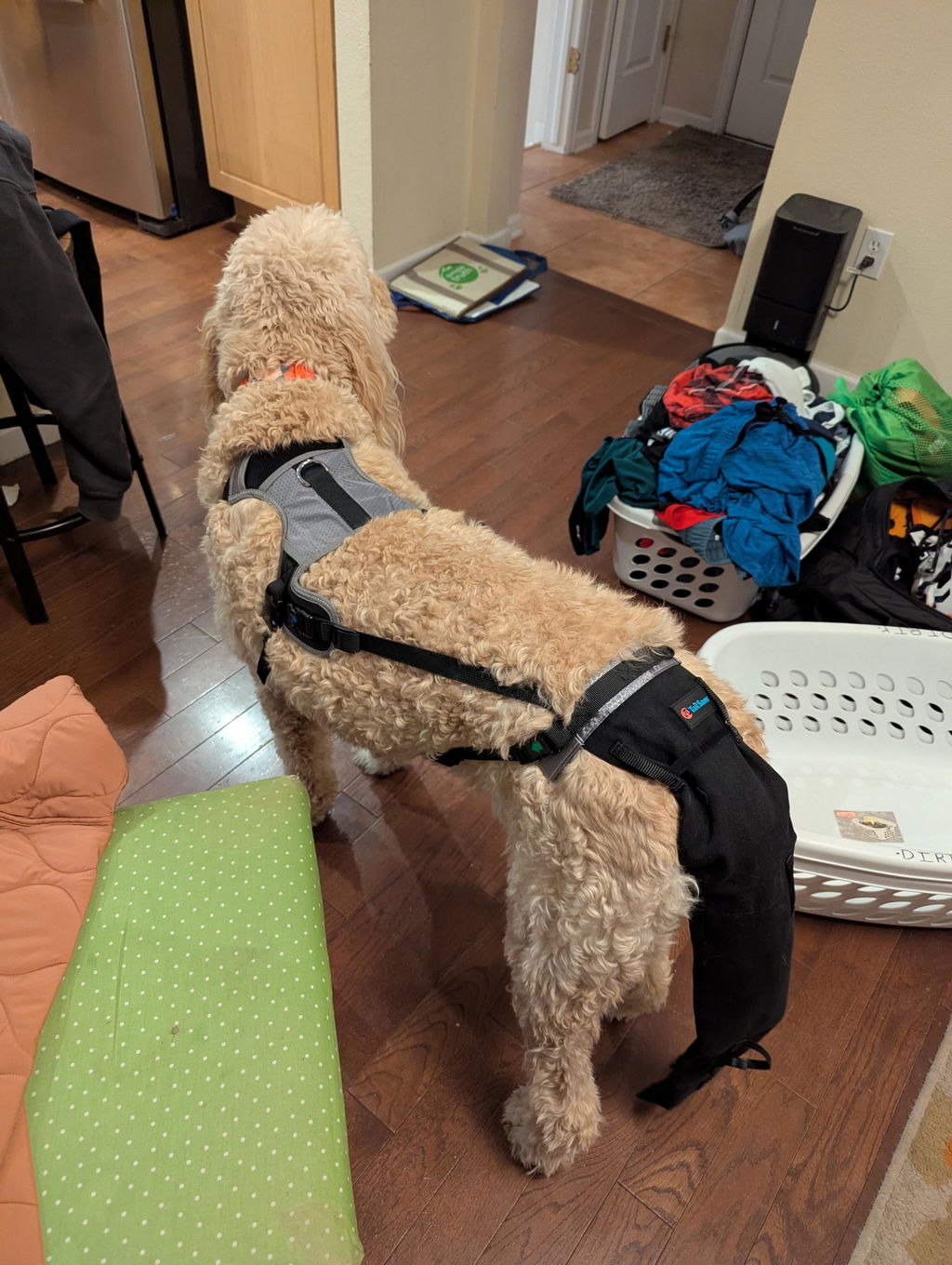
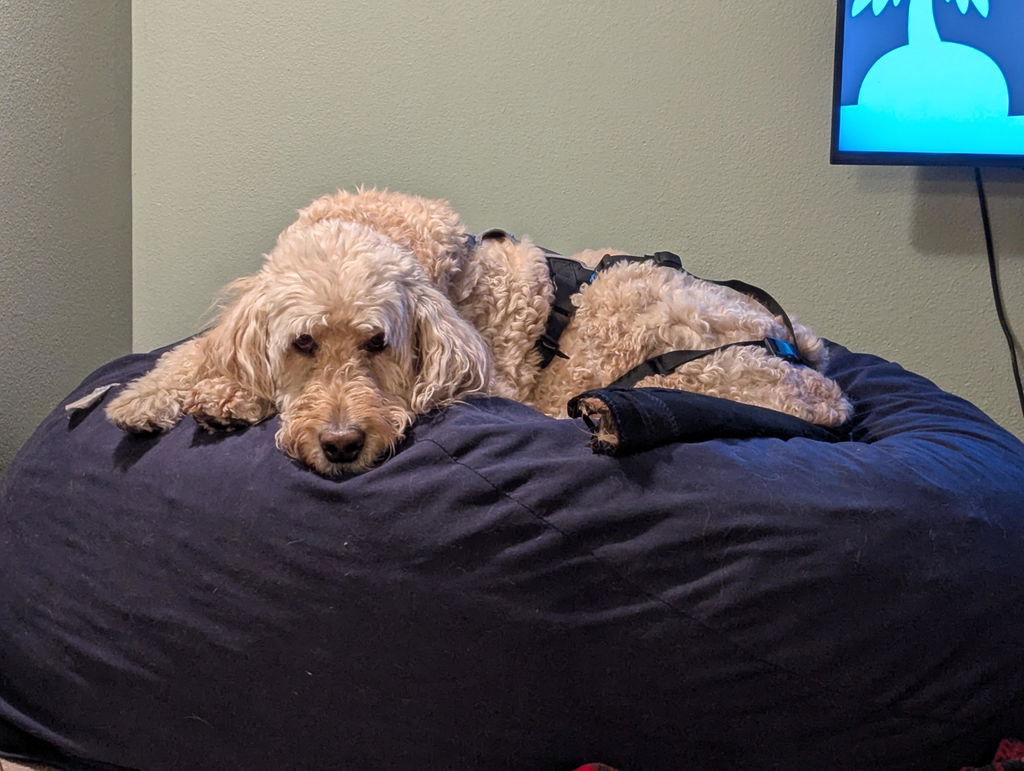
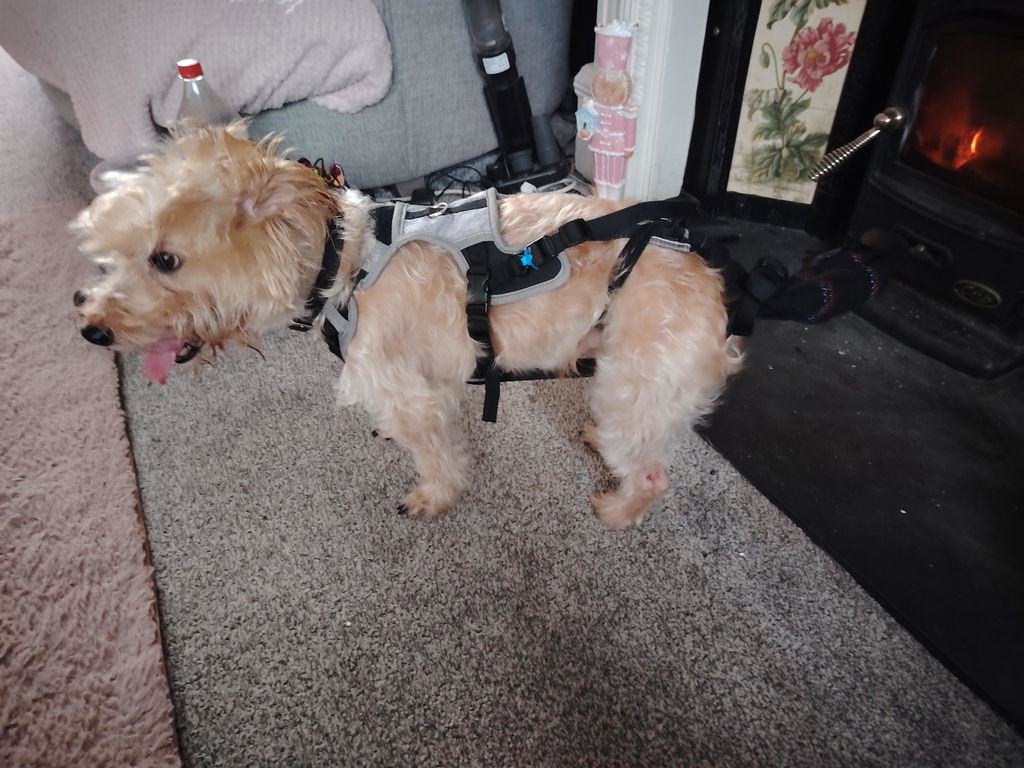
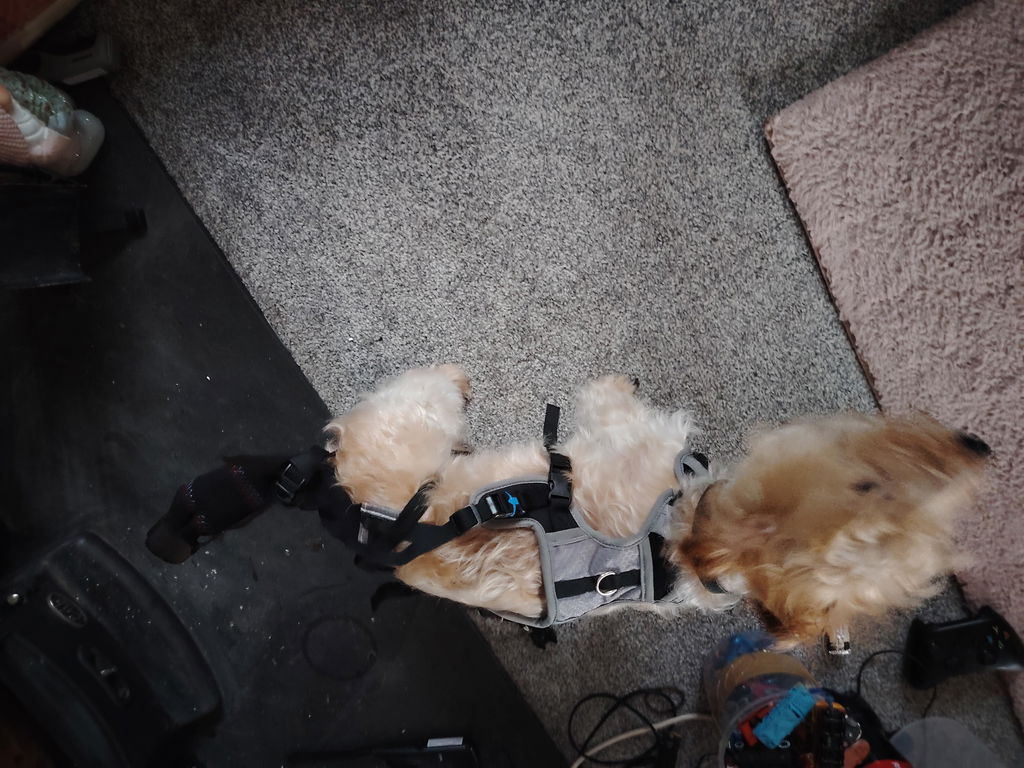
Given the extreme wag velocity, standard sleeve protection is insufficient without the cushioning layer. The K9 TailSaver® canvas sleeve provides a padded buffer that distributes impact force across the sleeve exterior rather than concentrating it on the wound. This is the critical difference for active, high-energy breeds like the Weimaraner.
Exercise management
After a Happy Tail wound opens, redirect Weimaraner energy away from activities that produce peak-intensity wagging indoors (greeting games, roughhousing with children). Field walking and structured off-leash exercise where the dog is running and focusing on environment — not tail-wagging excitement — are preferable during healing. The wag during purposeful running is less intense than the greeting wag.
Weimaraner Happy Tail FAQ
My Weimaraner hit their tail on the door frame once and now it won't stop bleeding. Is this serious?
For Weimaraners, yes — a first impact can produce a wound that in other breeds
would require repeated impacts. Apply pressure for 10–15 minutes, assess as
described in our Wound Care FAQ,
then begin K9 TailSaver protection immediately without waiting to see if
it heals on its own.
My vet suggested docking the remaining tail. Is this the right call for a Weimaraner?
Partial tail amputation is a valid long-term solution for Weimaraners with
recurrent severe Happy Tail after exhausting conservative options. Before agreeing,
request a 4–6 week trial with continuous harness-anchored protection,
exercise management, and environmental modification. Many cases resolve; the
minority that do not respond are reasonable surgical candidates.
Can a Weimaraner stay active while wearing the K9 TailSaver?
Yes. The device is designed for working and athletic dogs. The K9 TailSaver can
be worn during walks, light runs, and outdoor activities. Remove for swimming only.
See the sizing guide to ensure a secure, movement-allowing fit.