Labrador Retriever Happy Tail Syndrome: Complete Treatment Guide
Labrador Retriever Happy Tail Syndrome: Why Labs Are the Most Affected Breed
Labrador Retrievers account for more veterinary Happy Tail cases than any other breed in the United States. Their enthusiastic, high-frequency wag combined with a naturally active lifestyle and constant proximity to walls, furniture, and crates creates the perfect mechanical conditions for an injury the tail tip simply cannot heal from on its own. This guide covers what makes Labs uniquely vulnerable, how to recognize the stages of Happy Tail, and what treatment protocol achieves consistent healing outcomes.
Why Labrador Retrievers Get Happy Tail Syndrome
Labrador Retrievers were bred for high drive, high energy, and constant tail wagging. Their "otter tail" — thick at the base, tapering to a medium length — carries real momentum during a vigorous wag. Several factors converge in Labs:
- Wag frequency: A happy Lab wags nearly continuously in stimulating environments. Frequency, not just force, is what prevents the tail tip from healing. Even gentle wags reopen a fragile wound if they happen 40+ times per minute.
- Tail tip anatomy: Lab tail tips are thin-skinned and have relatively sparse subcutaneous tissue. There is little padding between the skin and the tail vertebrae, making split-skin injuries quick to occur and slow to fill.
- Activity level: Labs do not rest easily. They greet visitors, react to sounds, and self-stimulate through play constantly. Excited wags against door frames and furniture are inevitable.
- Indoor/kennel environment: Labs kept in standard homes or kennels encounter wall corners, metal crate bars, and door frames at tail height throughout the day. Each contact during a vigorous wag is a potential impact event.
Stages of Happy Tail Syndrome in Labs
Stage 1 — Minor abrasion
A small raw area at the tail tip, typically the size of a coin or smaller. Light bleeding may occur after excitement. Often dismissed as a minor scrape. Without protection, this stage progresses within days to Stage 2.
Stage 2 — Open wound cycle
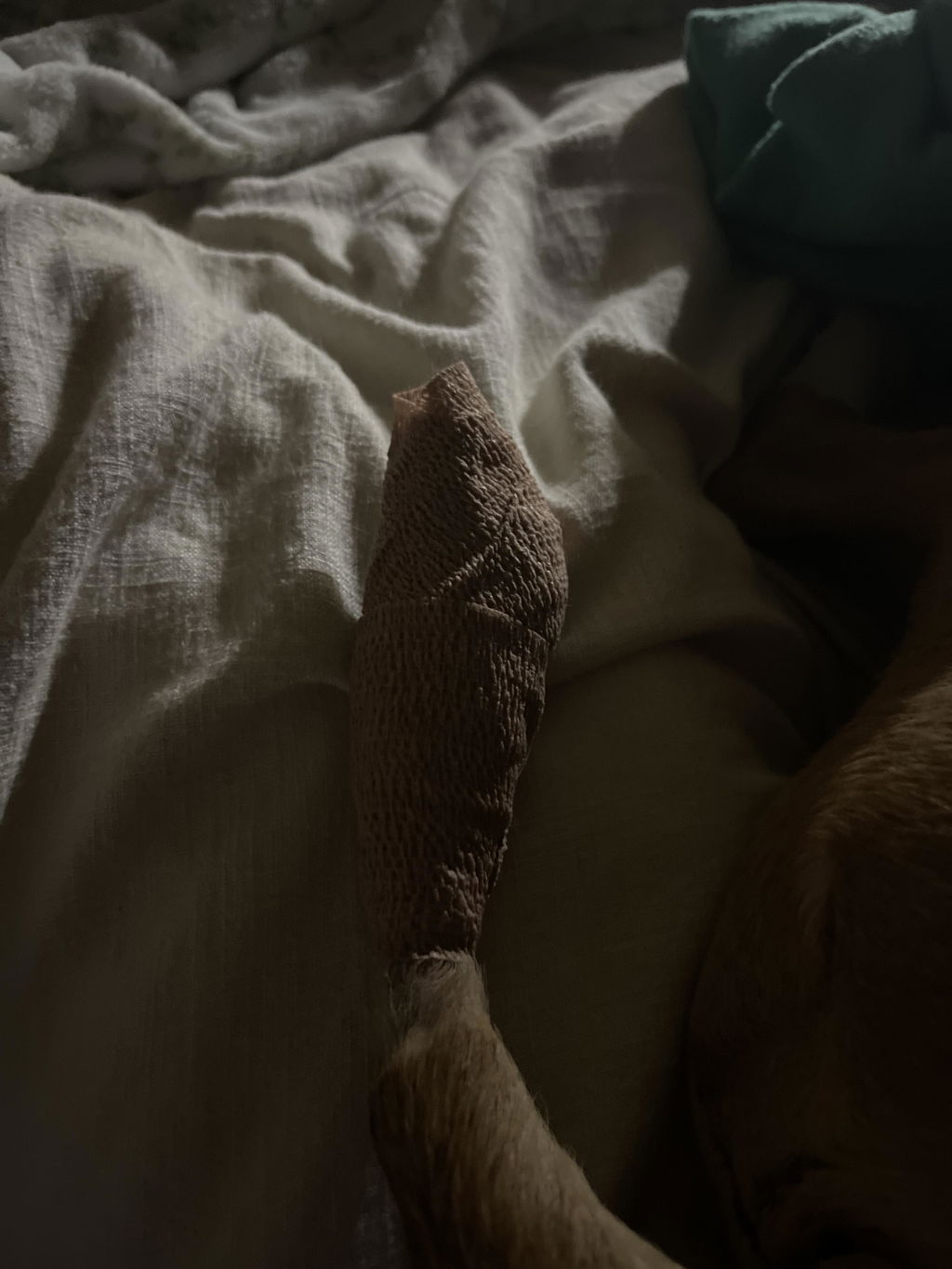
The wound is consistently open. Blood spatter appears on walls and furniture after active periods. Scabbing occurs during rest but the scab is broken by the first vigorous wag. Bandages applied at this stage typically last hours to a day.
Stage 3 — Chronic wound
The wound has been cycling open-and-closed for more than 2 weeks. Skin edges show beginning of callus formation. Wound may appear smaller but remains unable to close because each healing attempt is disrupted. Risk of secondary infection increases significantly at this stage.
Stage 4 — Infected or exposed tissue
Bone, cartilage, or tendon is visible. Wound has colored discharge or odor. This stage requires veterinary antibiotic intervention before wound closure is possible. Do not attempt home management of a Stage 4 wound without vet guidance.
Treatment: What Works for Lab Happy Tail
The core requirement is uninterrupted protection of the wound tip for the full duration of wound closure — not just during vet visits. Labs are energetic and will re-injure an unprotected wound almost immediately.
What does NOT work reliably
- Standard cohesive bandage alone — removed or destroyed within hours
- Elizabethan collar alone — Labs can reach their tail tip around most cones
- Bitter deterrent sprays — wash off quickly; most Labs habituate within a day
- "Resting" the dog — Labs do not stop wagging simply because they are confined
What works: harness-anchored tail protection
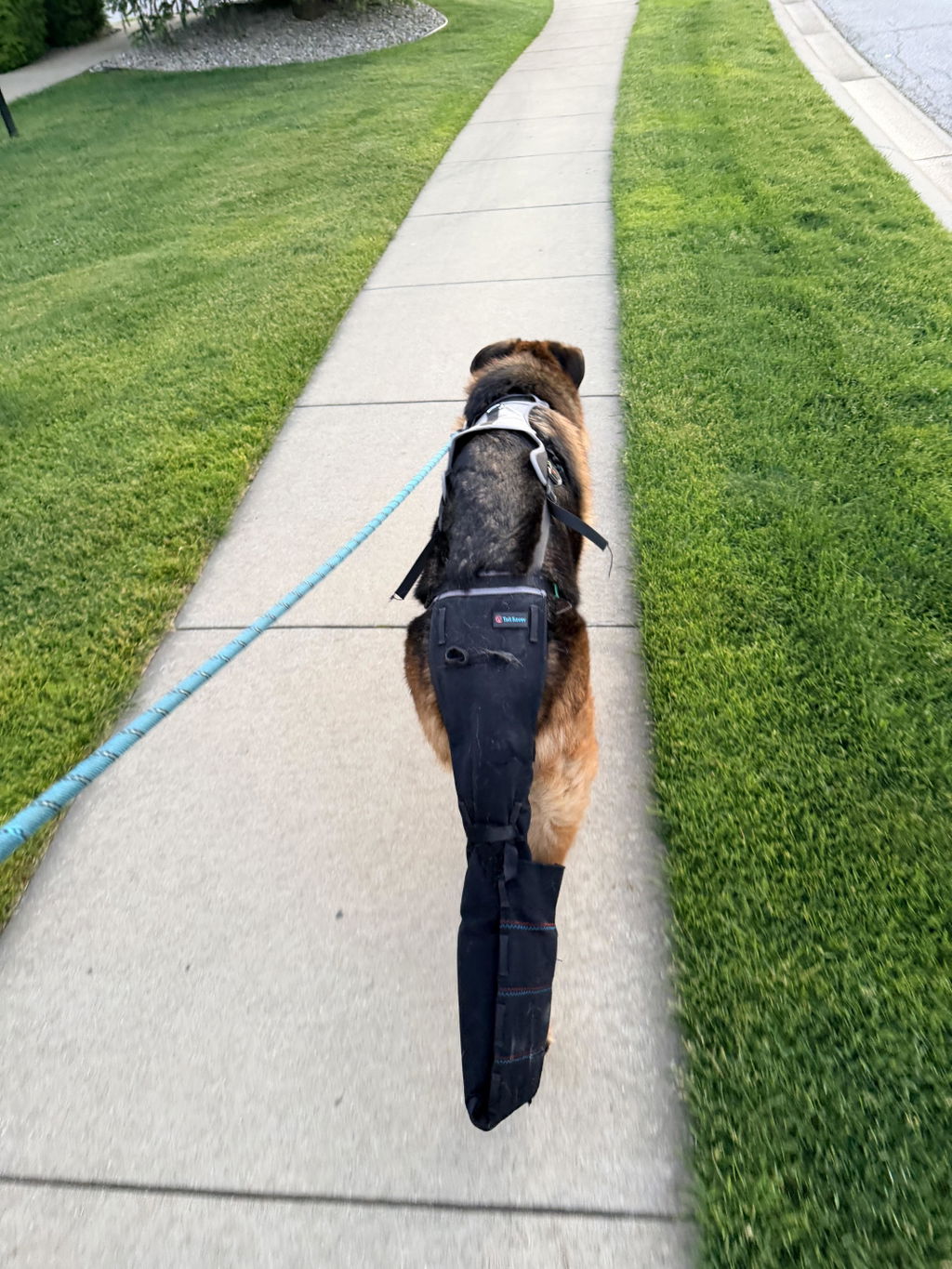
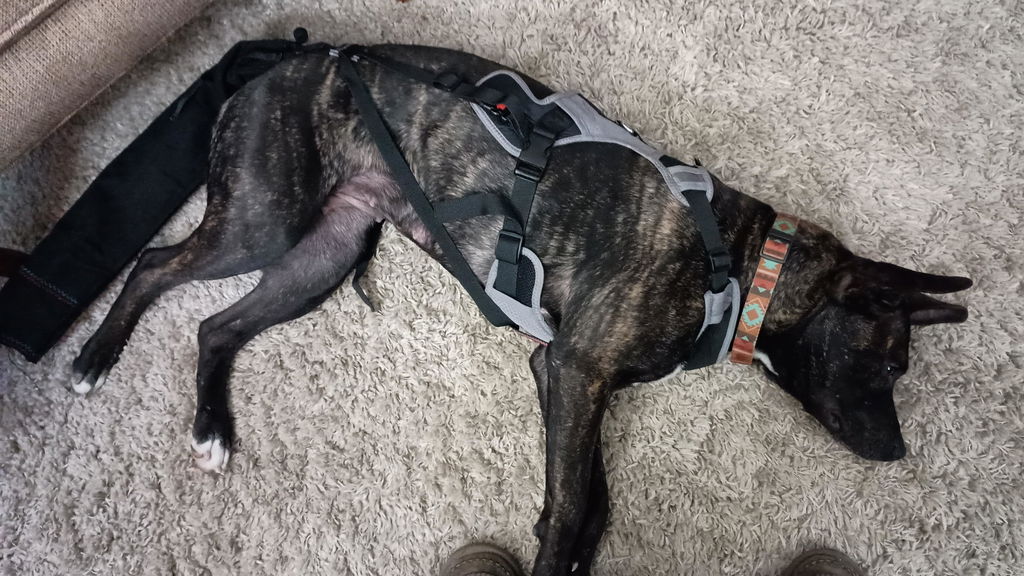
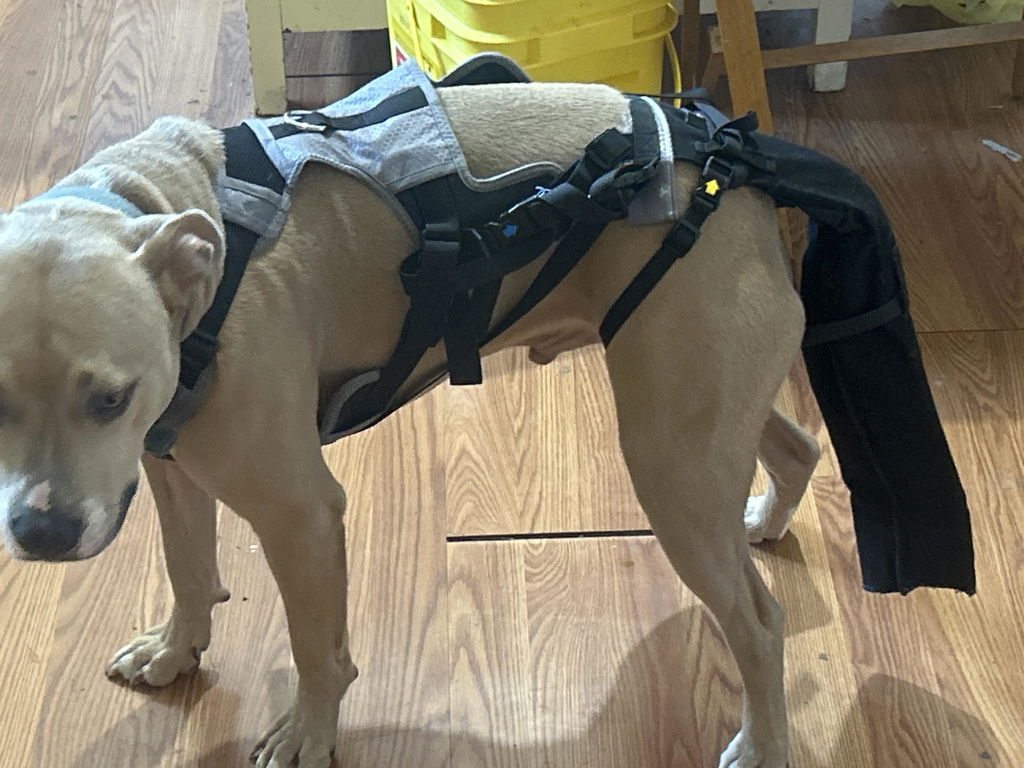
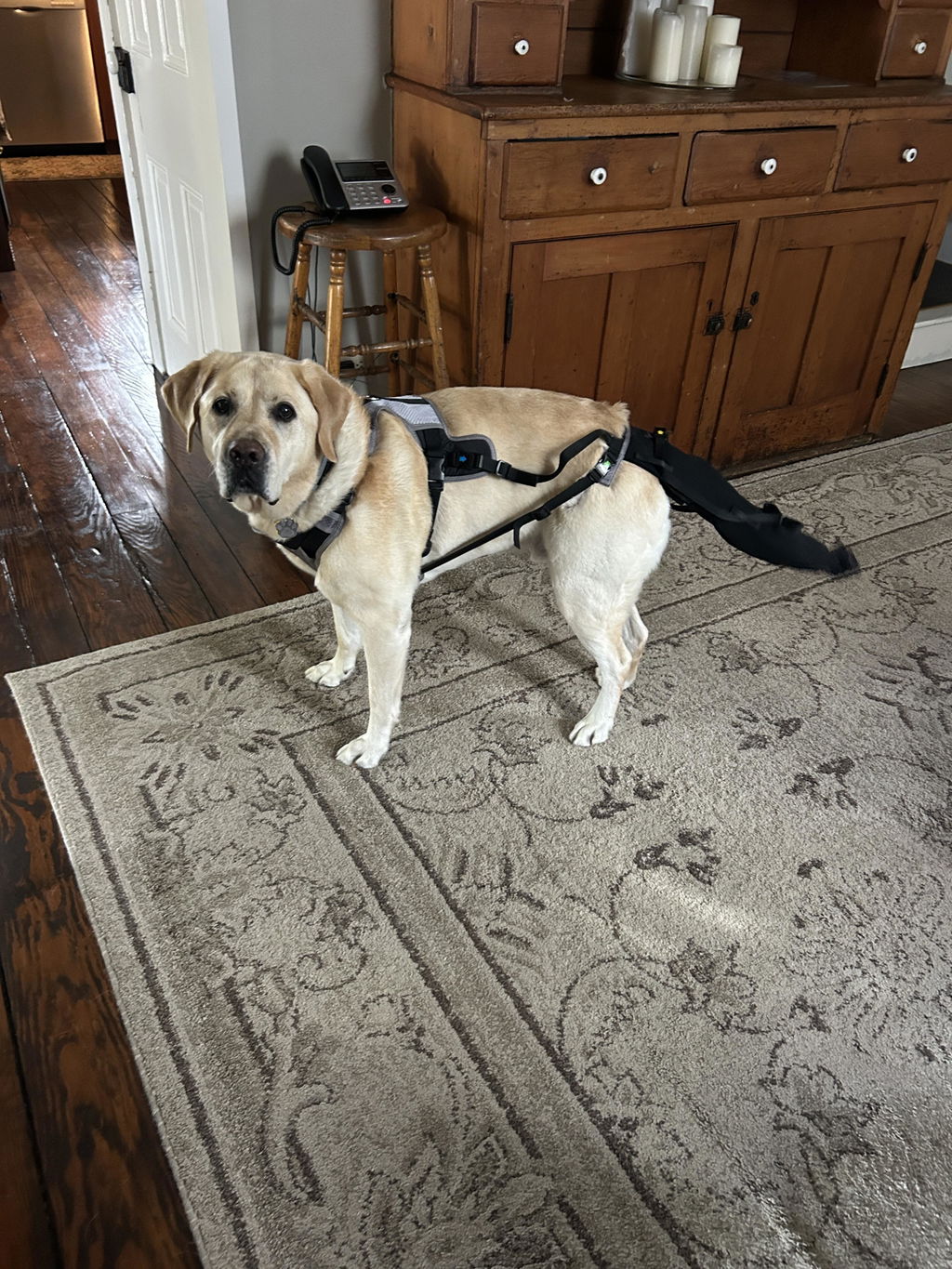
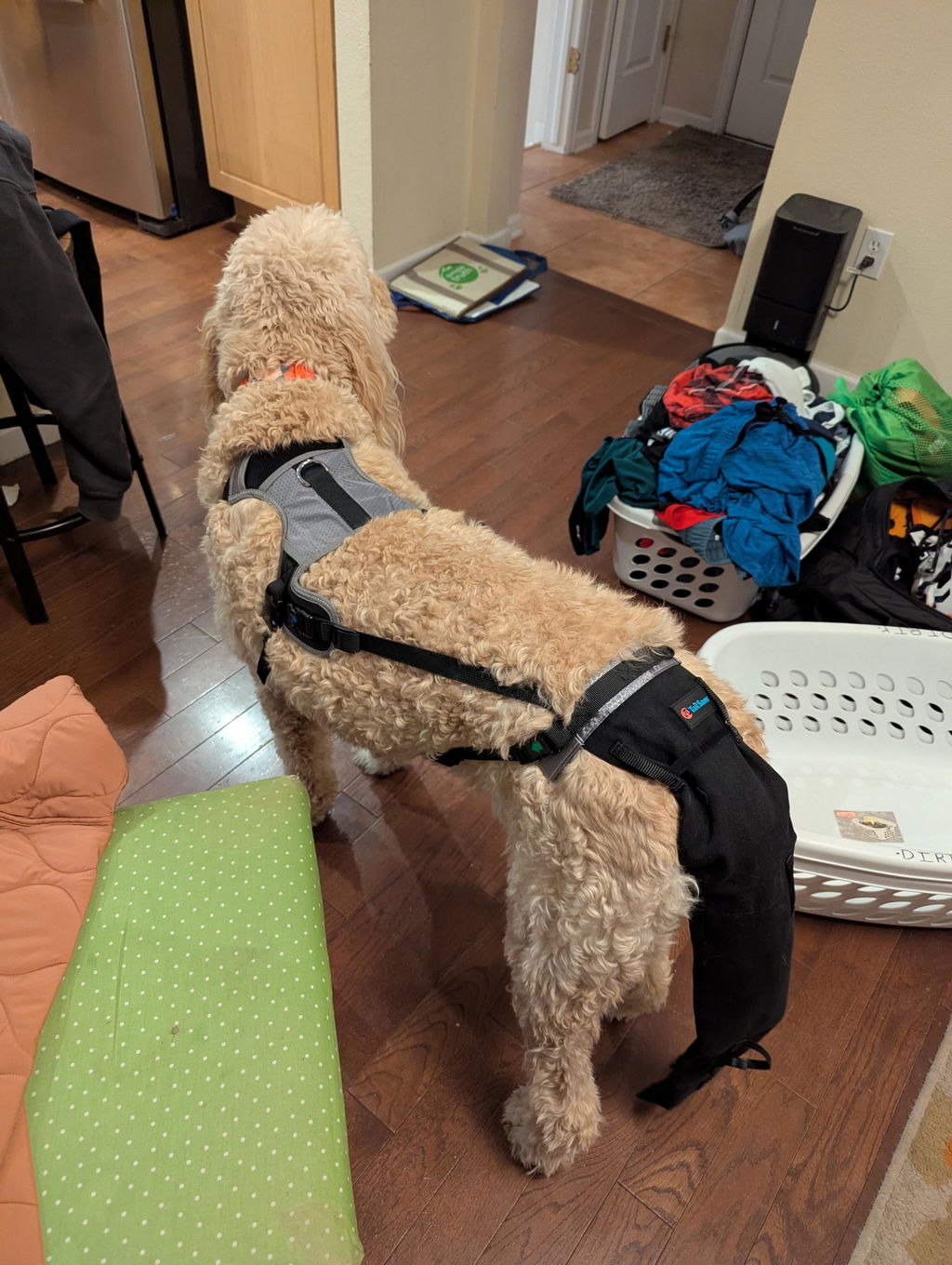
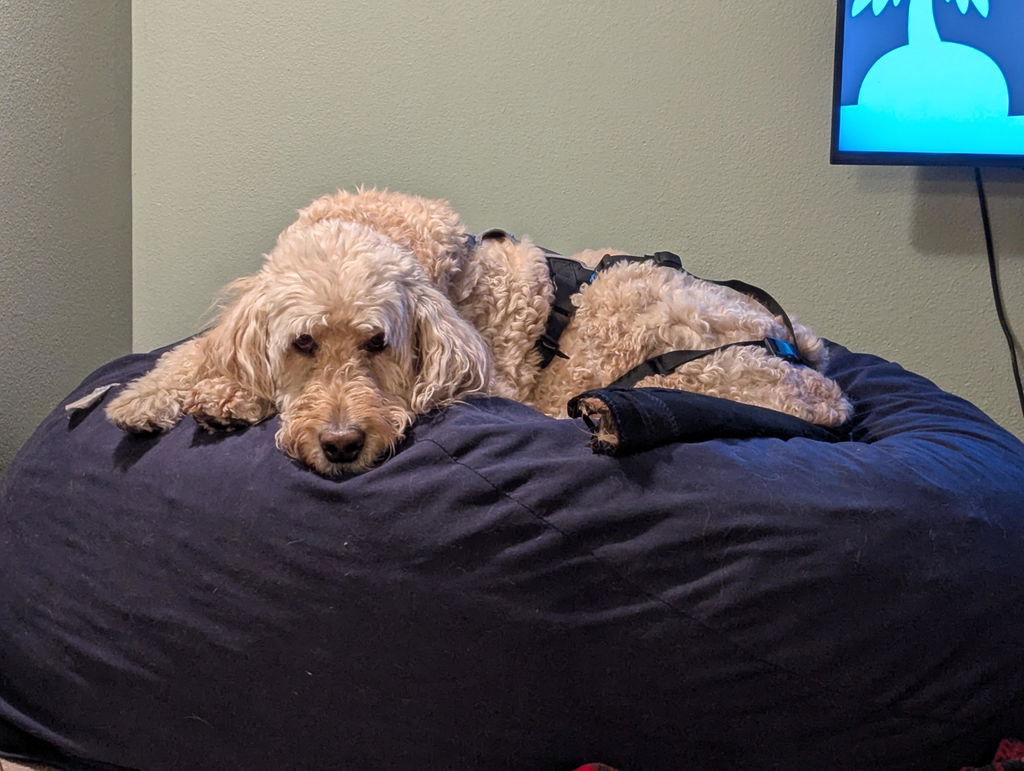
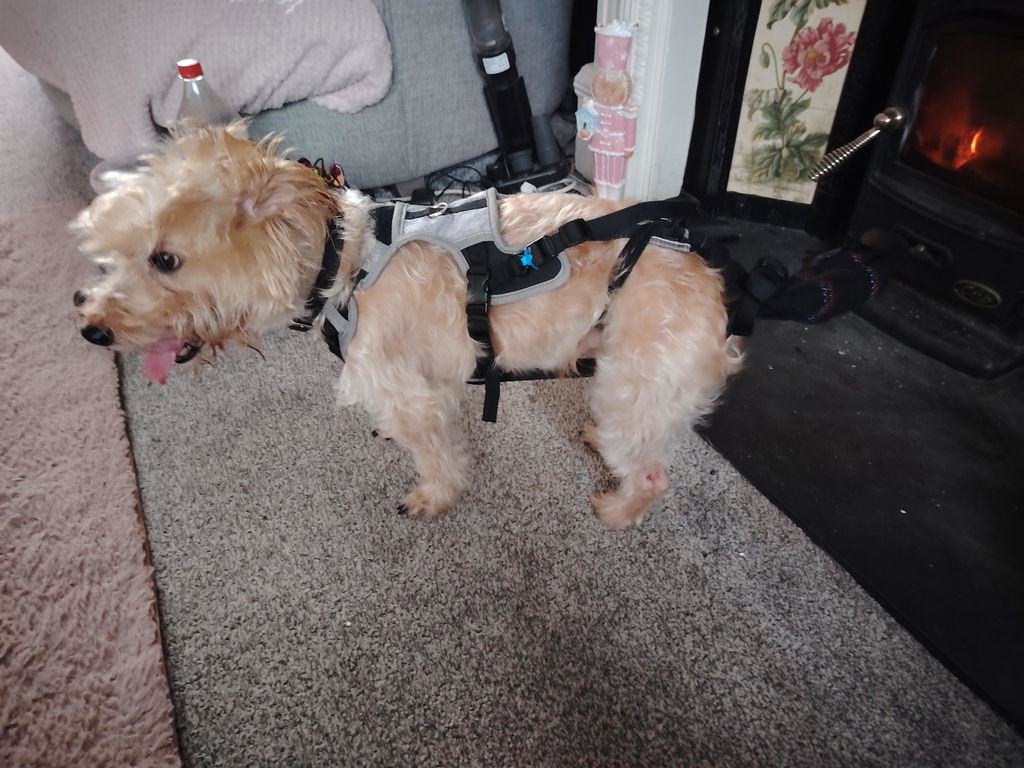
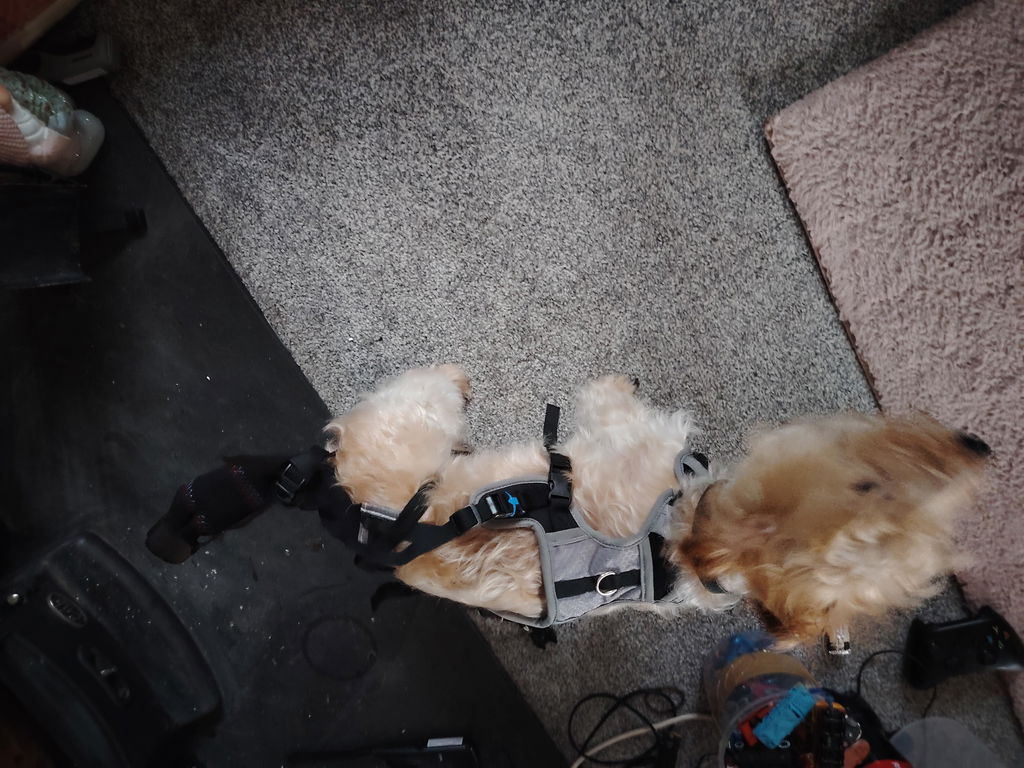
The K9 TailSaver® addresses the core mechanical problem: the sleeve is anchored to the dog's body via a full harness, so tail wag momentum does not dislodge it. Labs, even highly active ones, maintain the sleeve in position through running, playing, and sleeping. The padded canvas exterior prevents the dog from accessing the wound beneath, and a light sterile dressing can be placed under the sleeve to protect the wound between daily cleaning sessions.
Recovery timeline for Labs
- Stage 1–2 wounds: 7–14 days of continuous protection
- Stage 3 chronic wounds: 3–6 weeks; confirm full epithelialization before removing protection
- Stage 4 infected wounds: antibiotic course plus 4–8 weeks of wound management; healing timeline depends on infection severity
Prevention: Reducing Happy Tail Events in Labs Long-Term
After the wound heals, Labs remain at risk because the behavioral and environmental factors that caused the first injury do not change. Steps to reduce recurrence:
- Pad wall corners at Lab tail height in high-traffic areas
- Replace wire crates with X-pens to eliminate metal bar impact surfaces
- Manage greeting rituals — teach guests and family members to greet calmly to reduce peak-excitement wag sessions
- Consider tail tip padding for dogs that have suffered 2+ events: a lightweight tail protector worn during play and visitor interactions can prevent recurrence without restricting normal activity
Frequently Asked Questions — Labs and Happy Tail
My Lab had Happy Tail treated at the vet but it keeps coming back. What am I doing wrong?
Nothing — this is the normal pattern when the tail is only protected during vet
visits. Healing requires continuous protection, not intermittent bandaging. A harness-anchored
sleeve worn between vet visits is what breaks the cycle. See the
compliance guide if your Lab removes each device.
How do I measure my Lab for the K9 TailSaver?
Measure chest girth, back length, and body weight, then compare to the
sizing guide. Most adult male Labs fit L–XL.
Female Labs and slimmer builds typically fit M–L.
Can my Lab swim with the K9 TailSaver on?
Remove for swimming and baths. Reapply after the dog and wound are thoroughly dry.
The sleeve resists light moisture but is not waterproof and prolonged submersion
will saturate the padding.
Will this affect my Lab's tail wagging?
No. The anti-twist wag strap allows normal tail movement. The tail moves freely;
the sleeve simply rotates with it rather than fighting against it.