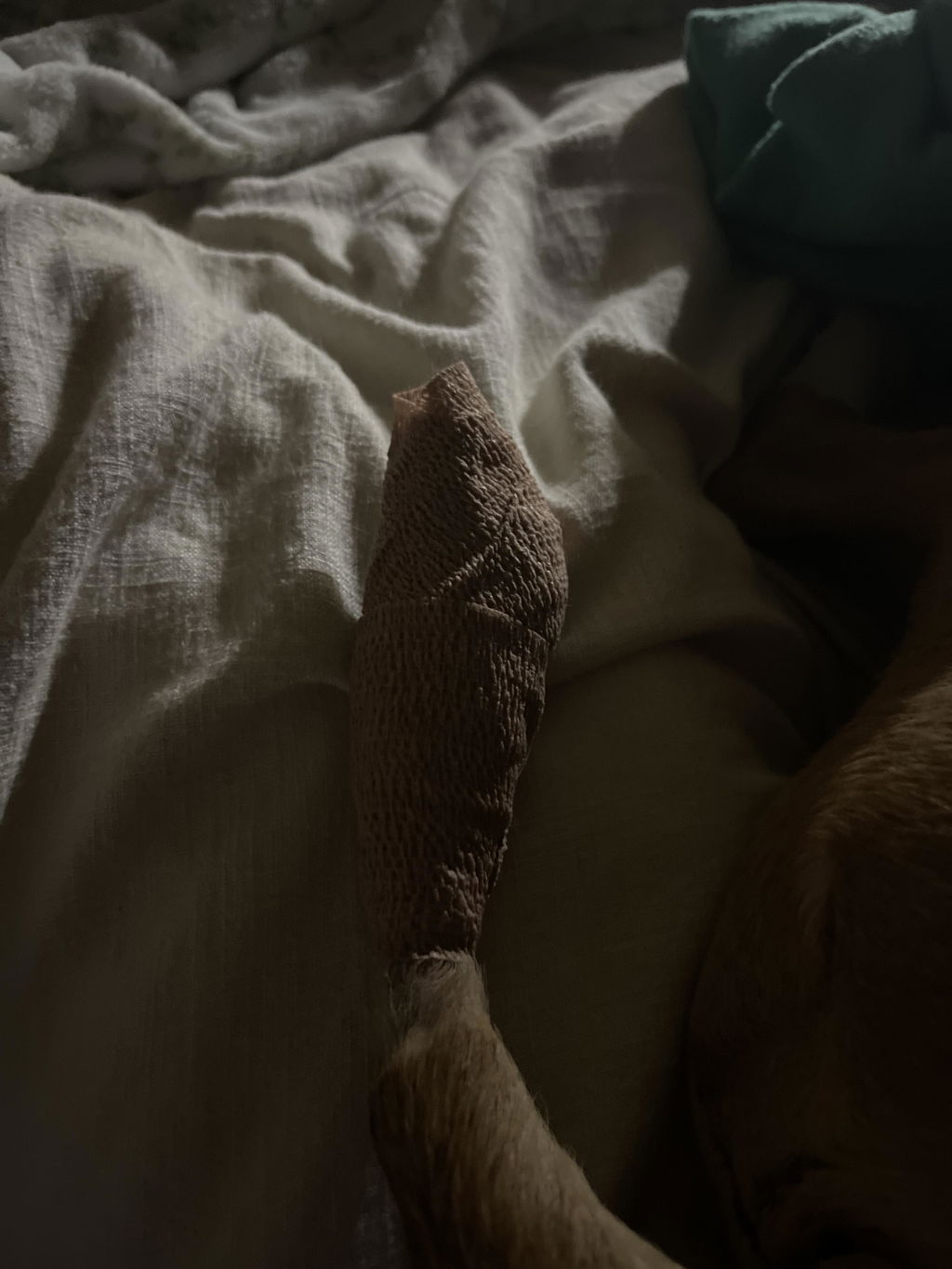
Happy Tail Syndrome: From Minor Abrasion to Chronic Wound
Happy Tail Syndrome Stages: Severity Classification and Stage-Specific Treatment
Happy Tail Syndrome does not present at one severity level. Whether a dog has a fresh minor abrasion or a wound that has been cycling open and closed for months changes what treatment is appropriate, what the healing timeline will be, and whether veterinary intervention is required before home management can succeed. This page provides a practical staging system to help owners and veterinarians identify the severity of a Happy Tail wound and choose the right treatment approach for each stage.
The Four Stages of Happy Tail Syndrome
Stage 1 — Superficial Abrasion
What it looks like: A small area of scraped or raw skin at the tail tip, usually less than 1 cm in diameter. Light bleeding or weeping may occur after an impact event. Between impact events, the wound appears partially or fully scabbed. The dog shows little behavioral change — it may briefly lick the area but is otherwise comfortable.
Risk level: Low, but deceptive. Stage 1 appears minor and is frequently dismissed by owners. Without protection, Stage 1 reliably progresses to Stage 2 within 3–7 days for active dogs.
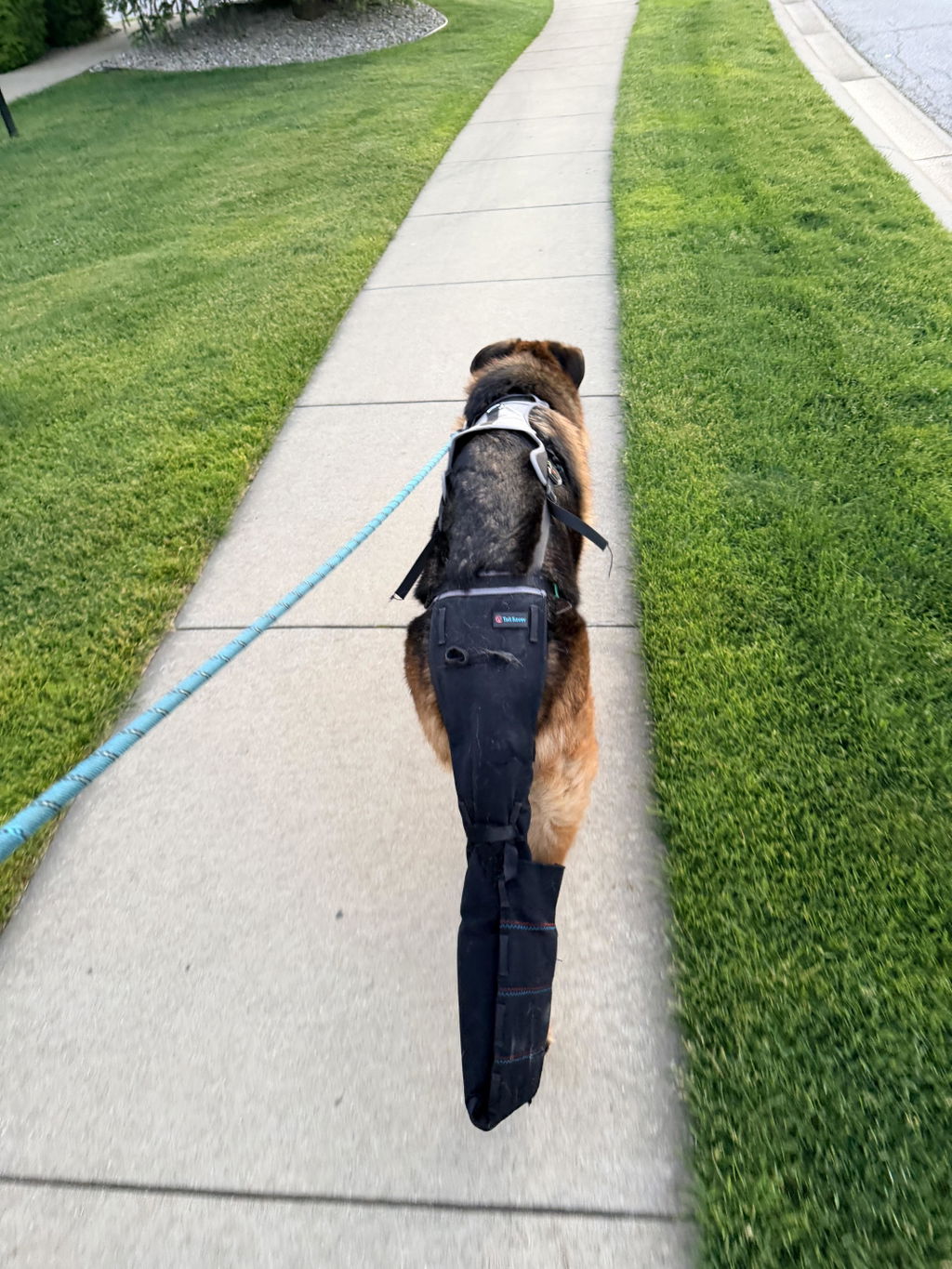
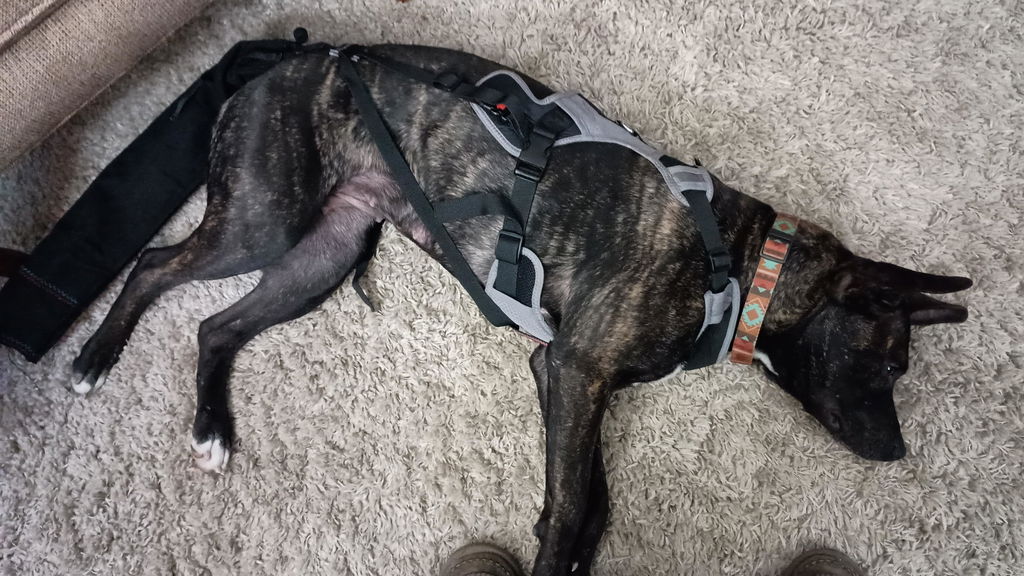
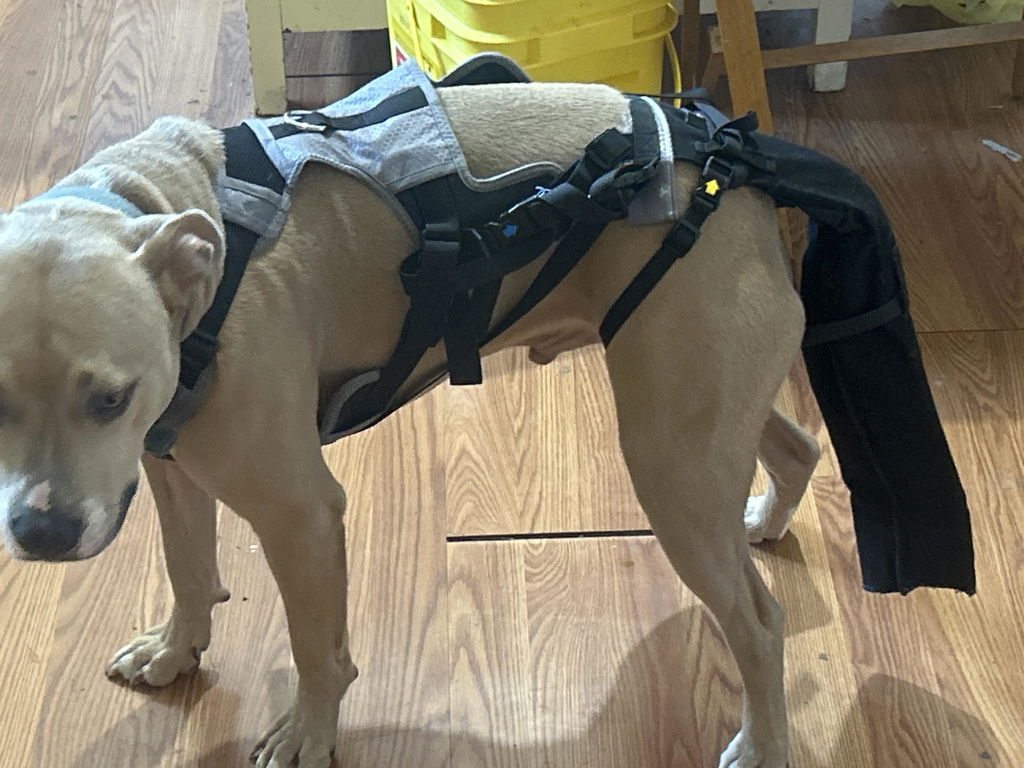
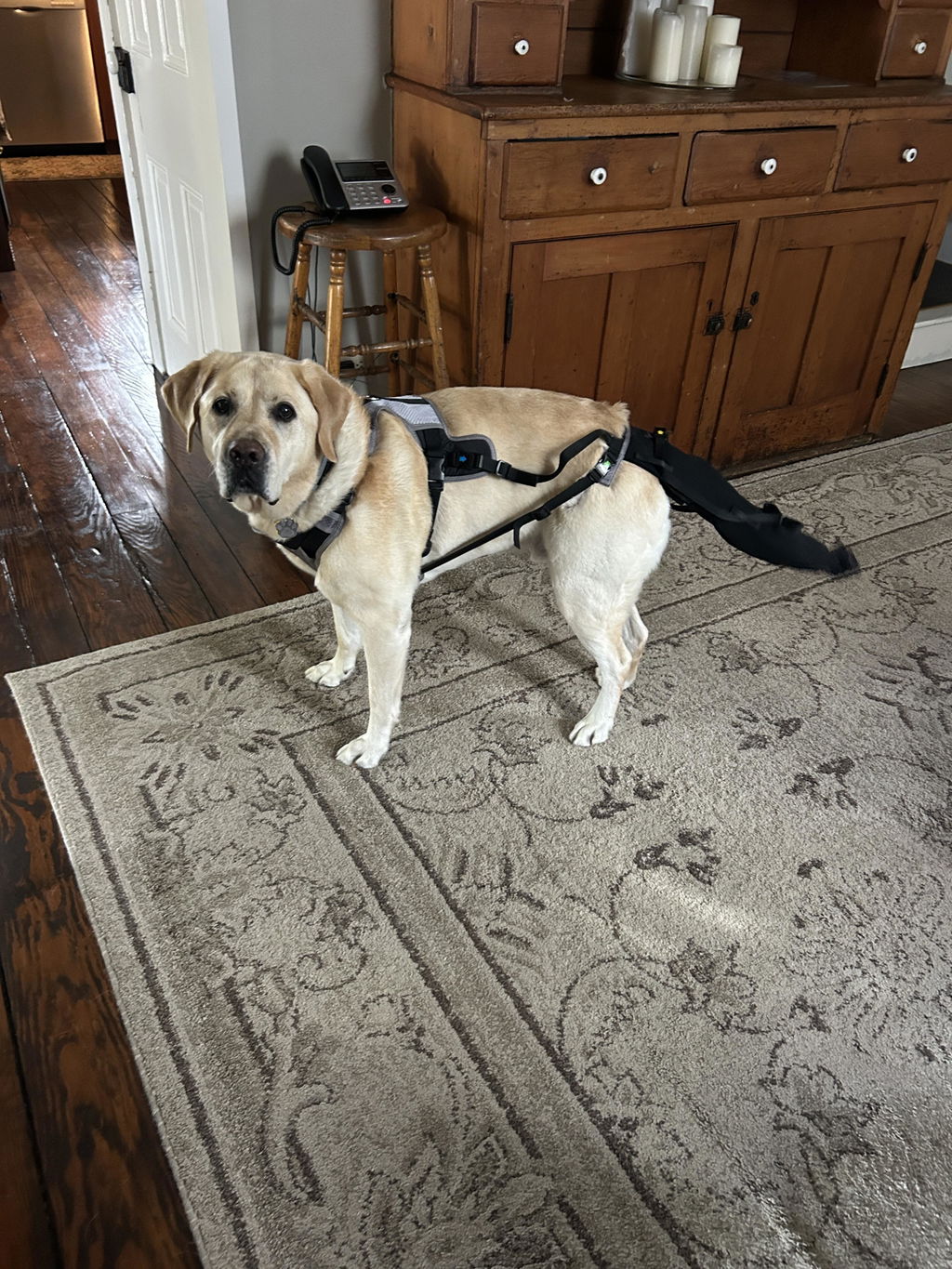
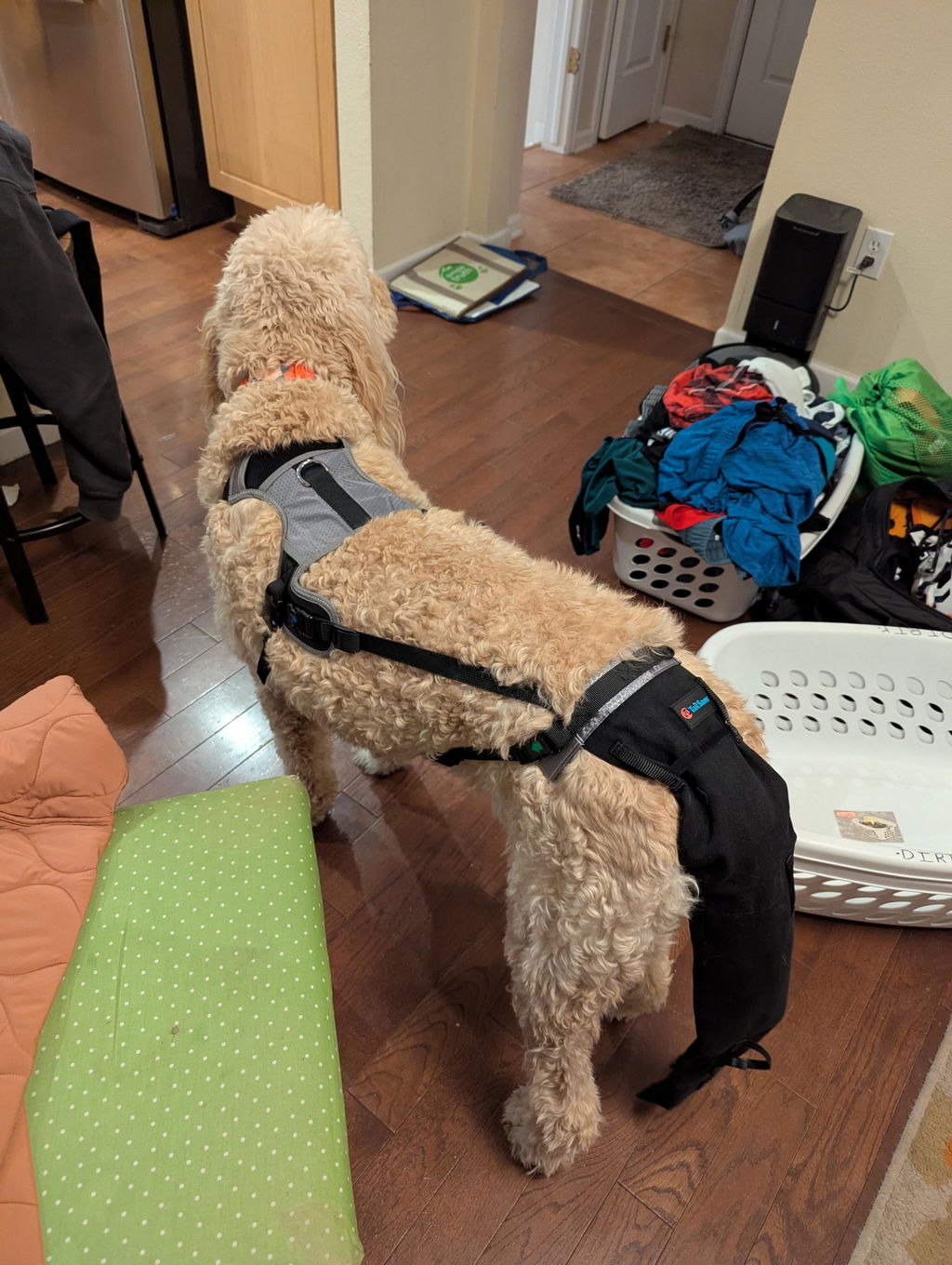
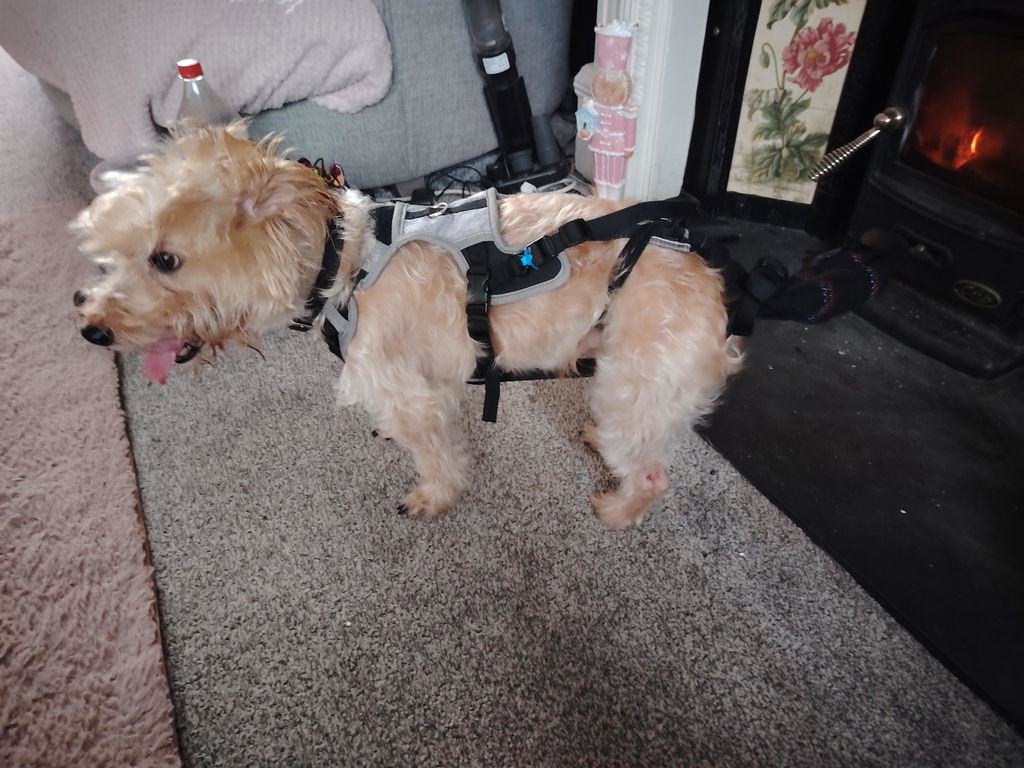
Treatment at Stage 1: This is the easiest and fastest stage to successfully heal. A non-stick dressing and K9 TailSaver® protection worn consistently for 7–10 days closes most Stage 1 wounds cleanly. Veterinary assessment is not urgently required if the wound is superficial, dry at the margins, and showing no infection signs.
Stage 2 — Open Wound Cycle
What it looks like: The wound is consistently open and actively weeping or bleeding after excited activity. A scab forms during rest periods but is torn off by the next vigorous wag. Blood spatter on walls and furniture after activity is the defining sign owners typically notice first. The wound may be 1–2 cm in diameter. Licking becomes more frequent as the dog focuses on the persistent wound.
Risk level: Moderate. Each failed healing cycle causes minor additional tissue damage. Repeated licking introduces bacteria. Without intervention, Stage 2 wounds progress to Stage 3 within 1–3 weeks.
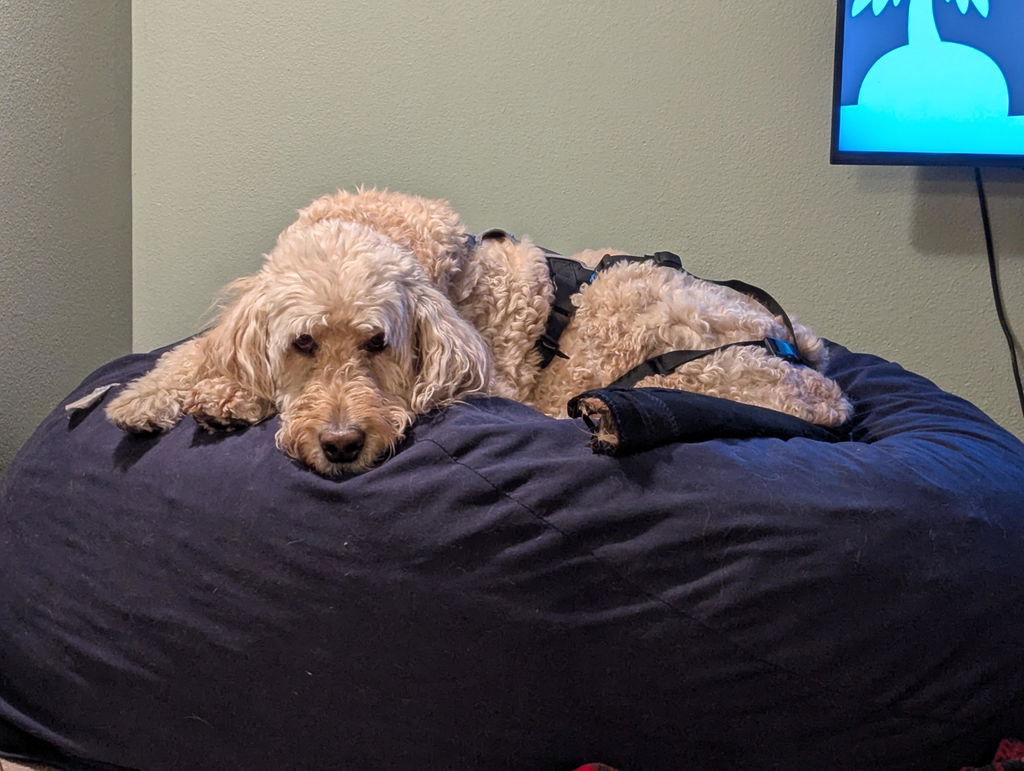
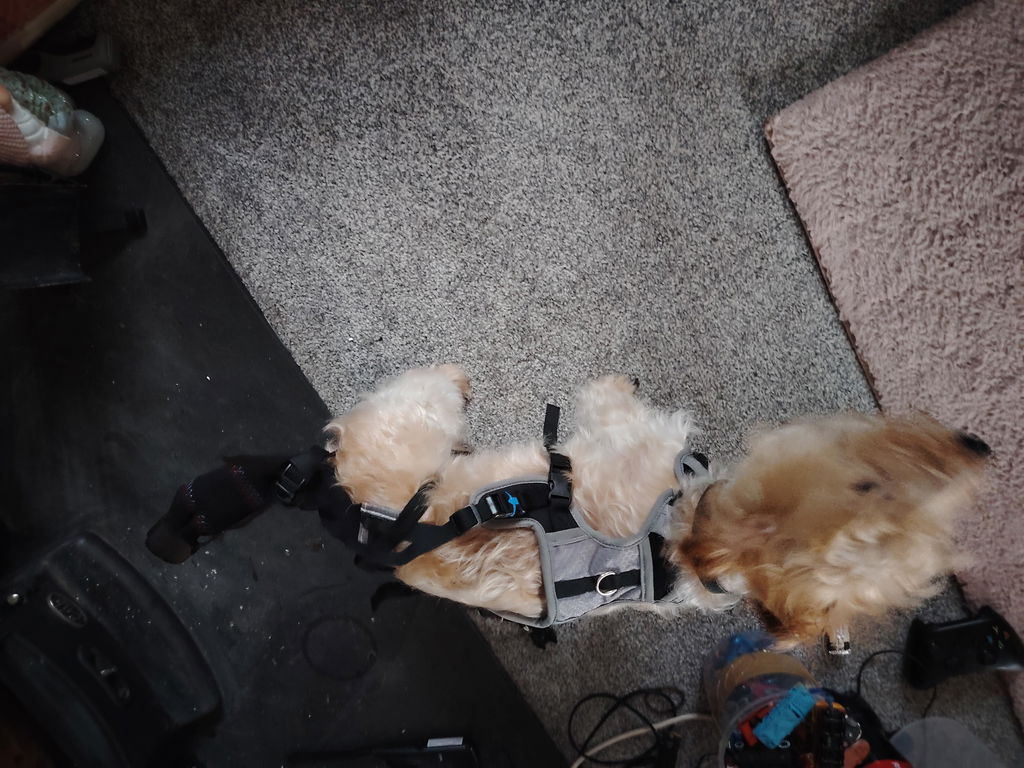
Treatment at Stage 2: Veterinary assessment is recommended to confirm no infection and to obtain wound cleaning guidance. The core treatment is continuous harness-anchored protection. With the K9 TailSaver applied consistently, most Stage 2 wounds heal within 2–4 weeks. The critical factor is eliminating all-unprotected periods, including nights.
Stage 3 — Chronic Non-Healing Wound
What it looks like: The wound has been open for 2+ weeks and has not made net progress toward closure. The wound edges may be starting to callus or thicken. The wound base may appear red and granulating (beefy red tissue). The dog has habituated to licking the wound regularly. Repeated bandage applications have left adhesive residue, contact dermatitis, or raw areas adjacent to the primary wound. Owners are often frustrated; multiple vet visits have produced temporary improvement but the wound reopens at home.
Risk level: High. Chronic wounds develop bacterial biofilms that resist healing independently. Tissue quality degrades with repeated trauma. The longer a wound cycles, the lower the chance of rapid closure even with correct treatment.
Treatment at Stage 3: Veterinary assessment is required. The vet should culture the wound for bacterial growth, assess for biofilm or deep tissue involvement, and prescribe targeted antibiotics if indicated. Once infection is controlled, begin the K9 TailSaver protocol with daily wound cleaning. Expect 4–8 weeks of healing from the point correct management begins. Do not remove protection at any point during this window.
Stage 4 — Severe: Exposed Bone, Deep Infection, or Failed Multiple Treatments
What it looks like: Bone, cartilage, or tendon is visible in the wound base. The wound has significant purulent discharge with foul odor. The dog may be systemically unwell (fever, lethargy, reduced appetite). The surrounding tissue may show signs of spreading infection (cellulitis: warmth, redness, and swelling extending beyond the wound margins). Multiple prior treatments have failed to achieve sustained improvement.
Risk level: Severe. Stage 4 wounds require urgent veterinary care. Bone infection (osteomyelitis) at the tail tip is painful, difficult to resolve with antibiotics alone, and may require surgical debridement or partial amputation.
Treatment at Stage 4: Emergency vet visit. Do not attempt to manage Stage 4 at home. Surgical debridement, targeted systemic antibiotics based on wound culture results, and potentially partial tail amputation may be necessary. The K9 TailSaver can be used for post-surgical wound protection after surgical management has addressed the acute crisis.
How Stage Determines Healing Timeline
| Stage | Wound Duration | Typical Healing Time (with correct protection) | Vet Required? |
|---|---|---|---|
| Stage 1 | < 3 days | 7–10 days | Optional |
| Stage 2 | 3 days to 2 weeks | 14–28 days | Recommended |
| Stage 3 | 2+ weeks | 4–8 weeks | Required |
| Stage 4 | Variable; severe | 6–12+ weeks post-surgical | Emergency |
Monitoring: How to Track Stage Progression During Treatment
Photograph the wound at the same time each day during daily cleaning. Use the photograph series to assess whether the wound is:
- Improving: Wound boundary is consistently smaller; less discharge; wound surface is transitioning from raw red to pink-grey (early epithelium)
- Stable with no progress: Wound size unchanged over 5+ days; consider whether protection is truly continuous, whether infection is present, or whether systemic screening is needed
- Worsening: Wound is enlarging, developing odor, or showing signs of spreading infection; escalate to vet immediately
Stage FAQ
My dog's wound was Stage 1 and I started treatment, but now it looks like Stage 2. Did I do something wrong?
Not necessarily. Stage 1 wounds can briefly appear larger at the start of treatment because proper cleaning removes the scab and reveals the true wound area. As long as the wound is not showing infection signs and is consistently protected, this initial apparent worsening is normal.
Can a Stage 3 wound heal without surgery?
Yes — but it requires antibiotic treatment if infection is present, then extended consistent protection. Seek the Veterinary help and begin K9 TailSaver protection simultaneously with the antibiotic course. Surgery is appropriate if medical management fails after a full 6–8 week trial.
How do I know my dog has reached Stage 4?
Visible bone or tendon in the wound base, significant foul odor, colored purulent discharge, or a dog that is systemically unwell are Stage 4 indicators. Any of these signs require same-day vet contact — do not wait for a scheduled appointment.