Great Dane Happy Tail Syndrome: Causes, Treatment & Recovery
Great Dane Happy Tail Syndrome: Why This Breed Is at Highest Risk
If there is one breed veterinarians associate most closely with Happy Tail Syndrome, it is the Great Dane. The combination of an extremely long, heavy tail, a powerful wag, and a dog that lives at wall-height means every excited tail swing carries enough force to split skin. Great Dane owners know the pattern well: a minor looking wound at the tail tip, a brief improvement, and then blood on the walls again. This guide explains why Great Danes are so vulnerable and what treatment actually works for a breed this size.
Why Great Danes Are Uniquely Prone to Happy Tail Syndrome
Several anatomical and behavioral factors combine to make Great Danes the highest-risk breed for Happy Tail Syndrome:
- Tail length and leverage: A Great Dane tail can measure 18–24 inches from base to tip. At that length, even a moderate wag generates significant tip velocity. The tail tip strikes surfaces with considerably more force than the same wag from a smaller breed.
- Tail set and height: Great Danes carry their tails at a height that aligns perfectly with wall corners, door frames, furniture edges, and kennel bars. Every environmental object in a house becomes a potential impact point during excitement.
- Wag power vs. healing capacity: The skin at the tail tip is thin and poorly vascularized. Repeated blunt trauma prevents the new capillary networks required for wound closure from forming before the next impact destroys them.
- Indoor living in small spaces: Great Danes are kept indoors despite their size. Standard rooms, hallways, and crates are not proportioned for a dog with a 2-foot tail radius. The tail strikes surfaces hundreds of times daily.
Recognizing Happy Tail Syndrome in a Great Dane
In a Great Dane, the scale of the injury is often alarming. Blood spatter from a single wagging session can reach several feet up a wall. Owners sometimes mistake this for a severe injury requiring emergency care when the wound itself may be relatively superficial — it is the volume of wagging that causes the apparent severity. Key signs:
- Red, raw, or scabbed wound at the tail tip; may appear crusty between wag sessions
- Blood on walls, furniture, baseboards, and ceilings at Great Dane tail height
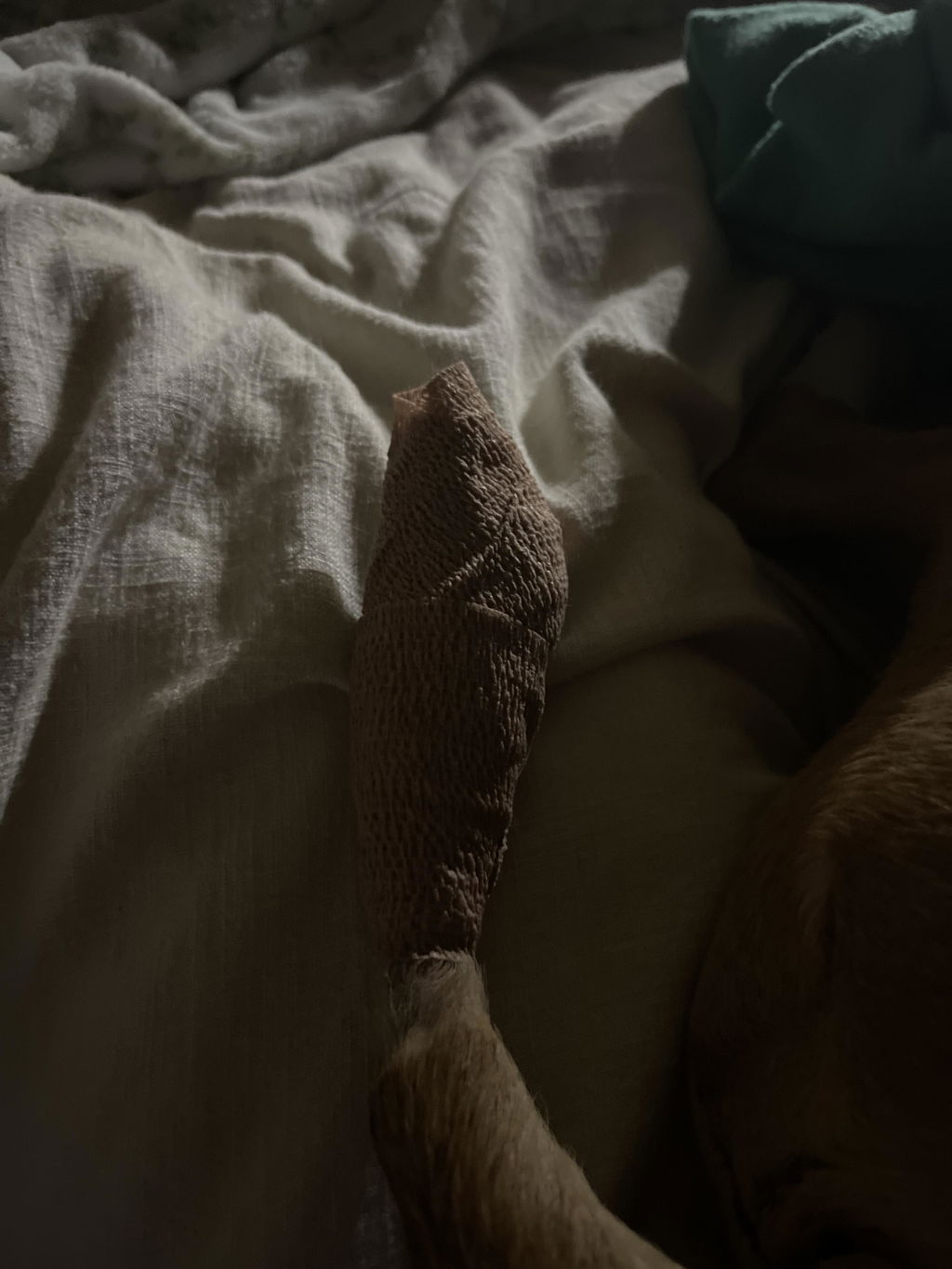
- Wound reopens repeatedly despite bandaging at vet visits
- Dog does not appear to be in severe pain — continues wagging normally
- Swelling or warmth along the tail tip (infection from repeated exposure)
Why Standard Bandaging Fails on Great Danes
The standard veterinary approach — clean the wound, apply cohesive bandage, advise rest and rechecks — has a documented failure rate for Great Dane Happy Tail. The reasons are mechanical:
- A Great Dane's tail generates enough force on impact to shear a standard cohesive bandage off within hours. The bandage is not designed to absorb repeated lateral and rotational loads.
- The long tail creates a significant mechanical arm. Any sleeve or bandage placed at the tip acts like a flag on the end of a whip during a vigorous full-body wag.
- Elizabethan collars cannot prevent a Great Dane from reaching the tail tip. These dogs have the body length and spinal flexibility to arc around even large cones.
Veterinarians familiar with Great Dane Happy Tail typically acknowledge early that bandaging alone is insufficient and recommend a harness-anchored protection system.
Effective Treatment: What Works for Great Dane Happy Tail
Successful recovery from Great Dane Happy Tail requires solving four problems simultaneously: wound coverage, impact protection, licking prevention, and secure anchoring through continuous tail movement.
Step 1: Veterinary assessment
Before beginning home management, confirm there is no infected tissue, bone exposure, or fracture at the tail tip. Great Danes with long-standing Happy Tail wounds can develop osteomyelitis (bone infection) that requires antibiotic intervention before healing is possible. If the wound smells, has colored discharge, or has been chronic for more than 3 weeks, see your vet before starting home management.
Step 2: Apply a non-stick dressing under the tail sleeve
Do not apply bandage directly to a raw wound. Use a sterile Telfa pad or similar non-adherent dressing over the wound before placing any protective sleeve. This prevents dressing changes from disrupting newly forming tissue.
Step 3: Use a harness-anchored tail sleeve
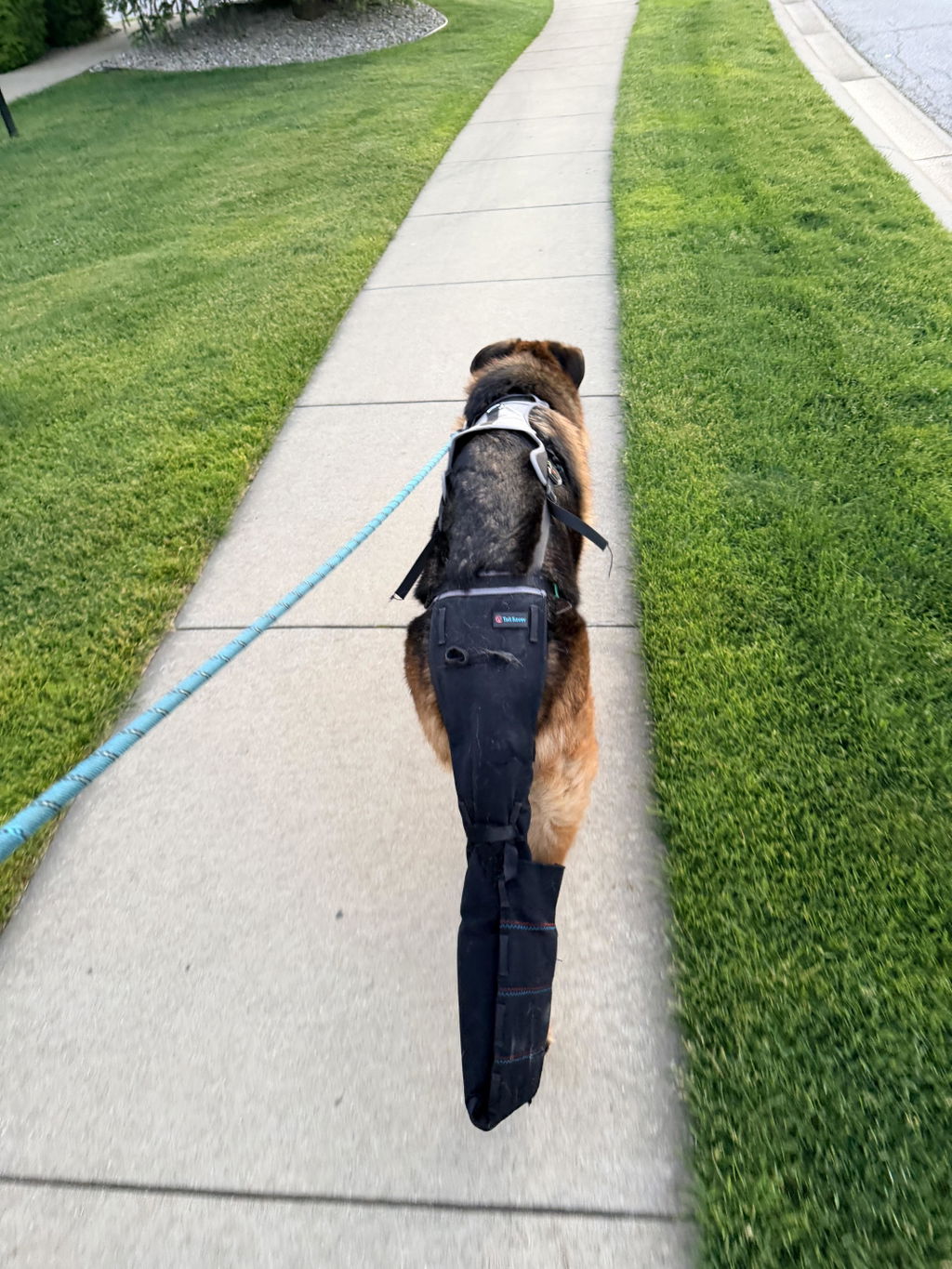
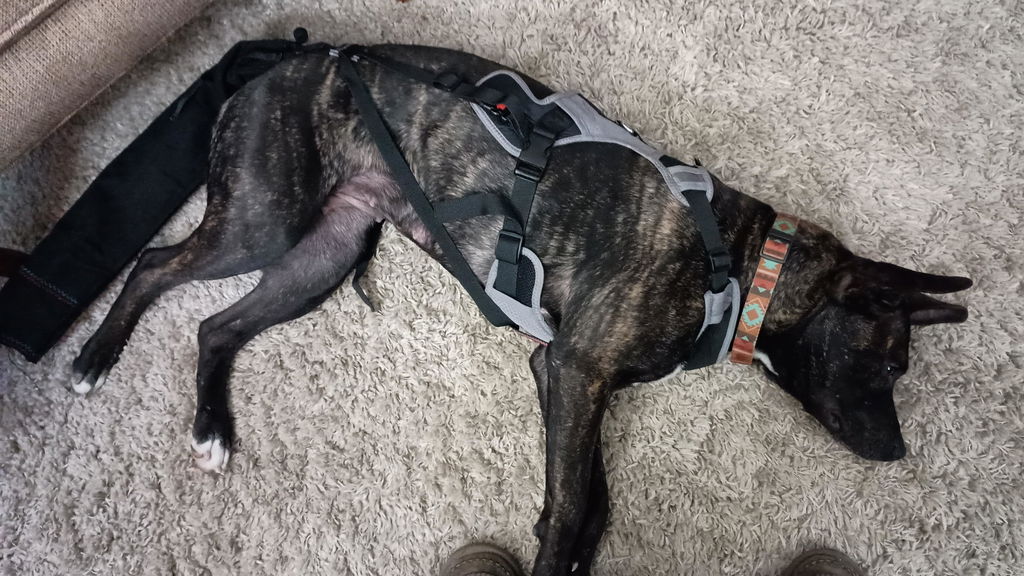
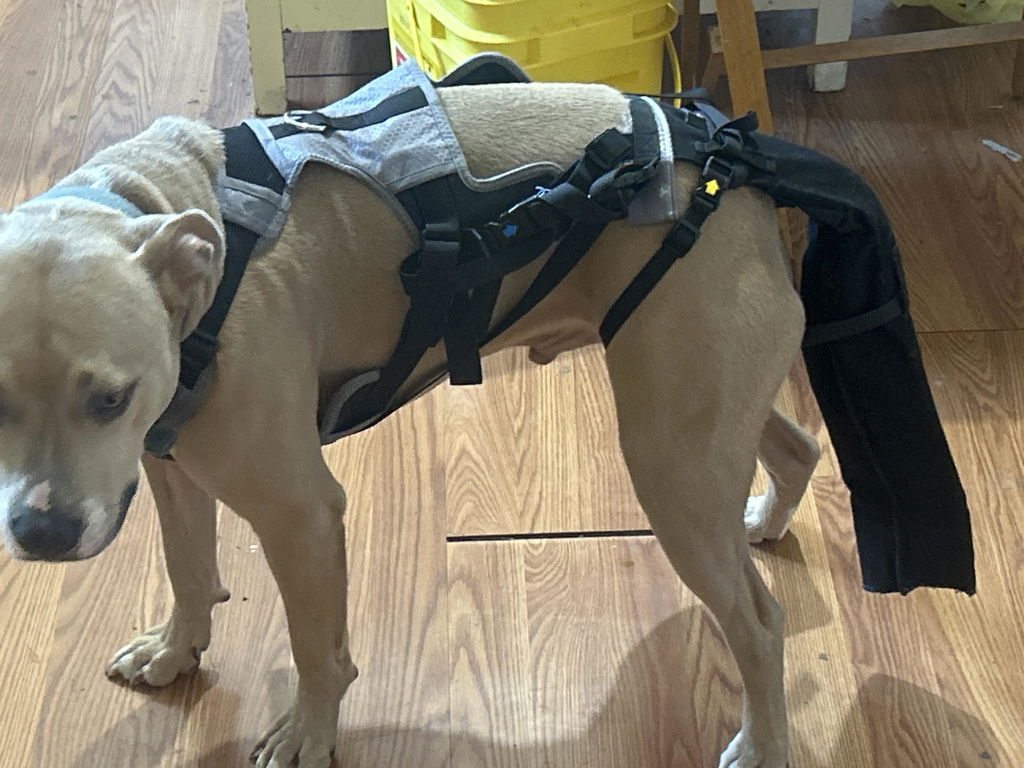
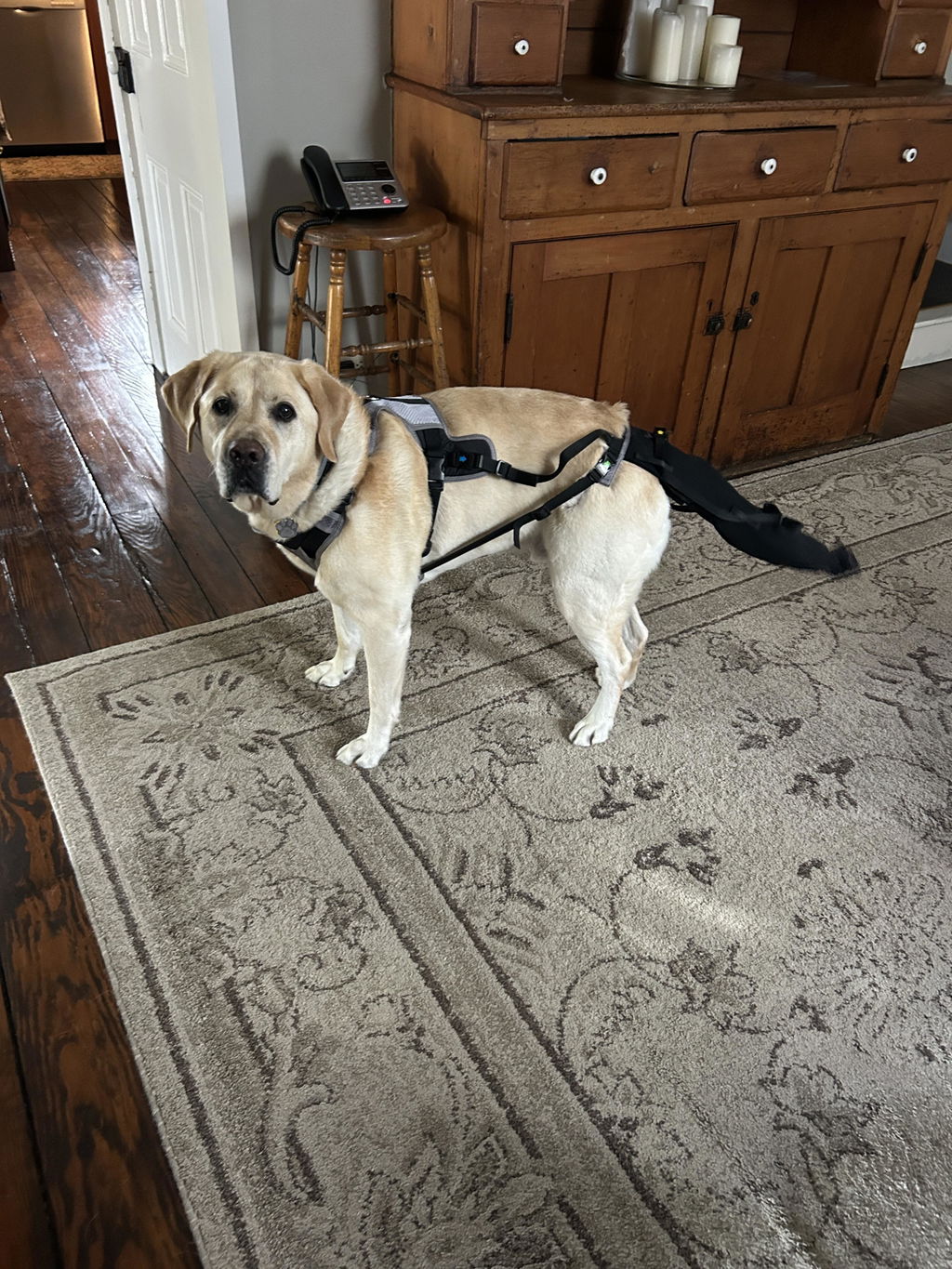
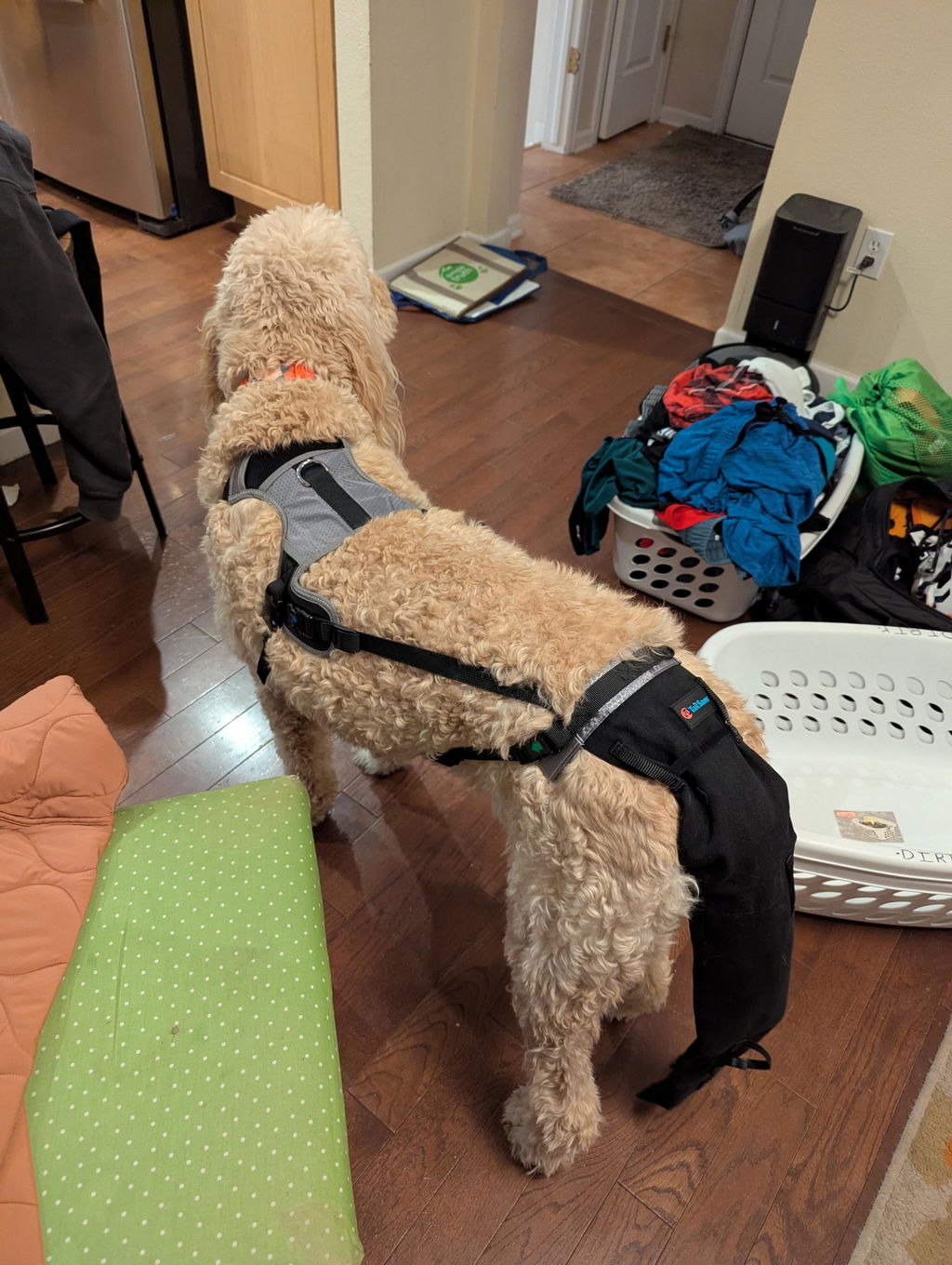
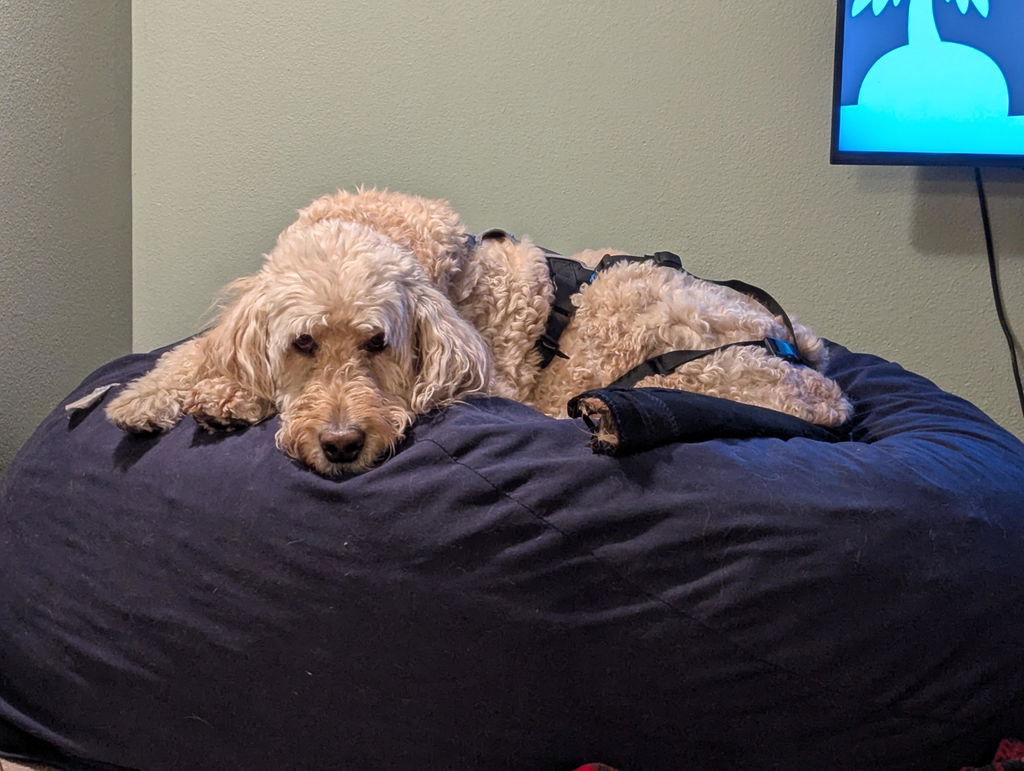
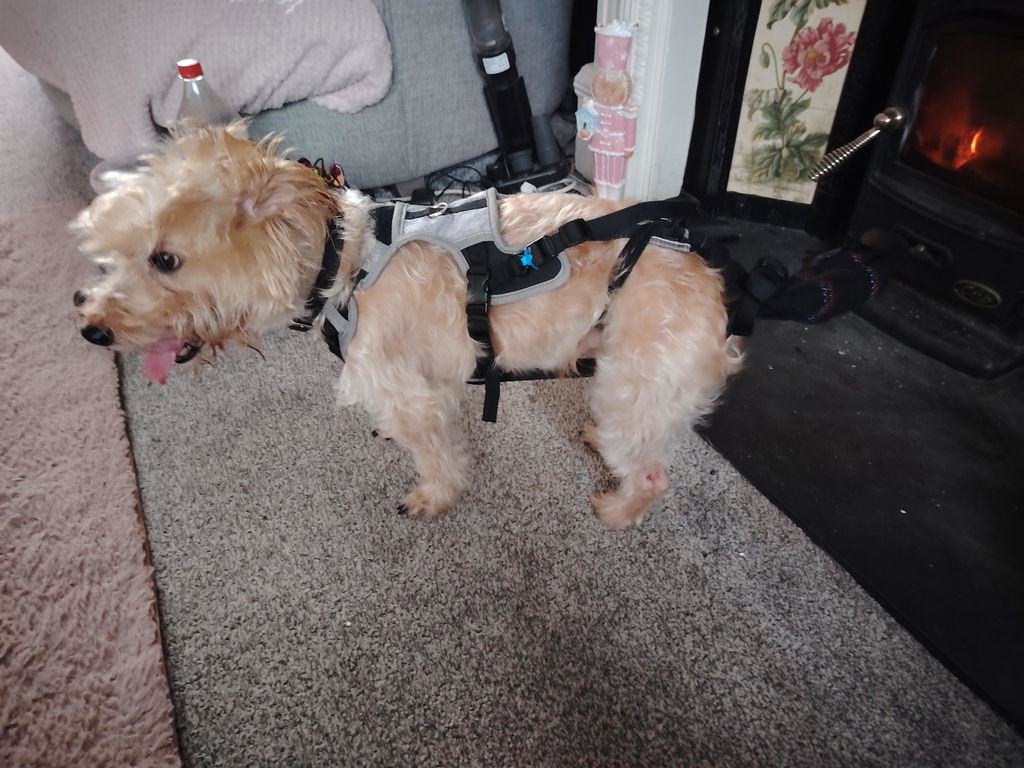
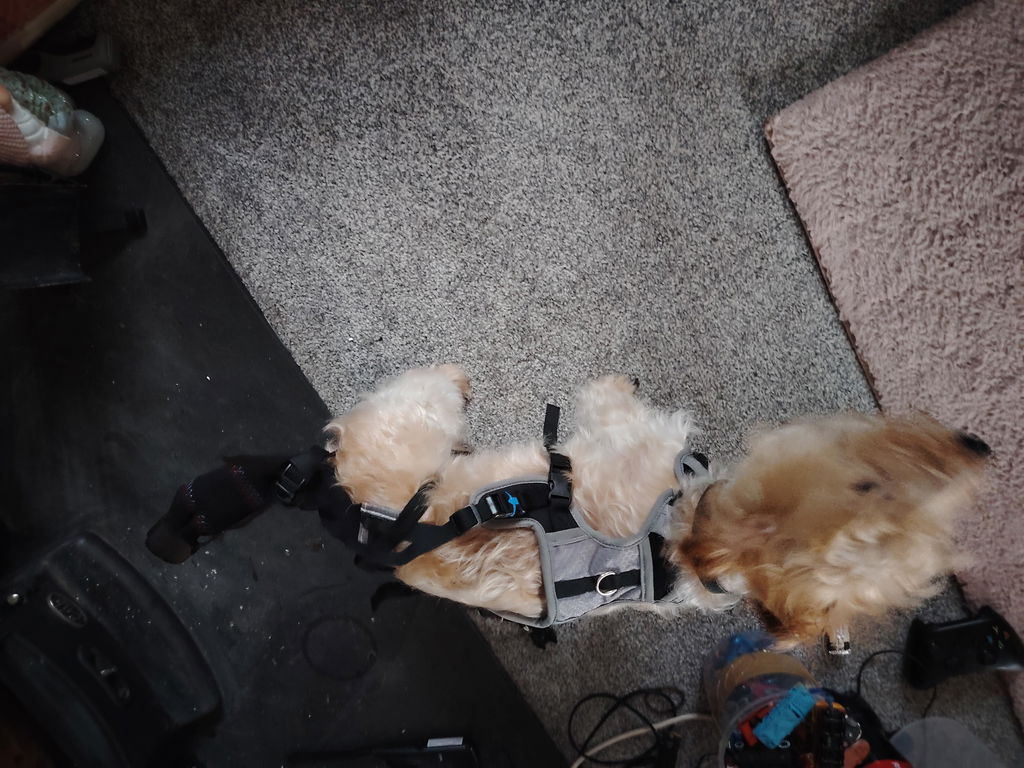
The K9 TailSaver® is sized for large breeds including Great Danes (sizes up to 3XL). The padded canvas sleeve covers the wound and dressing, while the full-body harness anchors the sleeve to the dog's body. This means tail wag momentum does not shear the sleeve off — the sleeve moves with the tail rather than against it because the anchor point is the body, not the tail itself.
Step 4: Maintain protection 24/7 until full epithelialization
The most common mistake in Great Dane Happy Tail recovery is removing protection too soon. The wound must be covered continuously until new skin has completely grown across the entire wound surface with no remaining raw area. For a Great Dane with a chronic wound, this can take 4–8 weeks of consistent protection.
Environmental Modifications to Reduce Re-injury
While the tail is healing — and after recovery if your Great Dane has suffered multiple Happy Tail events — modifying the environment reduces re-injury risk:
- Pad wall corners: Foam corner protectors installed at Great Dane tail height on high-traffic corners reduce the impact force when a tail makes contact.
- Replace wire crates: Metal crate bars are a primary Happy Tail impact surface. Switch to an exercise pen (X-pen) or a larger soft-sided crate that does not have rigid bars at tail height.
- Manage excitement transitions: Greeting routines (arrivals home, visitors entering) are peak impact moments. Ask guests to greet calmly until the wound has healed.
- Room configuration: Move furniture to give the dog's tail a clear swing path in their most-used resting areas.
When Amputation Is and Isn’t Necessary
Partial tail amputation (tail docking at the injury site) is sometimes presented as the only long-term solution for Great Dane Happy Tail. While it is sometimes the right answer — particularly for dogs with 3+ severe events, exposed bone, or failed multiple treatment courses — it should not be the first response.
Many Great Danes documented as "surgical candidates" have achieved full wound closure with 4–6 weeks of consistent harness-anchored protection. Ask your veterinarian to allow a supervised conservative trial before scheduling surgery.
Great Dane Happy Tail FAQ
My Great Dane's tail tip is bleeding constantly. What do I do right now?
Apply gentle pressure with sterile gauze for 10 minutes in a quiet room. If bleeding
does not slow, or if bone is visible, go to an emergency vet. If bleeding slows and
the wound is superficial, apply a non-stick dressing and order the
K9 TailSaver®
while keeping the wound covered with the dressing and a loose bandage.
Can a Great Dane wear the K9 TailSaver all day?
Yes. The system is designed for 24/7 wear. Great Danes can eat, sleep, walk, and
use the bathroom normally while wearing it. Remove only for daily wound cleaning.
Will my Great Dane chew off the tail sleeve?
The harness anchor prevents the dog from getting into a position to access the
sleeve tip. Most Great Danes accept the device within 48 hours. See the
Chewing & Compliance FAQ
if your dog persists in attempting removal.
My vet has never heard of the K9 TailSaver. Should I still use it?
Yes. Print the product page and the
Vet & Safety FAQ
and bring them to your appointment. Many veterinarians have adopted it after
seeing outcomes in their patients.