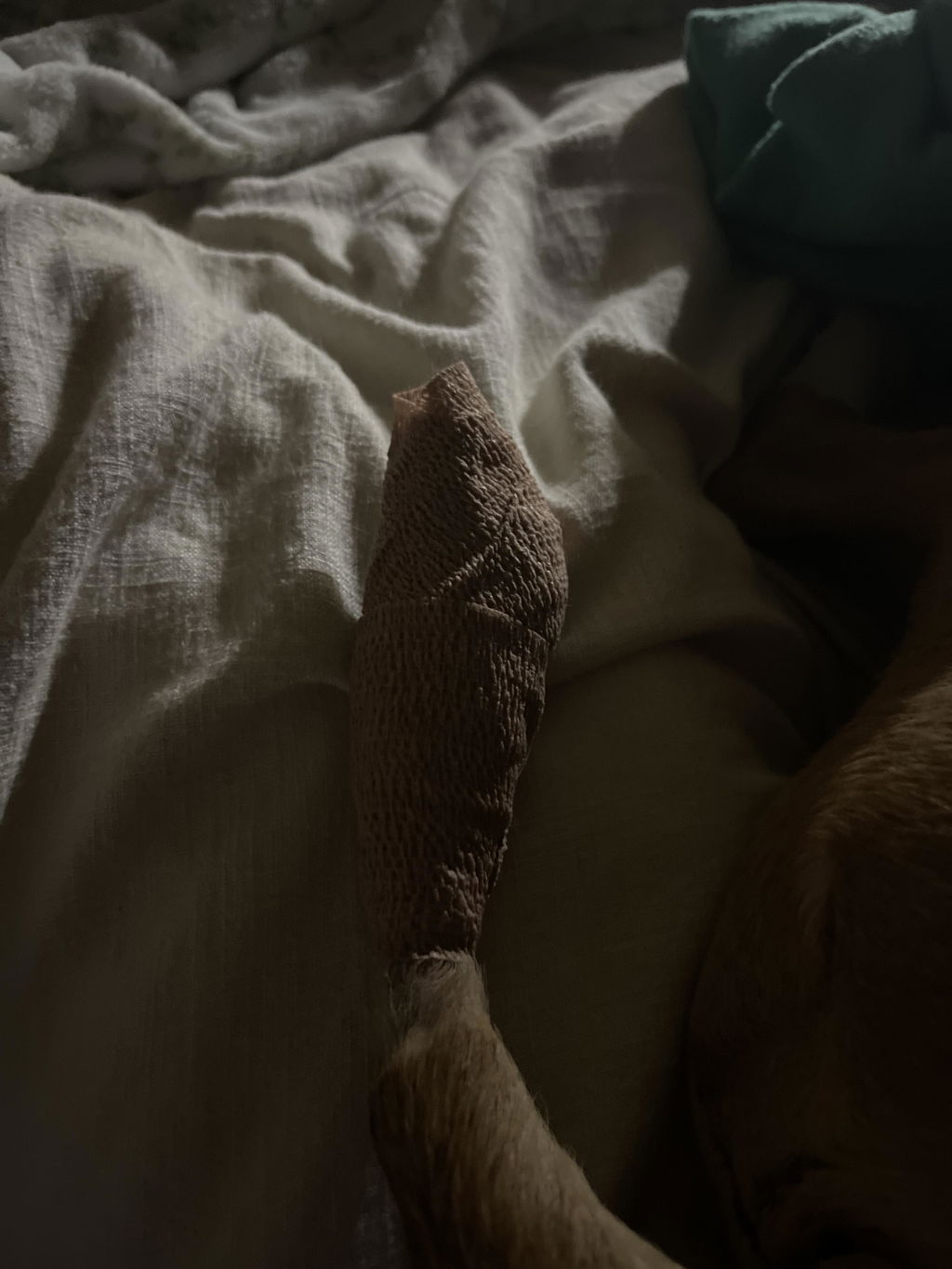
Dog Tail Bandage Keeps Falling Off: Why It Happens and What Actually Works
Dog Tail Bandage Keeps Falling Off: The Mechanical Reason and What to Use Instead
You are not doing it wrong. If your dog's tail bandage falls off within hours despite careful application — or slides down, gets chewed off, or flings off during a wag episode — the problem is not technique. It is the fundamental incompatibility between standard bandage design and the mechanical forces generated by an active, wagging dog tail. This page explains exactly why bandaging fails on dog tails specifically, and what actually works as a long-term replacement.
Why Dog Tail Bandages Don't Stay On
Problem 1: The tail is a taper, not a cylinder
Standard cohesive bandage and wound wrap are designed for cylindrical anatomy: limbs, wrists, ankles. A dog tail tapers from base to tip — it is widest near the body and narrowest at the tip where the wound is. Any wrap applied to tapered anatomy will migrate toward the narrow end (the injured tip) under even mild mechanical force. Securing a bandage around a narrower point than the wrap is designed for is fundamentally unstable.
Problem 2: Wag forces are lateral, rotational, and cyclical
Wound bandages are designed for stationary wound sites. A leg after surgery is rested; the bandage primarily needs to resist gravity. A dog tail with Happy Tail Syndrome experiences lateral impact forces (tip striking wall), rotational torque (during the wag arc), and cyclical flex stress (hundreds of wag cycles per day). Standard cohesive bandage fails under these forces in hours.
Problem 3: No proximal anchor point
Every successful bandage has an anchor: the bandage is applied above a structure wide enough to prevent migration (above the knee on a limb, for example). The tail has no such equivalent anchor. The tail base is the widest point but applying a tight bandage at the tail base causes circulatory restriction and is dangerous. There is no safe anchor point on the tail itself between the wound and the body.
Problem 4: Water, sweat, and movement cause adhesion failure
Cohesive bandage adhesion depends on surface contact and minimal moisture. Dog tail skin is thin and mobile. Normal body heat and the movement of tail hair against the bandage surface degrades adhesion rapidly, even before any impact.
Common "Fixes" That Also Fail (and Why)
| Attempted Fix | Why It Fails |
|---|---|
| Adding more layers of bandage | More layers = more weight, more instability at the tip. Falls off faster. |
| Taping to tail hair | Hair tears free from follicles before tape loses adhesion. Causes pain and wound extension. |
| Applying adhesive directly to skin | Dog tail skin is thin and contact-sensitive; adhesive causes dermatitis that worsens the wound. |
| Using sock or tube over bandage | Still no anchor point; sock migrates the same direction as the bandage, and faster. |
| Elizabethan collar to prevent chewing | Does not address the core problem (impact); most dogs can reach tail around collar. Doesn't prevent wag impact. |
| Bitter spray deterrent | Washes off within an hour; most dogs habituate to the taste within 24-48 hours. |
What Actually Stays On: The Harness-Anchor Solution
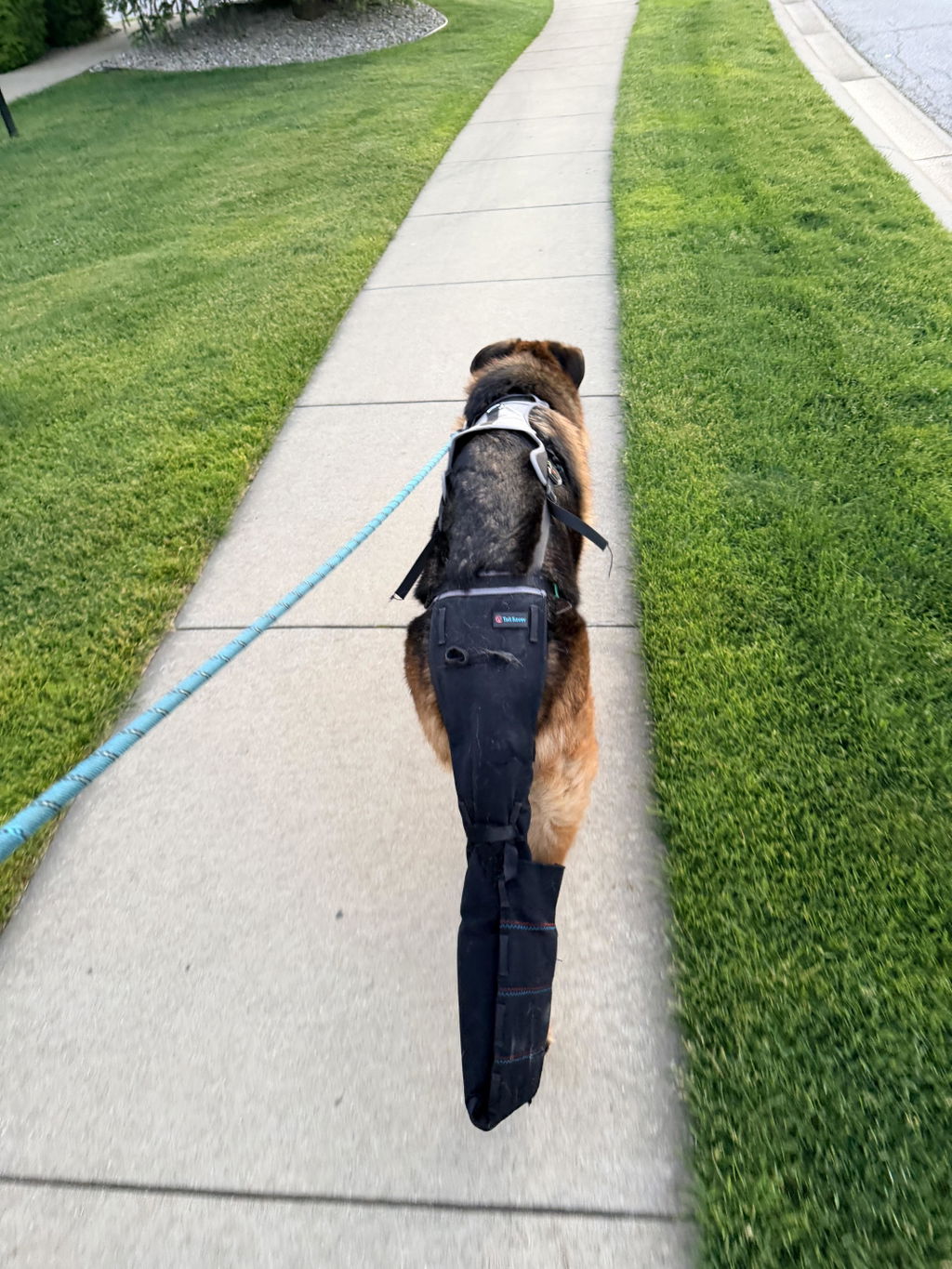
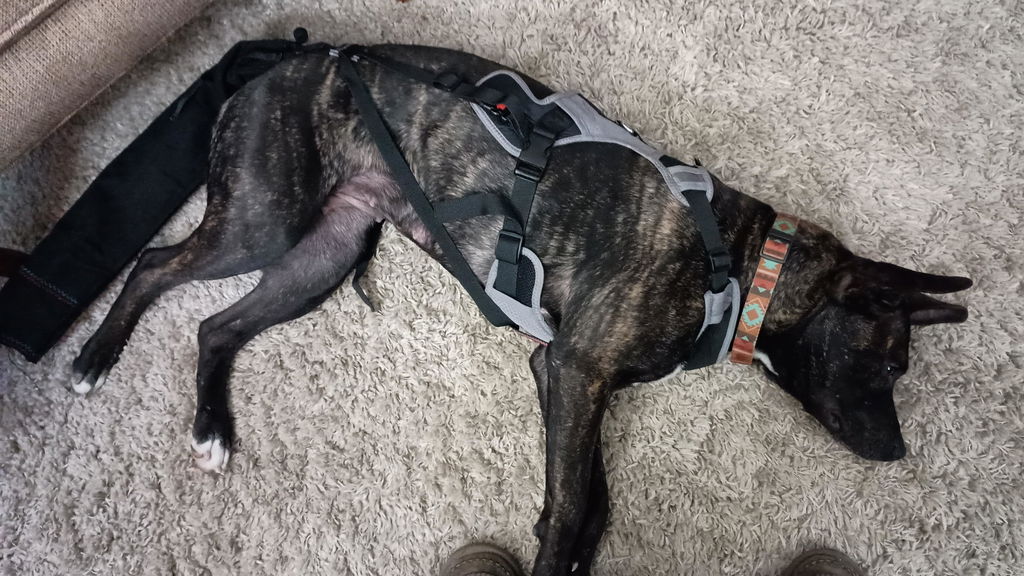
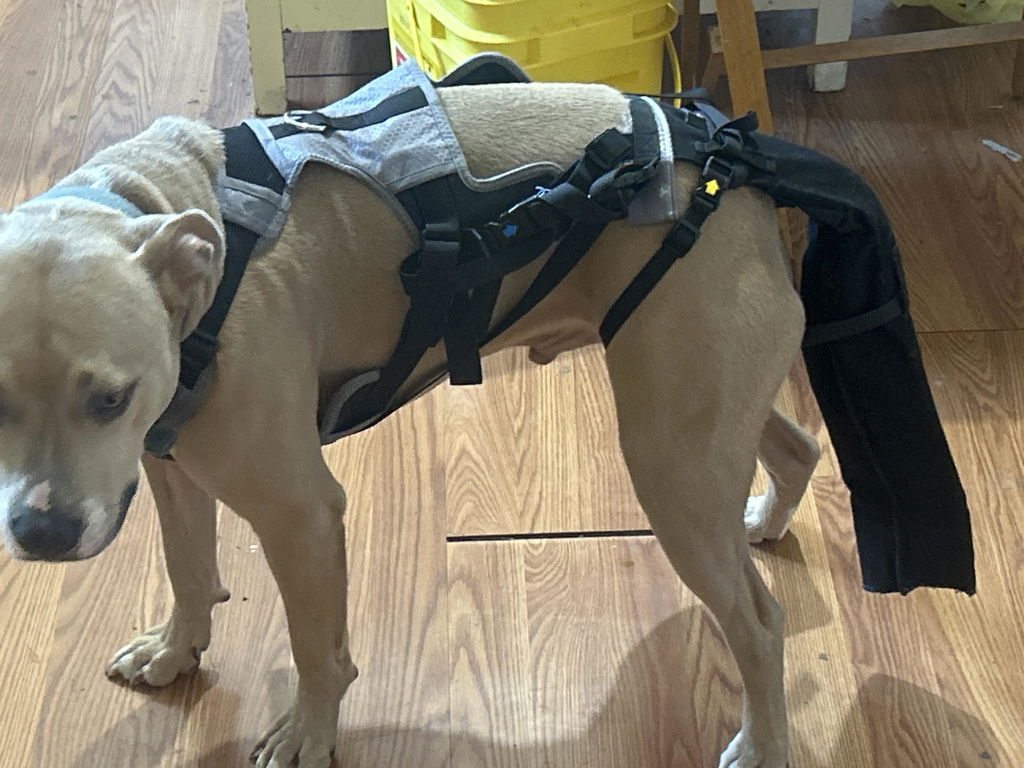
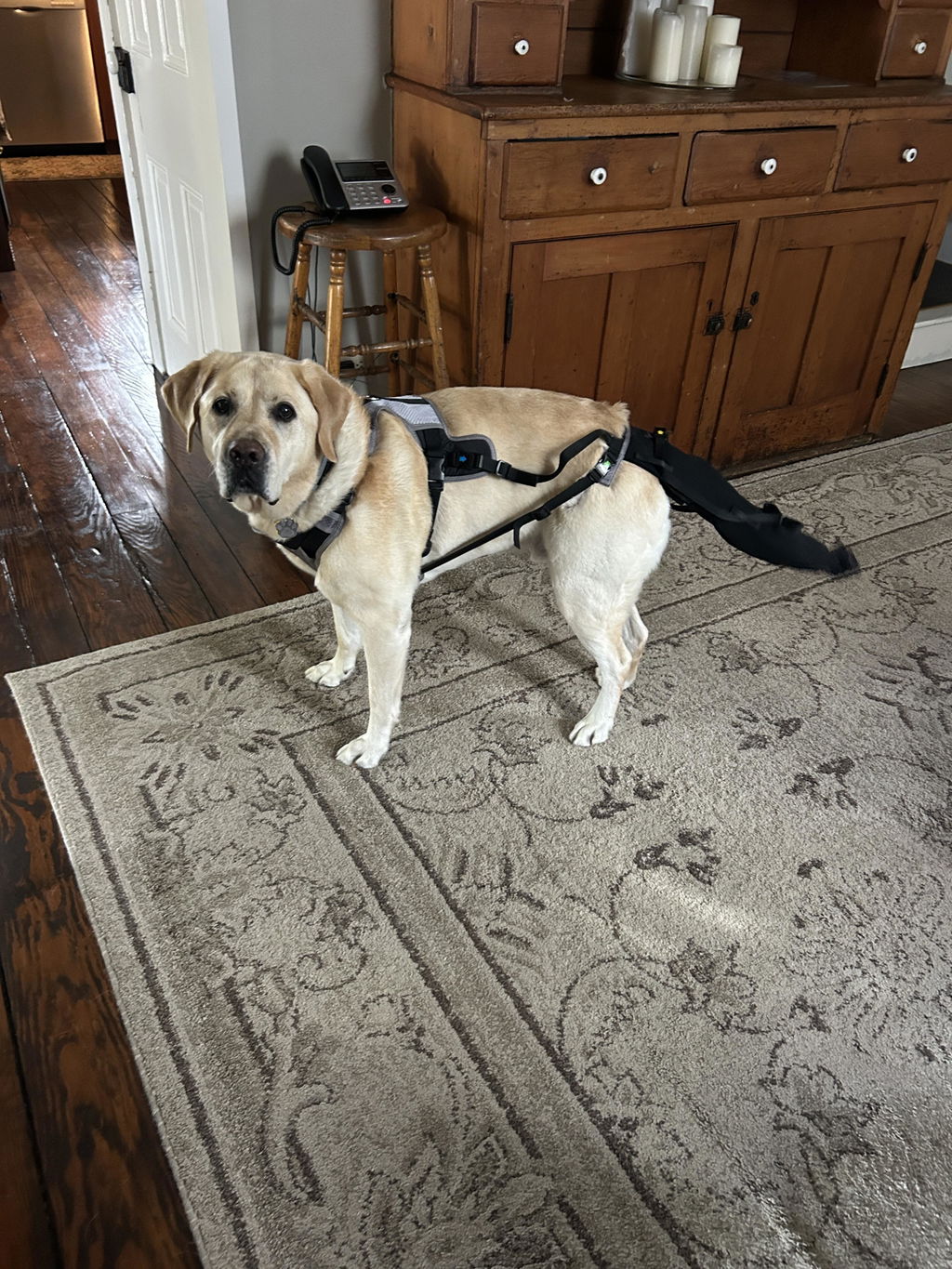
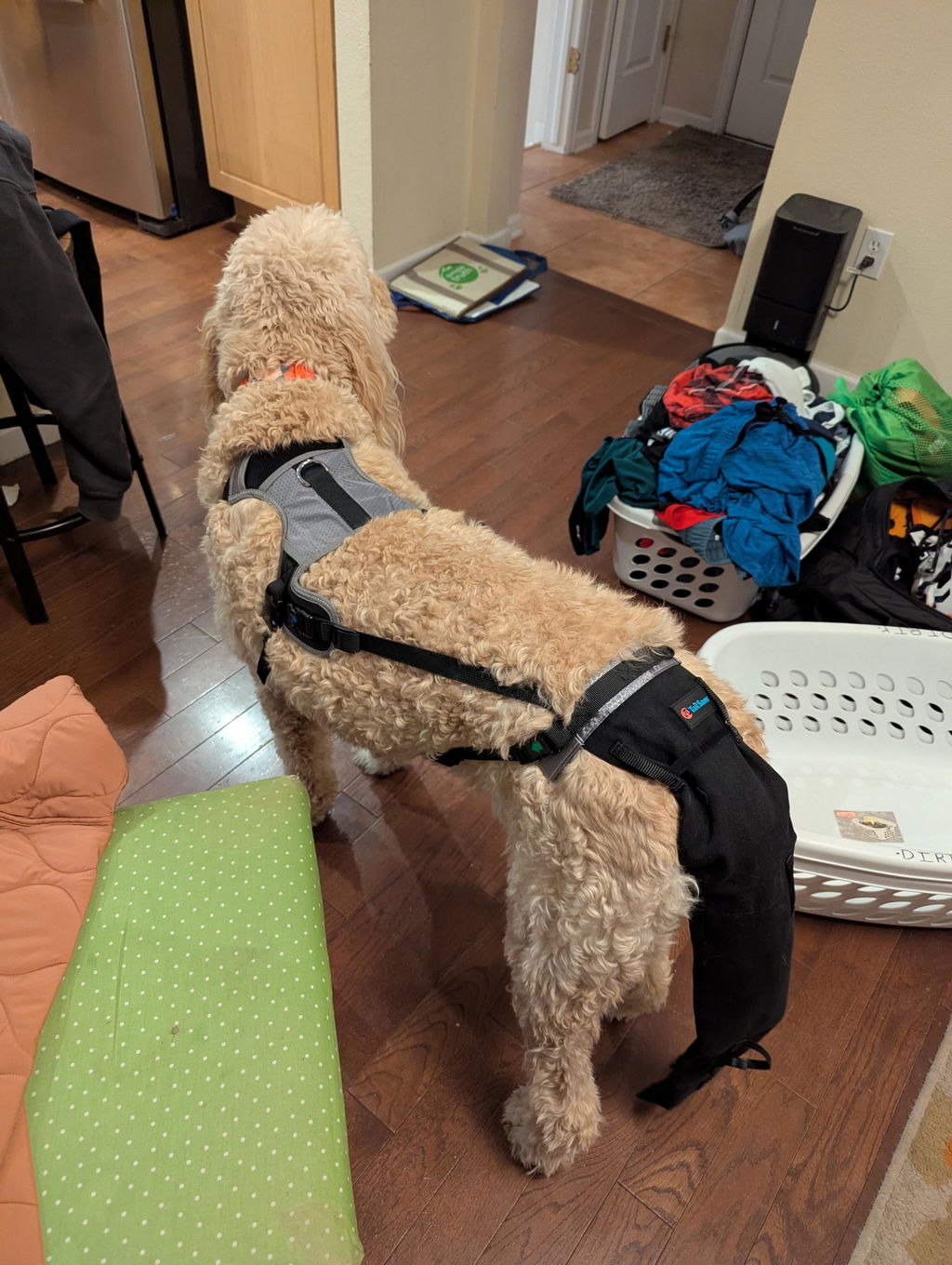
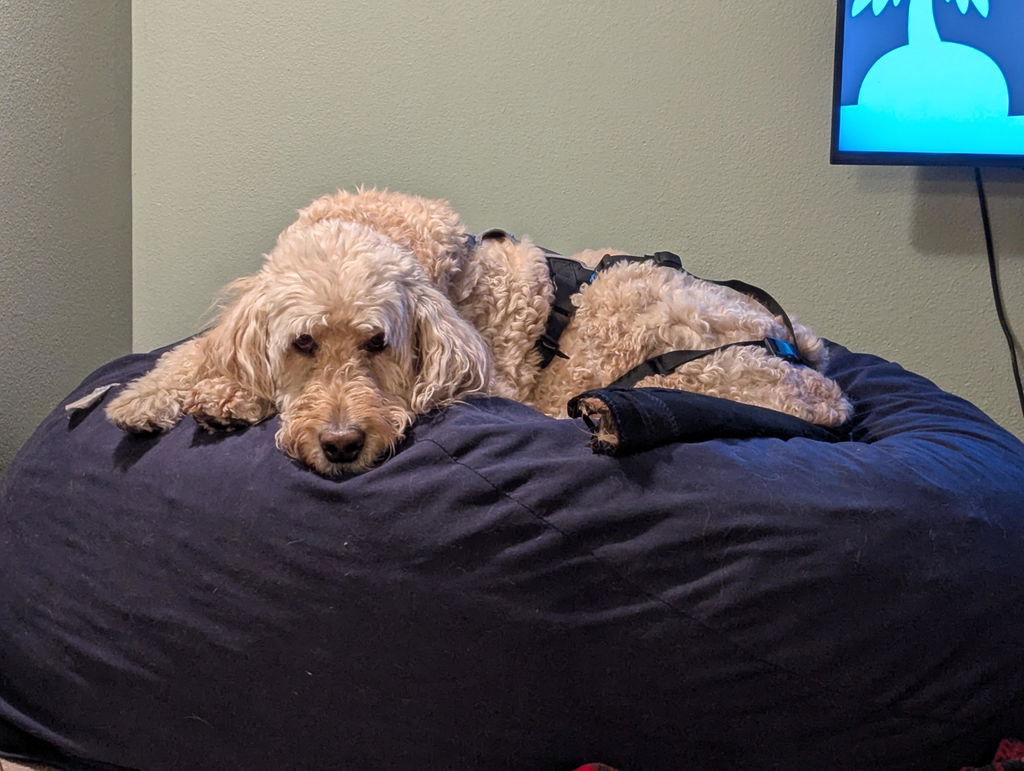
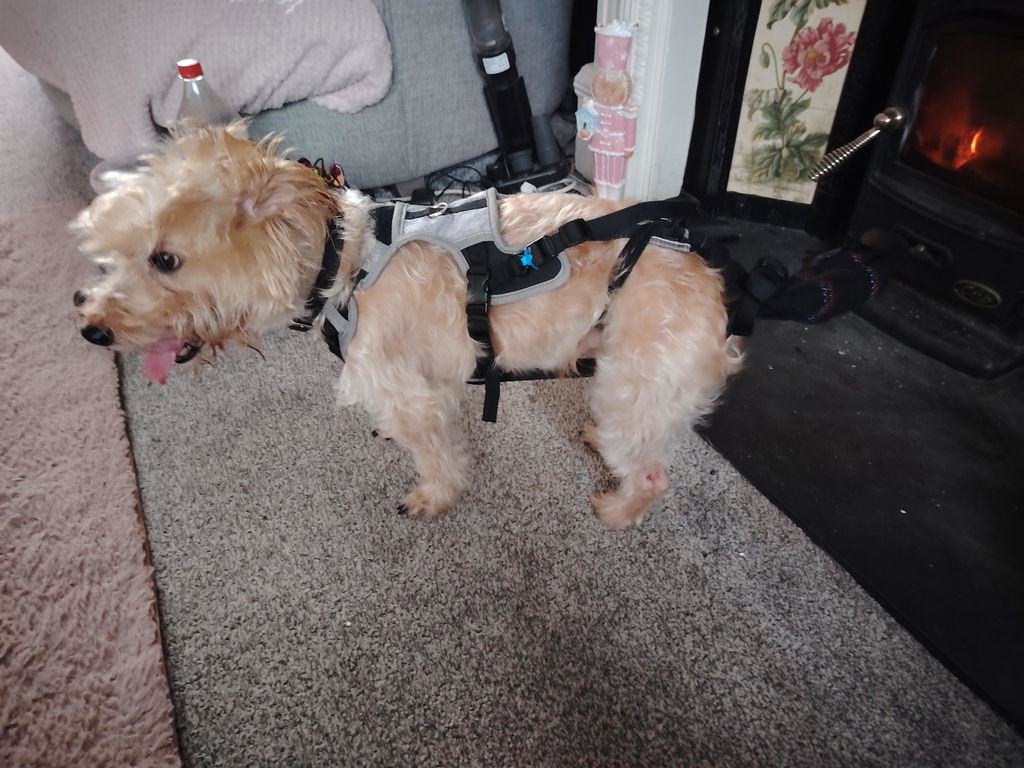
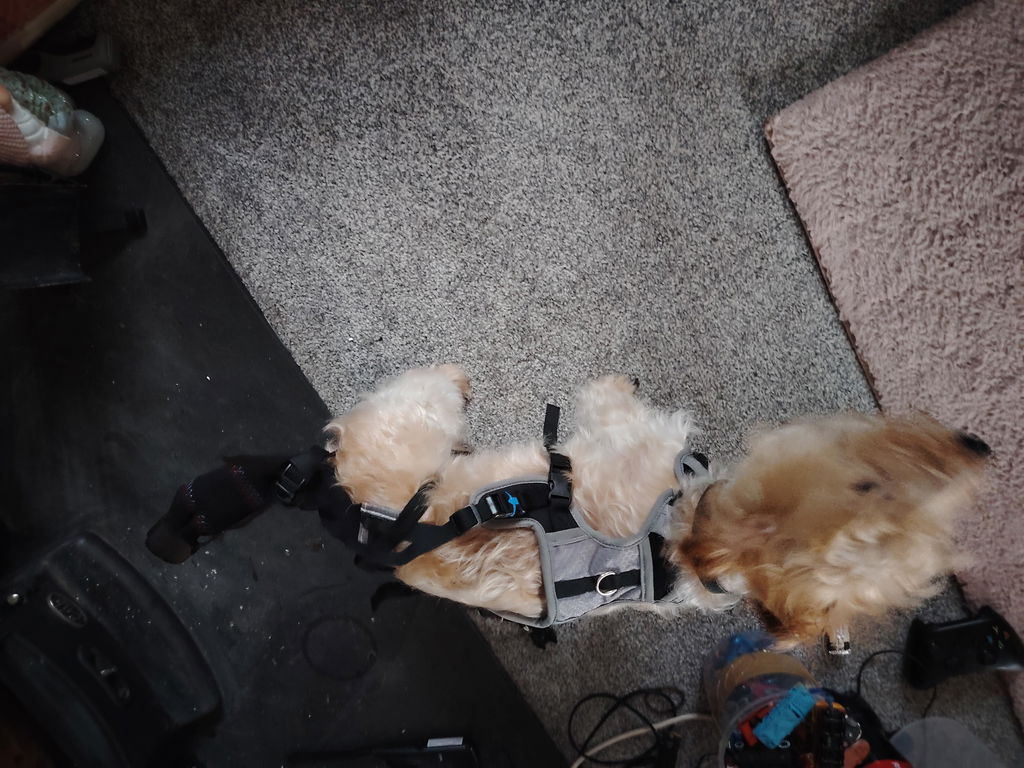
The reason bandages fail is the absence of a stable anchor. The K9 TailSaver® solves this by moving the anchor point off the tail entirely: the padded canvas tail sleeve is attached by a cord to a full body harness worn around the dog's trunk. The sleeve rides naturally on the tail, held in position not by friction against tapered tail skin, but by the stability of the harness anchor on the dog's body.
What this means in practice:
- The sleeve does not migrate toward the wound tip under wag forces, because the harness holds the top of the sleeve at a fixed position
- Wag rotation causes the sleeve to rotate with the tail rather than shearing off, because the sleeve is compliant with tail movement
- No adhesive contacts the dog's skin at any point
- The padded canvas exterior resists chewing attempts better than thin bandage
Proper Application for Maximum Retention
Even with the K9 TailSaver, proper application ensures optimal performance:
- Fit the harness snugly per the sizing guide. The harness should sit flat, not ride up toward the neck or slip toward the hindquarters.
- Place the non-stick wound dressing (Telfa pad) over the wound before sliding the sleeve onto the tail.
- Slide the sleeve over the tail from tip to base until the sleeve opening sits approximately 1–2 inches above the wound margin.
- Connect the sleeve retaining cord to the harness attachment point. Adjust cord length to allow tail movement without allowing the sleeve to migrate toward the tip.
- Confirm the dog can wag naturally without the sleeve sliding down. If it slides, shorten the cord by one adjustment position.
After correct application, observe the dog during an excitement event. A properly fitted K9 TailSaver sleeve will remain in position through vigorous wagging. See the fit and adjustment instructions if the sleeve is not staying in position after initial setup.
Conditions Where Even the K9 TailSaver Needs Adjustment
Very thin or smooth tails (Greyhounds, Whippets)
Sighthound tails are extremely tapered. Use one size smaller than the size chart suggests, and check the sleeve position after the first wearing session.
Dogs that actively work to remove the device
See the Chewing & Compliance FAQ for specific strategies. Most dogs acclimate within 48 hours when properly introduced to the device.
Bandage Falling Off FAQ
My vet wrapped the bandage and said it should stay on for 3–4 days. It came off in 2 hours. Is my dog abnormal?
No. Most dog tail bandages applied at the vet come off within 2–12 hours at home.
This is the standard failure rate that leads most vets familiar with the breed
and condition to recommend harness-anchored alternatives instead.
Can I glue the bandage to stay on?
Surgical tissue adhesive (e.g. Vetbond) can briefly stabilize a wound edge but
is not appropriate as a method for securing a large bandage to a moving tail.
Do not use craft or household adhesives (super glue, hot glue, epoxy) on dog wounds.
What happens if I leave the bandage on when it starts to slip?
A slipped bandage bunches around the tail and acts as a band, potentially restricting
circulation below the constriction point. A bandage that has slipped should be removed
immediately. Do not try to push a slipped bandage back up the tail.
My vet says to bandage it for 2 weeks. But it falls off. What do I tell them?
Show your vet the K9 TailSaver and the sizing guide. Many veterinarians who understand
the mechanical limitations of tail bandaging are receptive to harness-anchored alternatives.
Bring the Vet & Safety FAQ
as a reference document.