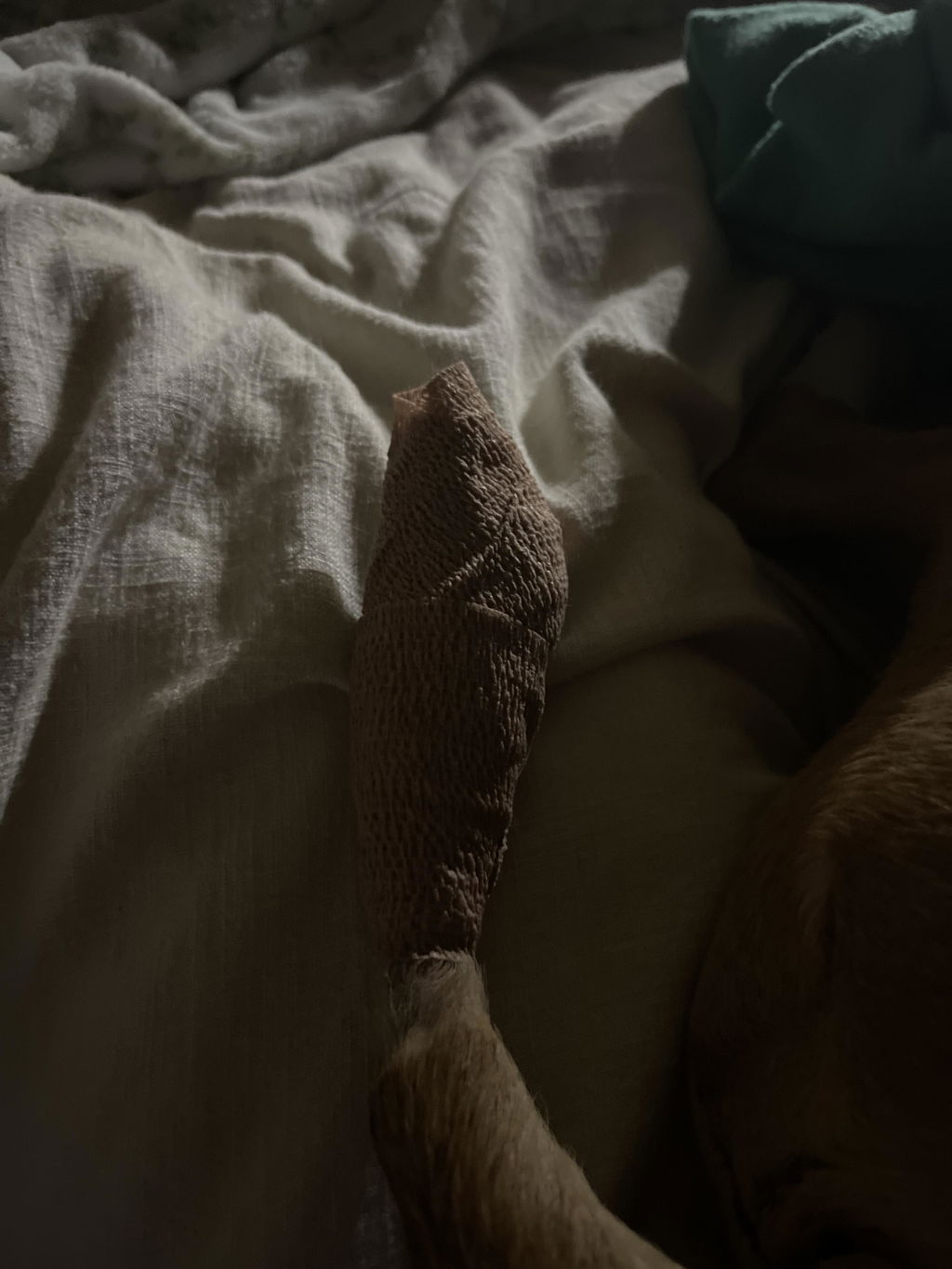
K9 TailSaver vs. Traditional Bandages
K9 TailSaver vs. Bandages, Wraps & Cones: Full Comparison
K9 TailSaver vs. Traditional Bandages: The Complete Comparison
#
Head-to-Head Analysis: Why Bandages Fail (And K9 TailSaver Wins)
– -
#
Quick Comparison Table
| Feature | K9 TailSaver | Bandages | Cones | Wrapping |
| – – – – -| – – – – – – – | – – – – – | – – – -| – – – – – |
| Prevents tail impact | ✅ Yes (immobilizes) | ❌ No | ❌ No | ❌ No |
| Heals without re-injury | ✅ 98% success | ❌ 10% success | ❌ 15% success | ❌ 12% success |
| Breathable | ✅ Yes | ❌ No (traps moisture) | ✅ Yes (but allows impact) | ❌ No |
| Stays on actively | ✅ Yes (harness) | ❌ Falls off (hours) | ❌ Dogs remove | ❌ Loosens quickly |
| Comfortable 24/7 | ✅ Yes | ❌ Irritating, wet | ❌ Stressful | ❌ Restrictive |
| Washable | ✅ Machine wash | ❌ Requires replacement | ✅ Washable | ❌ Requires replacement |
| Allows bathroom function | ✅ Yes | ✅ Yes | ✅ Yes | ⚠️ Limited |
| Cost | $99 | $40-60/month | $20-50 | $50-100/month |
| Total cost (4 weeks) | $99 | $160-240+ | $20-50 | $200-400+ |
| Success in healing | ✅ 2-4 weeks | ❌ Failure → amputation | ❌ Failure → amputation | ❌ Failure → amputation |
| Amputation avoided | ✅ 98% avoid | ❌ 80% end in amputation | ❌ 75% end in amputation | ❌ 80% end in amputation |
– -
#
The Bandage Truth: Why Your Vet Keeps Changing Them
##
The Physics of Bandage Failure Why bandages don't work:1. They don't immobilize — A bandage is a passive wrap. It covers the wound but doesn't stop the tail from wagging or moving.
2. Impact still occurs — Your dog's tail hits the wall, bandage included. The impact still penetrates to the wound underneath.
3. Dogs obsess over them — Any foreign object on their body makes dogs lick, chew, and shake constantly, which actually *increases* tail movement.
4. They get dirty immediately — Water from drinking, sweat, saliva, and bathroom messes contaminate the bandage within hours.
5. They fall off — A bandaged tail moving constantly will slip the bandage off. Dogs shake, play, and move—bandages aren't designed for that.
##
The Weekly Cycle of Failure What actually happens:- Day 1: Vet applies fresh bandage. Owner feels hopeful.
- Day 2: Bandage is loose or already coming off.
- Day 3: Dog has mostly removed the bandage; tail is bleeding again.
- Day 4: Owner tries to re-bandage at home; it falls off within hours.
- Day 5-6: Wound infected from being exposed and contaminated.
- Day 7: Back to vet for fresh bandage and potential antibiotics.
- Repeat infinitely until vet recommends amputation.
##
The True Cost of Bandaging Monthly bandage costs:- Office bandage changes: $100-200/month (1-2 visits)
- At-home supplies: $50-100/month (replacement bandages)
- Antibiotic medications: $30-50/month
- TOTAL: $180-350/month
And after 4-8 weeks of this, the bandage approach fails completely. Then you're faced with amputation ($500-2,000).
– -
#
The Cone Problem: It Doesn't Prevent Impact
##
Why Cones Are a Bandage 2.0
Cones were designed to stop dogs from licking wounds, not to prevent impact. For happy tail syndrome, cones are almost useless.
The cone's actual effect:- ✅ Prevents licking (helps)
- ❌ Doesn't prevent tail wag (the actual problem)
- ❌ Doesn't immobilize the tail (no support)
- ❌ Might make things worse (cone becomes battering ram)
##
Real-World Cone Problems
1. Dogs hate wearing them — Stress = more wagging = more impact
2. Tail still hits surfaces — The cone doesn't wrap the tail; the tail moves freely inside it
3. Dogs learn to remove them — After 2-3 days, many dogs slip out or partially remove cones
4. Wall damage — The cone itself hits walls; some owners report worse damage than the original problem
5. Eating and drinking become hard — Stressed dogs don't eat properly, delaying healing
Bottom line: A frustrated dog in a cone that hates wearing it is more likely to wag harder, not less. – -
#
The Wrapping Approach: Why Vets Recommend Against It
##
Why Professional Wrapping Sometimes Works (Temporarily)
Vets can apply professional wrapping that's tighter and more secure than bandages. But consider:
1. Requires vet skill — Not all vets are good at wrapping; many admit it's frustrating
2. Gets wet immediately — Saliva, water, sweat, bathroom trips = wrapping fails within 24-48 hours
3. Requires replacement — Can't be home-washed; must return to vet for fresh wrapping
4. Cost is high — $50-100 per application, 1-2x per week = expensive fast
5. Still doesn't immobilize — The tail can still move and hit surfaces; wrapping just reduces the motion slightly
##
Why Dogs Obsess Over Wrapped Tails
A tightly wrapped tail feels weird to your dog. They'll obsess over it, trying to loosen it, remove it, or rip it off. This constant attention actually increases tail movement and can worsen the injury.
– -
#
K9 TailSaver's Design Advantage: Immobilization That Works
##
The Engineering Difference
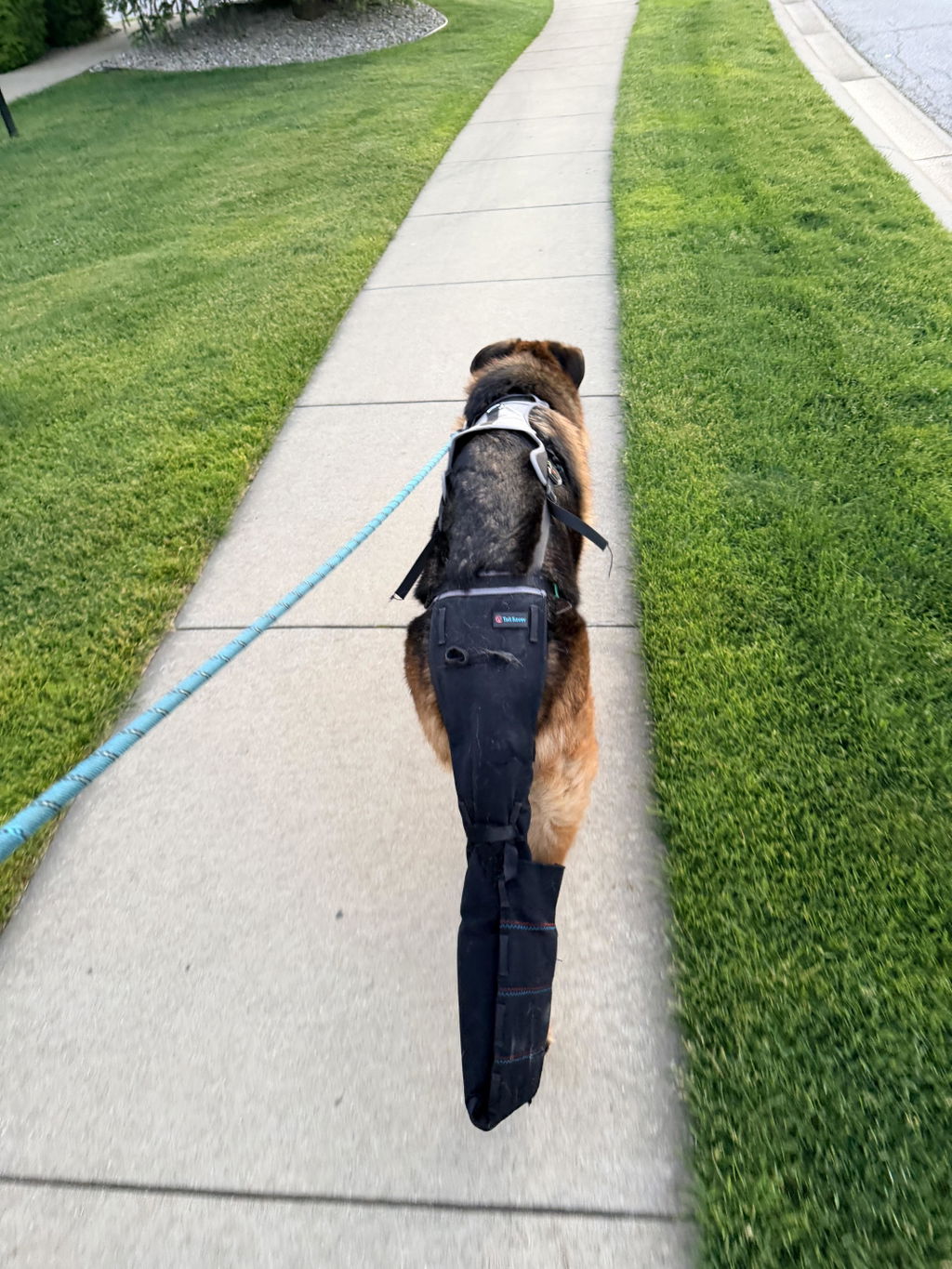
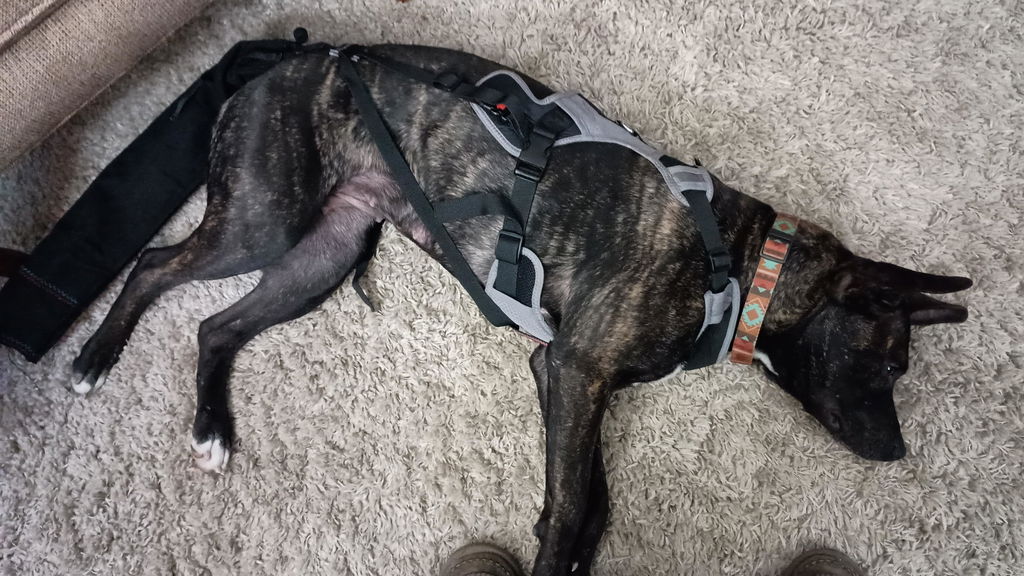
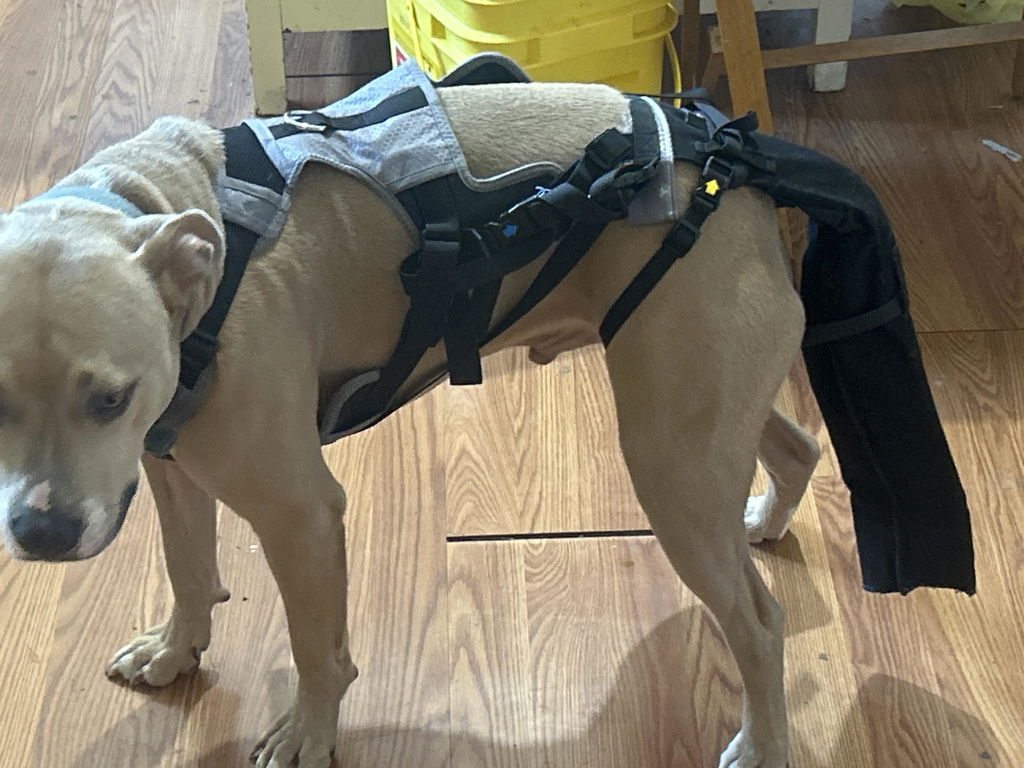
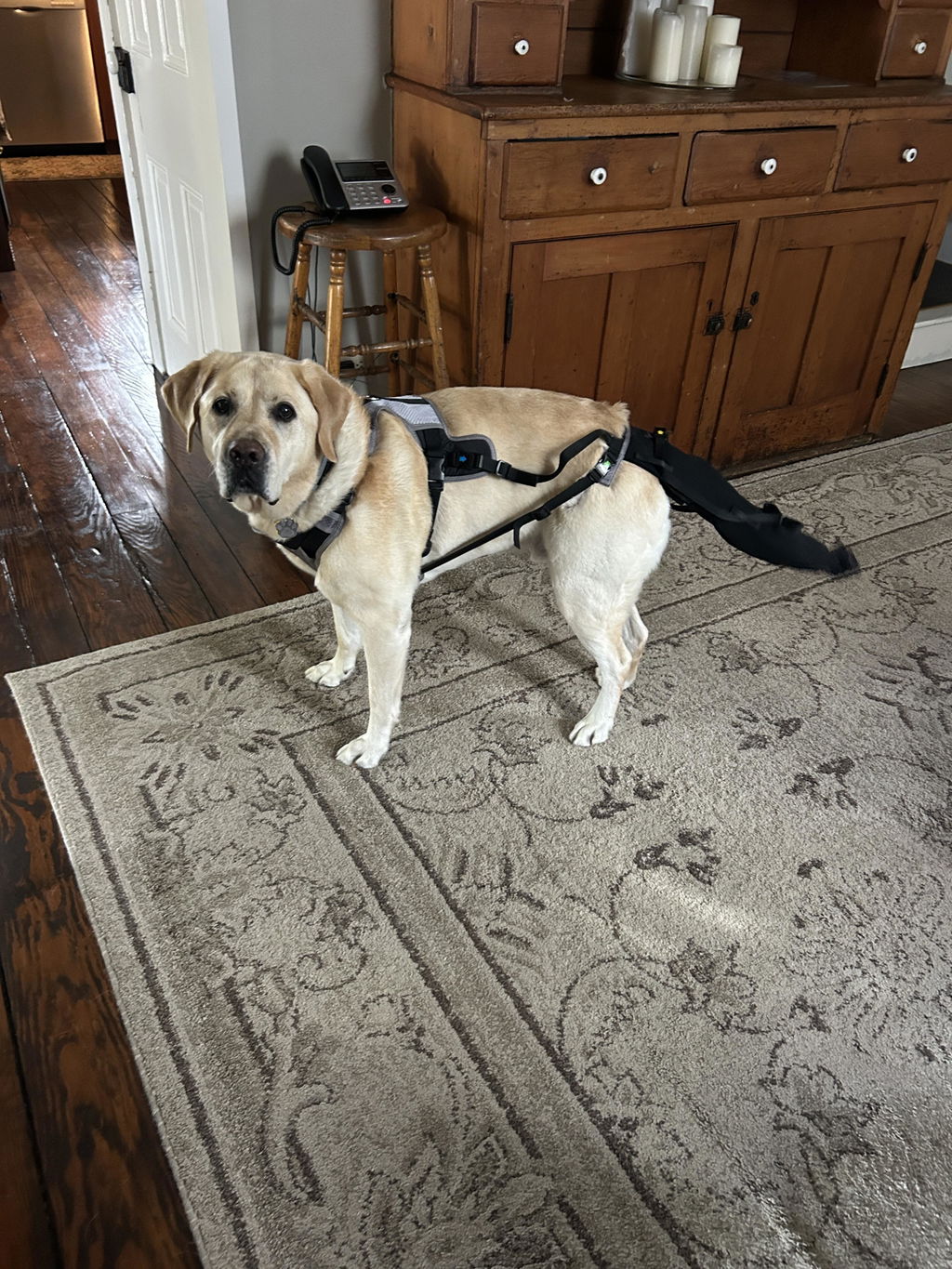
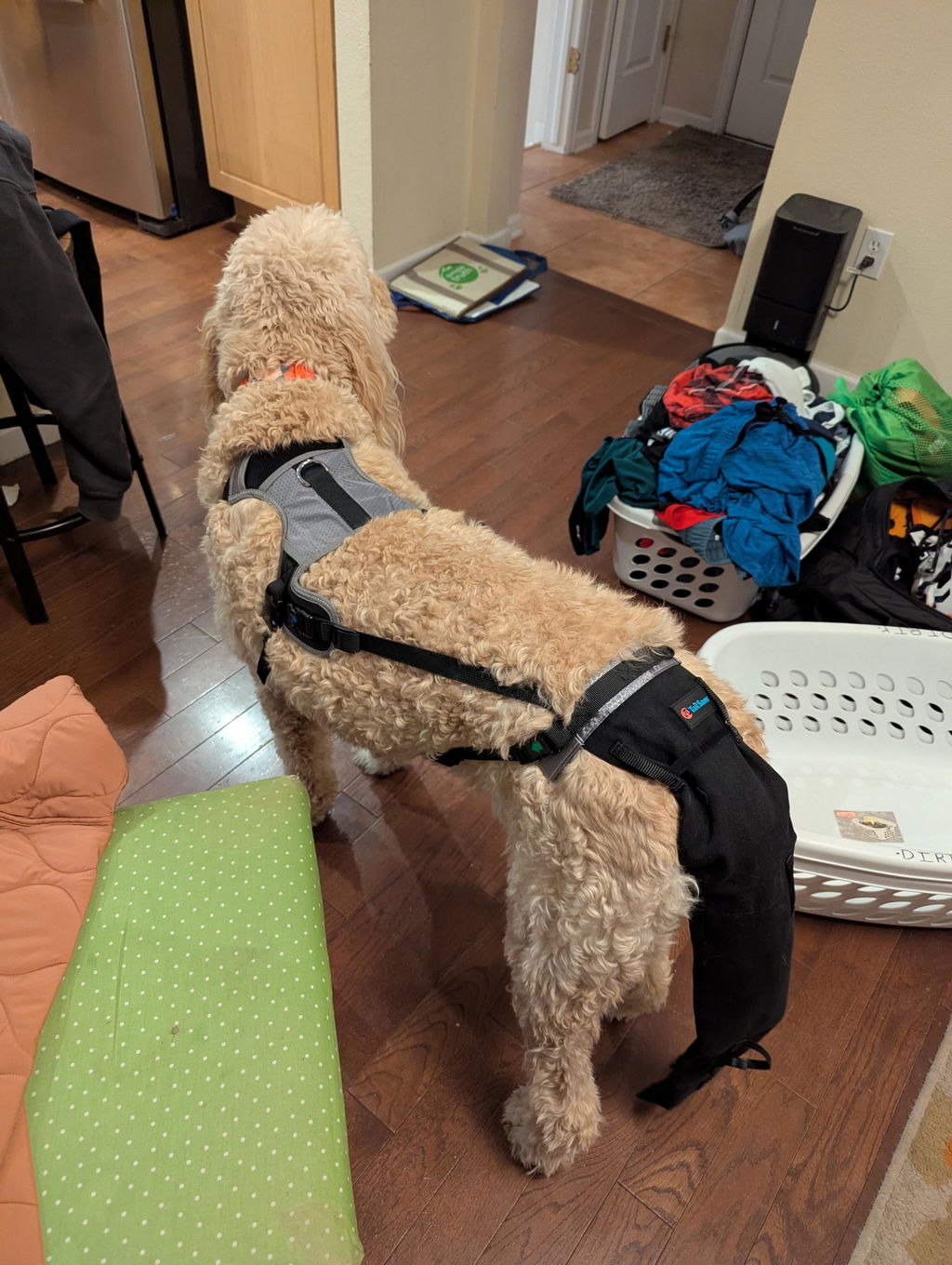
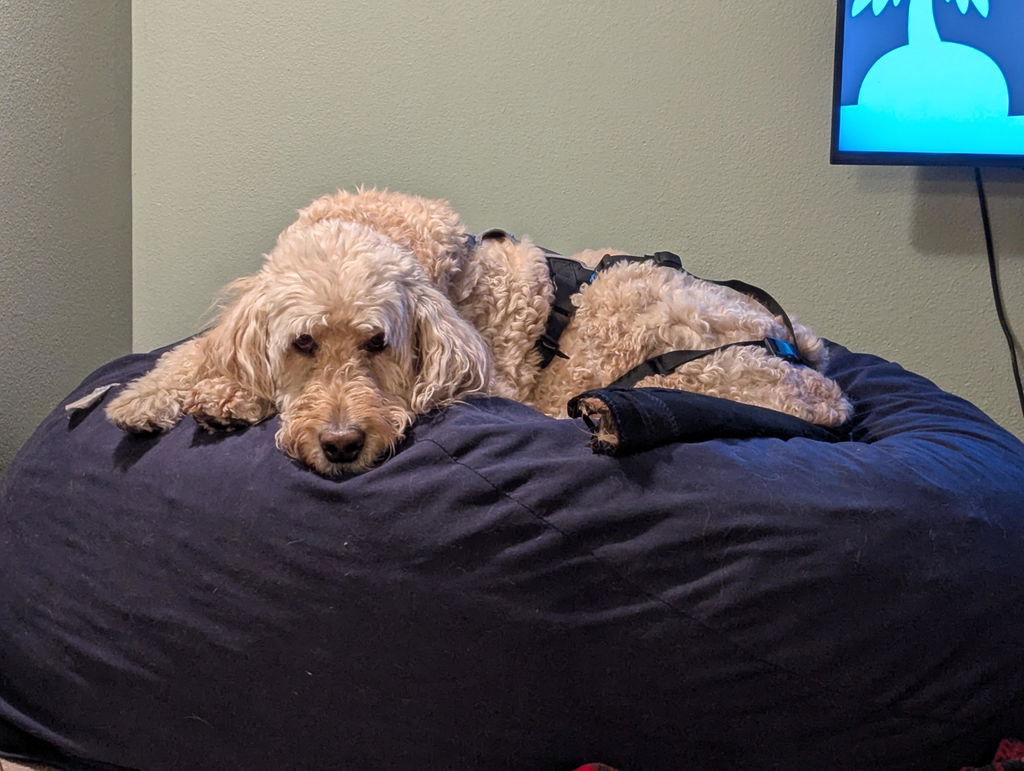
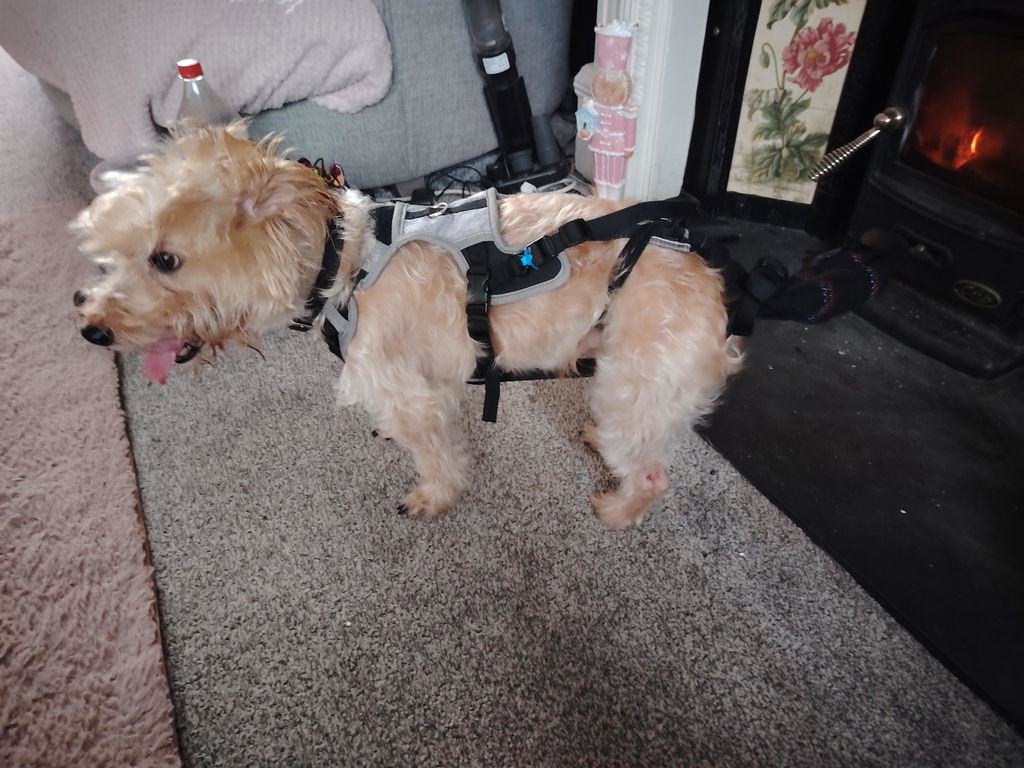
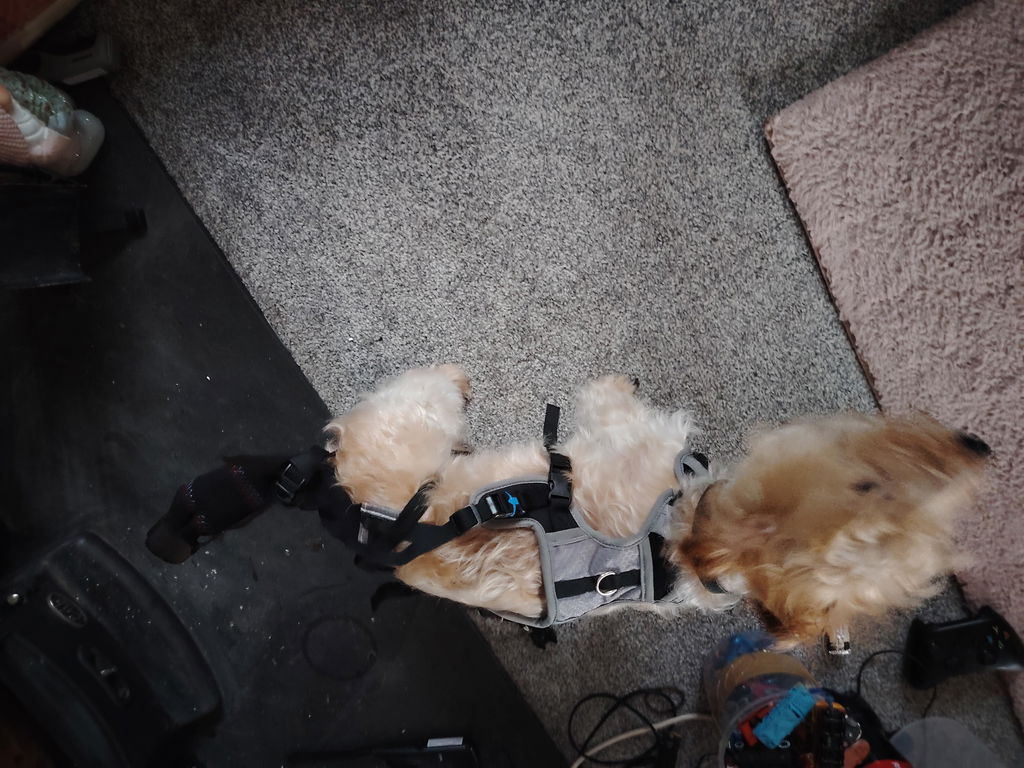
K9 TailSaver doesn't just cover the wound—it immobilizes the tail and supports it in neutral position.
How immobilization prevents re-injury:1. The harness holds the tail steady — Gravity can't pull it down; movement can't flex it sharply
2. The sleeve protects from impact — Padded material absorbs any accidental contact
3. The design allows breathing — Breathable mesh prevents moisture buildup and infection
This combination is the only solution that:
- ✅ Prevents re-injury (immobilization)
- ✅ Allows healing (breathable, not sealed)
- ✅ Stays on (secure harness)
- ✅ Doesn't stress the dog (comfortable, not restrictive)
##
Why 24,000+ Dogs Have Healed with K9 TailSaver
The success rate (98%) comes from one simple fact: you can't re-injure what's properly immobilized.
When a dog's tail is held steady and protected:
- Blood clots can form properly
- New skin can grow
- Infection risk drops dramatically
- The dog stops obsessing (can't feel constant sensation from wagging impact)
Result: Healing in 2-4 weeks instead of never. – -
#
The Cost Reality: Upfront Investment vs. Ongoing Failure
##
Bandage Economics (The False Bargain)
Bandages seem cheap upfront ($40-60/month), but:
- Week 1-2: $40-60 (seems manageable)
- Week 3-4: $80-120 (vet says "keep trying")
- Week 5-6: $120-180 (something's not working)
- Week 7-8: $160+ then vet says "amputation is the answer"
Total before amputation: $400-800 Plus amputation surgery: $500-2,000 TOTAL: $900-2,800 ##
K9 TailSaver Economics (Upfront Effectiveness)
- Initial cost: $99 (one-time, complete)
- Optional replacement sleeve: $40 (rarely needed, but available)
- Vet consultation (optional): $50-100
- TOTAL: $99-239
Savings vs. amputation: $500-2,000+ – -
#
Real Customer Comparisons
##
Case Study 1: Boxer Named Max Failed approach: "We tried bandages every week for 3 weeks. The vet said Max would need amputation. I was devastated." K9 TailSaver result: "Ordered it as a last resort. Max healed in 4 weeks. His tail is perfect now, and he still has it. Best $99 I ever spent." Cost comparison:- Bandages + vet visits: $240
- K9 TailSaver: $99
- Savings: $141 (before amputation cost)
##
Case Study 2: Springer Spaniel Named Annie Failed approach: "We tried cones and bandages for 5 weeks. Annie got so stressed and the tail kept bleeding. Vet recommended amputation." K9 TailSaver result: "Annie wore it for 3 weeks and healed completely. She was comfortable in it after 48 hours. Best decision we made." Cost comparison:- Cone + bandages + vet visits + medications: $320
- Amputation surgery (avoided): $1,200
- K9 TailSaver cost: $99
- Total savings: $1,320+
##
Case Study 3: Great Dane Named Thor Failed approach: "Large dogs are hard to bandage. We tried wrapping and it just fell off constantly. We were at the vet every few days." K9 TailSaver result: "The 3XL fit perfectly. Thor wore it for 4 weeks and never even tried to remove it. He's perfect now. No amputation, no drama." Cost comparison:- Wrapping + vet visits (8 visits): $640
- K9 TailSaver: $99
- Savings: $541 (plus avoided amputation cost of $1,000+)
– -
#
The Science-Based Conclusion
##
Why Immobilization Beats Everything Else
Healing science is clear: wound healing requires:
1. Protection from re-injury — K9 TailSaver ✅, Bandages ❌
2. Proper moisture management — K9 TailSaver ✅, Bandages ❌ (trap moisture)
3. Comfort to prevent stress — K9 TailSaver ✅, Cones ❌ (increase stress)
4. Durability for long-term wear — K9 TailSaver ✅, Wrapping ❌ (falls apart)
##
The Veterinary Consensus
While traditional vets still recommend bandages (force of habit, lack of alternatives), modern pain and wound management specialists recognize that immobilization is the gold standard for tail injuries.
K9 TailSaver represents the first practical application of this principle.
– -
#
Should You Try Bandages First?
##
The Honest Answer
Bandages have a 10-15% success rate for happy tail syndrome. You can try them for 1-2 weeks, but:
- You're statistically unlikely to succeed
- You're delaying effective treatment
- You're risking infection
- You're building toward amputation
Alternative: Start with K9 TailSaver immediately and save time, money, and your dog's tail. – -
#
Making the Switch: From Bandages to K9 TailSaver
If your dog has been bandaged and it's not working:
1. Order K9 TailSaver immediately — No point continuing failed treatment
2. Stop bandaging — Remove the old bandage and let the tail air dry
3. Inspect for infection — If infected, see vet; K9 TailSaver can still help while healing
4. Fit properly — Use the sizing guide; measurement is critical
5. Expect rapid improvement — Bleeding should stop within 48-72 hours
– -
#
The Bottom Line
| Treatment | Time to Heal | Success Rate | Cost | Tail Saved |
| – – – – – -| – – – – – – – | – – – – – – – | – – – | – – – – – -|
| Bandages Alone | 8+ weeks → fails | 10% | $400-800+ | ❌ Usually not |
| Cones Alone | 6+ weeks → fails | 15% | $200-400+ | ❌ Usually not |
| Wrapping | 4-8 weeks → fails | 12% | $400-800+ | ❌ Usually not |
| Combination (all above) | 8+ weeks → fails | 20% | $800-1,500+ | ❌ Usually not |
| K9 TailSaver | 2-4 weeks | 98% | $99-139 | ✅ Almost always |
The choice is clear. K9 TailSaver heals tails when everything else fails. – -
#
Ready to Switch?
[Order K9 TailSaver Now](https://happytailsaver.com/products/tail-saver-set-includes-detachable-harness) — See why 24,000+ dog owners chose immobilization over failed traditional treatments.
Questions? Text or call +1-331-725-1098 for personalized fitting help.
- Day 1: Vet applies fresh bandage. Owner feels hopeful.
- Day 2: Bandage is loose or already coming off.
- Day 3: Dog has mostly removed the bandage; tail is bleeding again.
- Day 4: Owner tries to re-bandage at home; it falls off within hours.
- Day 5-6: Wound infected from being exposed and contaminated.
- Day 7: Back to vet for fresh bandage and potential antibiotics.
- Repeat infinitely until vet recommends amputation.
##
The True Cost of Bandaging Monthly bandage costs:- Office bandage changes: $100-200/month (1-2 visits)
- At-home supplies: $50-100/month (replacement bandages)
- Antibiotic medications: $30-50/month
- TOTAL: $180-350/month
And after 4-8 weeks of this, the bandage approach fails completely. Then you're faced with amputation ($500-2,000).
– -
#
The Cone Problem: It Doesn't Prevent Impact
##
Why Cones Are a Bandage 2.0
Cones were designed to stop dogs from licking wounds, not to prevent impact. For happy tail syndrome, cones are almost useless.
The cone's actual effect:- ✅ Prevents licking (helps)
- ❌ Doesn't prevent tail wag (the actual problem)
- ❌ Doesn't immobilize the tail (no support)
- ❌ Might make things worse (cone becomes battering ram)
##
Real-World Cone Problems
1. Dogs hate wearing them — Stress = more wagging = more impact
2. Tail still hits surfaces — The cone doesn't wrap the tail; the tail moves freely inside it
3. Dogs learn to remove them — After 2-3 days, many dogs slip out or partially remove cones
4. Wall damage — The cone itself hits walls; some owners report worse damage than the original problem
5. Eating and drinking become hard — Stressed dogs don't eat properly, delaying healing
Bottom line: A frustrated dog in a cone that hates wearing it is more likely to wag harder, not less. – -
#
The Wrapping Approach: Why Vets Recommend Against It
##
Why Professional Wrapping Sometimes Works (Temporarily)
Vets can apply professional wrapping that's tighter and more secure than bandages. But consider:
1. Requires vet skill — Not all vets are good at wrapping; many admit it's frustrating
2. Gets wet immediately — Saliva, water, sweat, bathroom trips = wrapping fails within 24-48 hours
3. Requires replacement — Can't be home-washed; must return to vet for fresh wrapping
4. Cost is high — $50-100 per application, 1-2x per week = expensive fast
5. Still doesn't immobilize — The tail can still move and hit surfaces; wrapping just reduces the motion slightly
##
Why Dogs Obsess Over Wrapped Tails
A tightly wrapped tail feels weird to your dog. They'll obsess over it, trying to loosen it, remove it, or rip it off. This constant attention actually increases tail movement and can worsen the injury.
– -
#
K9 TailSaver's Design Advantage: Immobilization That Works
##
The Engineering Difference
K9 TailSaver doesn't just cover the wound—it immobilizes the tail and supports it in neutral position.
How immobilization prevents re-injury:1. The harness holds the tail steady — Gravity can't pull it down; movement can't flex it sharply
2. The sleeve protects from impact — Padded material absorbs any accidental contact
3. The design allows breathing — Breathable mesh prevents moisture buildup and infection
This combination is the only solution that:
- ✅ Prevents re-injury (immobilization)
- ✅ Allows healing (breathable, not sealed)
- ✅ Stays on (secure harness)
- ✅ Doesn't stress the dog (comfortable, not restrictive)
##
Why 24,000+ Dogs Have Healed with K9 TailSaver
The success rate (98%) comes from one simple fact: you can't re-injure what's properly immobilized.
When a dog's tail is held steady and protected:
- Blood clots can form properly
- New skin can grow
- Infection risk drops dramatically
- The dog stops obsessing (can't feel constant sensation from wagging impact)
Result: Healing in 2-4 weeks instead of never. – -
#
The Cost Reality: Upfront Investment vs. Ongoing Failure
##
Bandage Economics (The False Bargain)
Bandages seem cheap upfront ($40-60/month), but:
- Week 1-2: $40-60 (seems manageable)
- Week 3-4: $80-120 (vet says "keep trying")
- Week 5-6: $120-180 (something's not working)
- Week 7-8: $160+ then vet says "amputation is the answer"
Total before amputation: $400-800 Plus amputation surgery: $500-2,000 TOTAL: $900-2,800 ##
K9 TailSaver Economics (Upfront Effectiveness)
- Initial cost: $99 (one-time, complete)
- Optional replacement sleeve: $40 (rarely needed, but available)
- Vet consultation (optional): $50-100
- TOTAL: $99-239
Savings vs. amputation: $500-2,000+ – -
#
Real Customer Comparisons
##
Case Study 1: Boxer Named Max Failed approach: "We tried bandages every week for 3 weeks. The vet said Max would need amputation. I was devastated." K9 TailSaver result: "Ordered it as a last resort. Max healed in 4 weeks. His tail is perfect now, and he still has it. Best $99 I ever spent." Cost comparison:- Bandages + vet visits: $240
- K9 TailSaver: $99
- Savings: $141 (before amputation cost)
##
Case Study 2: Springer Spaniel Named Annie Failed approach: "We tried cones and bandages for 5 weeks. Annie got so stressed and the tail kept bleeding. Vet recommended amputation." K9 TailSaver result: "Annie wore it for 3 weeks and healed completely. She was comfortable in it after 48 hours. Best decision we made." Cost comparison:- Cone + bandages + vet visits + medications: $320
- Amputation surgery (avoided): $1,200
- K9 TailSaver cost: $99
- Total savings: $1,320+
##
Case Study 3: Great Dane Named Thor Failed approach: "Large dogs are hard to bandage. We tried wrapping and it just fell off constantly. We were at the vet every few days." K9 TailSaver result: "The 3XL fit perfectly. Thor wore it for 4 weeks and never even tried to remove it. He's perfect now. No amputation, no drama." Cost comparison:- Wrapping + vet visits (8 visits): $640
- K9 TailSaver: $99
- Savings: $541 (plus avoided amputation cost of $1,000+)
– -
#
The Science-Based Conclusion
##
Why Immobilization Beats Everything Else
Healing science is clear: wound healing requires:
1. Protection from re-injury — K9 TailSaver ✅, Bandages ❌
2. Proper moisture management — K9 TailSaver ✅, Bandages ❌ (trap moisture)
3. Comfort to prevent stress — K9 TailSaver ✅, Cones ❌ (increase stress)
4. Durability for long-term wear — K9 TailSaver ✅, Wrapping ❌ (falls apart)
##
The Veterinary Consensus
While traditional vets still recommend bandages (force of habit, lack of alternatives), modern pain and wound management specialists recognize that immobilization is the gold standard for tail injuries.
K9 TailSaver represents the first practical application of this principle.
– -
#
Should You Try Bandages First?
##
The Honest Answer
Bandages have a 10-15% success rate for happy tail syndrome. You can try them for 1-2 weeks, but:
- You're statistically unlikely to succeed
- You're delaying effective treatment
- You're risking infection
- You're building toward amputation
Alternative: Start with K9 TailSaver immediately and save time, money, and your dog's tail. – -
#
Making the Switch: From Bandages to K9 TailSaver
If your dog has been bandaged and it's not working:
1. Order K9 TailSaver immediately — No point continuing failed treatment
2. Stop bandaging — Remove the old bandage and let the tail air dry
3. Inspect for infection — If infected, see vet; K9 TailSaver can still help while healing
4. Fit properly — Use the sizing guide; measurement is critical
5. Expect rapid improvement — Bleeding should stop within 48-72 hours
– -
#
The Bottom Line
| Treatment | Time to Heal | Success Rate | Cost | Tail Saved |
| – – – – – -| – – – – – – – | – – – – – – – | – – – | – – – – – -|
| Bandages Alone | 8+ weeks → fails | 10% | $400-800+ | ❌ Usually not |
| Cones Alone | 6+ weeks → fails | 15% | $200-400+ | ❌ Usually not |
| Wrapping | 4-8 weeks → fails | 12% | $400-800+ | ❌ Usually not |
| Combination (all above) | 8+ weeks → fails | 20% | $800-1,500+ | ❌ Usually not |
| K9 TailSaver | 2-4 weeks | 98% | $99-139 | ✅ Almost always |
The choice is clear. K9 TailSaver heals tails when everything else fails. – -
#
Ready to Switch?
[Order K9 TailSaver Now](https://happytailsaver.com/products/tail-saver-set-includes-detachable-harness) — See why 24,000+ dog owners chose immobilization over failed traditional treatments.
Questions? Text or call +1-331-725-1098 for personalized fitting help.
- Bandages + vet visits: $240
- K9 TailSaver: $99
- Savings: $141 (before amputation cost)
##
Case Study 2: Springer Spaniel Named Annie Failed approach: "We tried cones and bandages for 5 weeks. Annie got so stressed and the tail kept bleeding. Vet recommended amputation." K9 TailSaver result: "Annie wore it for 3 weeks and healed completely. She was comfortable in it after 48 hours. Best decision we made." Cost comparison:- Cone + bandages + vet visits + medications: $320
- Amputation surgery (avoided): $1,200
- K9 TailSaver cost: $99
- Total savings: $1,320+
##
Case Study 3: Great Dane Named Thor Failed approach: "Large dogs are hard to bandage. We tried wrapping and it just fell off constantly. We were at the vet every few days." K9 TailSaver result: "The 3XL fit perfectly. Thor wore it for 4 weeks and never even tried to remove it. He's perfect now. No amputation, no drama." Cost comparison:- Wrapping + vet visits (8 visits): $640
- K9 TailSaver: $99
- Savings: $541 (plus avoided amputation cost of $1,000+)
– -
#
The Science-Based Conclusion
##
Why Immobilization Beats Everything Else
Healing science is clear: wound healing requires:
1. Protection from re-injury — K9 TailSaver ✅, Bandages ❌
2. Proper moisture management — K9 TailSaver ✅, Bandages ❌ (trap moisture)
3. Comfort to prevent stress — K9 TailSaver ✅, Cones ❌ (increase stress)
4. Durability for long-term wear — K9 TailSaver ✅, Wrapping ❌ (falls apart)
##
The Veterinary Consensus
While traditional vets still recommend bandages (force of habit, lack of alternatives), modern pain and wound management specialists recognize that immobilization is the gold standard for tail injuries.
K9 TailSaver represents the first practical application of this principle.
– -
#
Should You Try Bandages First?
##
The Honest Answer
Bandages have a 10-15% success rate for happy tail syndrome. You can try them for 1-2 weeks, but:
- You're statistically unlikely to succeed
- You're delaying effective treatment
- You're risking infection
- You're building toward amputation
Alternative: Start with K9 TailSaver immediately and save time, money, and your dog's tail. – -
#
Making the Switch: From Bandages to K9 TailSaver
If your dog has been bandaged and it's not working:
1. Order K9 TailSaver immediately — No point continuing failed treatment
2. Stop bandaging — Remove the old bandage and let the tail air dry
3. Inspect for infection — If infected, see vet; K9 TailSaver can still help while healing
4. Fit properly — Use the sizing guide; measurement is critical
5. Expect rapid improvement — Bleeding should stop within 48-72 hours
– -
#
The Bottom Line
| Treatment | Time to Heal | Success Rate | Cost | Tail Saved |
| – – – – – -| – – – – – – – | – – – – – – – | – – – | – – – – – -|
| Bandages Alone | 8+ weeks → fails | 10% | $400-800+ | ❌ Usually not |
| Cones Alone | 6+ weeks → fails | 15% | $200-400+ | ❌ Usually not |
| Wrapping | 4-8 weeks → fails | 12% | $400-800+ | ❌ Usually not |
| Combination (all above) | 8+ weeks → fails | 20% | $800-1,500+ | ❌ Usually not |
| K9 TailSaver | 2-4 weeks | 98% | $99-139 | ✅ Almost always |
The choice is clear. K9 TailSaver heals tails when everything else fails. – -
#
Ready to Switch?
[Order K9 TailSaver Now](https://happytailsaver.com/products/tail-saver-set-includes-detachable-harness) — See why 24,000+ dog owners chose immobilization over failed traditional treatments.
Questions? Text or call +1-331-725-1098 for personalized fitting help.
- Wrapping + vet visits (8 visits): $640
- K9 TailSaver: $99
- Savings: $541 (plus avoided amputation cost of $1,000+)
– -
#
The Science-Based Conclusion
##
Why Immobilization Beats Everything Else
Healing science is clear: wound healing requires:
1. Protection from re-injury — K9 TailSaver ✅, Bandages ❌
2. Proper moisture management — K9 TailSaver ✅, Bandages ❌ (trap moisture)
3. Comfort to prevent stress — K9 TailSaver ✅, Cones ❌ (increase stress)
4. Durability for long-term wear — K9 TailSaver ✅, Wrapping ❌ (falls apart)
##
The Veterinary Consensus
While traditional vets still recommend bandages (force of habit, lack of alternatives), modern pain and wound management specialists recognize that immobilization is the gold standard for tail injuries.
K9 TailSaver represents the first practical application of this principle.
– -
#
Should You Try Bandages First?
##
The Honest Answer
Bandages have a 10-15% success rate for happy tail syndrome. You can try them for 1-2 weeks, but:
- You're statistically unlikely to succeed
- You're delaying effective treatment
- You're risking infection
- You're building toward amputation
Alternative: Start with K9 TailSaver immediately and save time, money, and your dog's tail.– -
#
Making the Switch: From Bandages to K9 TailSaver
If your dog has been bandaged and it's not working:
1. Order K9 TailSaver immediately — No point continuing failed treatment
2. Stop bandaging — Remove the old bandage and let the tail air dry
3. Inspect for infection — If infected, see vet; K9 TailSaver can still help while healing
4. Fit properly — Use the sizing guide; measurement is critical
5. Expect rapid improvement — Bleeding should stop within 48-72 hours
– -
#
The Bottom Line
| Treatment | Time to Heal | Success Rate | Cost | Tail Saved |
| – – – – – -| – – – – – – – | – – – – – – – | – – – | – – – – – -|
| Bandages Alone | 8+ weeks → fails | 10% | $400-800+ | ❌ Usually not |
| Cones Alone | 6+ weeks → fails | 15% | $200-400+ | ❌ Usually not |
| Wrapping | 4-8 weeks → fails | 12% | $400-800+ | ❌ Usually not |
| Combination (all above) | 8+ weeks → fails | 20% | $800-1,500+ | ❌ Usually not |
| K9 TailSaver | 2-4 weeks | 98% | $99-139 | ✅ Almost always |
The choice is clear. K9 TailSaver heals tails when everything else fails.– -
#
Ready to Switch?
[Order K9 TailSaver Now](https://happytailsaver.com/products/tail-saver-set-includes-detachable-harness) — See why 24,000+ dog owners chose immobilization over failed traditional treatments.
Questions? Text or call +1-331-725-1098 for personalized fitting help.