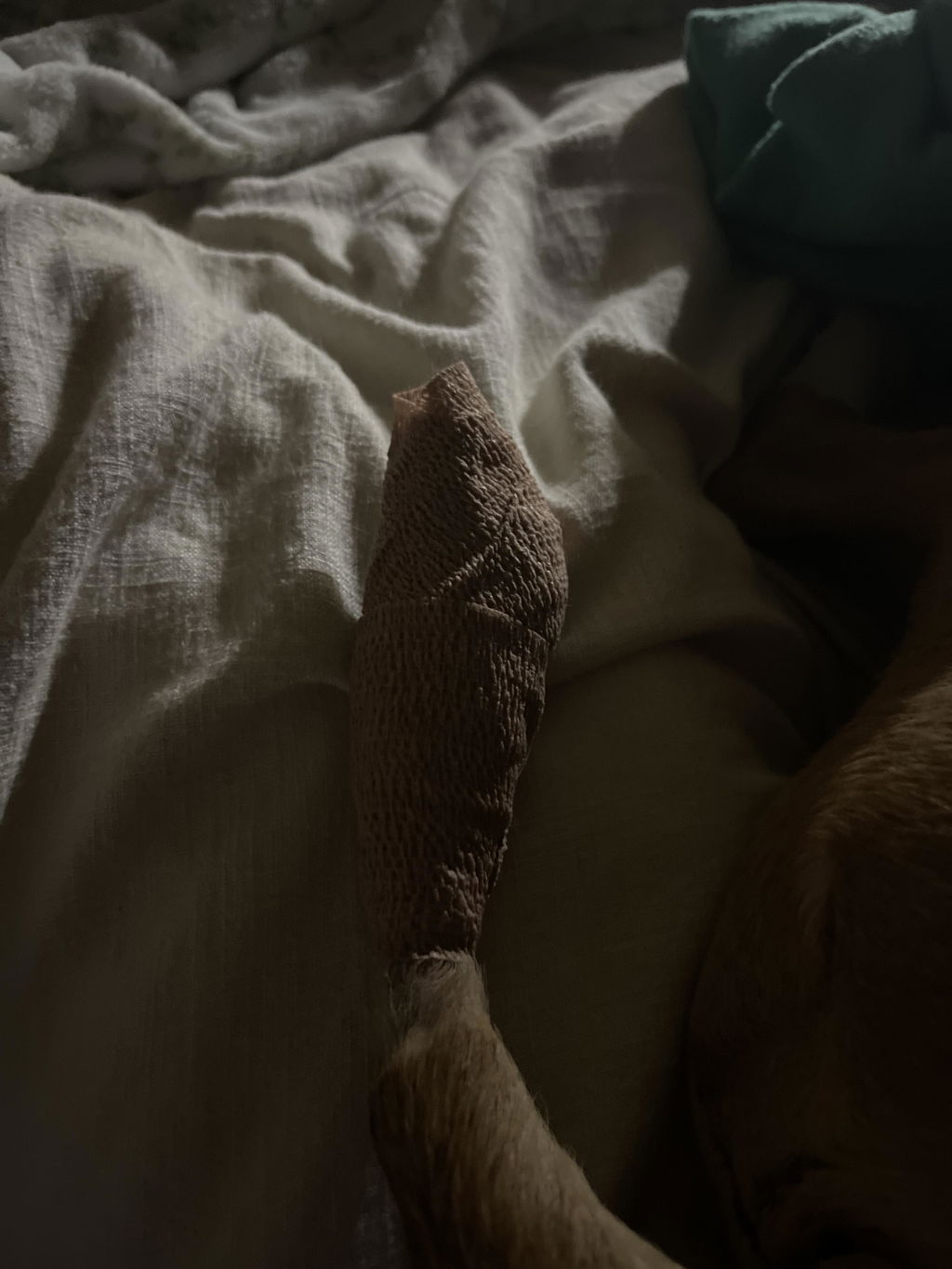
Is Happy Tail Syndrome Painful for Dogs? What the Science Says
Is Happy Tail Syndrome Painful for Dogs? Understanding Pain in Chronic Tail Wounds
One of the most common and confusing observations owners make about Happy Tail Syndrome is that their dog continues to wag the tail energetically and enthusiastically despite having an open, bleeding wound at the tip. This apparent mismatch between visible injury and behavioral indifference leads many owners to question whether Happy Tail is actually painful, and whether pain management is part of appropriate treatment. This page addresses what we know about pain perception in Happy Tail dogs and the behavioral and physiological reasons for the apparent paradox.
Why Dogs Keep Wagging Despite Visible Wounds
Neurology of tail wagging
Tail wagging in dogs is not a voluntary, cortically-controlled behavior the way a deliberate movement is. It is a semi-autonomic expression of emotional state driven by the limbic system — essentially, the same neural machinery that makes a dog's tail wag also processes emotional excitement and drive. A dog experiencing excitement, anticipation, or social engagement produces tail wagging as an involuntary output of that emotional state, not as a deliberate decision.
This means that even if the dog has some awareness that the tail tip is sensitive, the wag during excitement is not something the dog can consciously suppress. The emotional excitement overrides any local pain signal from the wound site.
Opioid-mediated pain modulation
Dogs (and all mammals) have natural opioid systems that modulate pain perception during high-arousal states. A dog in an excited social interaction may have significantly reduced effectively-felt pain during that window compared to the same stimulus during a resting state. This is why working dogs can sustain injuries in the field and not slow down, and why Happy Tail dogs appear pain-free during wagging episodes despite what the wound suggests.
Tail tip sensory anatomy
The tail tip has lower sensory nerve density than more proximal regions of the tail and than most other body areas. Mild traumatic injuries to the tail tip produce less pain signal than equivalent wounds on the trunk, paws, or face. This is not unique to dogs — human fingertip injuries that look severe are often less intensely painful than smaller injuries to the palm or wrist.
When Happy Tail Does Cause Significant Pain
While mild to moderate Happy Tail wounds are often tolerated with apparent stoicism, there are stages and conditions where Happy Tail-associated pain is significant and should be addressed:
- Infected wounds: Bacterial infection dramatically increases local pain. A dog that snaps at or cries when the tail tip is touched, or that actively guards the tail from handling, likely has a secondary infection.
- Tail fracture: A fracture at the tail tip from blunt impact causes pain along the tail column, not just at the wound surface. Dogs with fractured tail tips may not wag as freely, may be reluctant to let you handle the tail, and may show pain on palpation below the wound site.
- Exposed bone: When the wound has progressed to exposed bone or deep tissue, pain levels increase substantially. Dogs at this stage show behavioral changes consistent with chronic pain.
- Chronic tissue damage: Dogs with months-long Happy Tail histories may show general behavioral changes from chronic pain exposure: reduced engagement, reduced play drive, or irritability around the tail area even when not actively handling the wound.
Behavioral Signs of Pain in Happy Tail Dogs
Dogs mask pain behaviorally. Watch for subtle signs rather than waiting for overt pain displays:
- Licking the wound more than intermittently — sustained, focused licking indicates local discomfort or itching from healing
- Snapping, growling, or moving away when the tail is touched during handling
- Holding the tail in an unusual position — tucked, slightly raised, or angled away from the normal resting position
- Reduced wagging in contexts that previously produced enthusiastic wagging
- General behavioral changes: less active, less engaged, sleeping more than usual
Pain Management in Happy Tail Treatment
For simple Stage 1–2 Happy Tail wounds without infection, dedicated pain management beyond wound comfort is generally not required. The dog is tolerating the wound well at the behavioral level, and the goal of treatment is healing, not pain suppression.
For Stage 3–4 wounds, infected wounds, or dogs showing behavioral pain signs, discuss the following with your vet:
- Short-course NSAID therapy (veterinary prescription) to reduce wound-site inflammation during the early healing period
- Topical wound care agents (lidocaine-containing veterinary gels for wound cleaning discomfort during daily dressing changes)
- Antibiotic treatment — addressing the infection source of pain is more effective than pure analgesic management
Does the K9 TailSaver Cause or Reduce Pain?
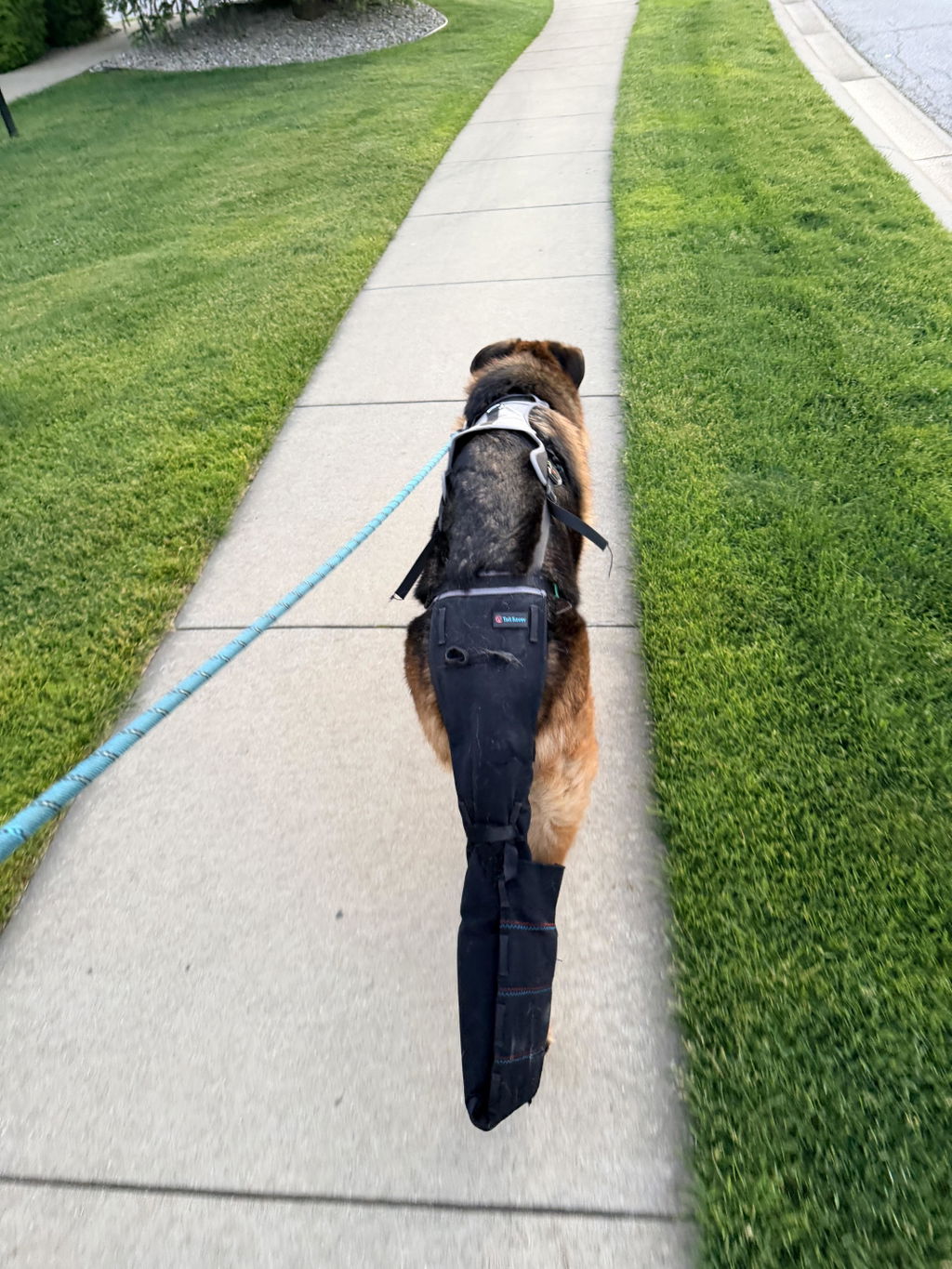
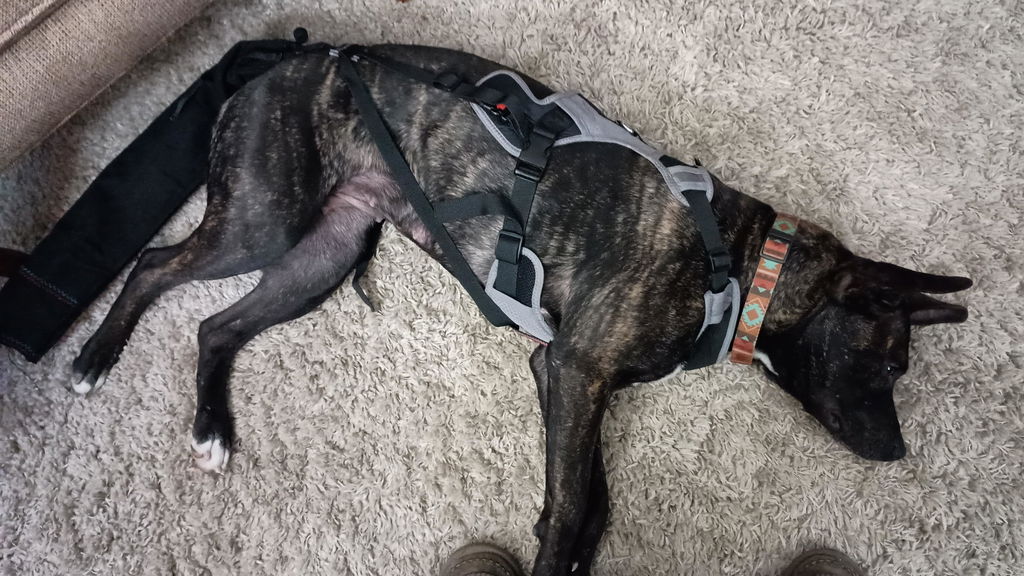
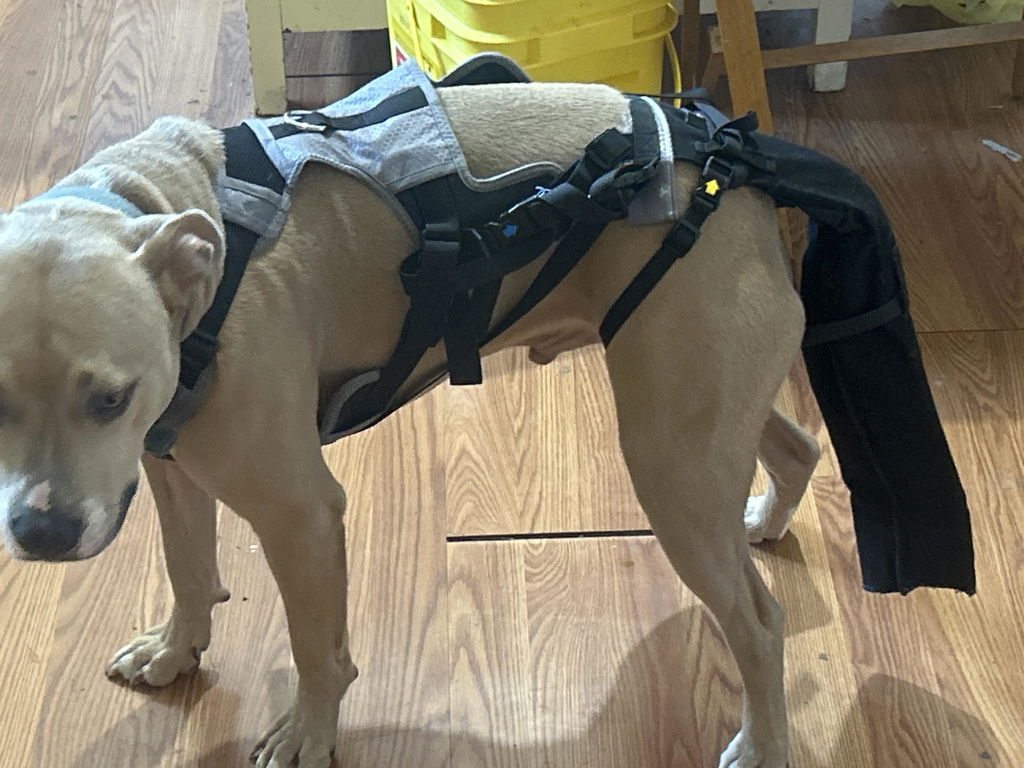
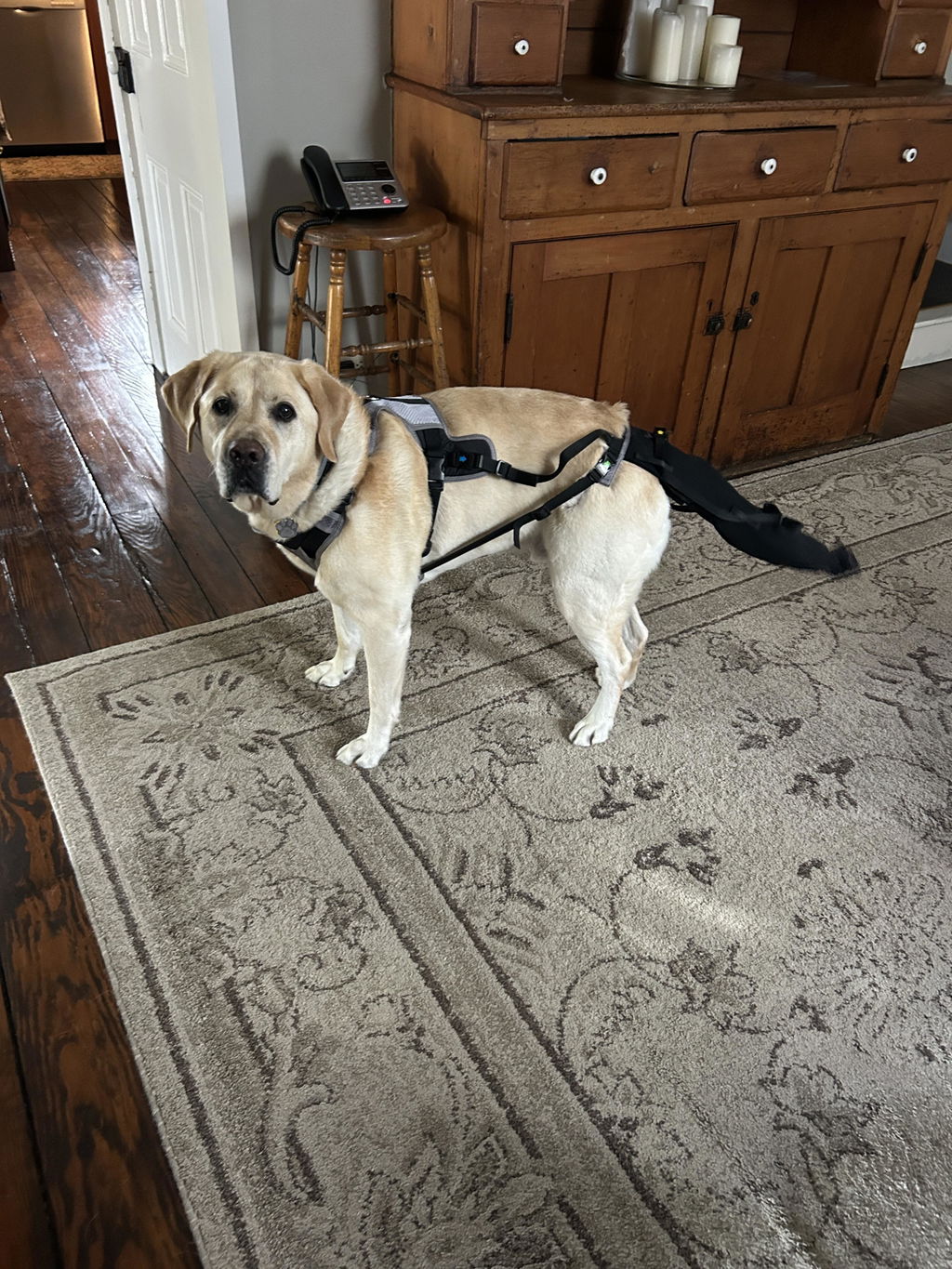
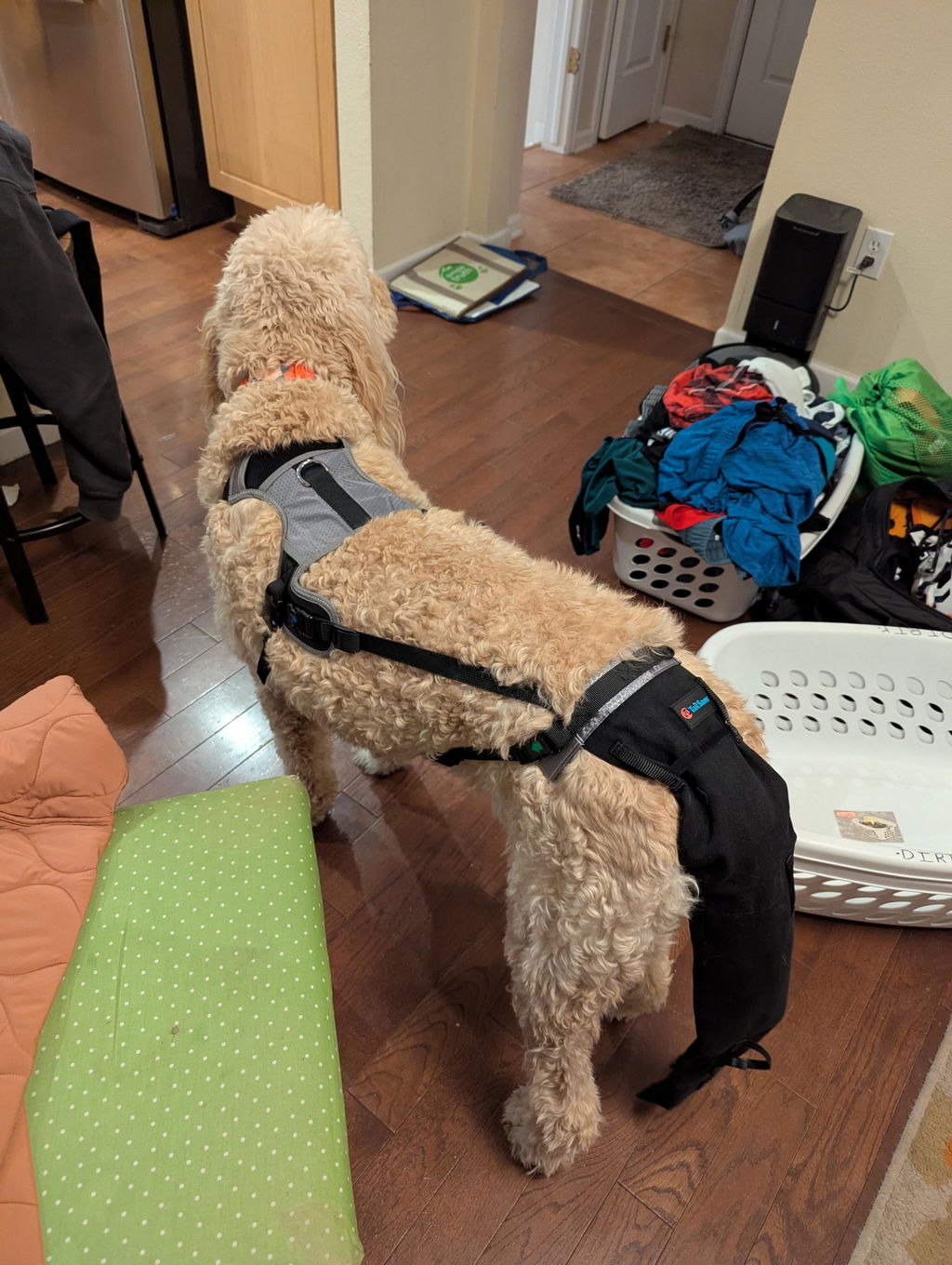
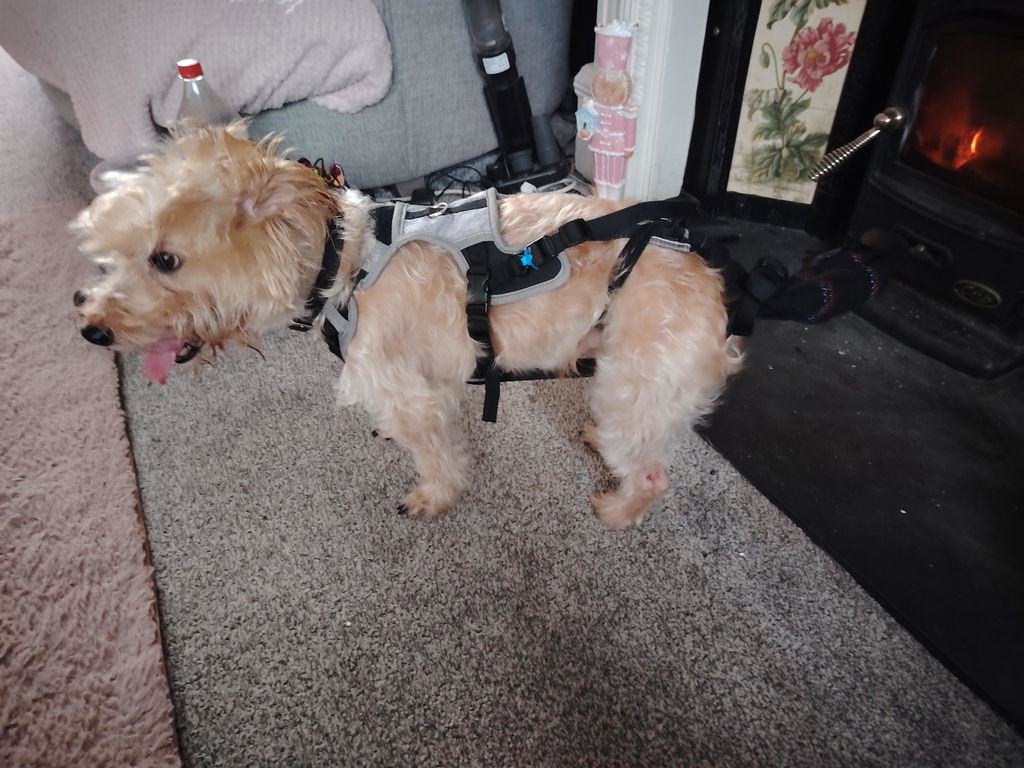
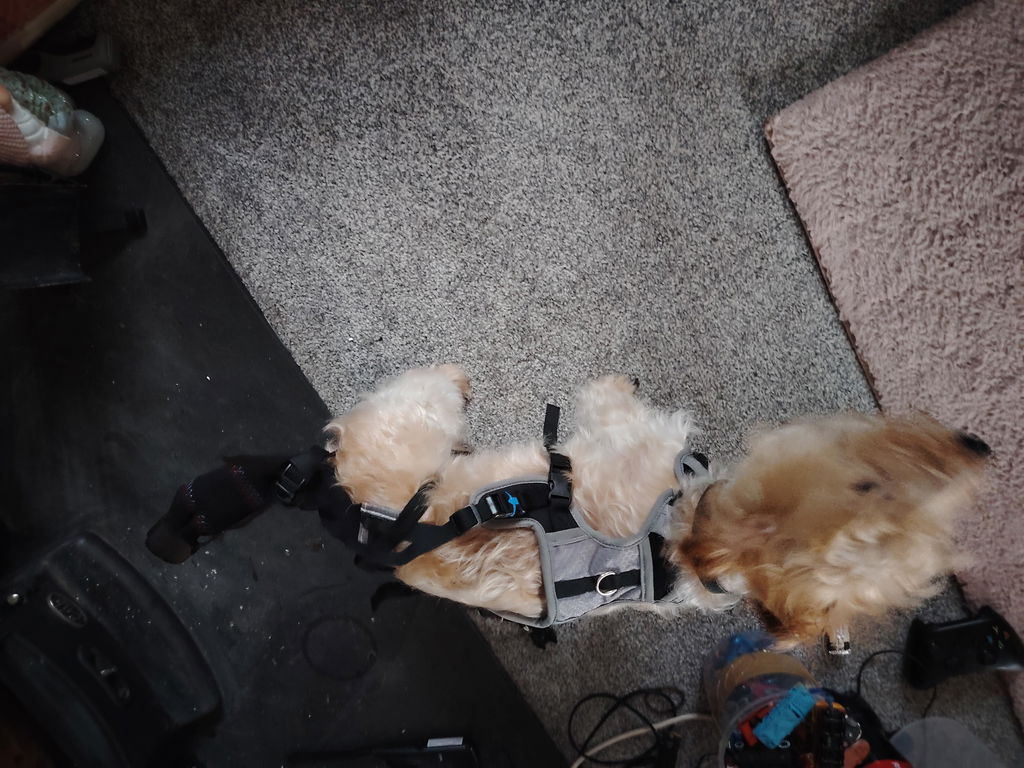
The K9 TailSaver® reduces sensory stimulation to the wound in several ways:
- The padded sleeve prevents the tactile input of direct impact on the wound
- Preventing licking reduces the itch and pain cycle of lick-induced wound irritation
- Allowing continuous wound closure without re-injury reduces the cumulative pain burden of repeated reopening events
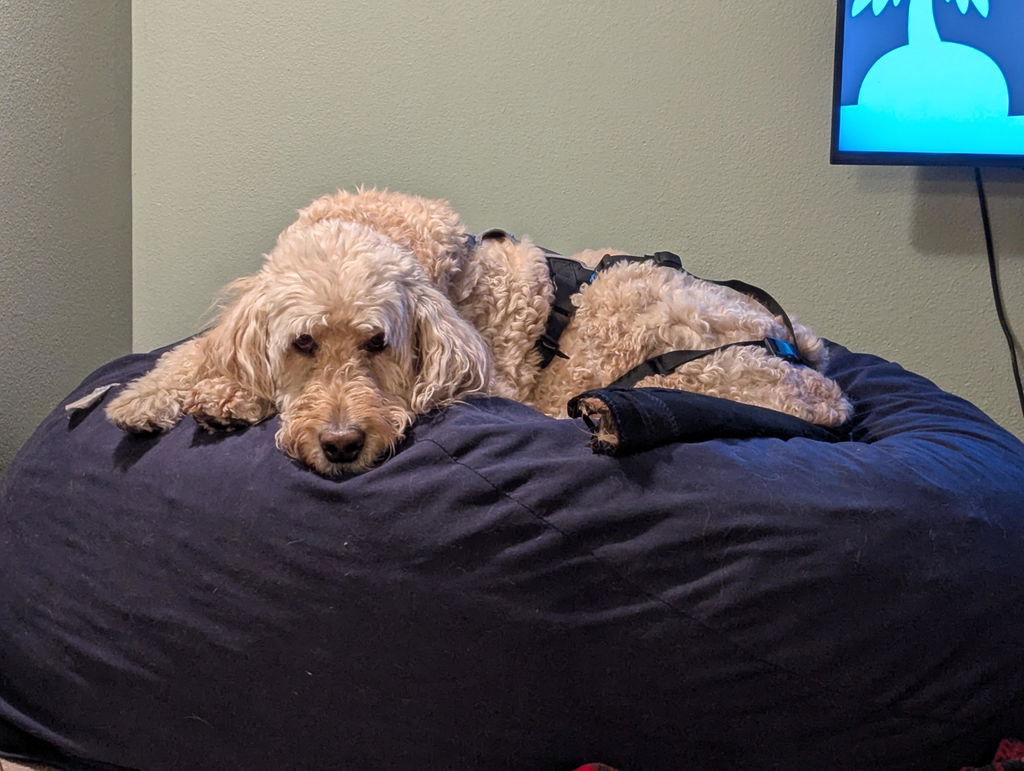
Most dogs accept the device within 48 hours and show no signs of distress while wearing it. The harness fits like a standard dog harness; the tail sleeve is padded and not constrictive.
Happy Tail Pain FAQ
My dog is wagging enthusiastically. How badly can it hurt?
The behavioral pain signal is genuinely suppressed during excitement. Does this
mean no pain exists? Not necessarily. It means the dog's arousal state overrides
the pain signal during wagging. The wound should be treated and protected regardless
of behavioral pain tolerance.
My dog cries when I clean the wound. Is this normal?
Wound cleaning disrupts the wound surface and triggers pain in a context where
the dog is not in an aroused state. Brief vocalization during cleaning is common
for more sensitive dogs or deeper wounds. To reduce handling discomfort, warm the
saline to body temperature before applying and work quickly during the cleaning step.
Could ongoing Happy Tail damage be causing chronic pain I am not seeing?
Yes — chronic pain in dogs is often clinically "silent" at the behavioral
level. If your dog has had ongoing Happy Tail for more than 4–6 weeks,
treating it promptly and definitively is important not just for wound closure but
for quality-of-life reasons regardless of overt pain signals.