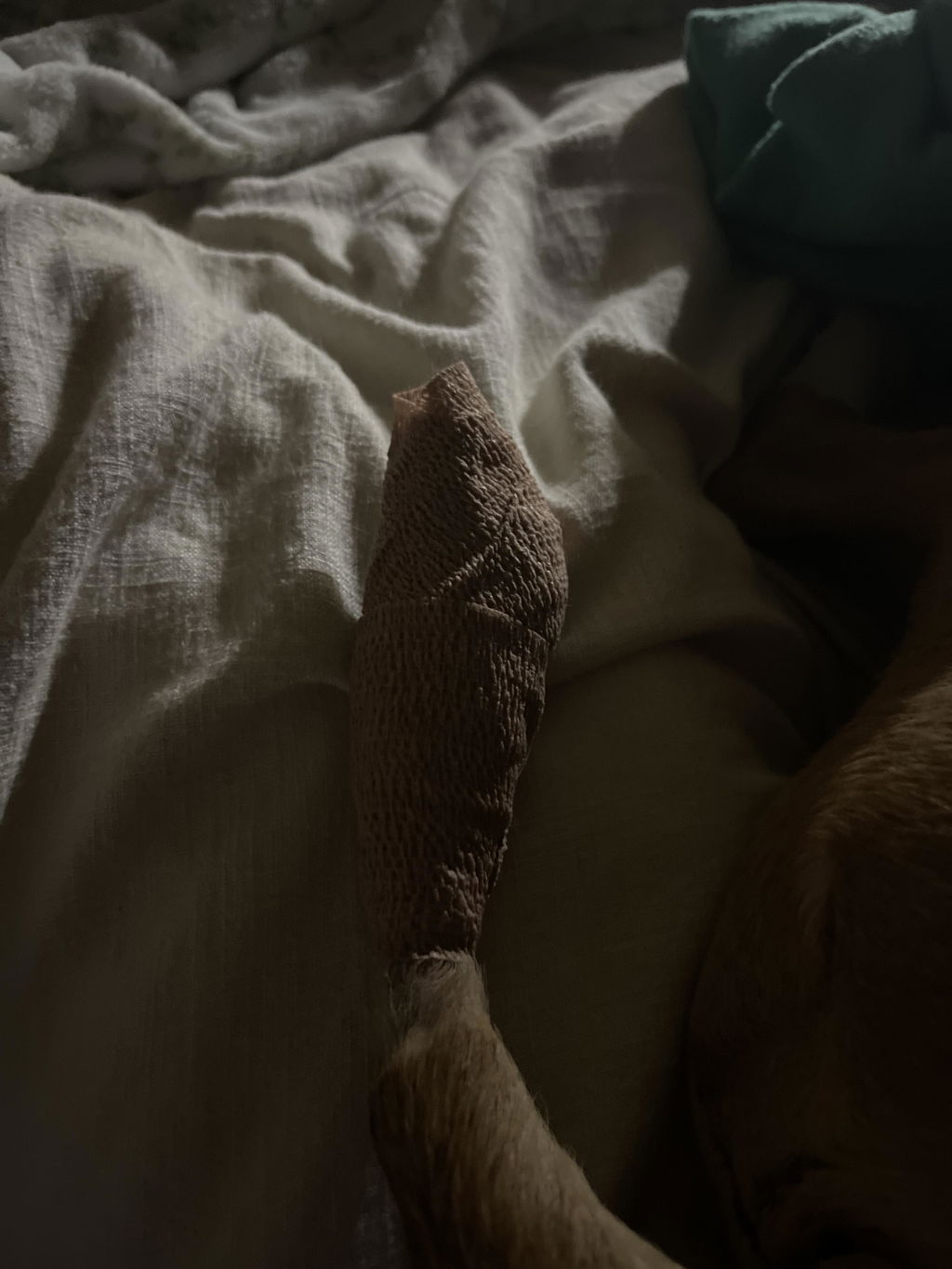
When a Dog's Tail is Caught in a Door and Solutions
When a Dog’s Tail Gets Caught in a Door: What to Do & How to Heal
A dog’s tail caught or slammed in a door is one of the most common acute tail injuries veterinarians see. The narrow space between a closing door and the frame exerts tremendous force on the tail — enough to bruise, fracture, or fully sever the tail tip. Knowing what to do in the first 24 hours determines how well the tail heals.
Signs of a Door‑Caught Tail Injury
- Immediate yelping and flinching at the point of impact
- Swelling or bruising along the tail within minutes
- Bleeding from a split or laceration at the tail tip
- Dog holds tail low or tucks it and avoids wagging
- Sensitivity to touch near the injured section
- Deformity or kink indicating a possible fracture
Step-by-Step: What to Do Right Now
- Calm your dog. Excitement causes wagging, which reopens the wound and worsens bleeding. Move to a quiet room and have someone gently restrain the dog.
- Assess the wound. Is it a superficial split or is bone visible? Bone or deep tissue exposure requires emergency vet care.
- Control bleeding. Apply light pressure with a sterile gauze pad for 5–10 minutes. Do not wrap tightly — this can cut off circulation.
- Call your vet. Even minor door injuries can cause hairline fractures that worsen without treatment. A radiograph confirms the extent of the damage.
- Prevent licking and chewing. Once the wound is assessed, protect it from the dog’s mouth while you travel to the vet or wait for an appointment.
Emergency vs. Non-Emergency Thresholds
Go to the emergency vet immediately if:
- Bleeding does not slow after 10 minutes of gentle pressure
- Bone, cartilage, or tendons are visible
- The tail tip is completely severed
- The dog is in severe distress or cannot bear weight
Can wait for a regular vet appointment if:
- Bleeding has stopped or is minimal
- No obvious deformity or exposed tissue
- Dog is walking and weight-bearing normally
- Wound is a clean split less than 1 cm
Long‑Term Recovery: Keeping the Wound Closed
After a door injury, the biggest challenge is the same as for Happy Tail Syndrome: the dog resumes wagging and re-traumatizes the wound before it can close. Standard bandages slip within hours on an active tail.
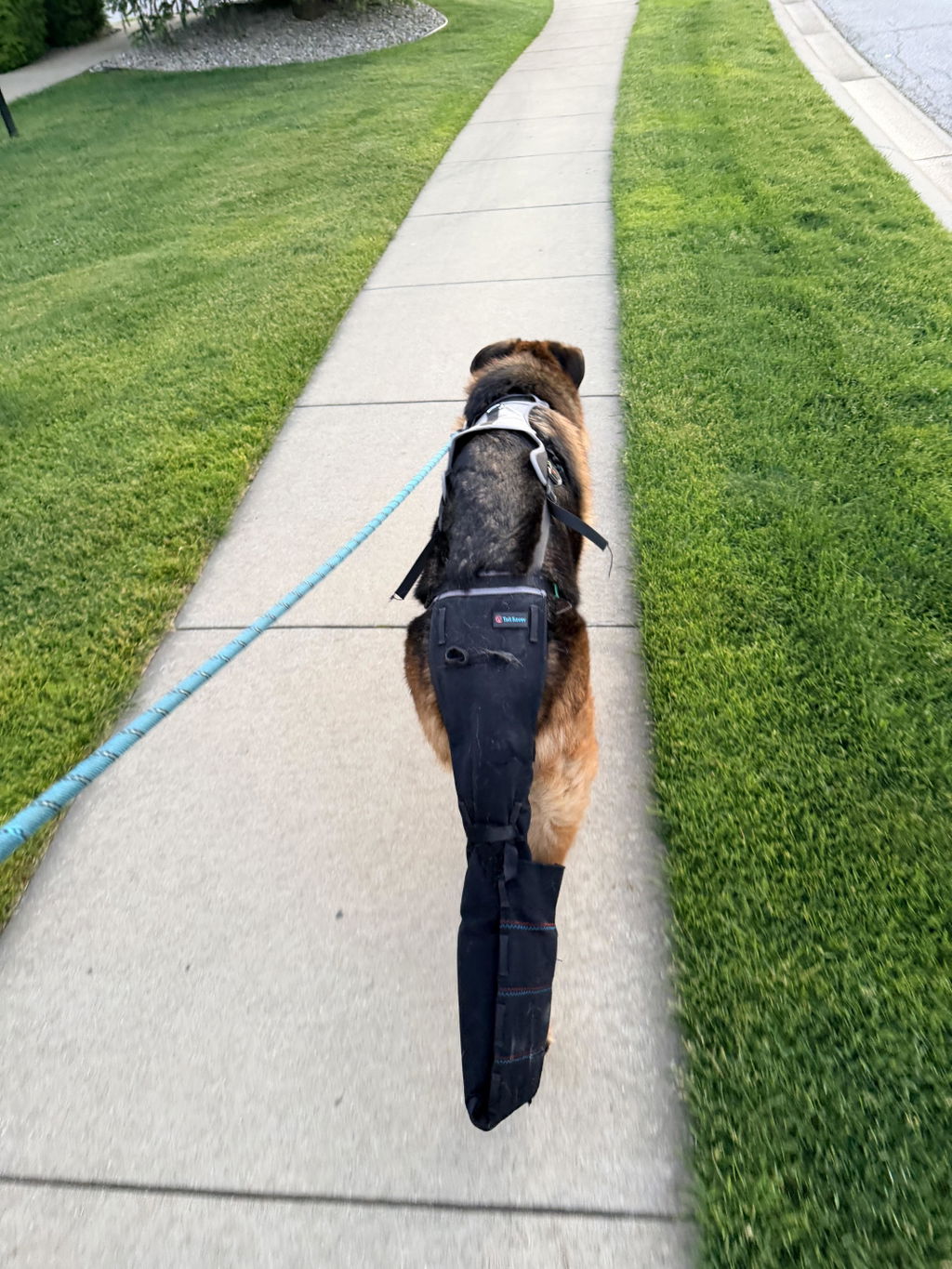
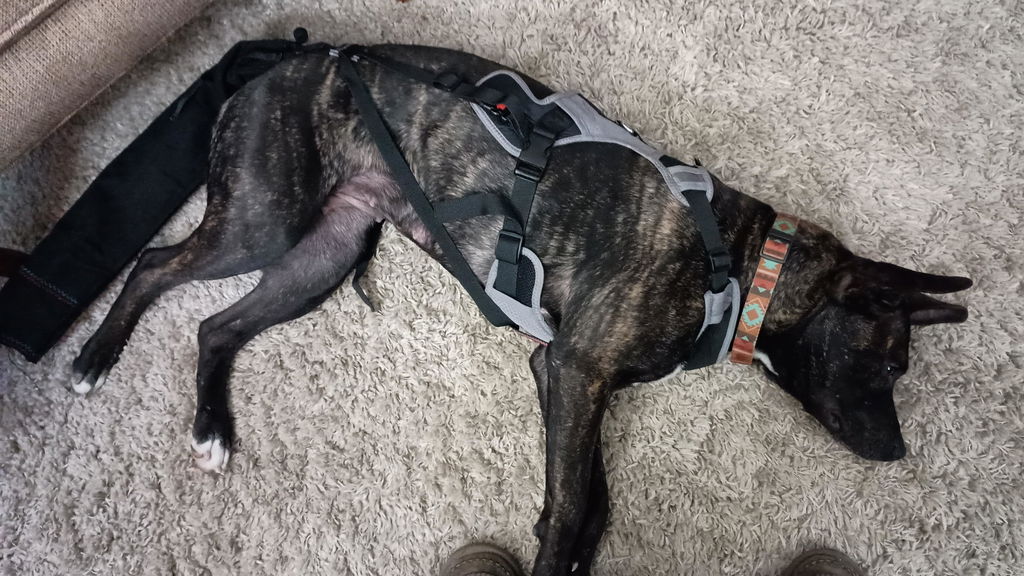
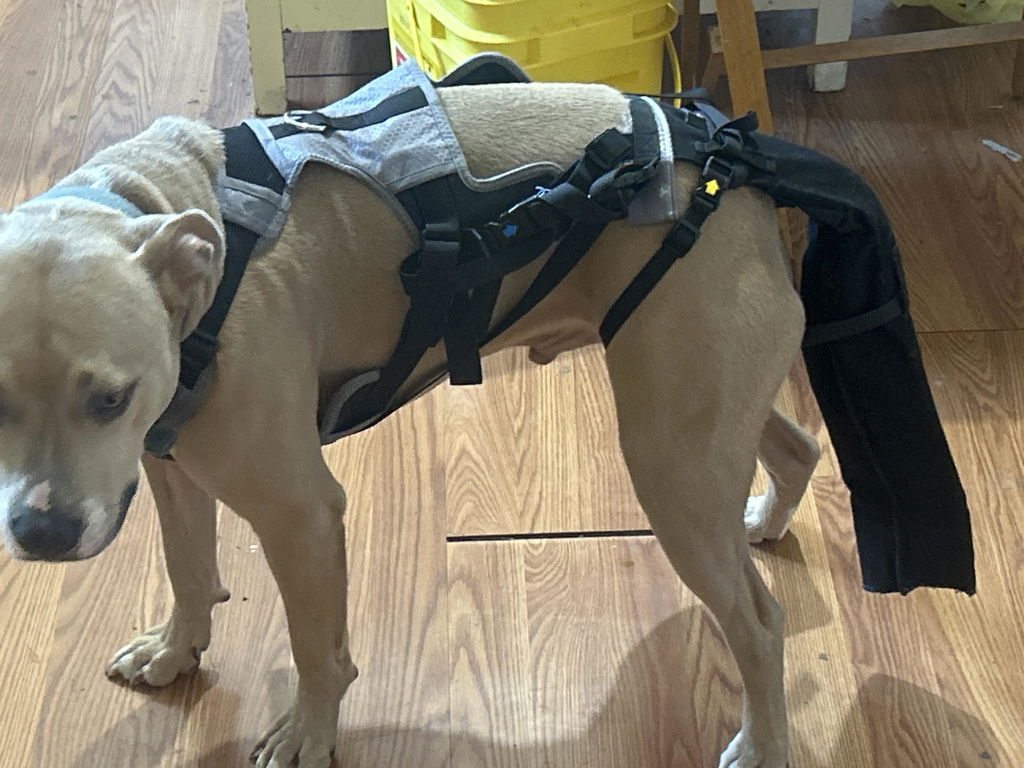
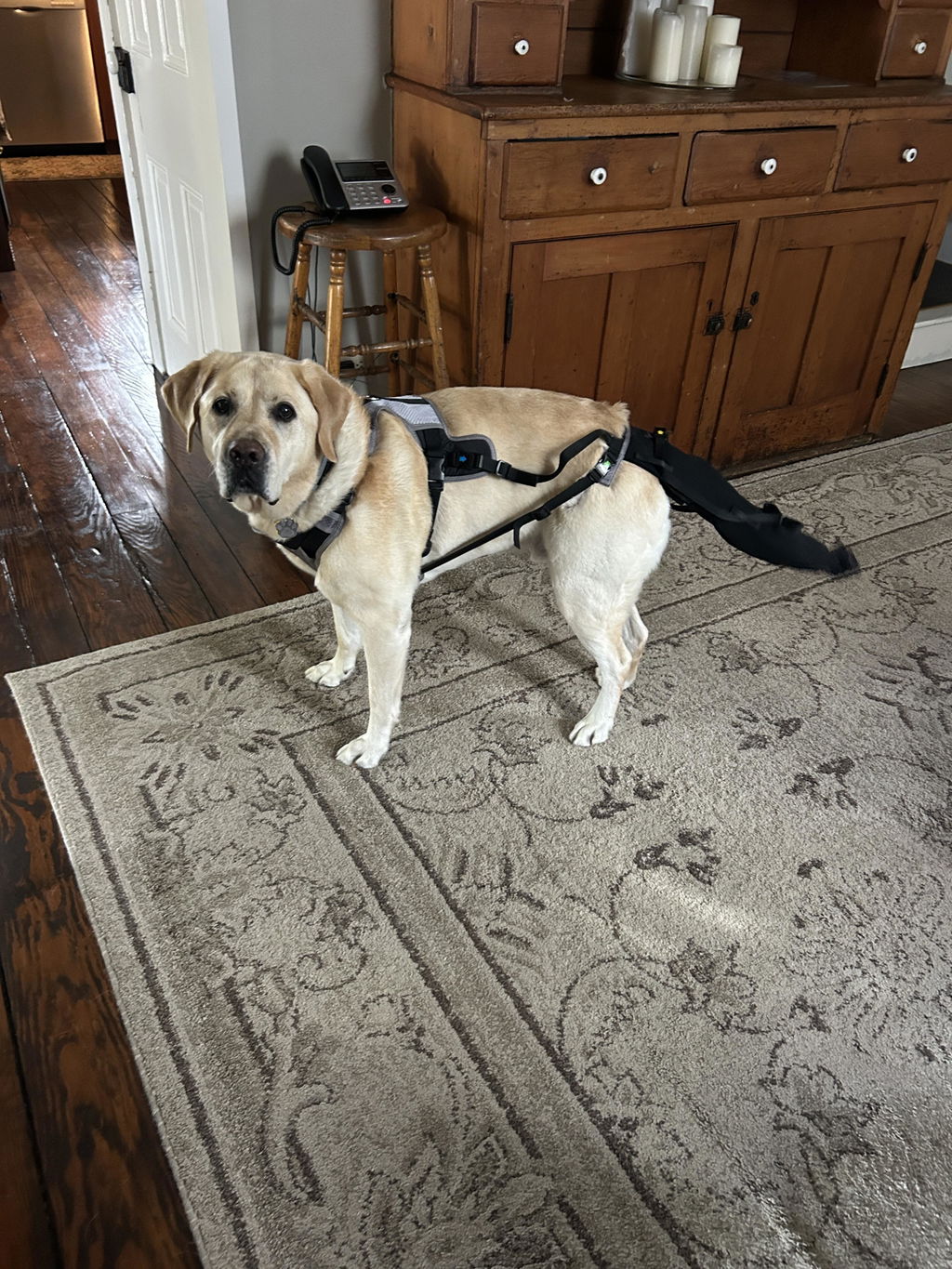
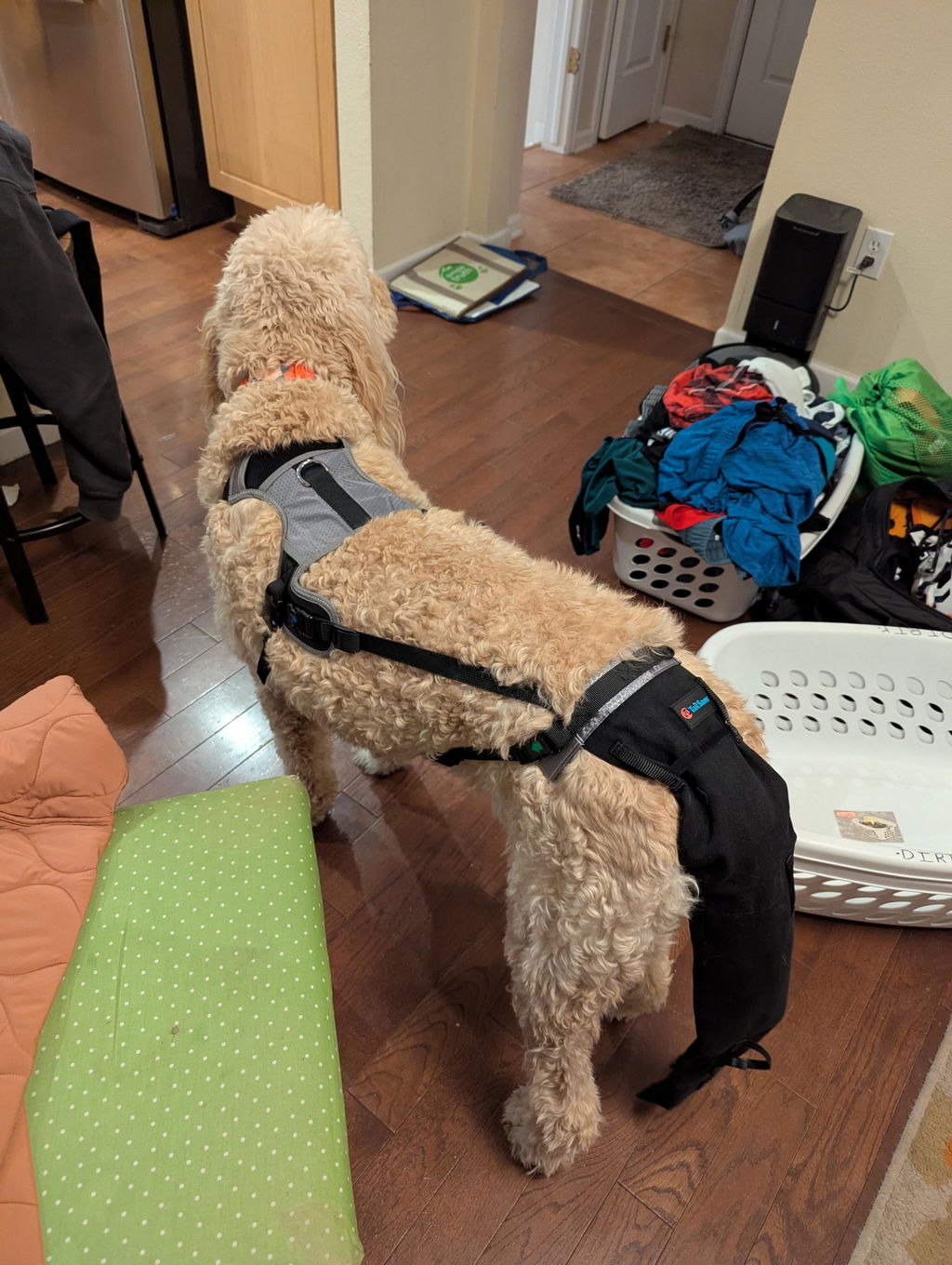
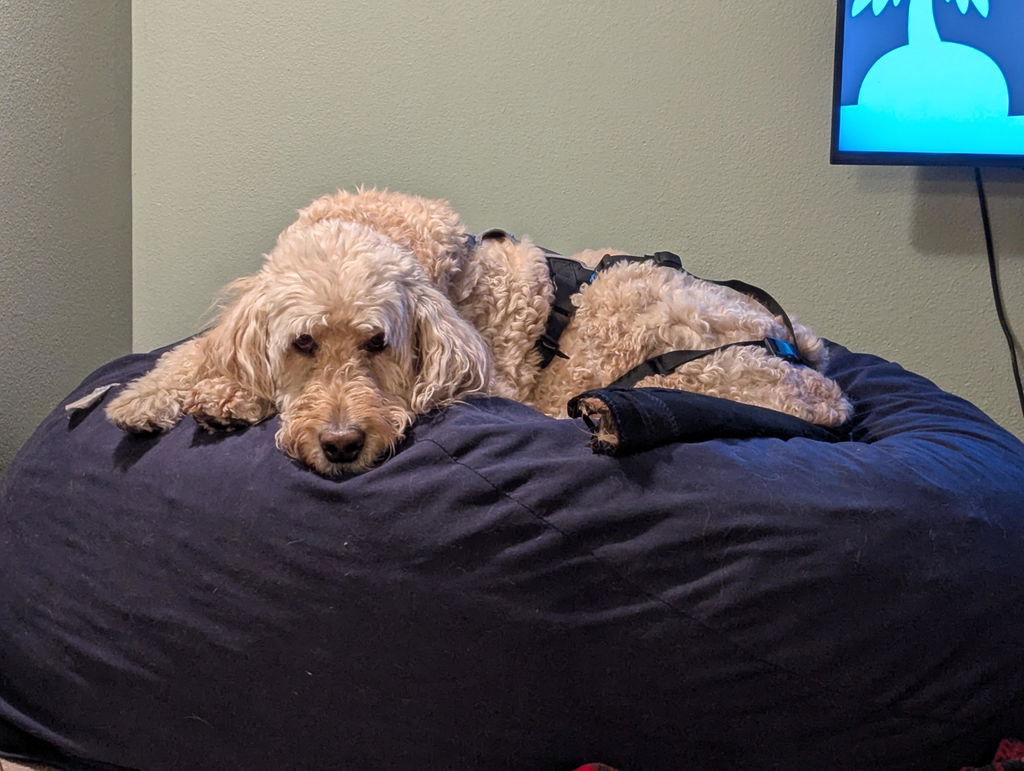
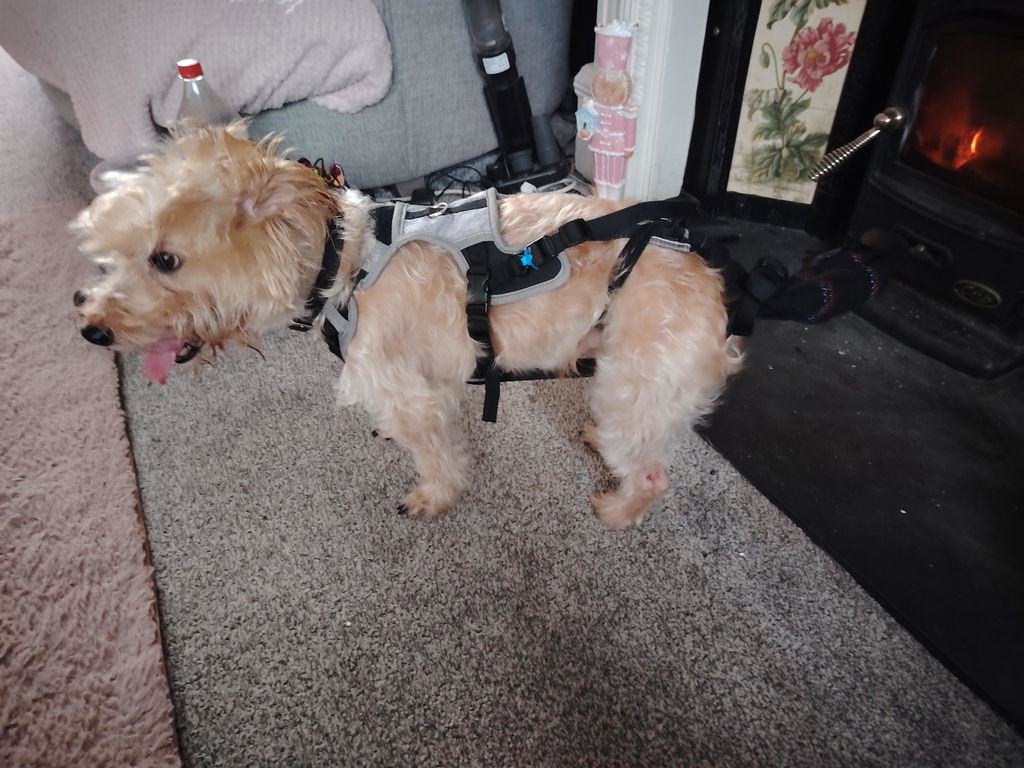
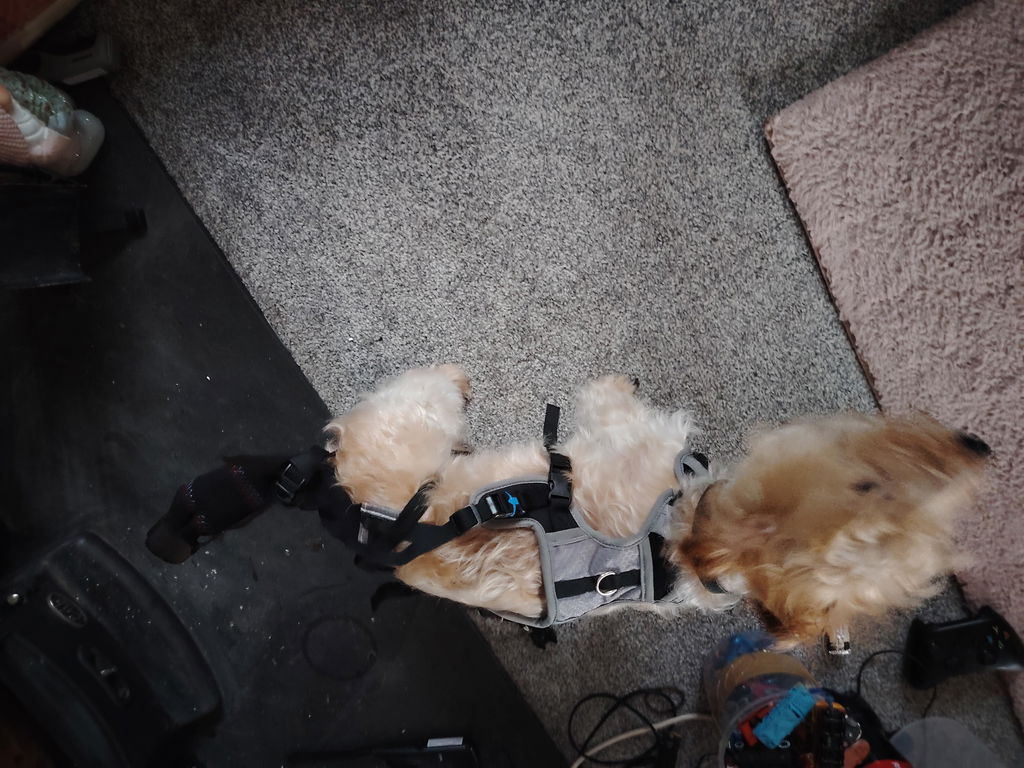
The K9 TailSaver addresses this by using a body harness that anchors the protective sleeve in place. Unlike tape-and-bandage methods, the sleeve cannot be shaken off or chewed through, giving the wound the uninterrupted protection it needs to close properly. See the Wound Care FAQ for dressing protocol and monitoring guidance.
Fractures: When the Tail Won’t Heal Without Intervention
A door impact can cause a clean fracture, a greenstick fracture, or a crush injury with multiple fragments. Depending on the severity and location along the tail, your vet may recommend:
- Rest and splinting for simple distal fractures
- Bandaging + external support for mid-tail fractures
- Partial amputation only if the fracture is severe, infected, or on the tail tip where circulation is already compromised
Many door‑caught fractures heal fully with proper protection. Amputation is a last resort, not a first line of treatment.
Frequently Asked Questions
Can a dog’s tail heal on its own after being caught in a door?
Minor split-skin injuries can heal with consistent protection. Fractures require
vet assessment. In both cases, preventing the dog from wagging the injury open
is the key to recovery.
How do I stop my dog from wagging after a tail injury?
You cannot reliably stop wagging through training alone. Tail protection that
physically covers the wound is necessary. See
alternatives to standard bandaging
that actually stay on.
My dog’s tail is bent at the spot where it got caught. Is it broken?
A kink or deviation at the injury site often indicates a fracture. Have the
vet take an X-ray. Many of these fractures heal well with the tail protected
for 4–6 weeks.
How long does a door‑caught tail injury take to heal?
Simple lacerations: 10–14 days with proper protection. Fractures:
4–8 weeks depending on severity and whether the dog re-injures the
site. Consistent protection throughout this period is critical.