E-Collar vs. Tail Sleeve for Happy Tail Syndrome: Which Works Better?
E-Collar vs. Tail Sleeve for Happy Tail: Side-by-Side Comparison
When a veterinarian diagnoses Happy Tail Syndrome, the most common prescription alongside wound care is an Elizabethan collar — the "cone of shame" — to prevent self-licking. This is logical for most wound sites, where the cone prevents the dog from reaching the wound location. For a tail wound, especially on a large or flexible dog, the cone is significantly more limited. This page compares the cone, standard bandaging, and harness-anchored tail sleeves across every factor that matters for Happy Tail recovery.
What Each Option Actually Does
Standard Elizabethan collar (E-collar / cone)
An E-collar is a rigid or semi-rigid cone placed around the dog's neck. Its purpose is to prevent the dog from reaching a wound with its mouth. It does not protect the wound from external impact, does not hold a dressing in place, and does not cushion the wound against wall or furniture contact. For Happy Tail specifically, it also fails at its primary purpose for many large breeds able to flex around the cone to reach their tail tips.
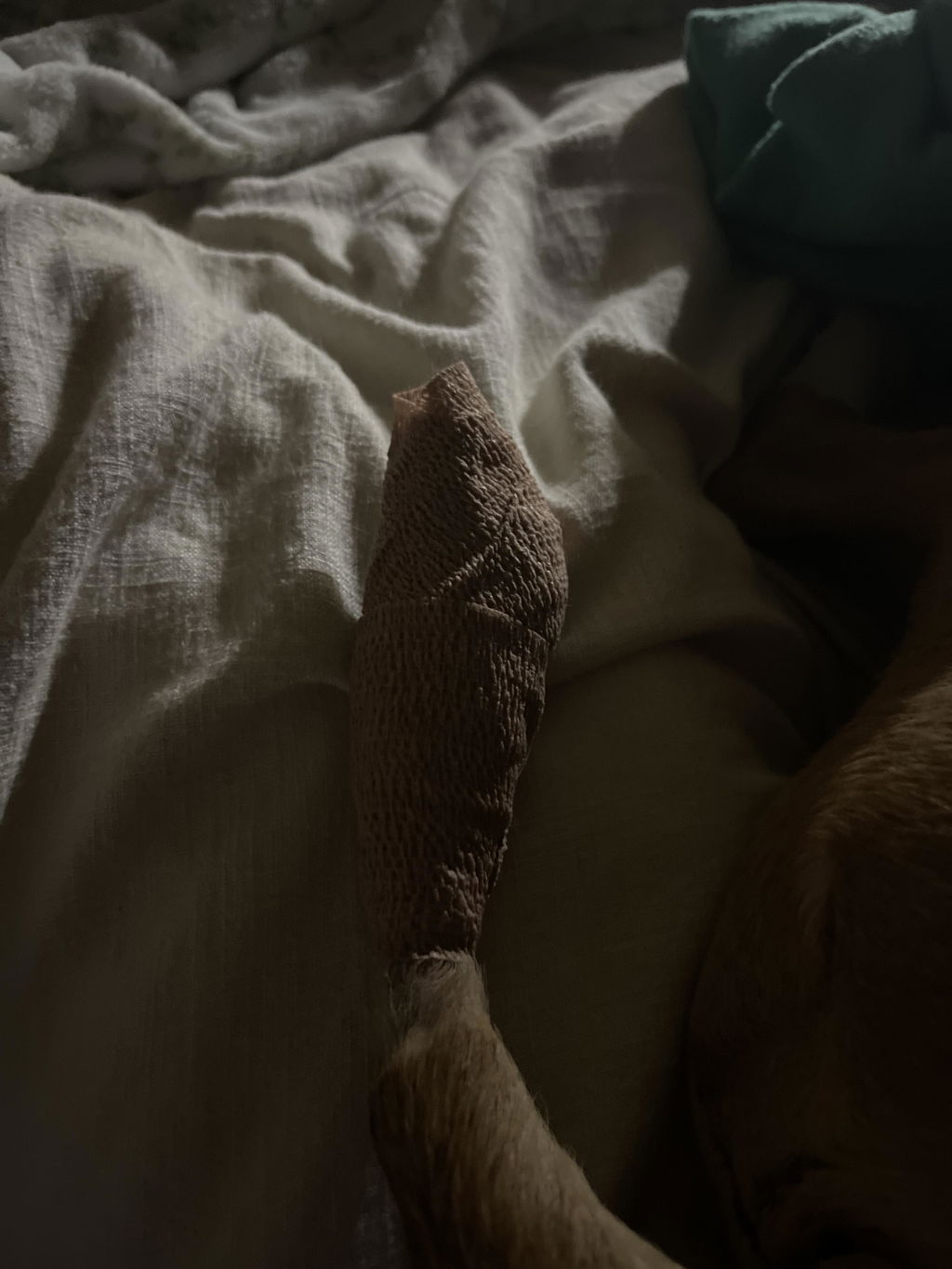
Standard cohesive bandage
Bandage protects the wound from environmental contamination and holds a wound dressing in place at rest. It does not have structural resistance to repeated impact forces, does not remain anchored on a tapered tail surface during vigorous wag activity, and does not prevent licking once the dog's tongue can reach over or around the bandage. Typically fails within hours for tail application.
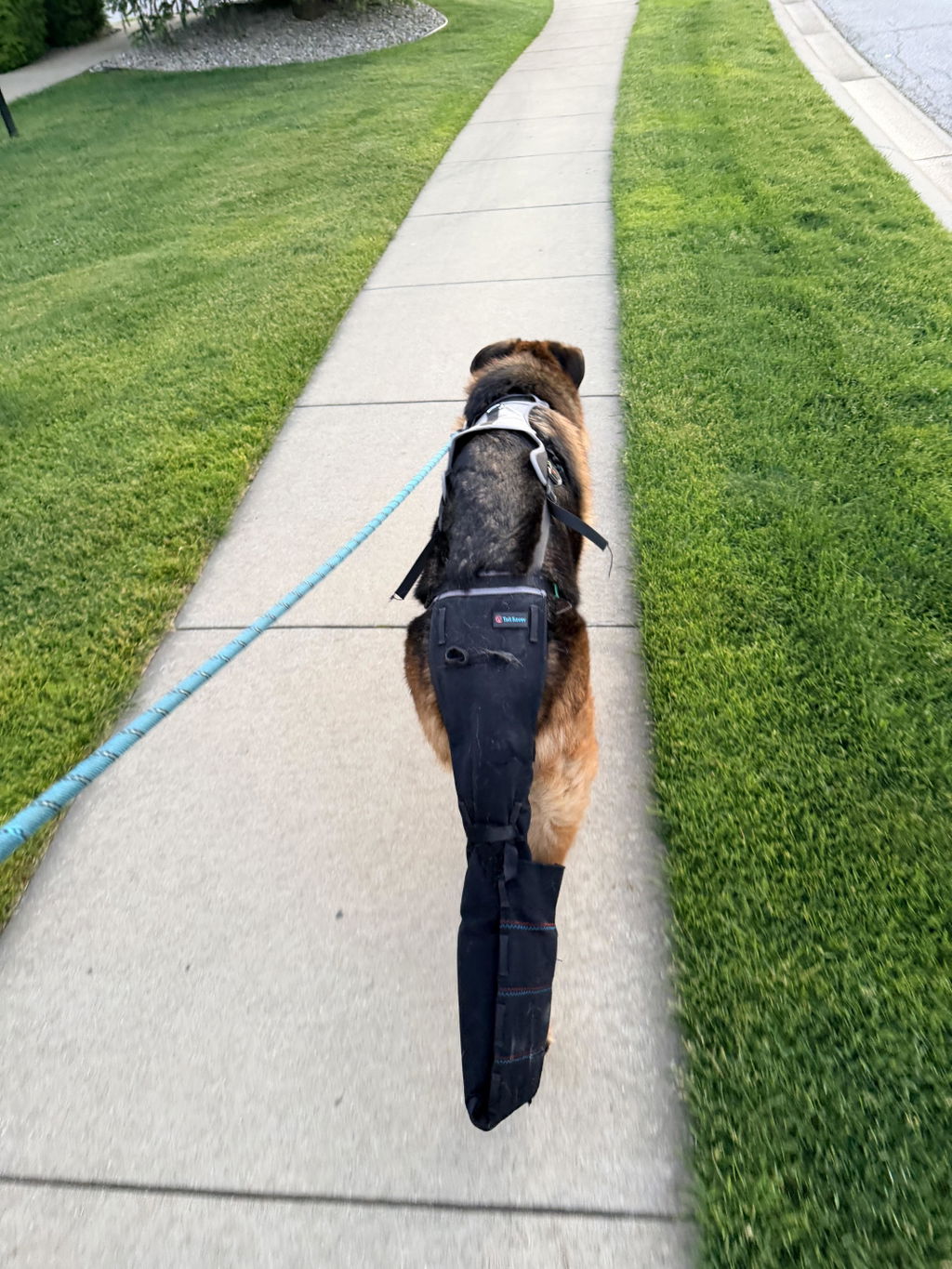
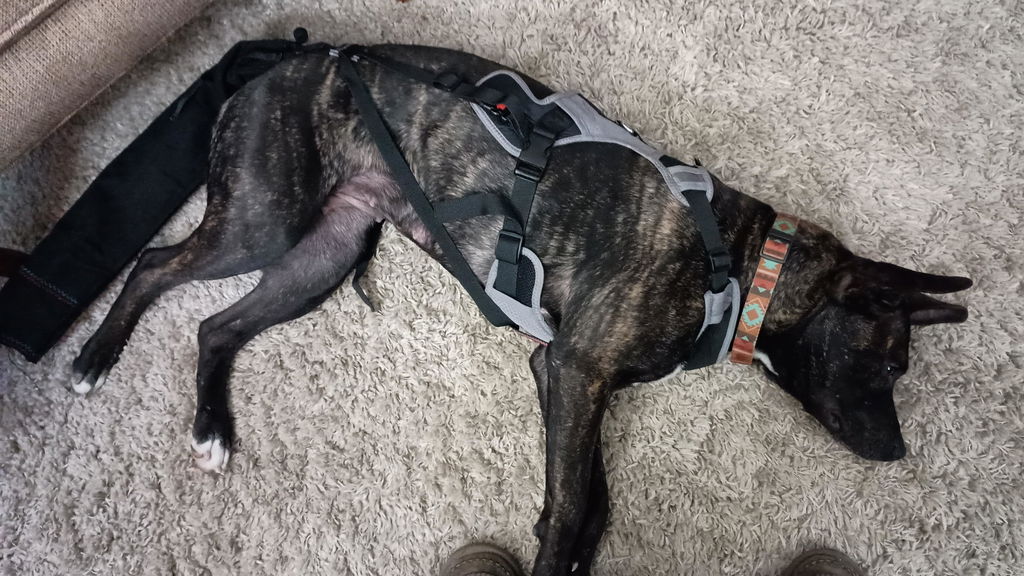
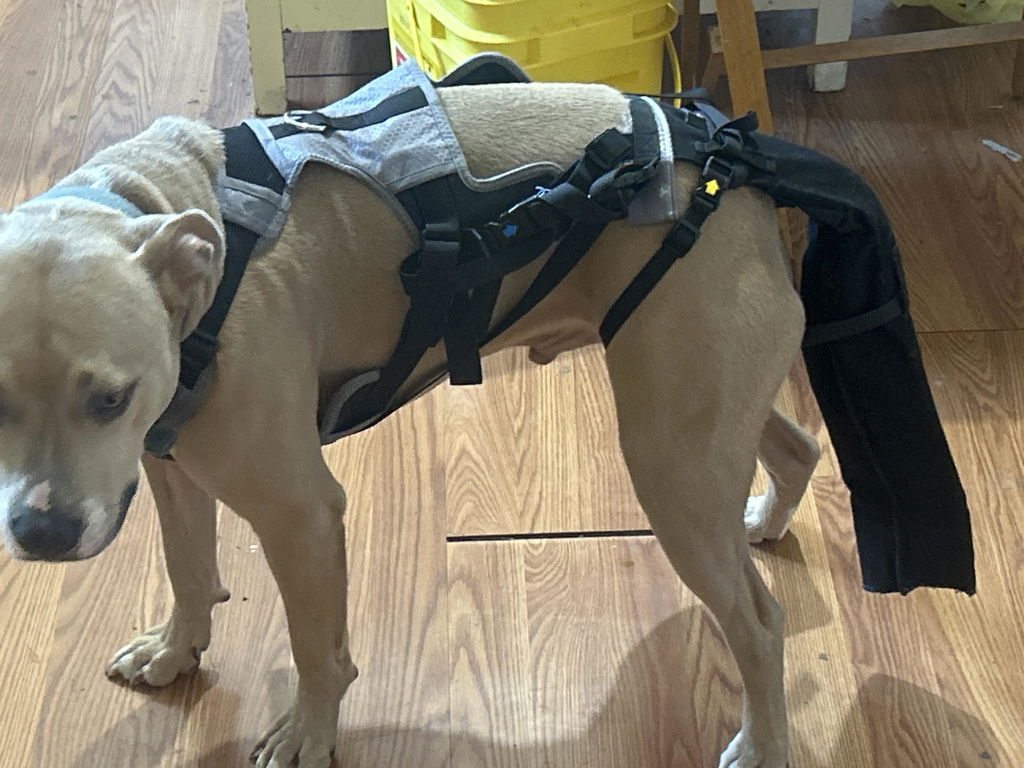
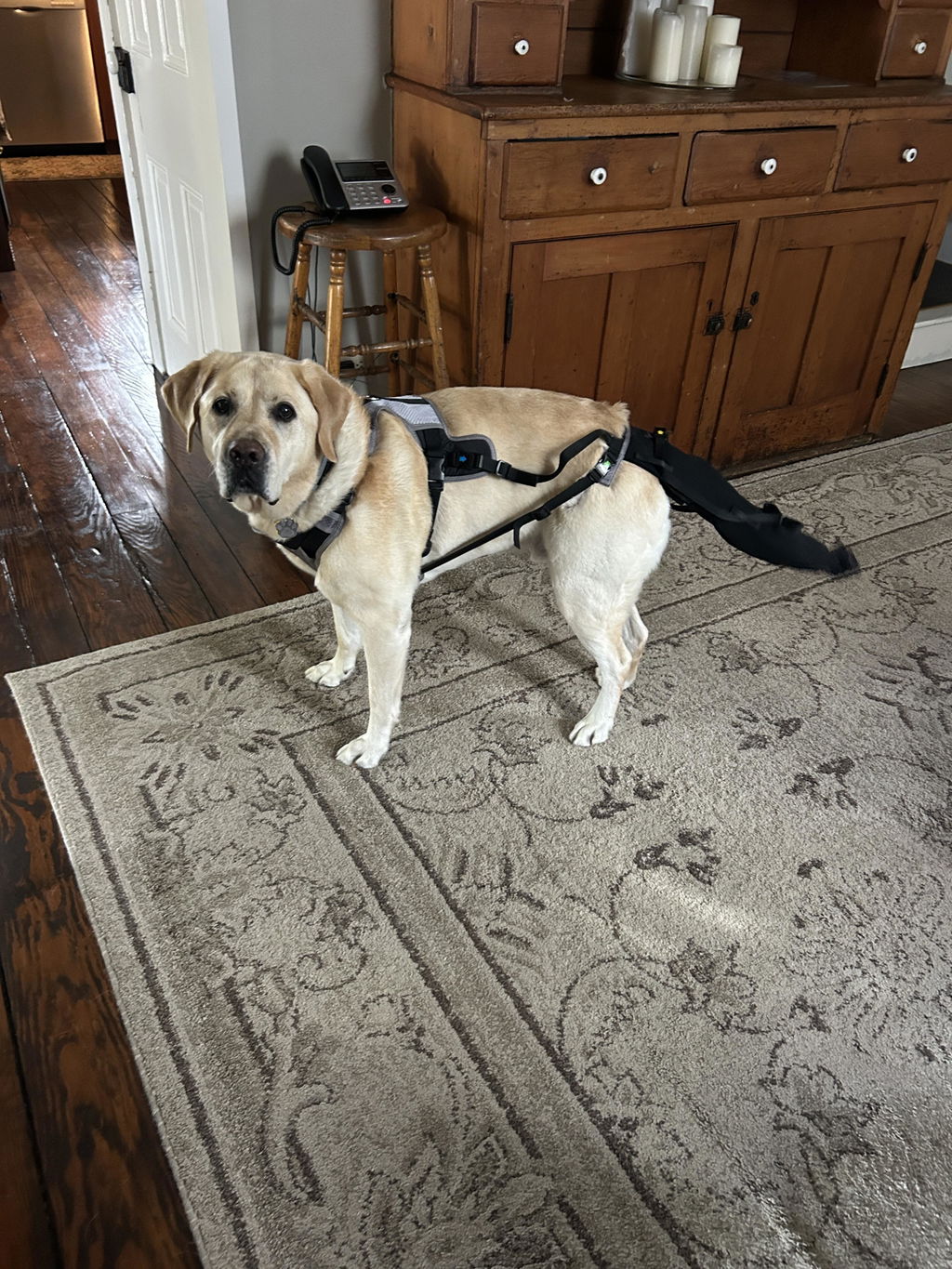
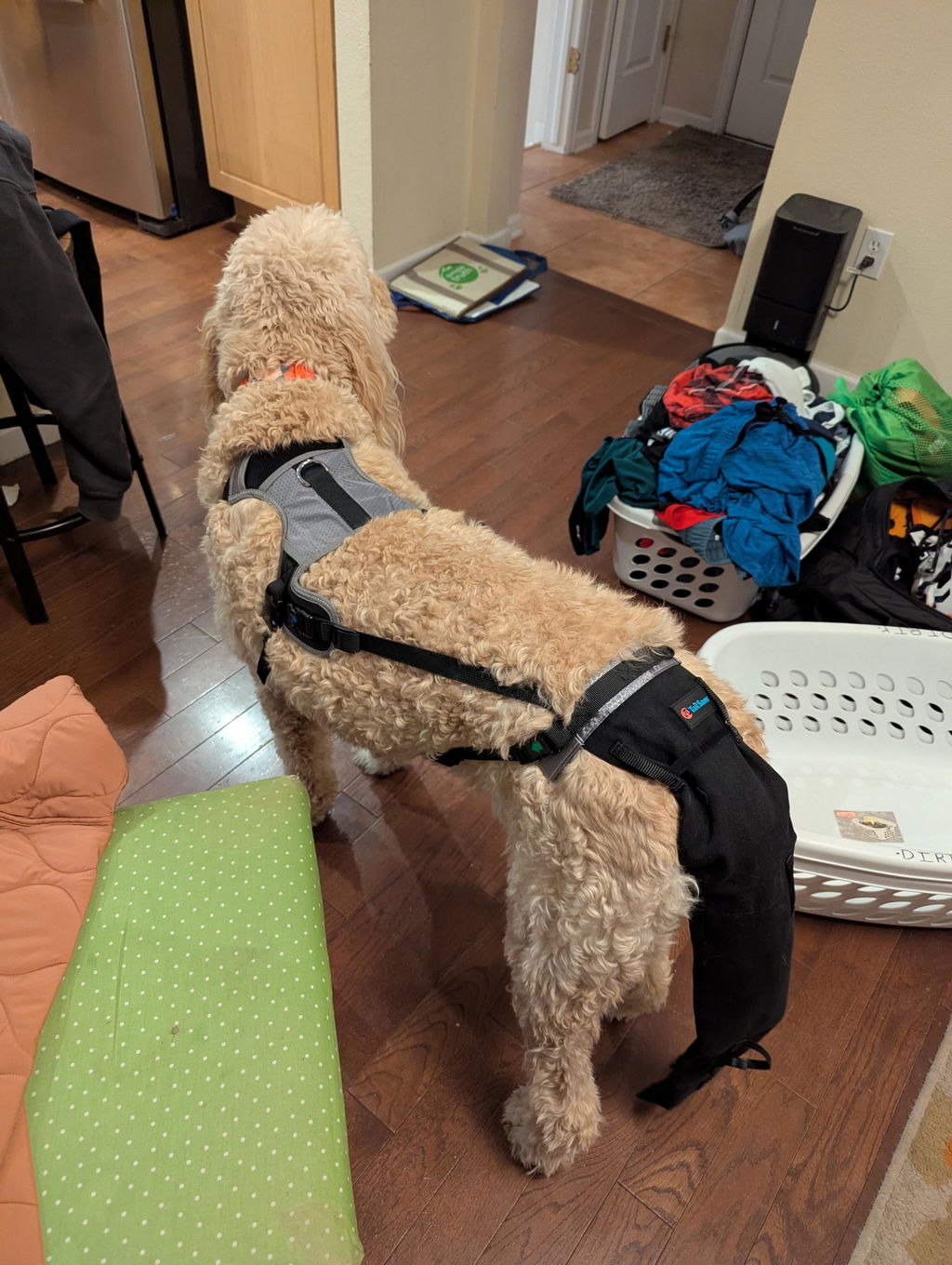
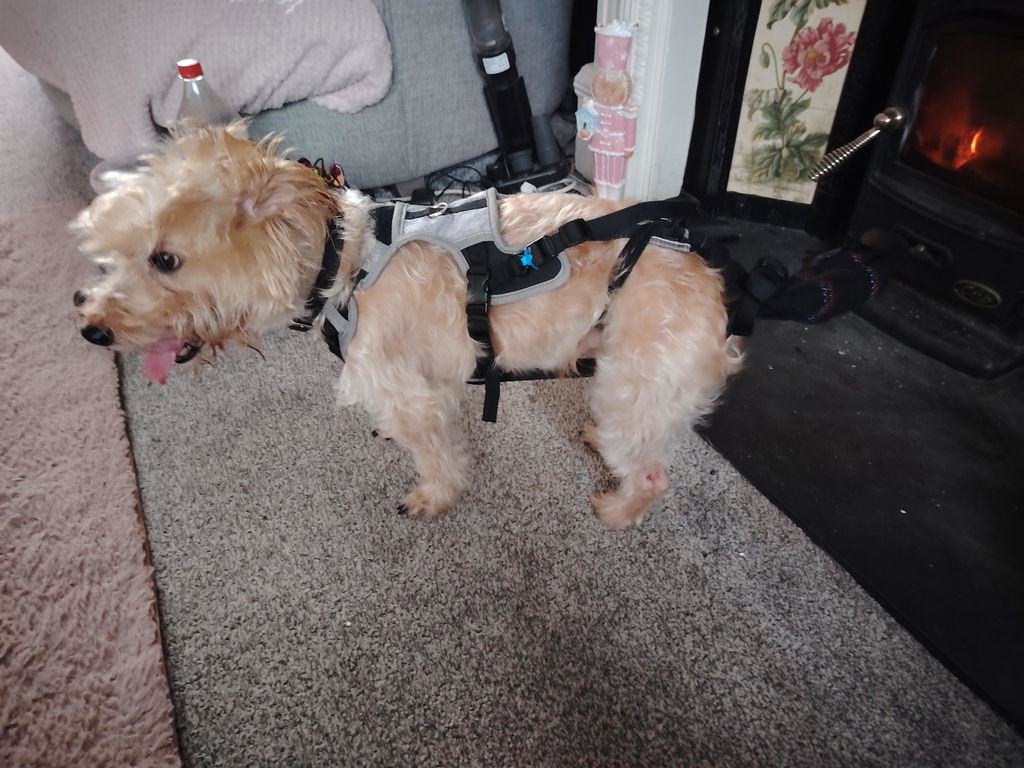
Harness-anchored tail sleeve (K9 TailSaver)
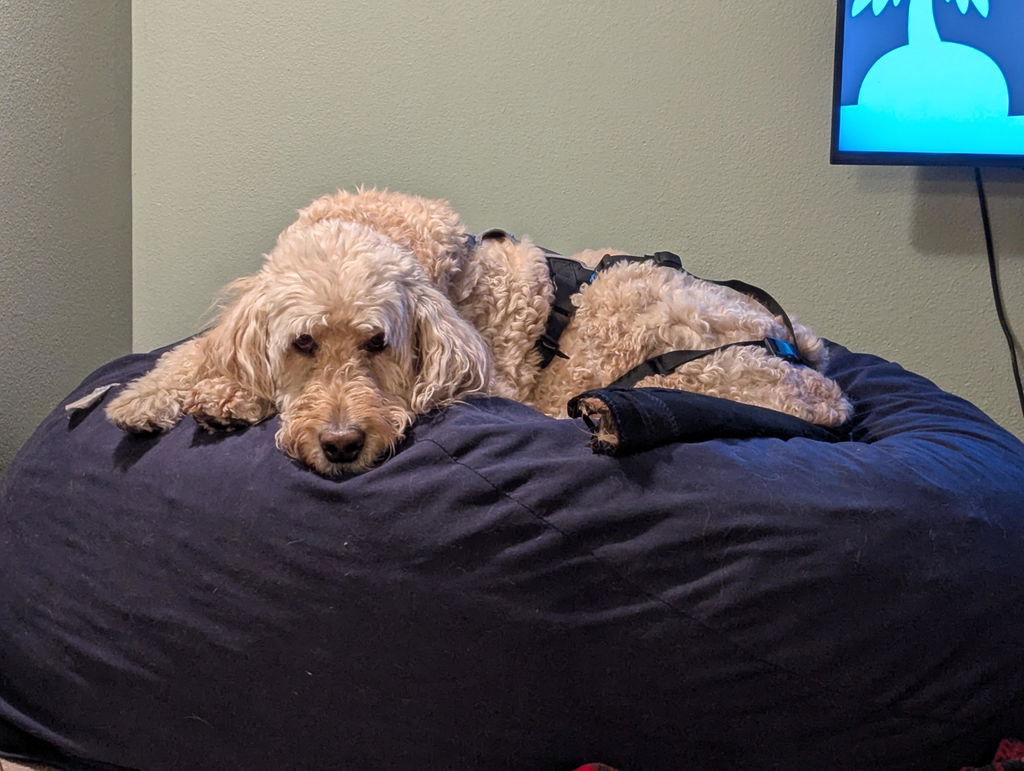
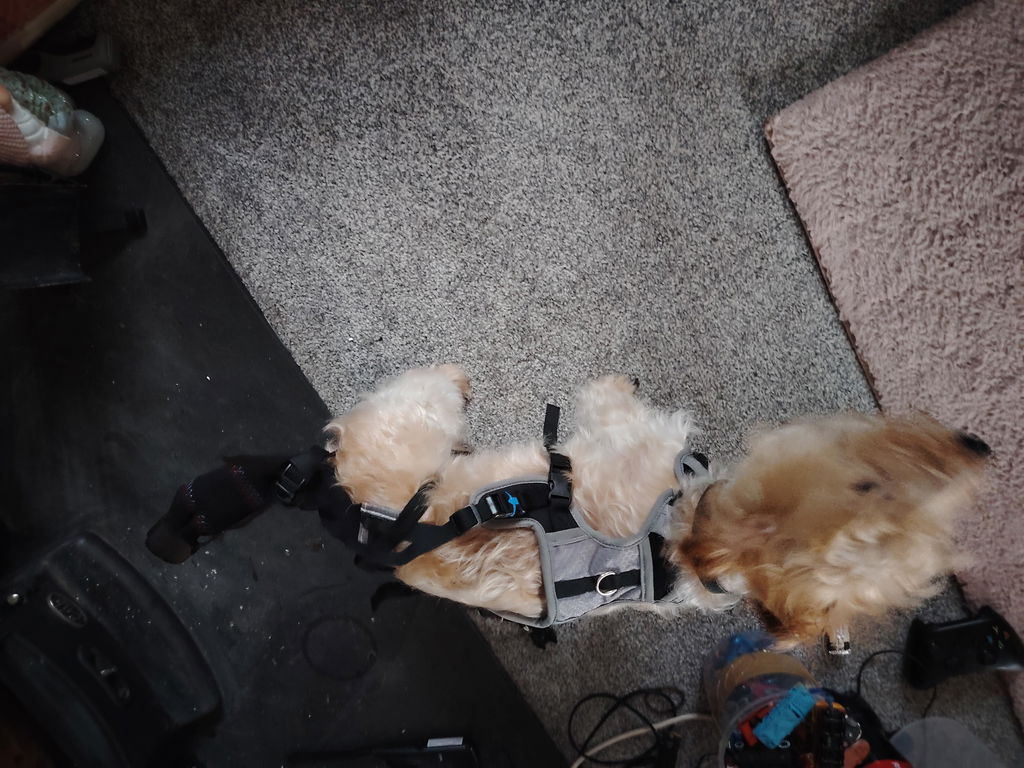
A padded canvas sleeve anchored via a body harness. Protects the wound from external impact and from licking access simultaneously. Stays in position through vigorous wag activity because the anchor is on the dog's body rather than relying on friction against the tapered tail skin. Does not interfere with normal movement, eating, sleeping, or toileting.
Head-to-Head Comparison Table
| Factor | E-Collar | Bandage | K9 TailSaver Sleeve |
|---|---|---|---|
| Prevents wag impact re-injury | ✗ No | Partially (fails quickly) | ✓ Yes |
| Prevents licking | Partially (fails for flexible dogs) | ✗ No | ✓ Yes |
| Holds wound dressing in place | ✗ No | Partially (falls off) | ✓ Yes |
| Stays on through vigorous wagging | ✓ Yes (neck fit) | ✗ No (falls off) | ✓ Yes |
| Dog can eat and drink normally | Partially (cone blocks bowl access) | ✓ Yes | ✓ Yes |
| Dog can sleep comfortably | ✗ No (cone disrupts sleep) | ✓ Yes | ✓ Yes |
| Dog can navigate doorways and stairs | ✗ Impaired (cone width) | ✓ Yes | ✓ Yes |
| Cushions wound from impact | ✗ No | Minimally (cloth layer only) | ✓ Yes (padded canvas) |
| Works for large/flexible dogs reaching their tail | ✗ Often fails | N/A | ✓ Yes |
Why Vets Often Start With an E-Collar
Elizabethan collars are prescribed by default because they work well for wounds on most body locations. For a wound on the face, back, or abdomen, a collar effectively prevents self-trauma and allows the wound to heal. Vets who see Happy Tail infrequently or who have not yet used harness-anchored solutions may not immediately reach for a different tool. This does not mean the cone is the wrong tool for wounds in general — only that tail wounds specifically require a different management approach that standard cone prescriptions don't adequately provide.
When to Use Both (Cone + Sleeve)
For very persistent tail-chewing dogs — those that continue to access the wound by working around the sleeve or that are determined to remove the device — a short-term combination approach may be appropriate:
- K9 TailSaver sleeve provides the wound protection and impact cushioning
- Soft E-collar (inflatable donut style, not rigid cone) provides additional discouragement from device removal without the sleep and navigation disruption of a rigid cone
This combination is typically only needed for the first 5–7 days until the dog habituates to the sleeve. See the Chewing & Compliance FAQ for a full habituation protocol.
FAQ: E-Collar vs. Tail Sleeve
My vet says just use the cone. Should I also use a tail sleeve?
For Happy Tail, yes. The cone does not prevent wag impact re-injury, which is
the primary mechanism keeping the wound from healing. The K9 TailSaver sleeve
addresses this. You can use both simultaneously or transition to the sleeve alone
once you have confirmed the dog is not actively trying to remove it.
Can I use a soft cone instead of the rigid one?
Soft and inflatable cones are more comfortable but provide even less reliable
access prevention for tail-flexible large dogs. For the licking prevention role,
the K9 TailSaver sleeve is more reliable than any cone variant for tail wounds.
My dog seems more distressed with the bandage than the cone. Which should I prioritize?
The K9 TailSaver sleeve is typically less distressing than either the cone or
a tight bandage because it fits like a harness the dog wears normally, without
restricting head movement or range of motion. Most dogs are more comfortable
within 24–48 hours of wearing the K9 TailSaver compared to an E-collar.