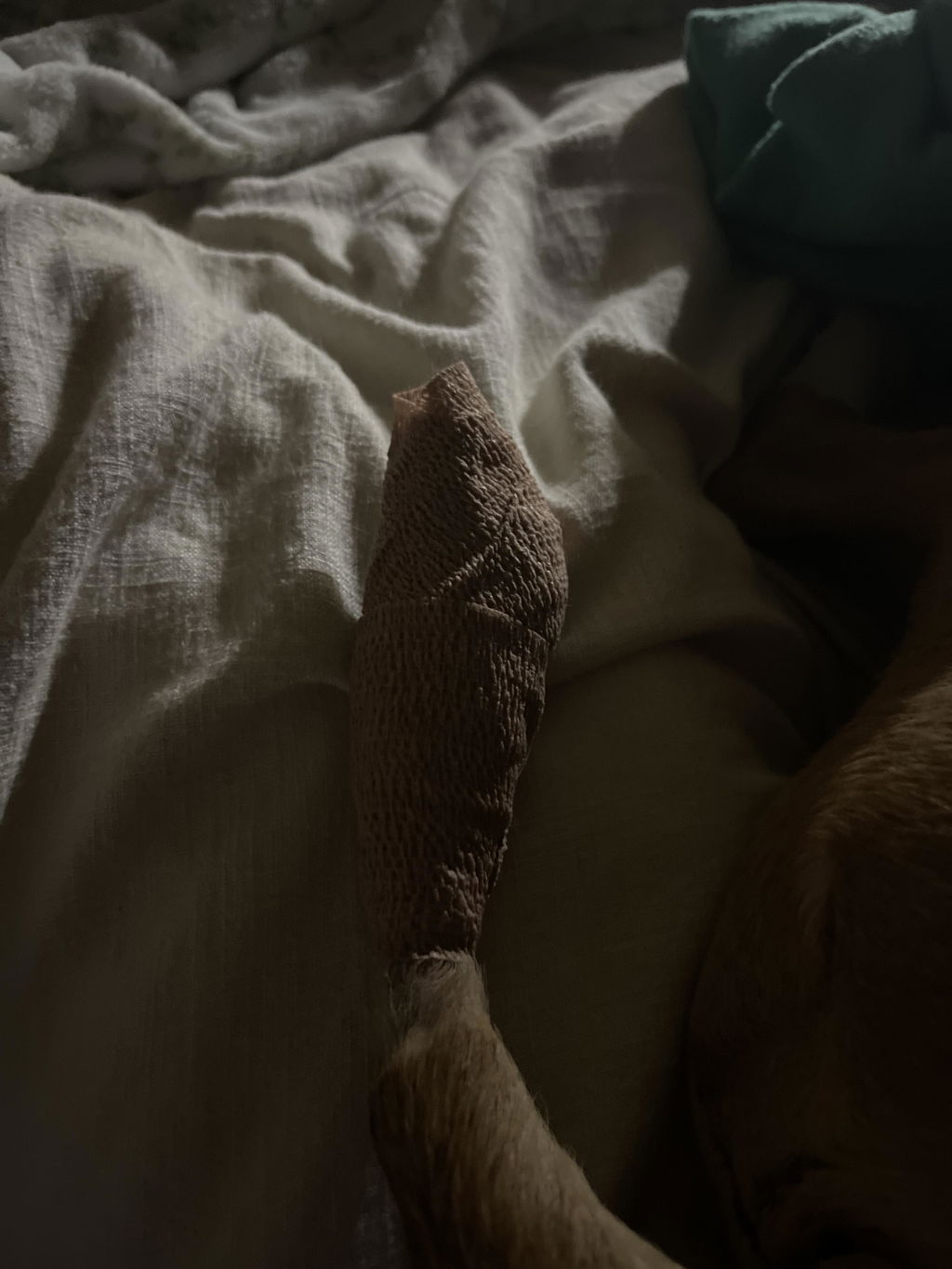
Greyhound Happy Tail Syndrome: Thin Skin, Fragile Tails & Treatment
Greyhound Happy Tail Syndrome: A Breed-Specific Treatment Guide
In the world of Happy Tail Syndrome, Greyhounds present a uniquely difficult case. Their tail skin is among the thinnest of any breed — informally called "paper skin" in the greyhound adoption community. A single moderate wag against a door frame produces a cut that, in any other breed, would be a minor abrasion. In a Greyhound, the same impact produces a gaping wound that bleeds profusely and struggles to heal. This guide is written specifically for Greyhound owners and the rescue organizations that work with them.
Why Greyhound Tails Are So Vulnerable
Thin, fragile skin
Racing Greyhounds are bred for aerodynamics. Subcutaneous fat and thick skin interfere with heat dissipation and add weight. The result is a dog with near-zero subcutaneous cushioning at the tail tip. The skin is bonded almost directly to the tail vertebrae. A minor wound in this tissue cannot contract and close the way a fat-backed wound in a Labrador would — there is no subdermal volume to draw the wound edges together.
Reduced wound healing capacity
Greyhounds also have reduced platelet activity compared to mixed-breed dogs. They clot more slowly, meaning even minor wounds bleed longer and more heavily. This is well-documented in the surgical literature for Greyhounds and catches many new owners off-guard when a seemingly minor tail wound bleeds at a rate that looks alarming.
Whip tail geometry
Greyhound tails are long, thin, and carried in a curved-under resting position that becomes a full circle during a fast rotation. The tail tip travels at high speed across a wide arc. Because the tail is very thin (small cross-section), impact force concentrates at a tiny contact point rather than distributing across a broader surface. The effective impact pressure is therefore much higher than a wider, padded tail would produce.
Common Injury Scenarios in Greyhounds
- Adoption transition: A greyhound moving from a kennel or track environment to a home encounters walls, furniture, and narrow hallways for the first time. Early Happy Tail injuries during this transition are extremely common and catch new owners unprepared.
- Crate or ex-pen contact: Metal crate bars and exercise pen panels are the most frequent impact surface during initial house training.
- Excitement greetings: Greyhounds, despite their calm reputation when resting, become highly excited during arrivals. Greeting-triggered wags against door frames are a major injury source.
- Stair railings: Narrow staircases with balusters at Greyhound tail height create an unavoidable impact surface during transit.
Treating Happy Tail in Greyhounds: Why Standard Approaches Fail Faster
The same treatments that work poorly for other breeds fail even faster in Greyhounds:
- Cohesive bandage: Greyhound tail skin is so thin that tape adhesive can cause contact dermatitis. Standard bandage wrap does not stay on a smooth, conically-shaped thin tail. Most last less than 2 hours.
- Suturing: Surgically closing a Happy Tail wound in a Greyhound often fails because the wound is immediately reopened by the next wag. Sutures tear through Greyhound skin with minimal force. Veterinarians familiar with the breed often decline suturing for this reason.
- E-collar: Greyhounds are highly flexible and can reach their tails around most cone sizes. Larger cones prevent the dog from reaching feeding positions and cause significant distress in sight hounds.
What Works: Greyhound-Specific Treatment
Pressure and initial hemostasis
For active bleeding: apply a sterile non-stick pad and hold direct pressure for 10–15 minutes without interruption. Greyhounds clot slowly; checking before 10 minutes restarts the clotting process. Silver nitrate sticks (available at pharmacies) can assist with persistent minor bleeding at the wound edges and are safe for Greyhound skin when used carefully.
Non-adhesive wound dressing
Never use adhesive bandage products directly on Greyhound skin. Use Telfa non-adherent pads as the primary wound contact layer, secured by the protective sleeve rather than tape.
Harness-anchored sleeve protection
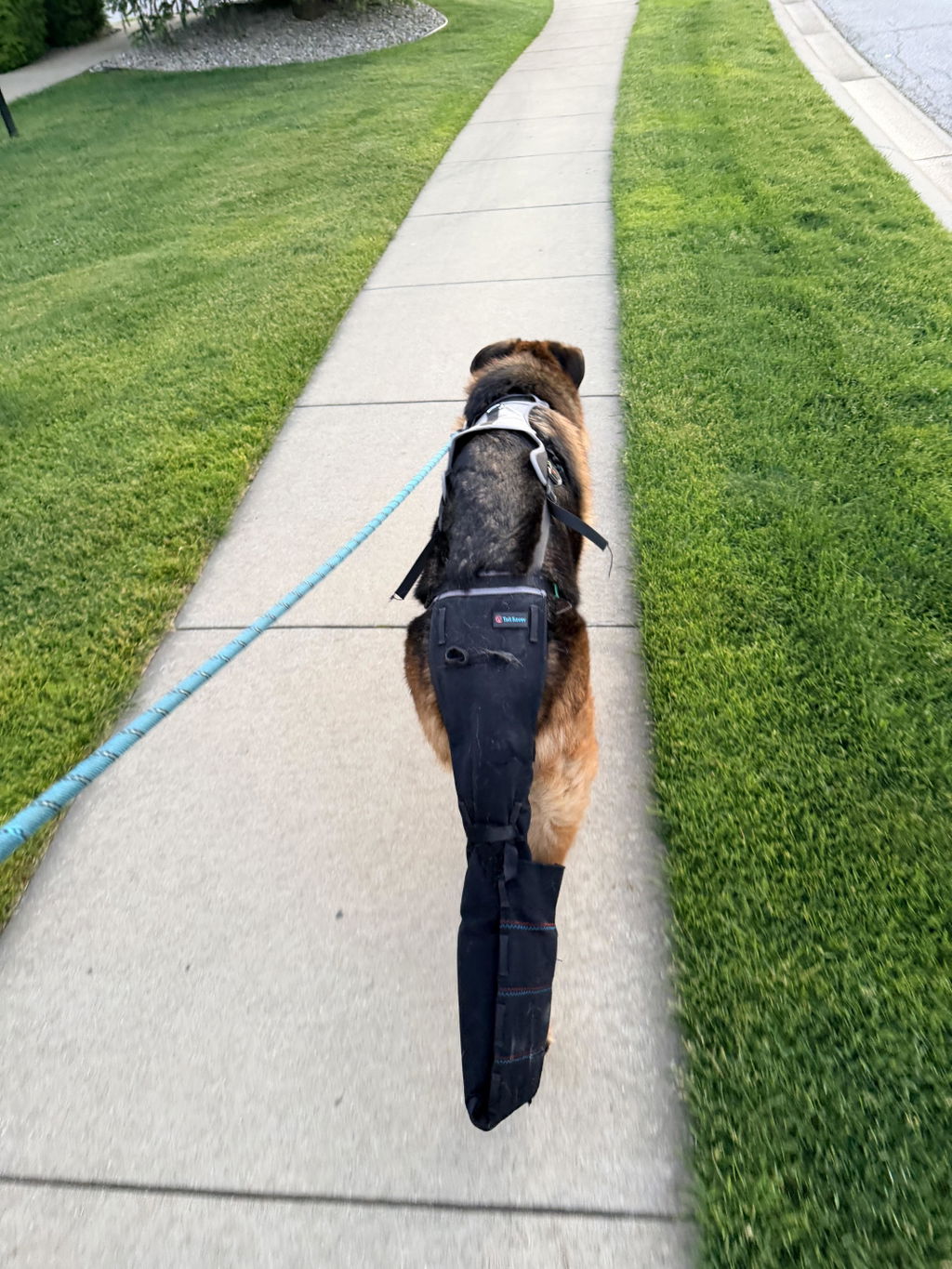
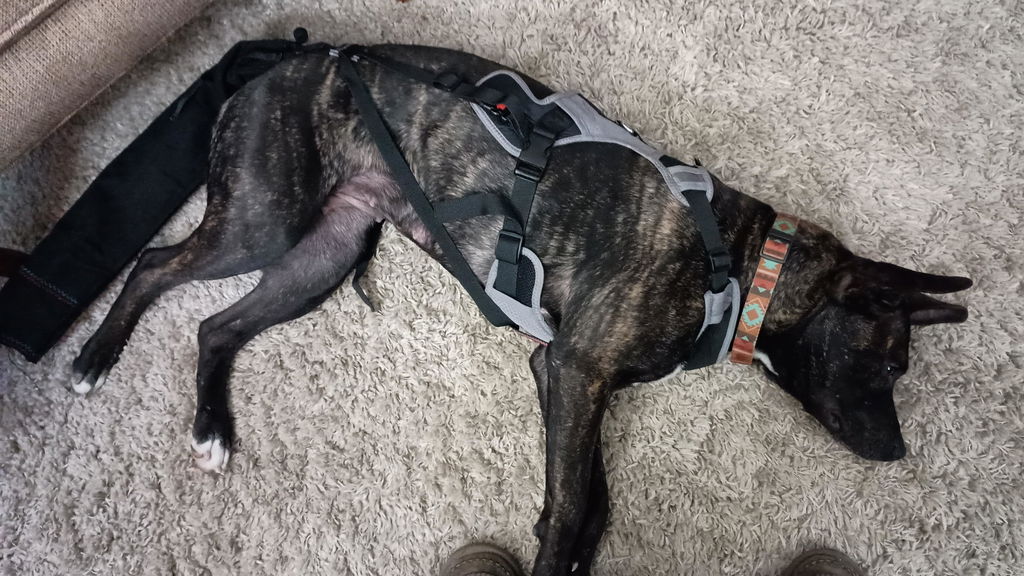
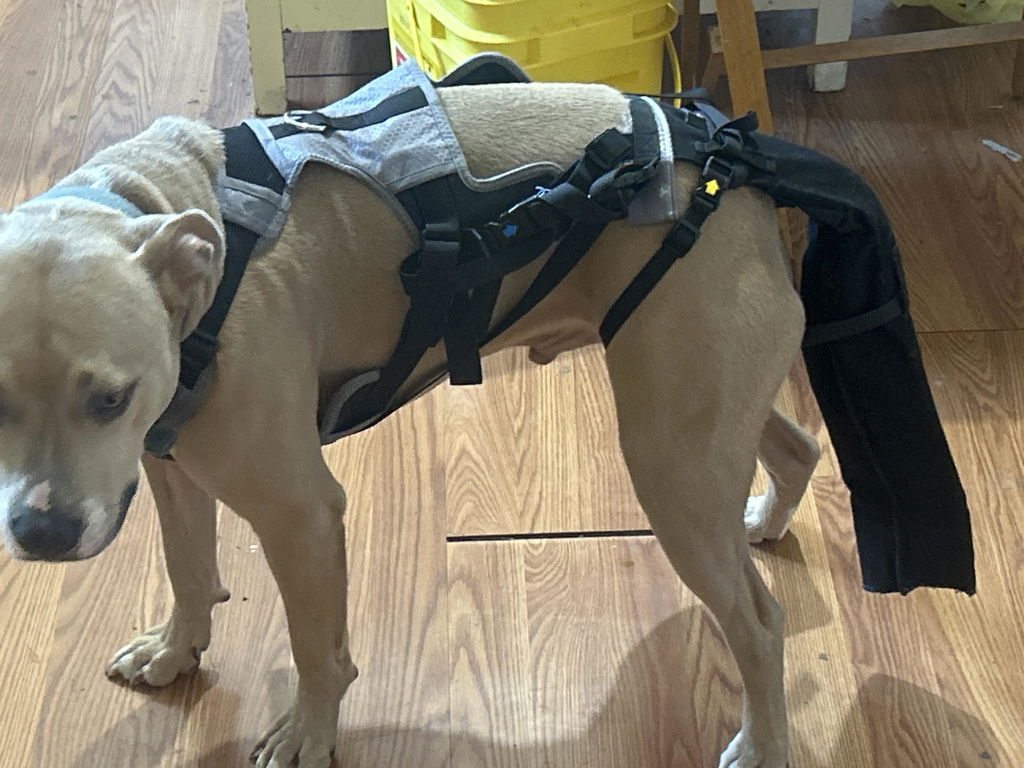
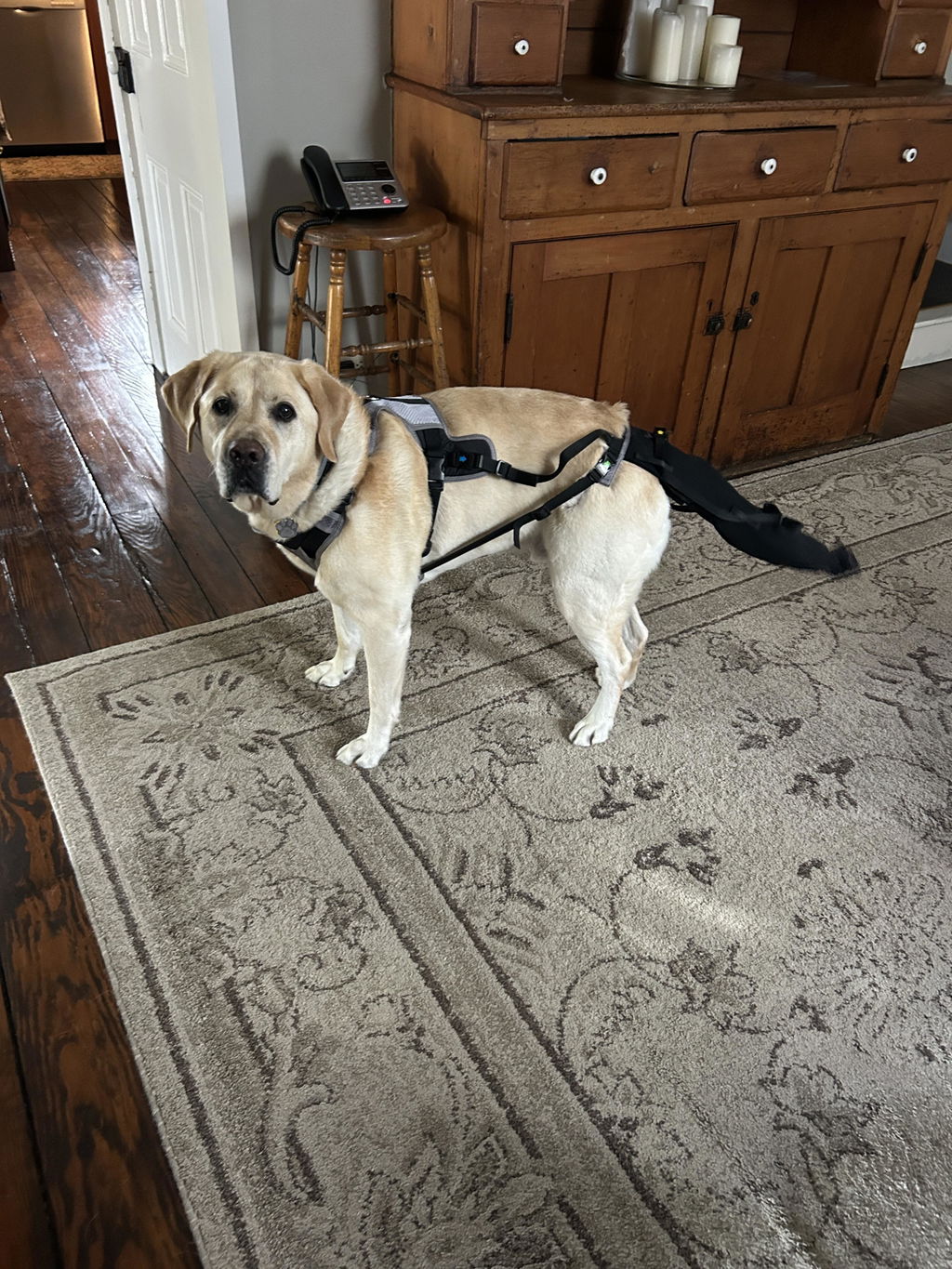
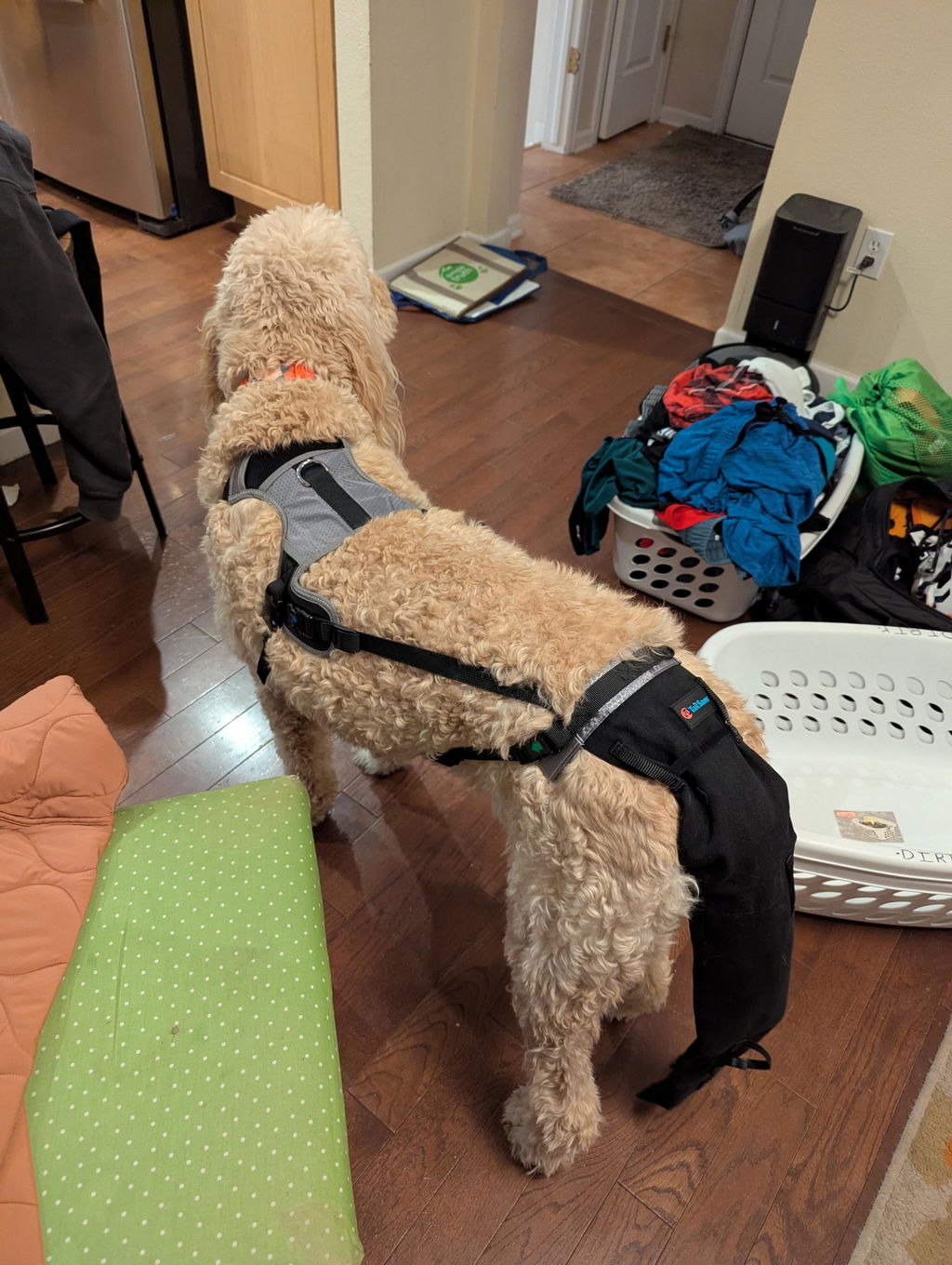
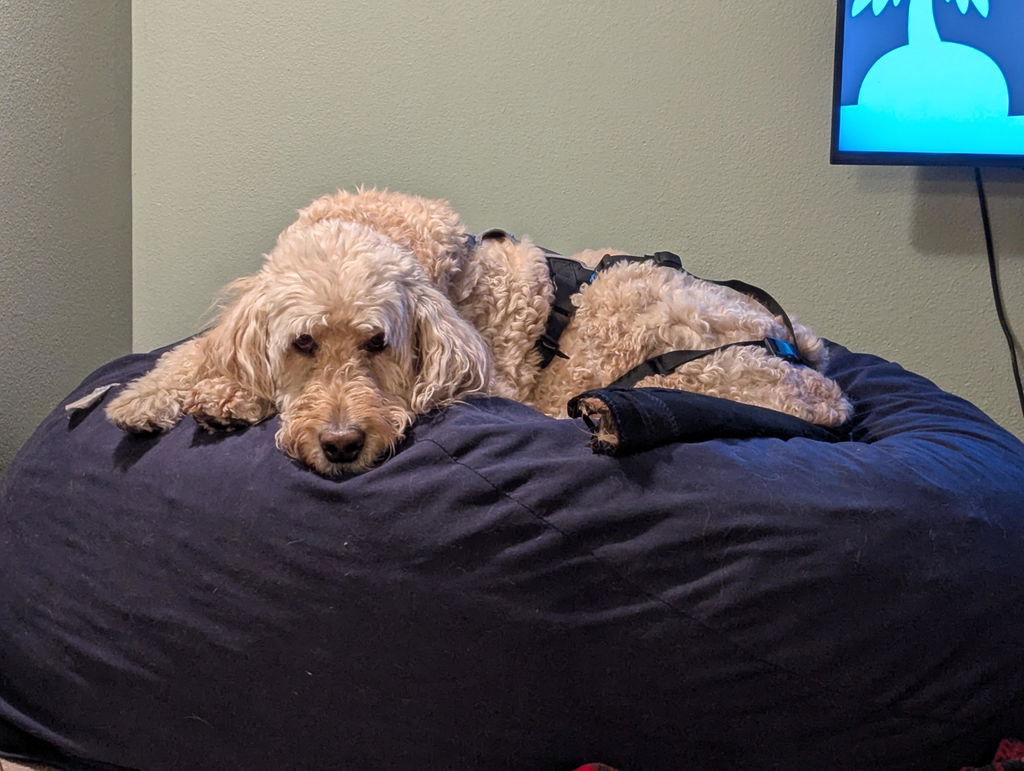
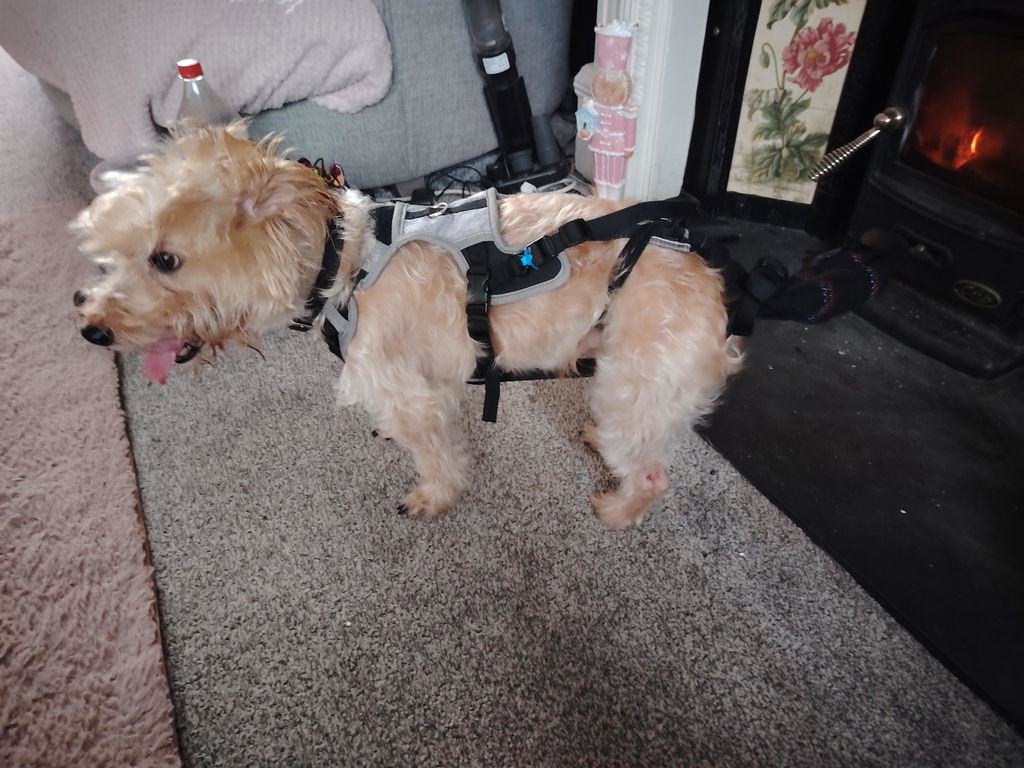
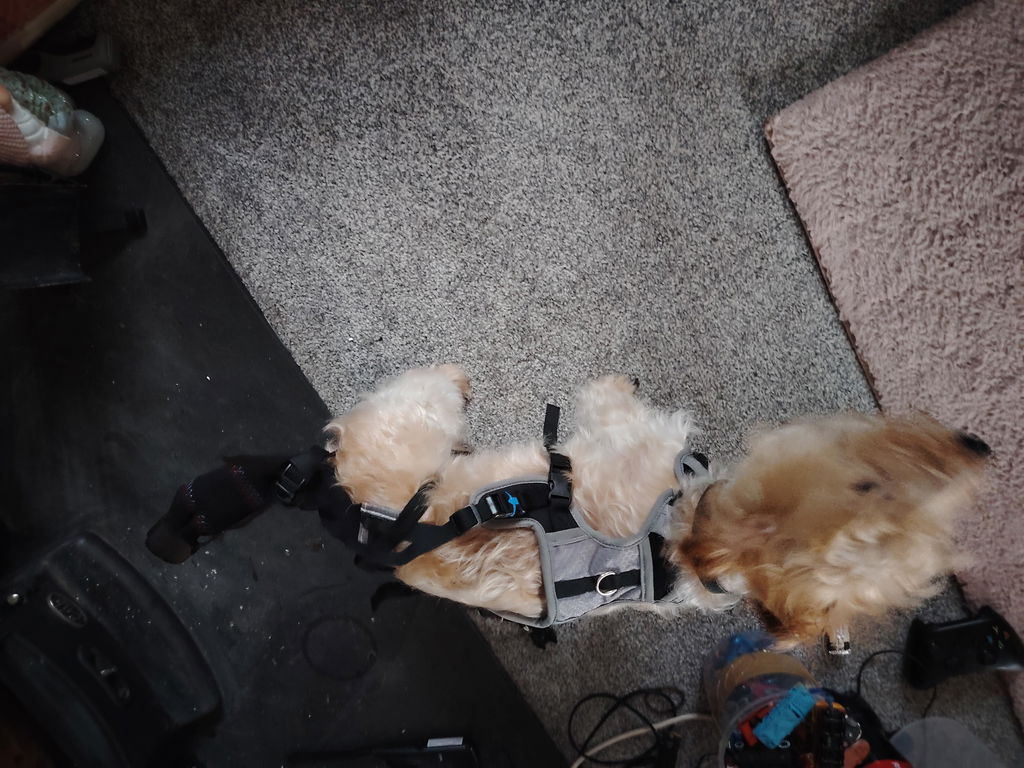
The K9 TailSaver® is the most effective management tool for Greyhound Happy Tail because it eliminates adhesive contact entirely while maintaining secure protection. The padded sleeve sits over the wound and dressing, anchored by the body harness rather than tape on the tail skin. Many greyhound adoption organizations now recommend it as standard equipment for dogs showing early Happy Tail signs during transition.
Sizing for Greyhounds
Greyhounds have a unique body proportions: deep chest, extremely slim waist, long back. Refer to the sizing guide and use chest girth as the primary measurement. Greyhounds typically appear larger than their weight suggests in terms of chest circumference; do not size down based on weight alone.
Healing Timeline for Greyhound Happy Tail
Because Greyhound wounds heal more slowly than equivalent wounds in other breeds, add 30–50% to standard timelines:
- Minor split skin: 12–18 days (vs. 7–10 in other breeds)
- Open wound cycling for 1–2 weeks: 4–6 weeks from start of consistent protection
- Chronic wound, 3+ weeks duration: 6–10 weeks
Greyhound Happy Tail FAQ
My newly adopted Greyhound got Happy Tail in the first week. Is this normal?
Yes. The transition to a home environment is the highest-risk period. Many adoption
organizations recommend applying the K9 TailSaver immediately upon adoption if
the dog shows any history of tail injury or if the home has hard-surface walls and
narrow hallways.
The wound is very shallow but bleeds a lot. Should I go to the emergency vet?
Greyhound tail tip bleeding is frequently out of proportion to the actual wound
depth due to their reduced platelet activity. If bleeding slows with 10–15
minutes of continuous pressure and no bone or deep tissue is visible, home
management is appropriate. If bleeding does not slow after 15 minutes, seek
veterinary care.
The vet wants to amputate the tail tip. Is there an alternative to try first?
Ask for a supervised 4–6 week trial with continuous harness-anchored protection
before surgical intervention. Many Greyhound vets will support this. Amputation
eliminates the risk of re-injury at that point — but is irreversible; exhausting
conservative options first is appropriate.