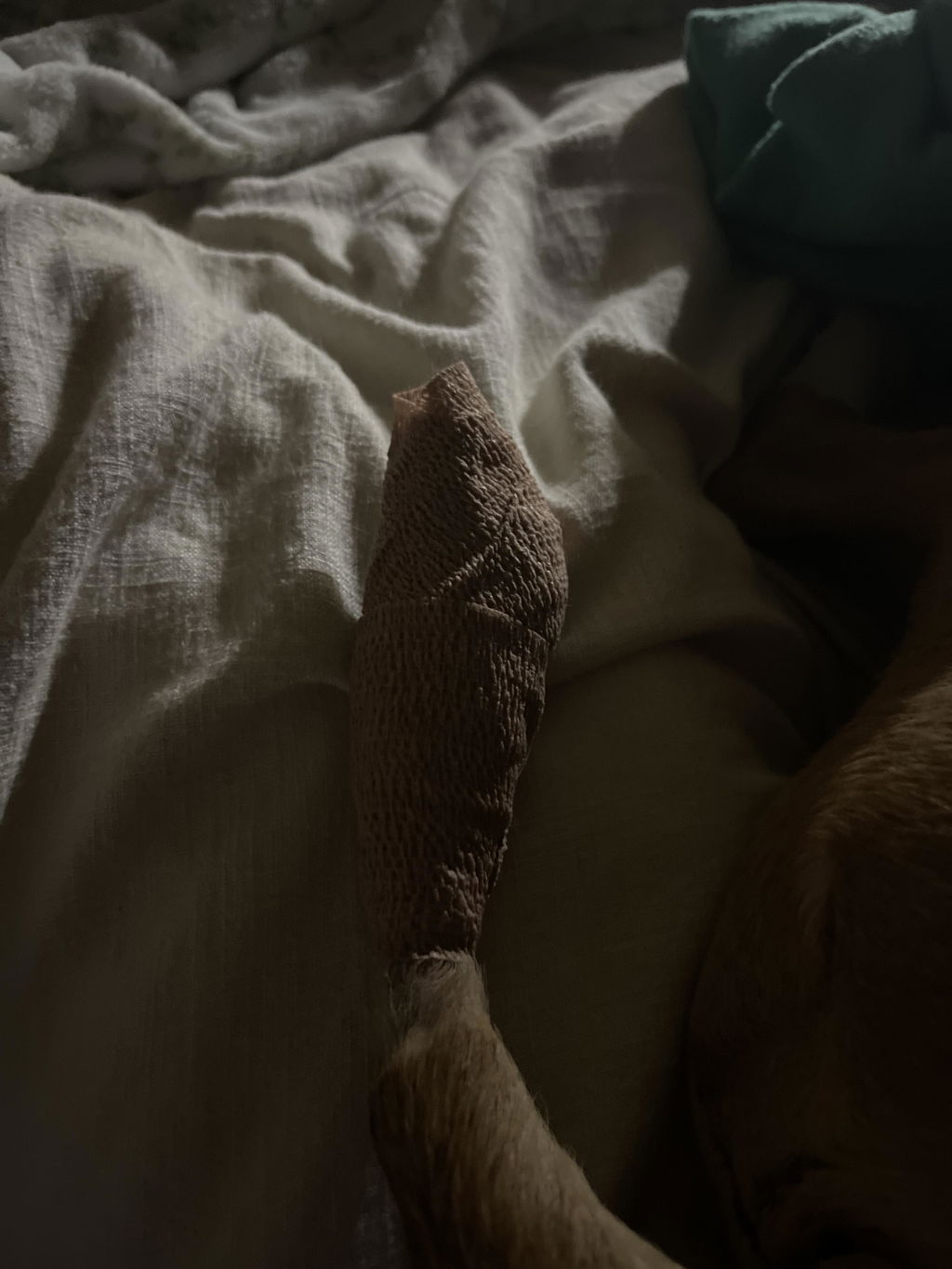
Pit Bull Happy Tail Syndrome: Causes, Severity & What to Do
Pit Bull Happy Tail Syndrome: High-Force Wag, Severe Wounds, and What Works
Pit Bull Terriers and American Bulldogs are not the most frequently discussed breeds in Happy Tail literature, but they are one of the most severely affected groups when the condition does occur. Their muscular build, athletic temperament, and enthusiastic full-body wagging produces tail tip impacts of higher force than many larger but less physically powerful breeds. The wounds that result tend to be deeper, bleed more heavily, and cycle with greater intensity than equivalent injuries in softer-temperament breeds. This guide is specific to Pit Bull and American Bulldog owners navigating Happy Tail management.
Why Pit Bulls Develop Severe Happy Tail
Compact, powerful build and wag mechanics
Pit Bulls have a compact, heavily muscled physique with a thick tail at the base. The issue is not tail length alone (Pit Bull tails are shorter than Great Dane or Lab tails) but the muscular power that drives each wag. A Pit Bull's full-body wag involves significant spinal and hindquarter engagement, producing whip-like tail tip velocity despite the moderate tail length. The resulting impact force at the tail tip is among the highest of any breed.
High arousal and enthusiasm
Well-socialized Pit Bulls are exceptionally people-focused dogs that greet with full-body enthusiasm. Their wagging involves their entire rear end — a characteristic sometimes called the "wigglebutt" wag. This engagement means tail wag episodes during arrivals and social interaction produce maximum force, maximum frequency, and maximum tail contact with surrounding surfaces.
Thin-tipped tails
Pit Bull tails taper significantly at the tip. Despite the powerful wag mechanics, the tail tip itself is lightly padded with relatively thin skin. This produces the same skinned-knuckle effect seen in sighthounds: high force delivered through a small, unpadded contact area.
What Happy Tail in Pit Bulls Looks Like
- Wound is often deeper and more clearly a "split" rather than a superficial abrasion
- Bleeding from Pit Bull Happy Tail wounds is vigorous and appears suddenly after impact events
- The dog's enthusiasm makes it nearly impossible to prevent the wagging that causes re-injury during normal home interaction
- Standard bandage typically lasts 1–3 hours due to the force applied
- The wound tends to present at a more advanced stage than equivalent breed presentations because Pit Bull owners sometimes normalize vigorous activity and do not identify the wound pattern as a medical issue initially
Treatment: The Challenges and What Addresses Them
Challenge: Exceptional wag force
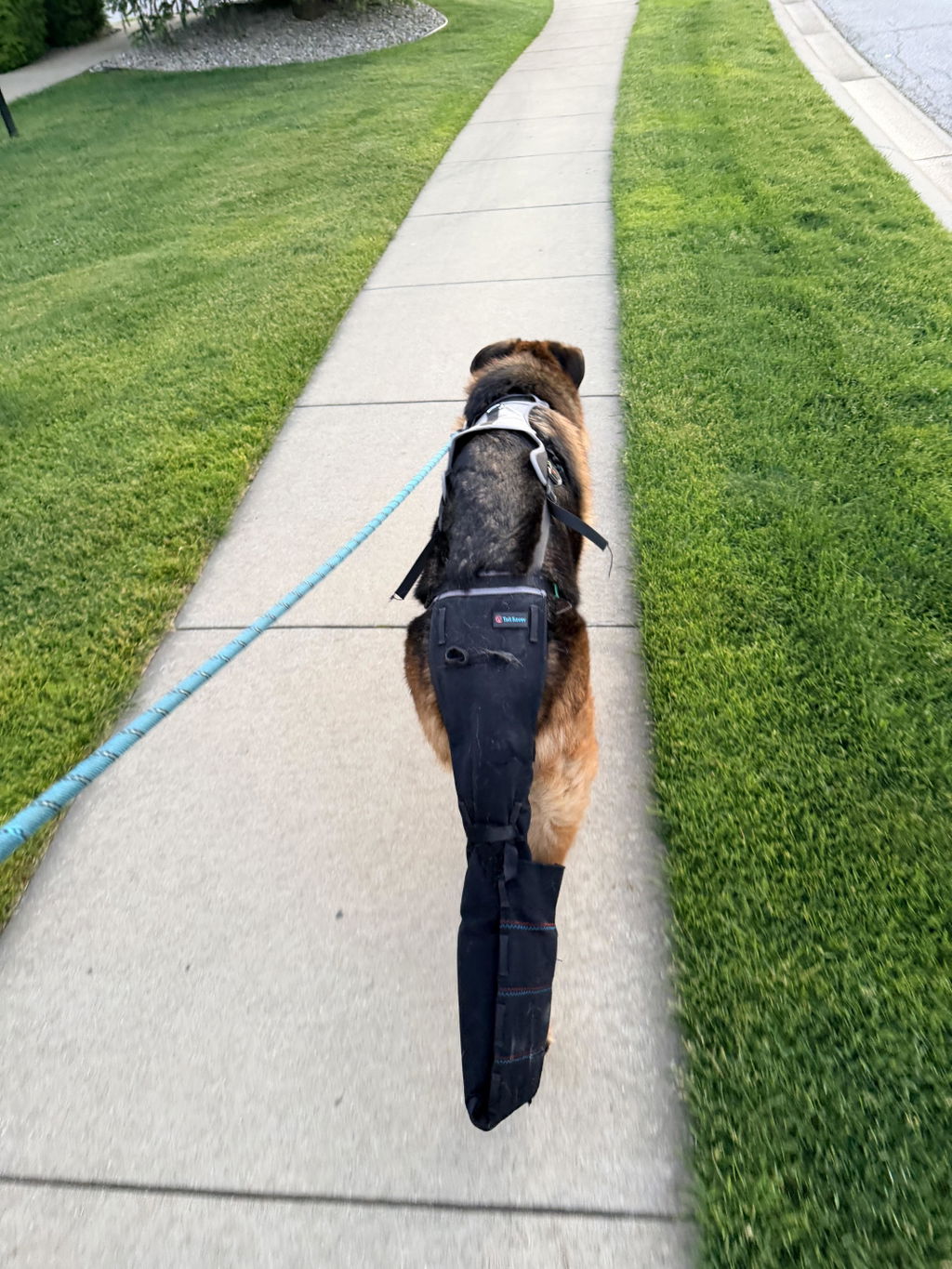
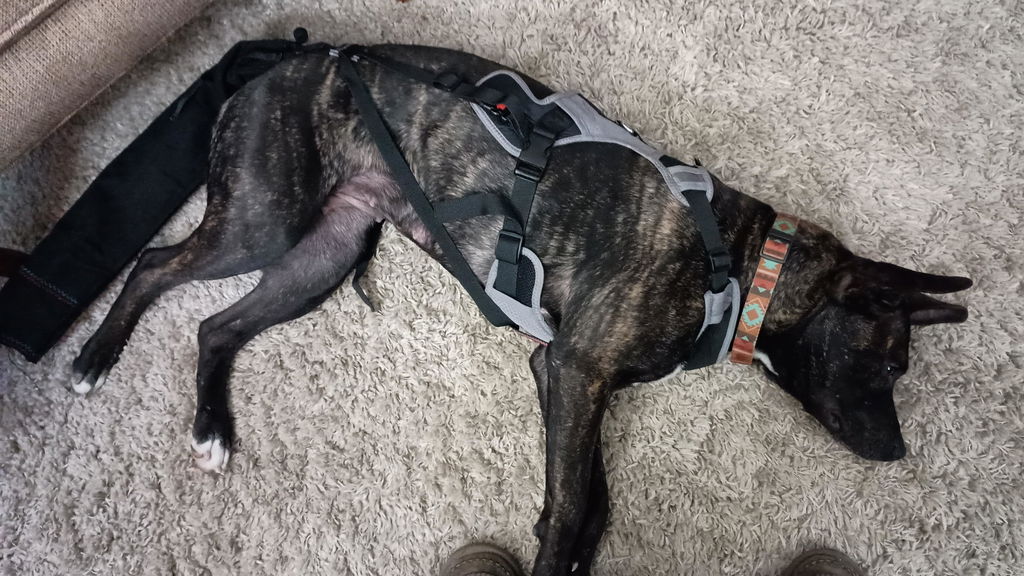
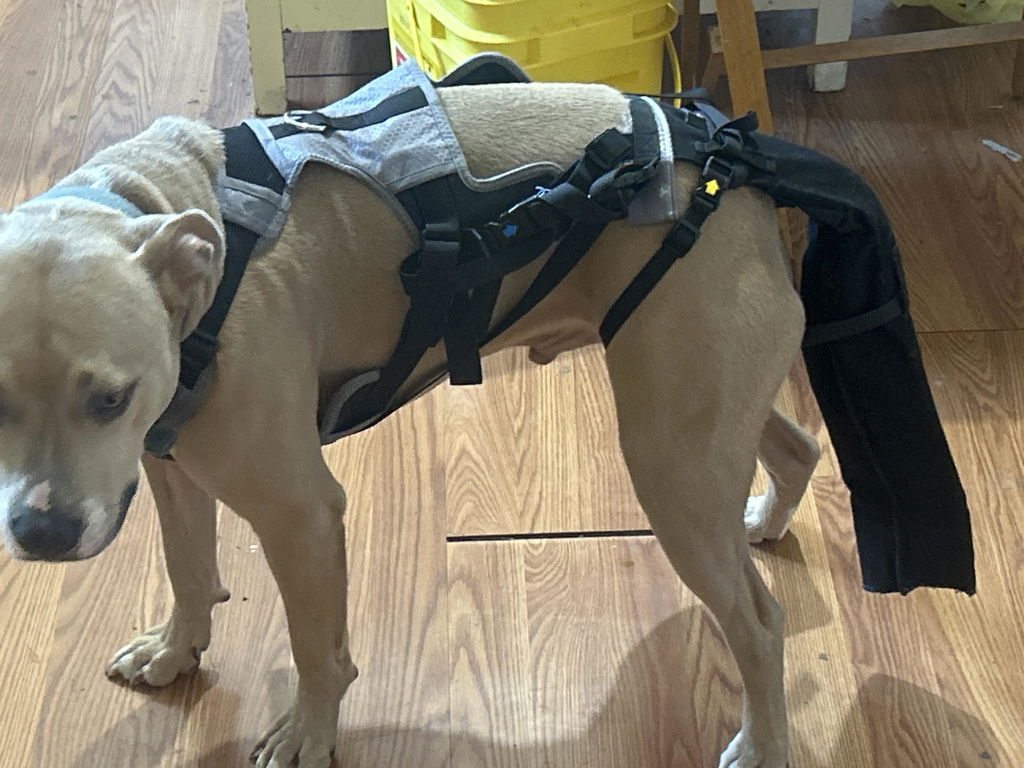
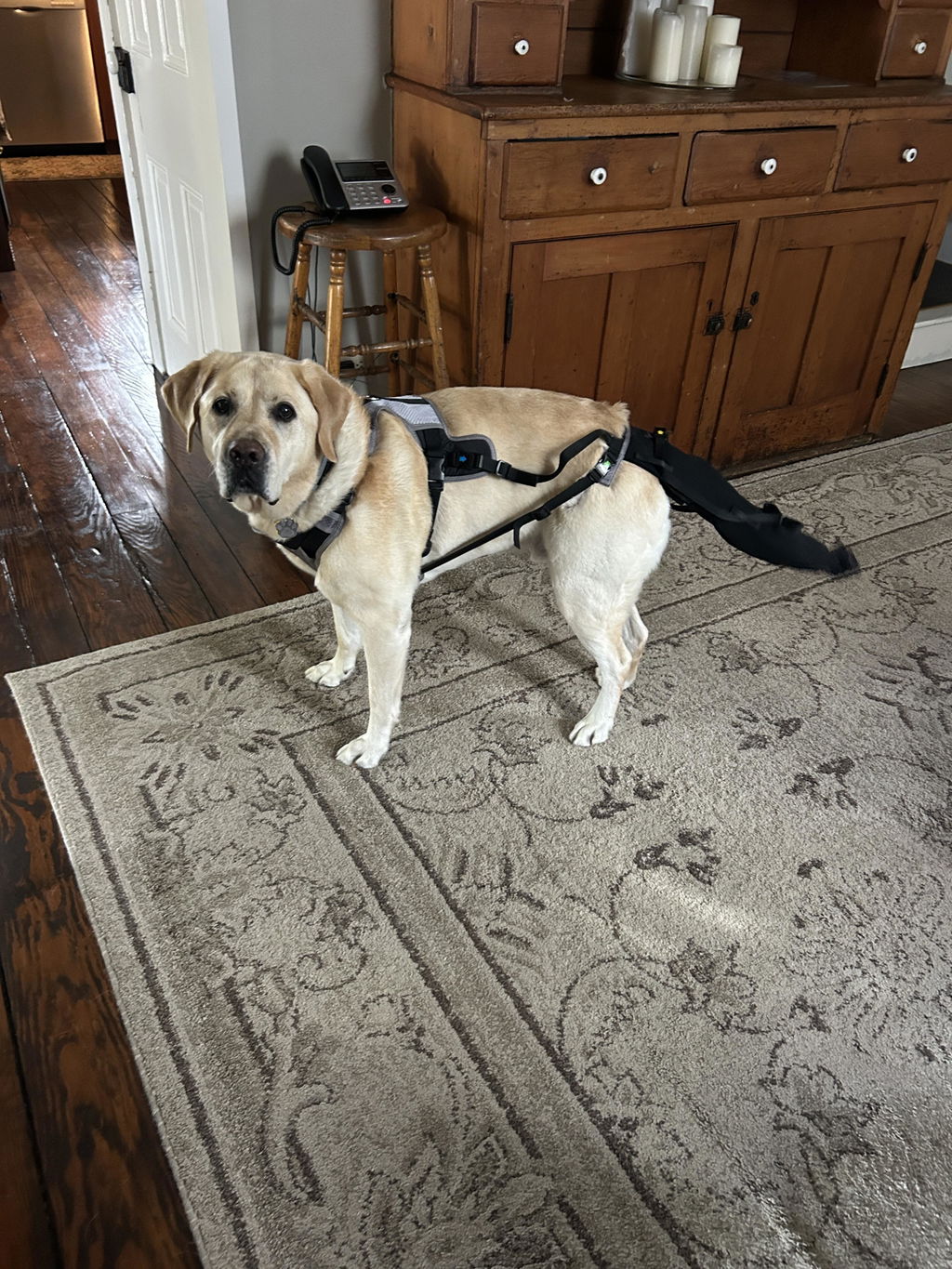
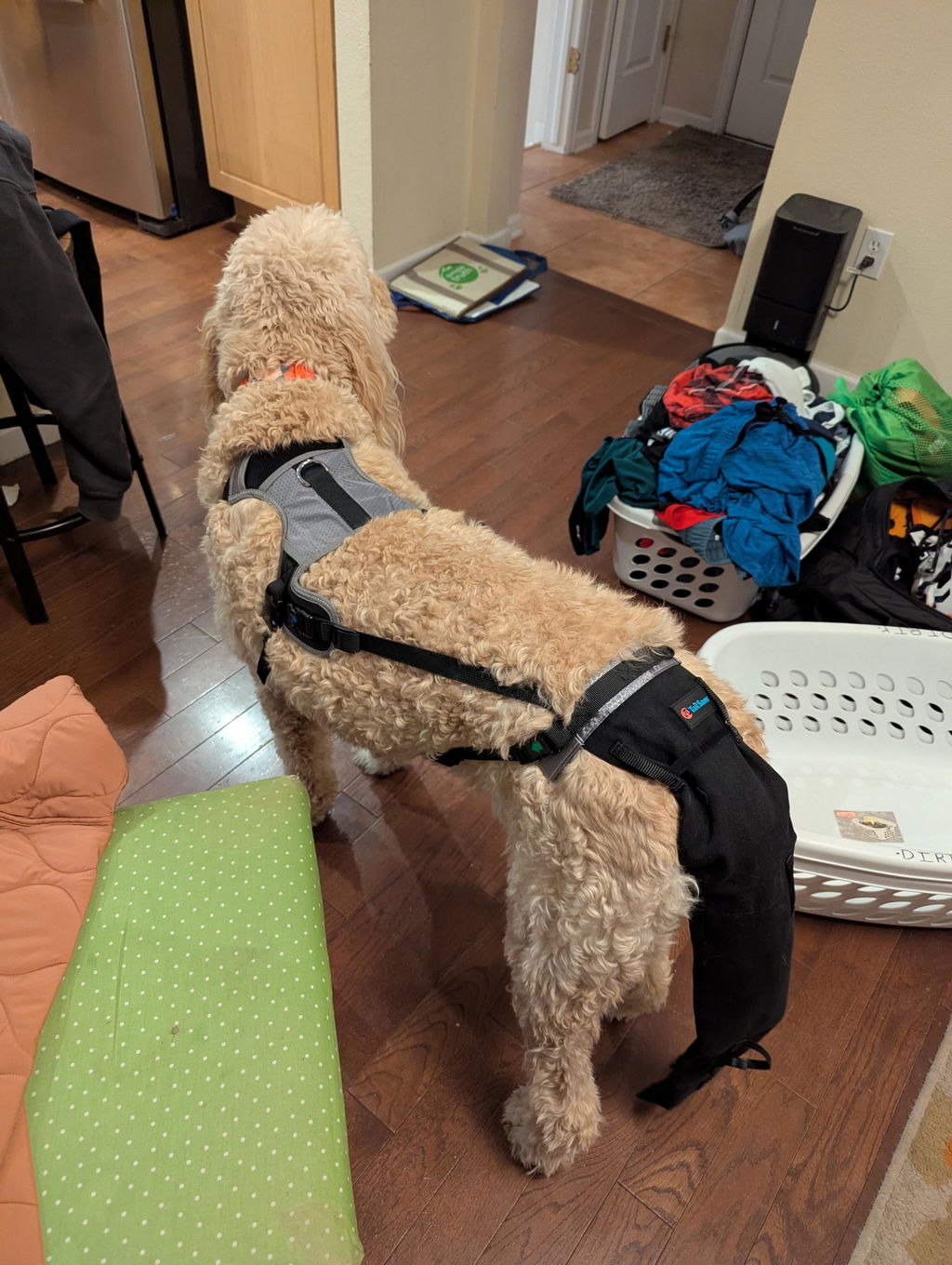
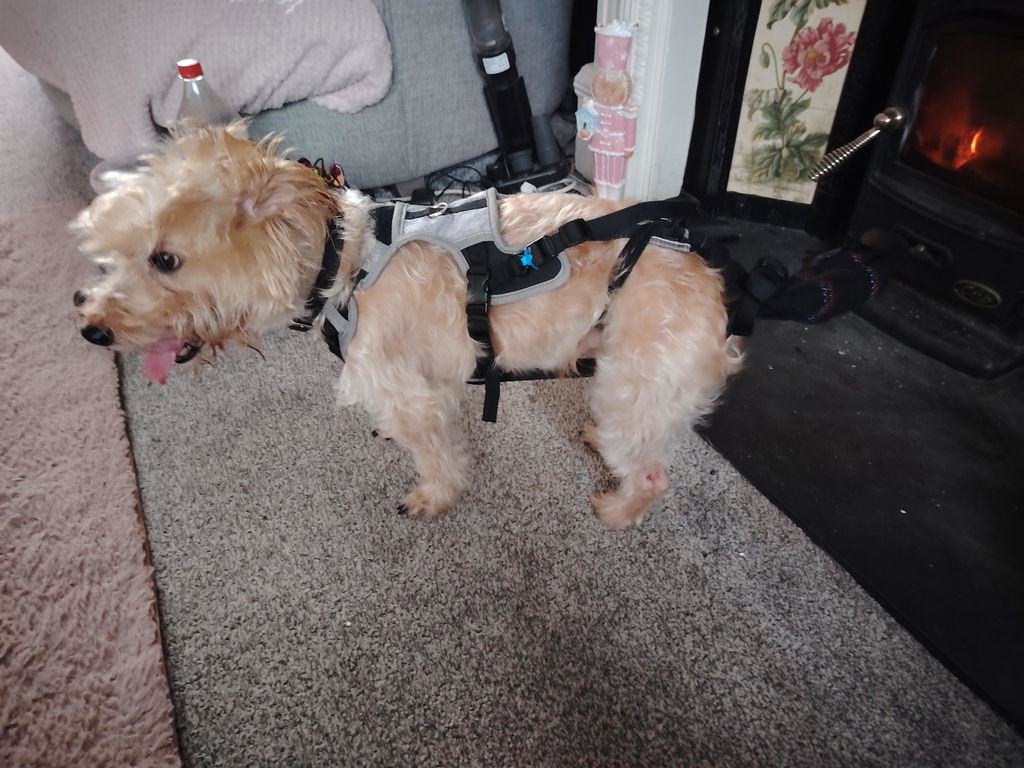
Standard cohesive bandage fails faster for Pit Bulls than for most other breeds because of the force applied per wag cycle. The K9 TailSaver® harness anchor is critical here — the sleeve is not fighting the tail's wag force with friction; it is moving with the tail while the anchor holds the position. Even Pit Bull-level wag force does not dislodge a correctly fitted K9 TailSaver.
Challenge: High arousal during human interaction
Managing a Pit Bull's arousal during the healing period requires active effort. Steps that help:
- All greetings performed in a calm, low-stimulus manner — no excited greetings from any household member during the healing period
- Structured exercise (walking, tethered running) that channels energy without producing peak-arousal wag events
- Feeding from puzzle toys to provide mental engagement without excitement wagging
Challenge: Wound severity
Pit Bull Happy Tail wounds that have been cycling for more than a week should be assessed by a vet for structural depth and infection. Given the force involved, deep tissue involvement is more common in this breed than in breeds with lower wag force.
Sizing the K9 TailSaver for Pit Bulls and American Bulldogs
Pit Bulls and American Bulldogs vary significantly in build. Refer to the sizing guide and measure chest girth rather than relying on weight. Pit Bulls have deep chests relative to their weight class; they often size up by one size compared to weight alone. American Bulldogs are typically larger and can range from L to 2XL depending on sex and bloodline.
Pit Bull Happy Tail FAQ
My Pit Bull's tail tip split in one wagging episode. Is this normal?
For Pit Bulls specifically, yes. The wag force is sufficient to cause an immediate
split-skin wound from a single high-velocity impact on a hard surface. This is
a true impact injury, not an accumulation injury. Apply first aid (pressure,
non-stick dressing) and begin K9 TailSaver protection immediately rather than
waiting to see if it heals on its own.
My vet says they have never seen this brand. Should I still use it?
Yes. Print the product page and the
Vet & Safety FAQ
for your appointment. The harness-anchored approach is recommended by vets who
have observed its outcomes in their patients, regardless of prior familiarity.
The wound reopens every time someone comes home. What can I do?
Establish a "calm arrival protocol": all household members enter quietly, ignore
the dog for 60 seconds until the dog settles, then greet calmly. This is the
single most impactful behavioral change for high-arousal Pit Bulls during healing.
The K9 TailSaver provides impact protection when the re-injury does occur, allowing
healing to continue even if not every arousal event is managed successfully.