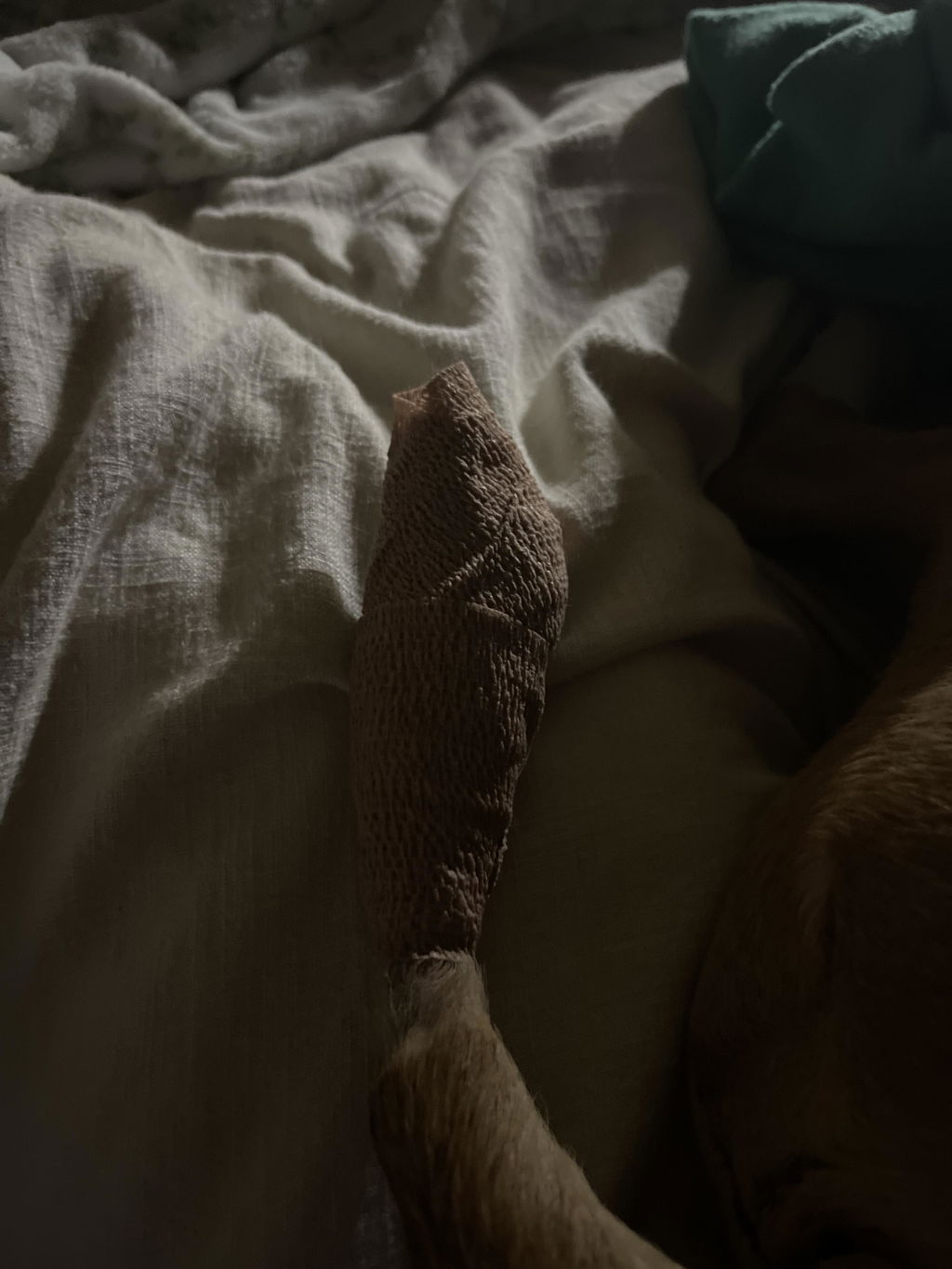
Dog Tail Swollen After Injury: Causes, Symptoms & When to See a Vet
Dog Tail Swollen After Injury: How to Tell If It's Inflammation or Infection
A dog tail that is swollen after a wagging impact or wound event is concerning — but swelling alone does not indicate whether the cause is simple reactive inflammation or a progressing infection that requires veterinary intervention. Knowing the difference is critical: treating a minor inflammatory response with antibiotics it doesn't need delays proper wound management, while ignoring a true infection allows it to progress to a serious systemic problem. This guide explains how to evaluate tail swelling after injury and what to do based on what you find.
Why Dog Tails Swell After Injury
Normal post-traumatic inflammation
Any tissue trauma — a wag impact, a bite wound, a cut — triggers the normal inflammatory cascade. Histamine and prostaglandins dilate local blood vessels, increasing fluid influx to the injury site. Swelling, warmth, and redness are expected in the first 12–48 hours after a fresh injury. This is the body directing immune resources to the wound site. It indicates healing is being attempted, not that something has gone wrong.
Infection-related swelling
When bacteria colonize a wound, an abscess or cellulitis can develop. Bacterial swelling typically begins 24–72 hours after wound contamination. Unlike reactive inflammation that is warmand diffuse, infected tissue swelling is progressive, may include purulent discharge, may extend beyond the wound margins, and is often accompanied by systemic signs: reduced appetite, lethargy, or fever.
Hematoma
A direct blunt impact to the tail can rupture small vessels beneath the skin without breaking the surface, producing a fluid-filled swelling (hematoma). This feels fluctuant or "squishy" when pressed, is limited to the impact site, and does not expand significantly beyond the first day without repeated trauma.
Fracture-related swelling
A dog tail fractured by blunt trauma swells at the fracture site. Tail fractures from Happy Tail-type impacts are less common than skin wounds but do occur, especially in breeds with fine tail vertebrae (Greyhounds, Whippets, small sighthounds). A fracture-related swelling is painful to palpation along the tail column, not just at the wound surface.
Assessing Tail Swelling: A Systematic Approach
Inflammatory vs. infected swelling: key distinguishing signs
| Feature | Normal Inflammation | Infection |
|---|---|---|
| Timeline | Begins within hours of injury; peaks at 24-48h | Begins 24-72h post-injury; worsens progressively |
| Discharge | Clear or light pink fluid | Cloudy, yellow, green, or grey discharge |
| Odor | Minimal, blood-like | Foul or distinctly unpleasant smell |
| Spread | Limited to wound margins | Advancing redness/swelling beyond wound |
| Systemic signs | Dog otherwise normal | Lethargy, reduced appetite, possible fever |
| Trajectory | Reduces by day 3-5 | Continues to expand without treatment |
Home Management of Inflammatory Tail Swelling
When swelling shows normal inflammatory characteristics (clear discharge, limited to wound margins, dog systemically well, reducing after 48 hours):
- Daily saline rinse: Flush the wound and surrounding swollen tissue with sterile saline to clear surface debris. Do not use hydrogen peroxide, iodine, or alcohol — these damage new tissue and delay healing.
- Non-adherent dressing: Apply a Telfa pad over the wound and swollen area to protect from environmental contamination.
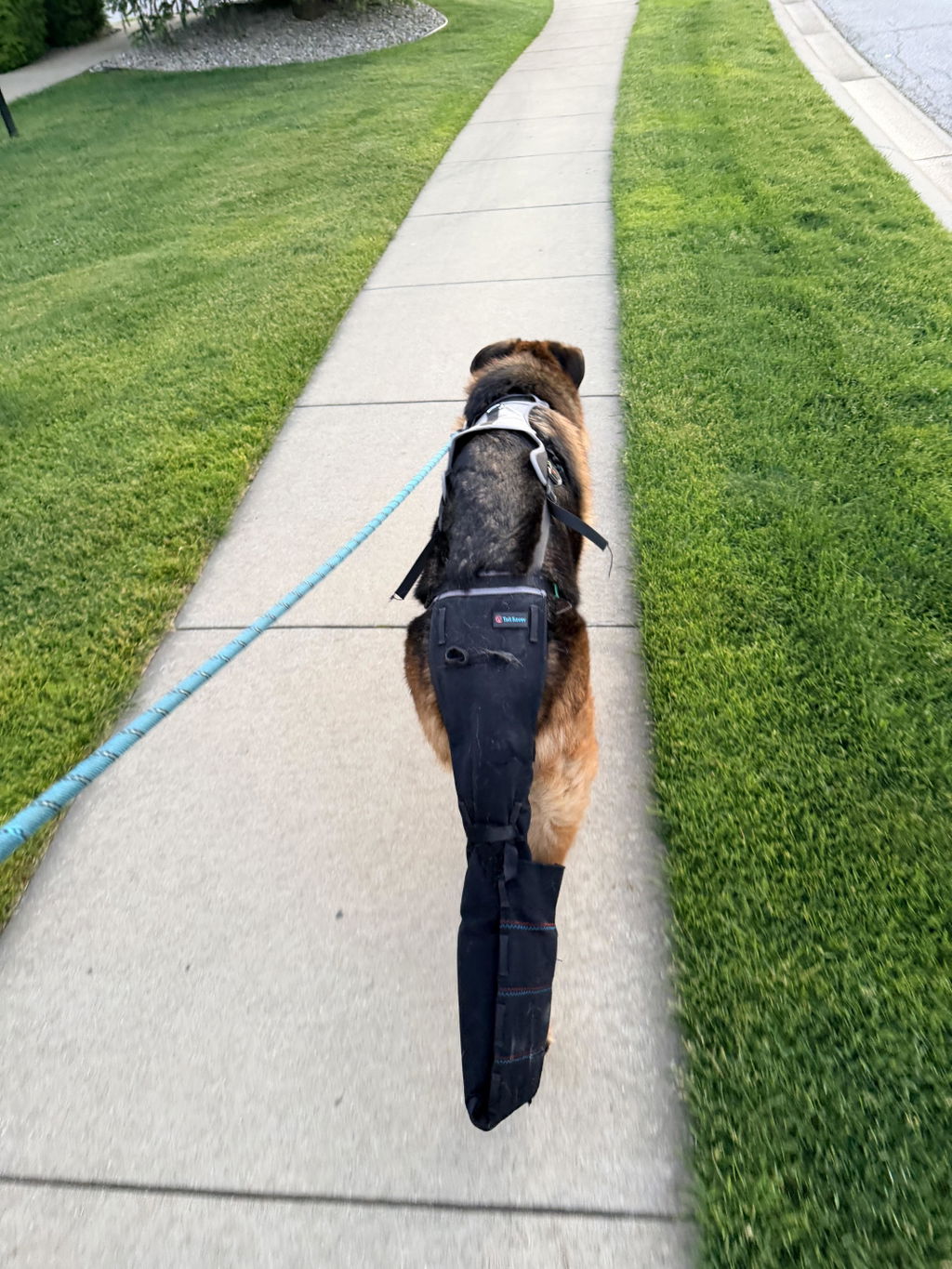
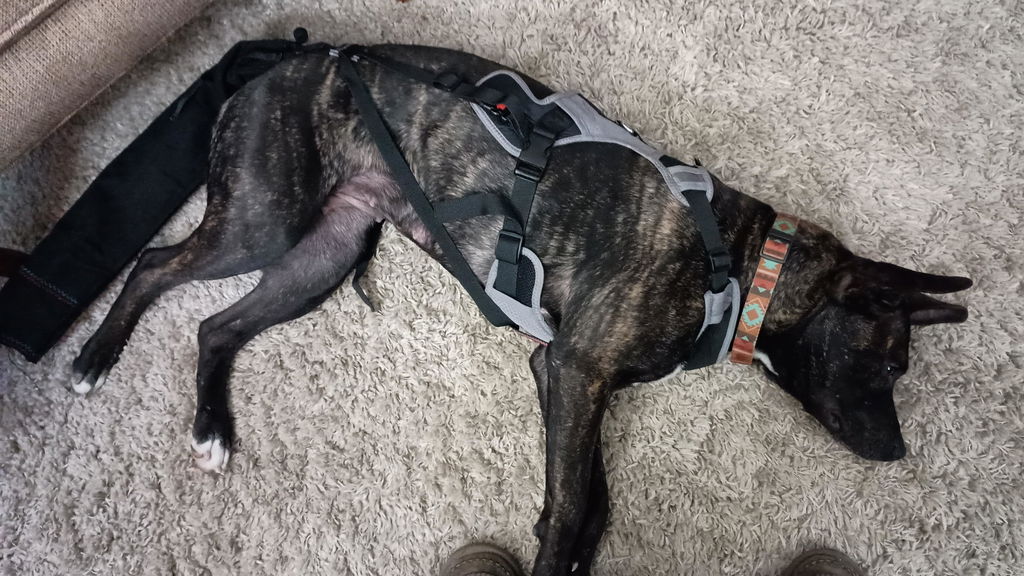
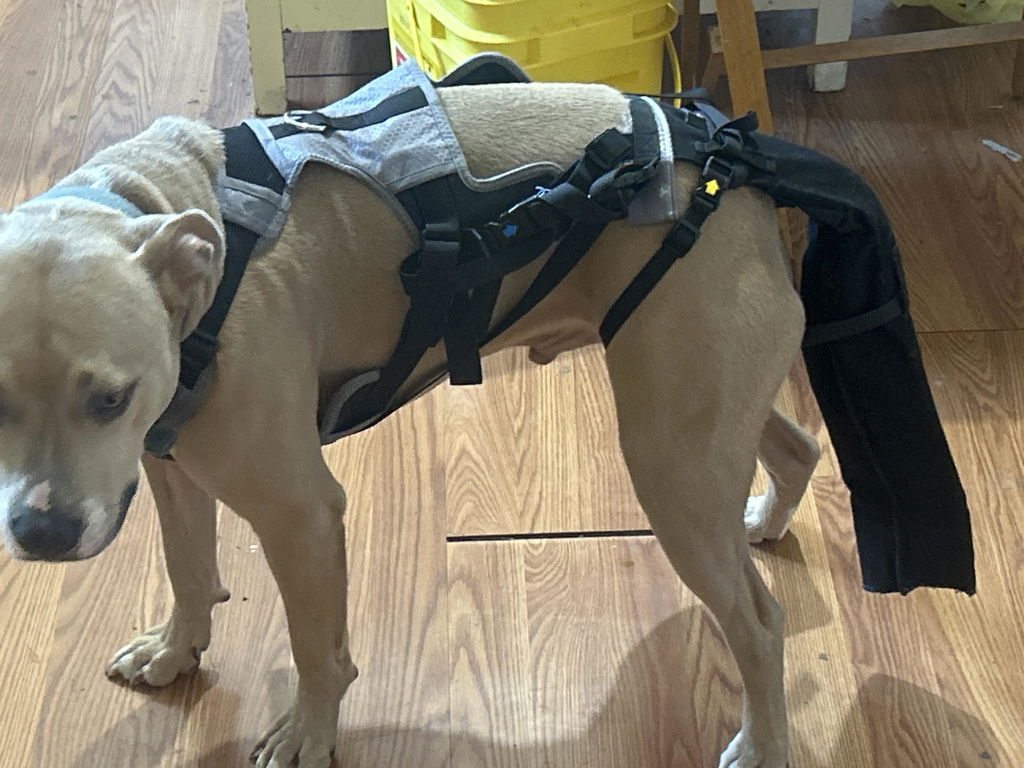
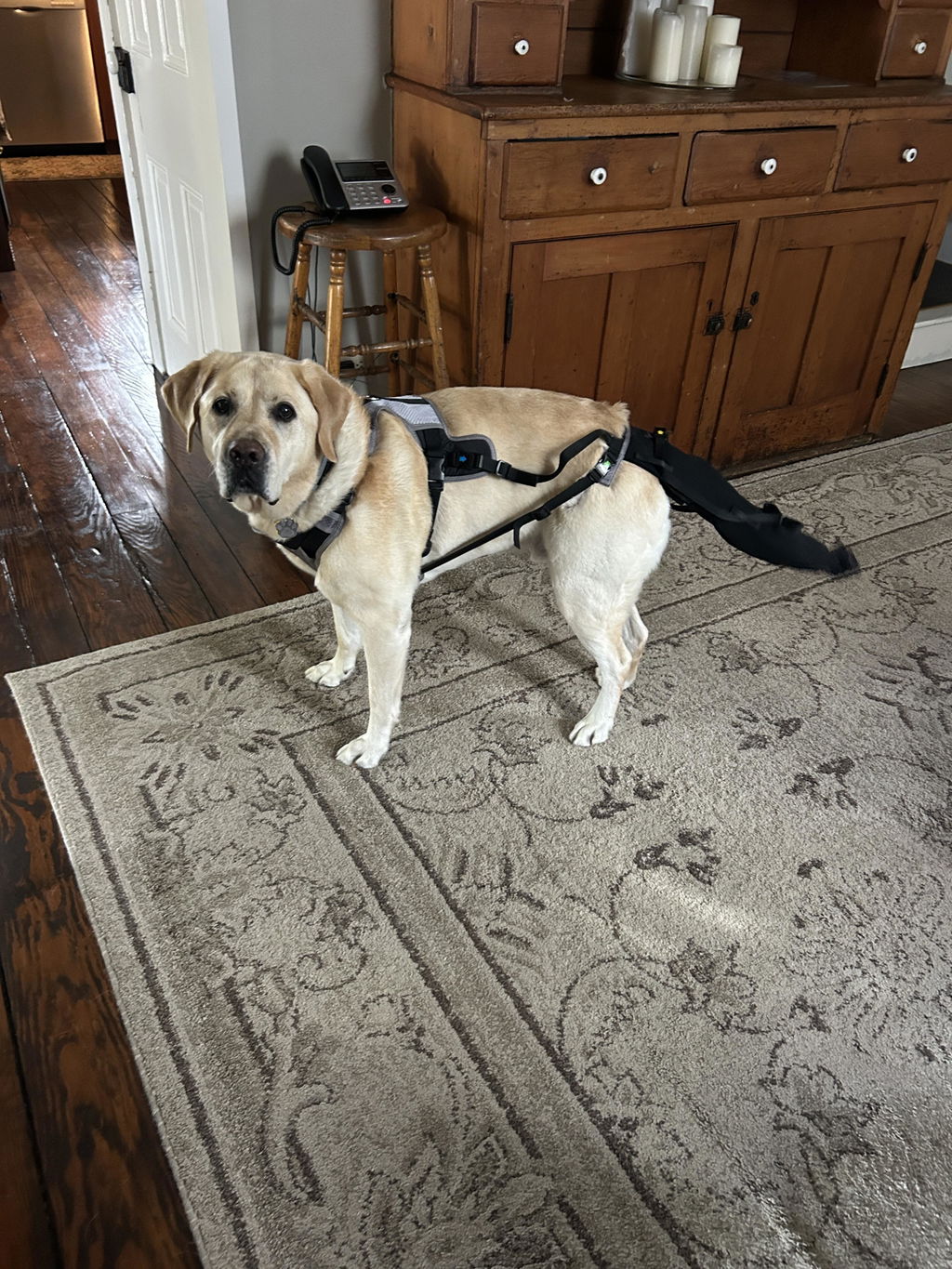
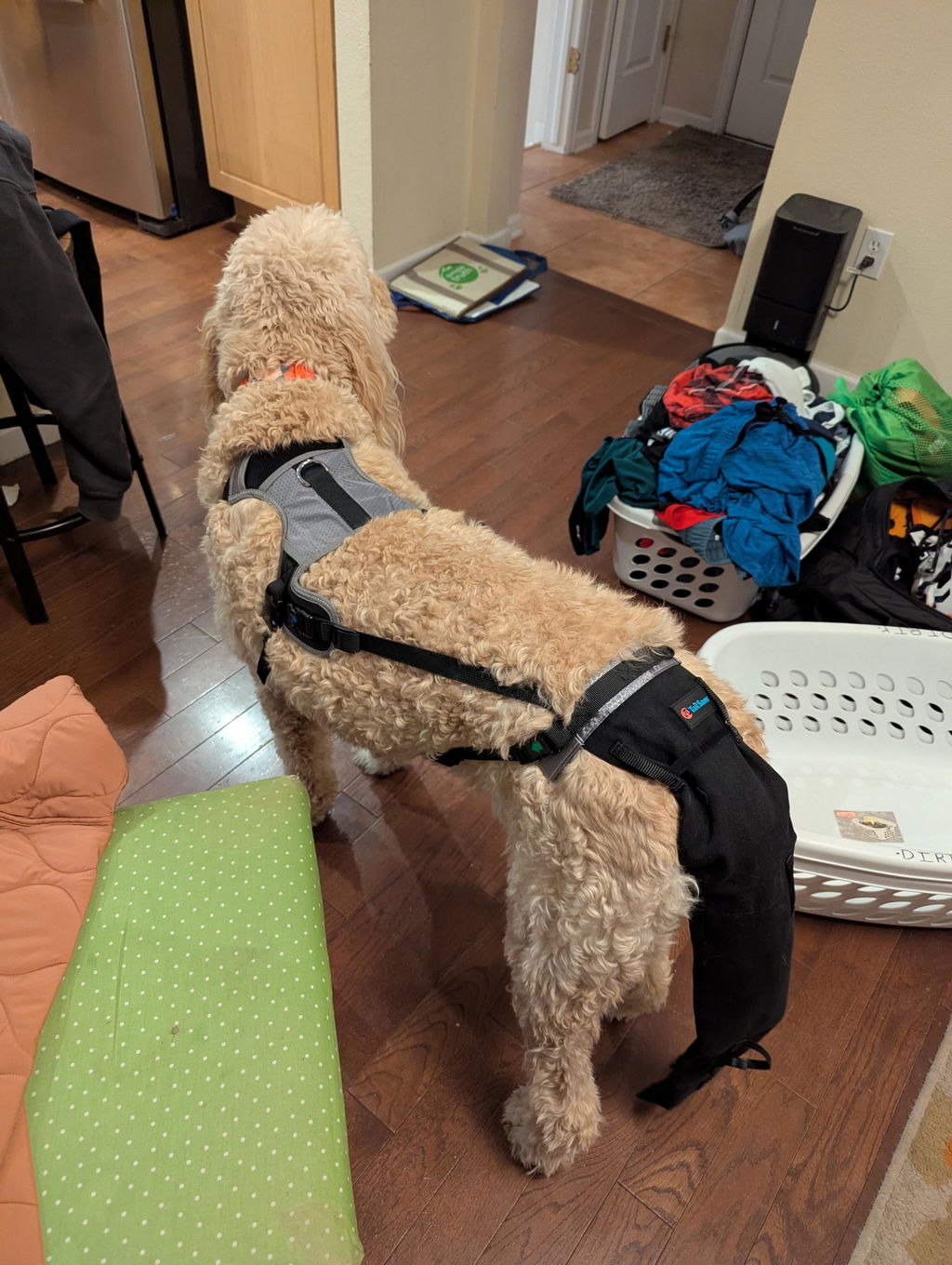
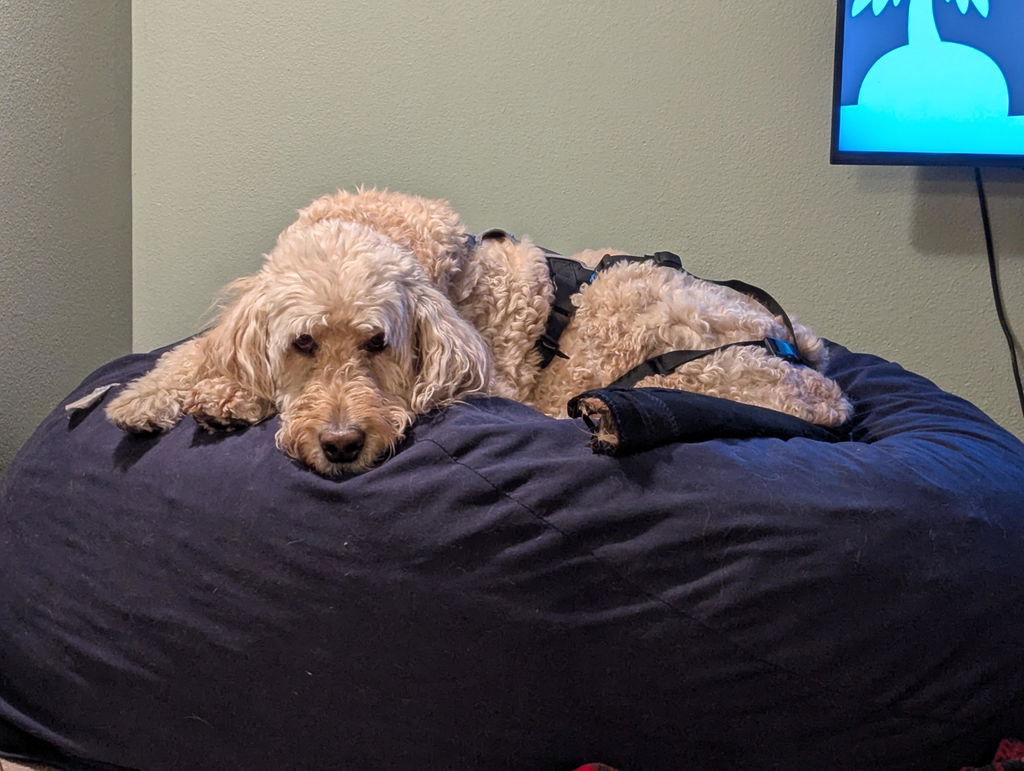
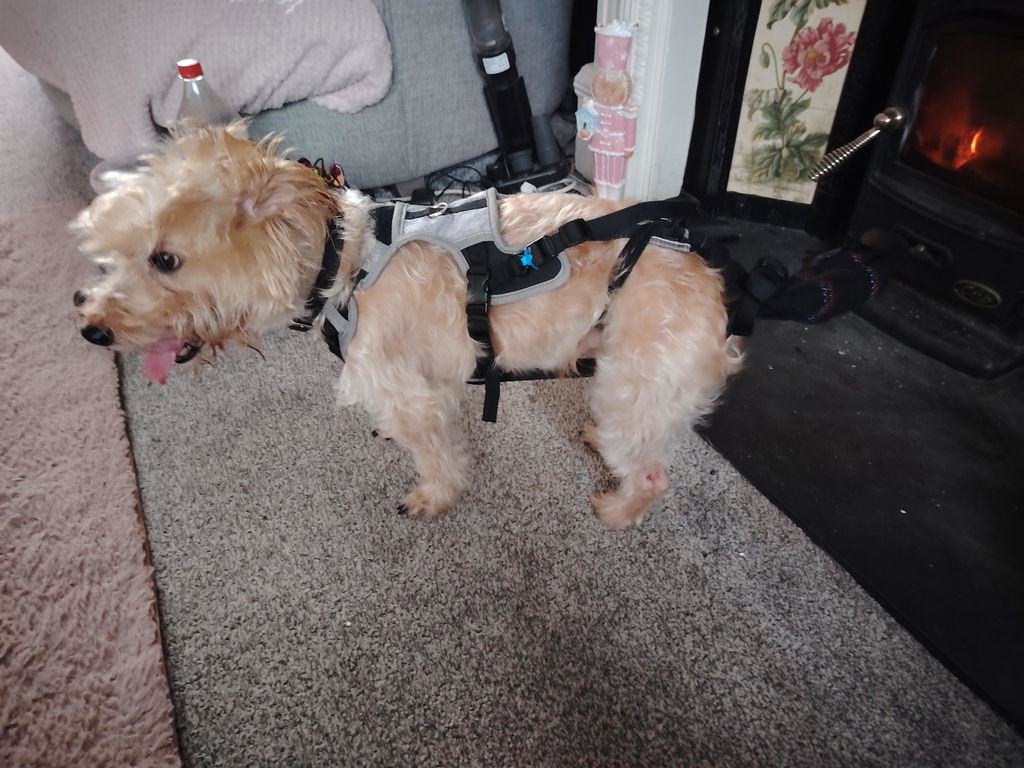
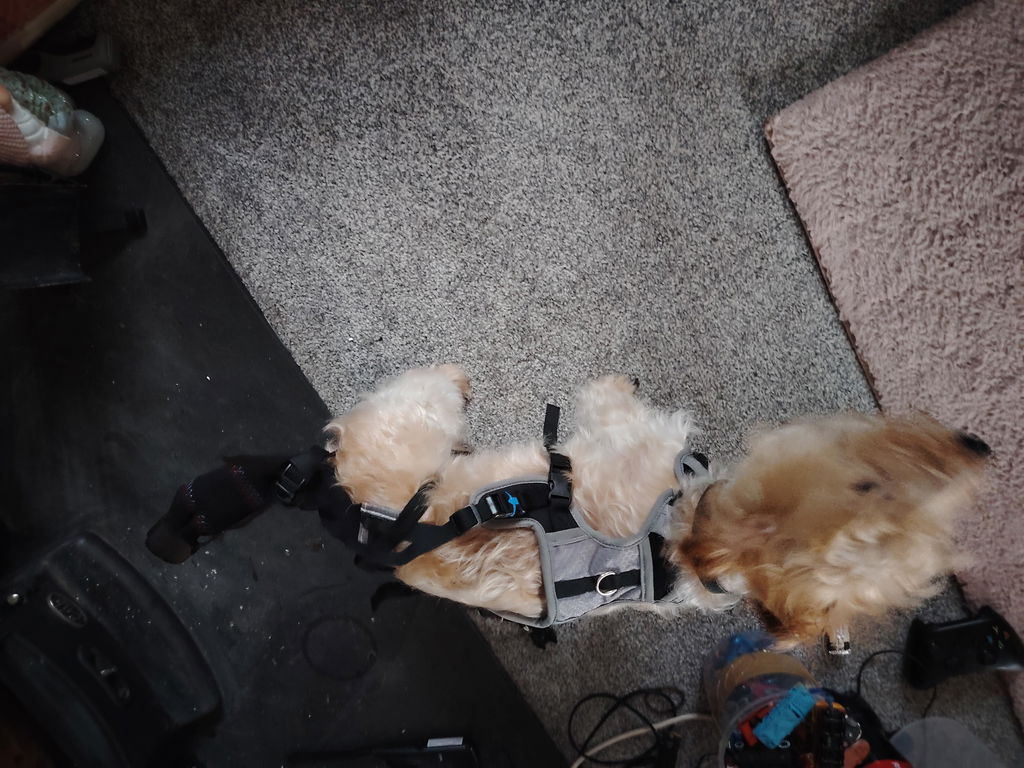
- Harness-anchored protection: Apply the K9 TailSaver® over the dressing to prevent re-injury, licking, and dressing displacement. Both the wound and the swollen tissue around it need protection from further impact.
- Monitor trajectory: Swelling should reduce progressively from day 3 onward. If it does not, or if any infection signs appear, go to the vet.
When to Go to the Vet Immediately
- Swelling is progressing rather than reducing after 48 hours
- Discharge is cloudy, colored, or foul-smelling
- Redness or warmth is extending beyond the wound margin (cellulitis)
- Dog is systemically unwell: lethargy, not eating, or fever
- Swelling feels fluctuant (fluid-filled) and is expanding — may be abscess
- Pain on palpation extends along the tail column, not just the wound site
The Vet & Safety FAQ provides detailed guidance on what information to bring to the appointment and what treatment options to ask about.
Happy Tail and Recurring Swelling
In chronic Happy Tail Syndrome cases, repeated impact and healing attempts can produce persistent tissue thickening (callus) at the tail tip that may look or feel like swelling but does not express discharge. This type of chronic tissue change indicates sustained trauma to the area over many weeks. It resolves as wound healing progresses with the K9 TailSaver protocol but takes longer than acute inflammatory swelling.
Tail Swelling FAQ
My dog's tail tip looks puffy but there is no wound. Should I be concerned?
A hematoma (bruise beneath intact skin) or mild inflammatory reaction can
produce swelling without a visible wound. Monitor daily: if it resolves
within 5–7 days the dog is clearing a minor bruise normally. If it grows
or persists beyond a week, have it assessed by a vet.
Can I give my dog anti-inflammatories (NSAIDs) for the swelling?
Only if prescribed by your vet. Do not give human NSAIDs (ibuprofen, naproxen,
aspirin) to dogs — they are toxic at even low doses. Veterinary-approved
NSAIDs (meloxicam, carprofen) can reduce inflammatory swelling if indicated,
but their use should be supervised, especially in dogs with kidney or liver conditions.
The swelling has reduced but the wound still isn't closing. What's happening?
Reduction of swelling and wound closure are separate processes. Swelling
reflects active inflammation; wound closure requires new epithelial tissue
to grow across the wound surface. This takes additional time beyond inflammation
resolution. With continuous K9 TailSaver protection and no further re-injury events,
wound closure continues even after swelling subsides.