Happy Tail Syndrome & Breaks, Wounds, Allergies
What Is Happy Tail Syndrome? Causes, Symptoms & Treatment
Happy Tail Syndrome is a painful and persistent tail injury caused by a dog's own enthusiastic wagging. The tail tip repeatedly strikes hard surfaces — walls, furniture, door frames — breaking open the skin and creating wounds that won't heal because the motion never stops. What appears to be a minor scrape can escalate to spraying blood, exposed bone, and even amputation if left unmanaged.
Happy Tail Syndrome vs. Standard Tail Injury
Happy Tail Syndrome describes injuries caused by a dog's enthusiastic tail wags against hard surfaces. Long, powerful tails are most susceptible. Injuries can also occur due to environmental changes, like moving to a new home with tighter spaces, or from kennel confinement (kennel tail).
What starts as a minor injury can quickly worsen due to the constant wagging and repeated impact. This can lead to bleeding that sprays across walls and furniture — a hallmark sign owners often describe before a diagnosis is confirmed.
Signs Your Dog Has Happy Tail Syndrome
- Blood spatter on walls, baseboards, or furniture at tail height
- A raw, red, or scabbed wound at the tip or along the tail
- The wound reopens repeatedly, even after appearing to heal
- Dog licks or chews at the tail tip
- Swelling, discharge, or a foul odor (signs of secondary infection)
Treatment Challenges
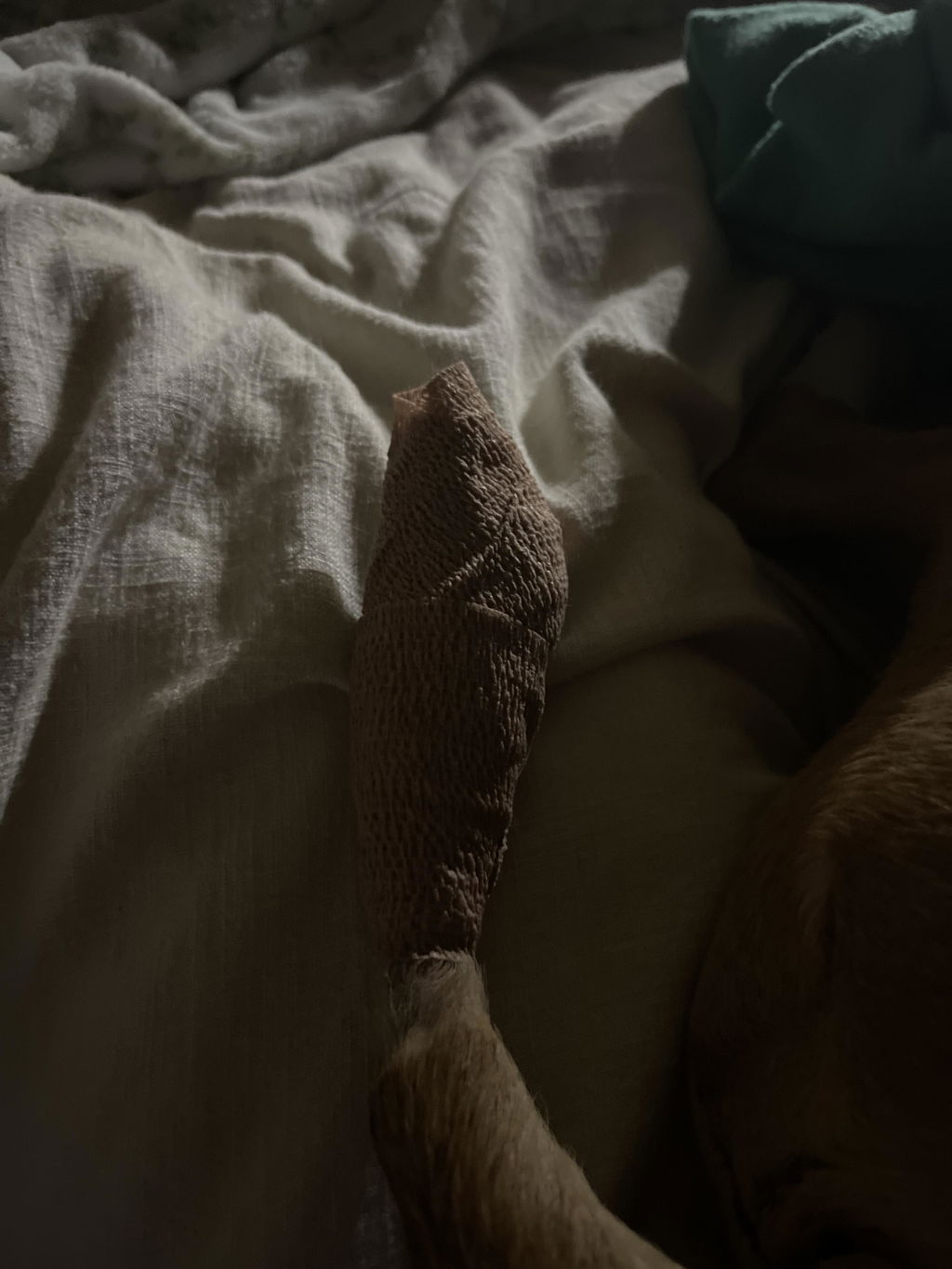
Traditionally, veterinarians may use bandages and cones to manage Happy Tail Syndrome. However, cones often fail to fully protect the tail tip, and frustrated dogs can chew through bandages, causing further damage. This can lead to frequent vet visits, sleepless nights, and significant stress for the dog. In severe cases, partial or full tail amputation may be considered.
How the K9 TailSaver Addresses Happy Tail
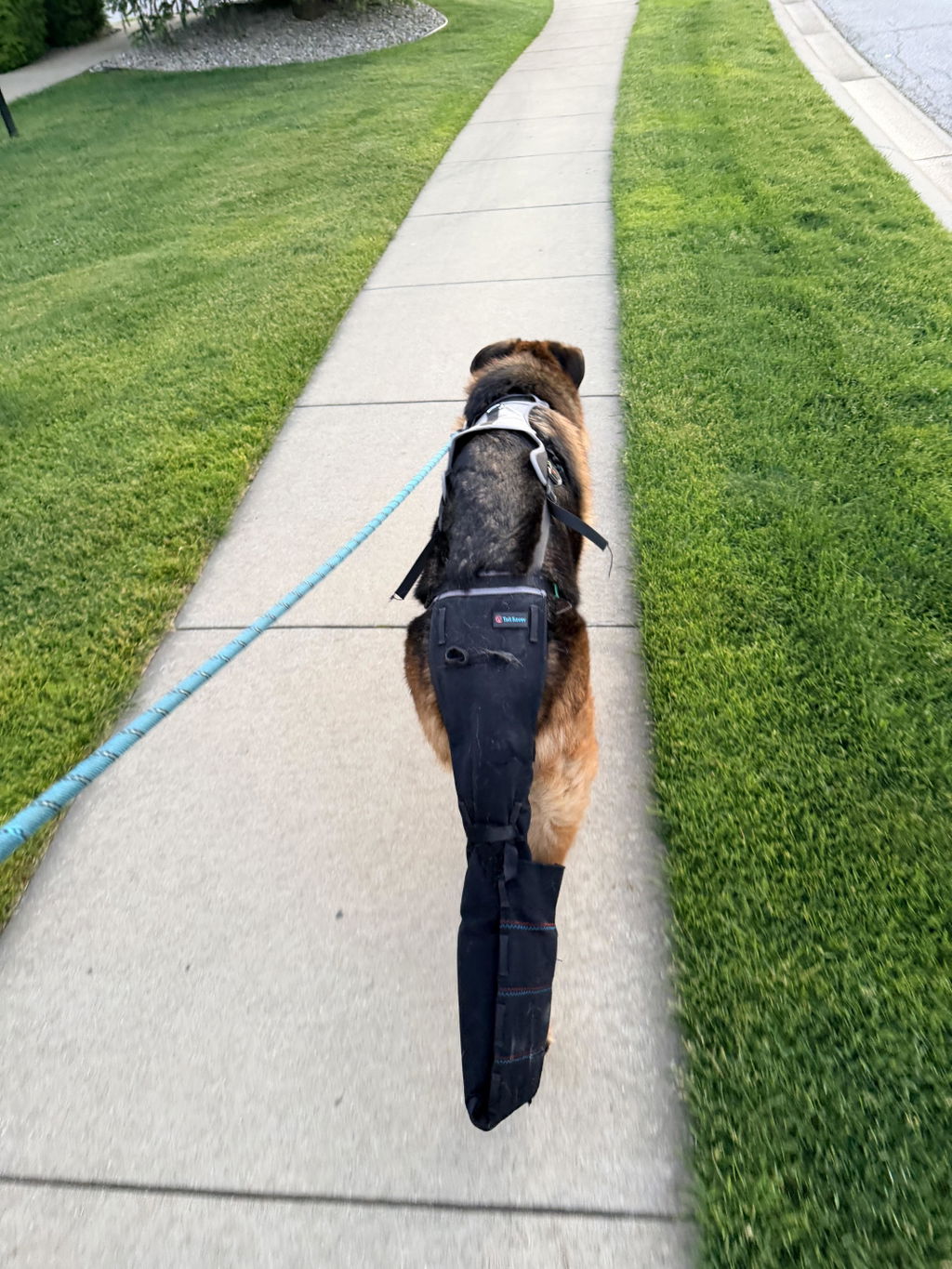
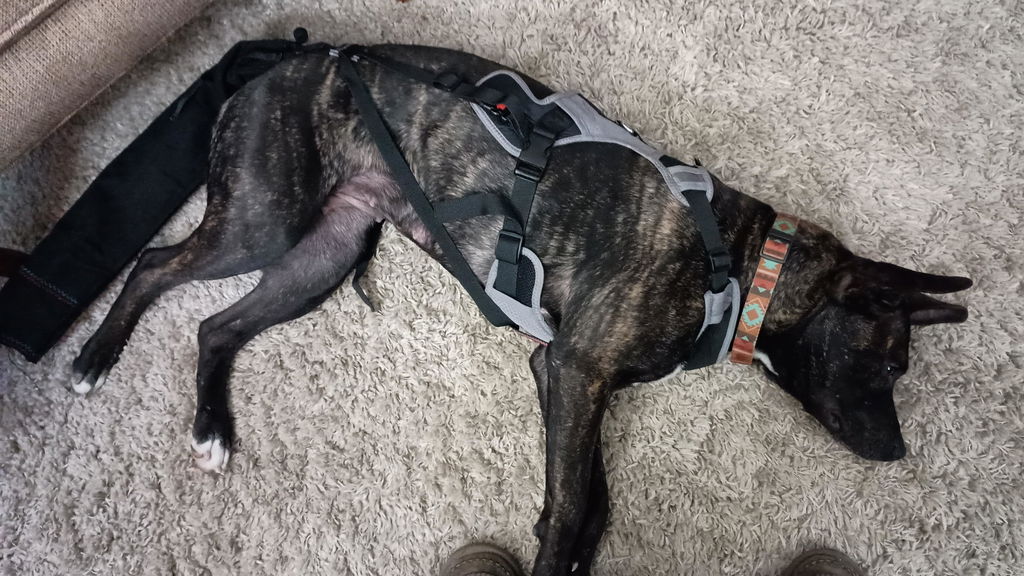
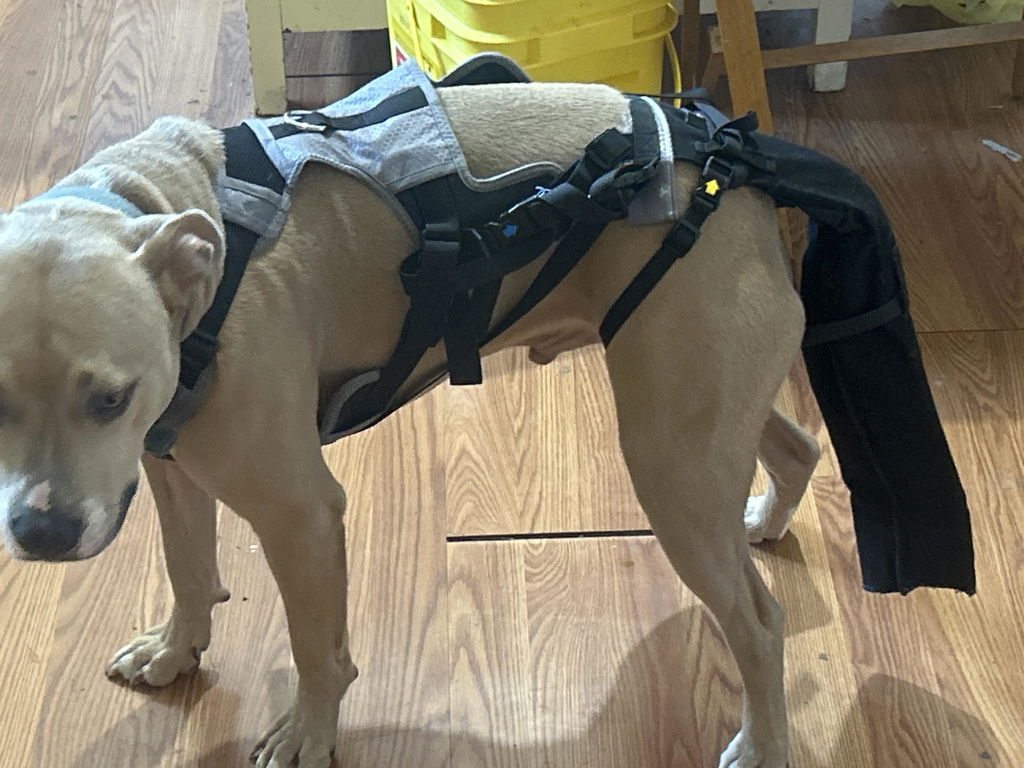
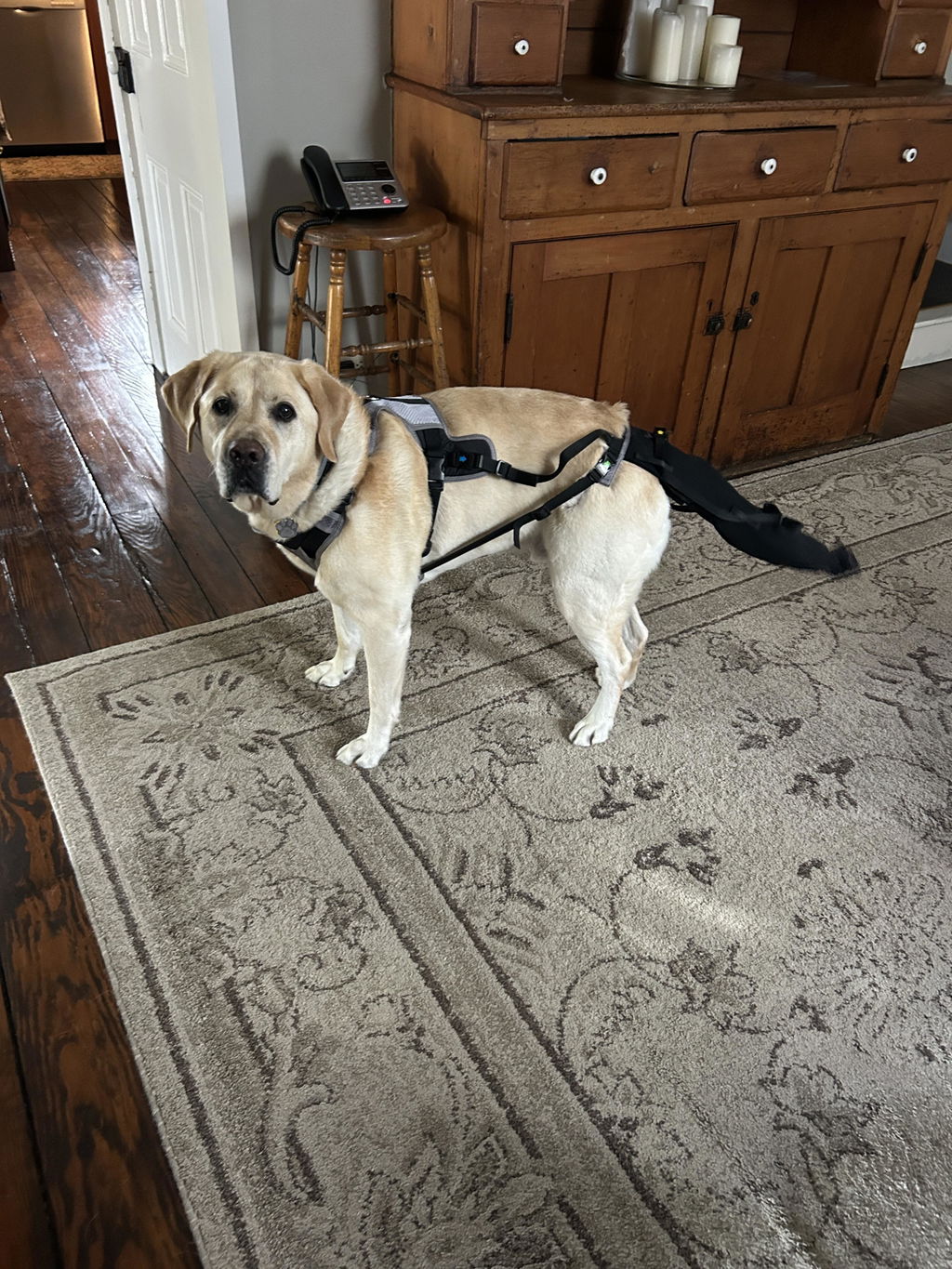
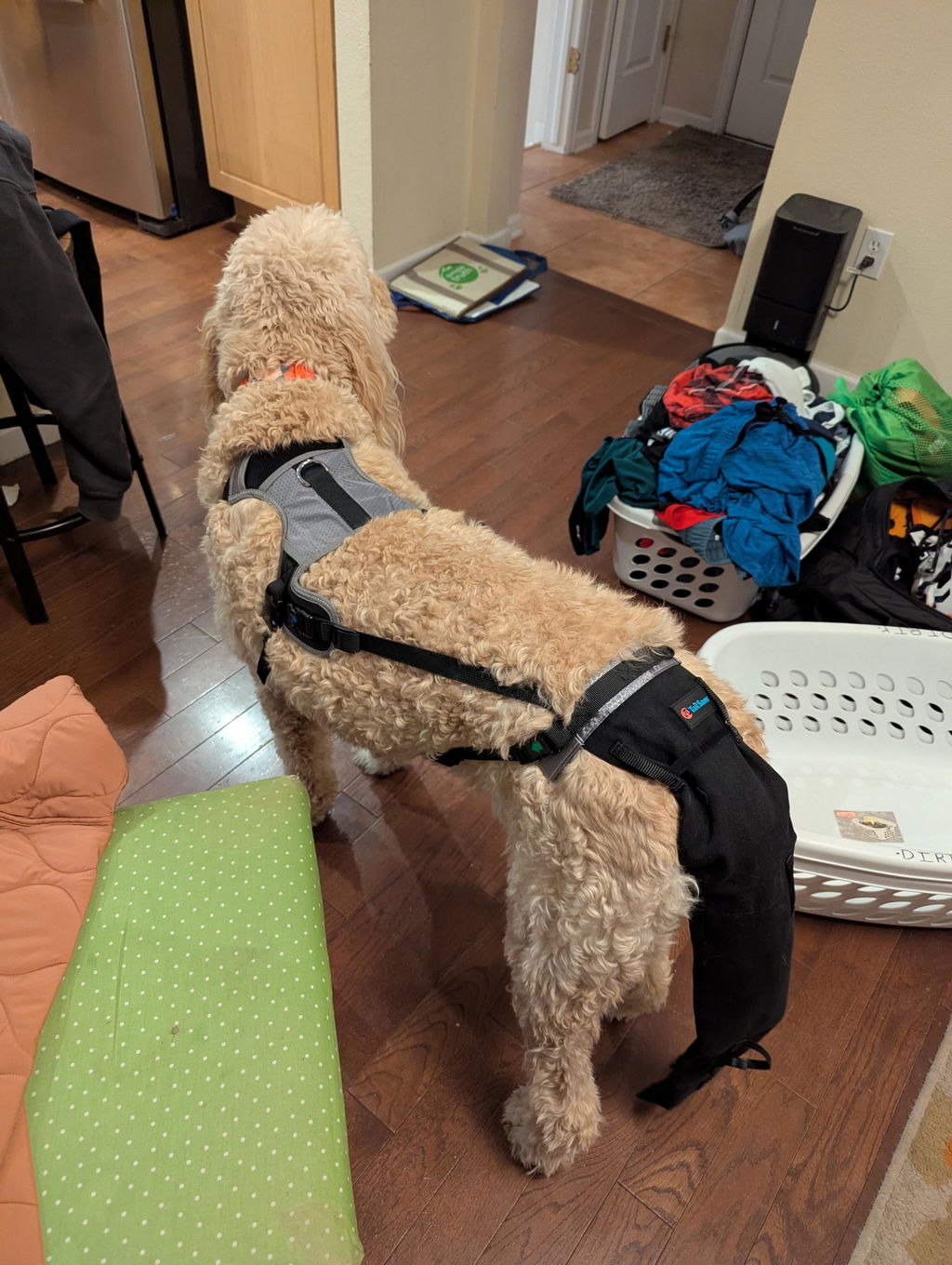
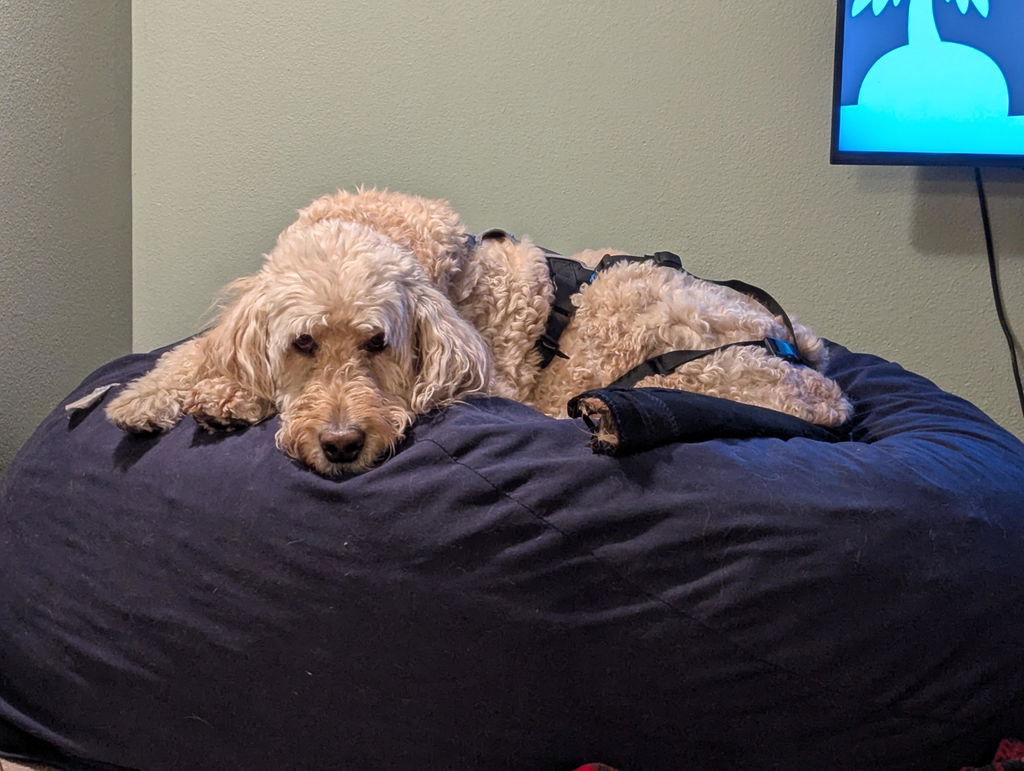
The K9 TailSaver offers a comfortable and effective solution. By protecting the tail and preventing licking or chewing, it allows for faster healing within days of initial injury. Many veterinarians now recommend the K9 TailSaver as a first-line alternative to amputation.
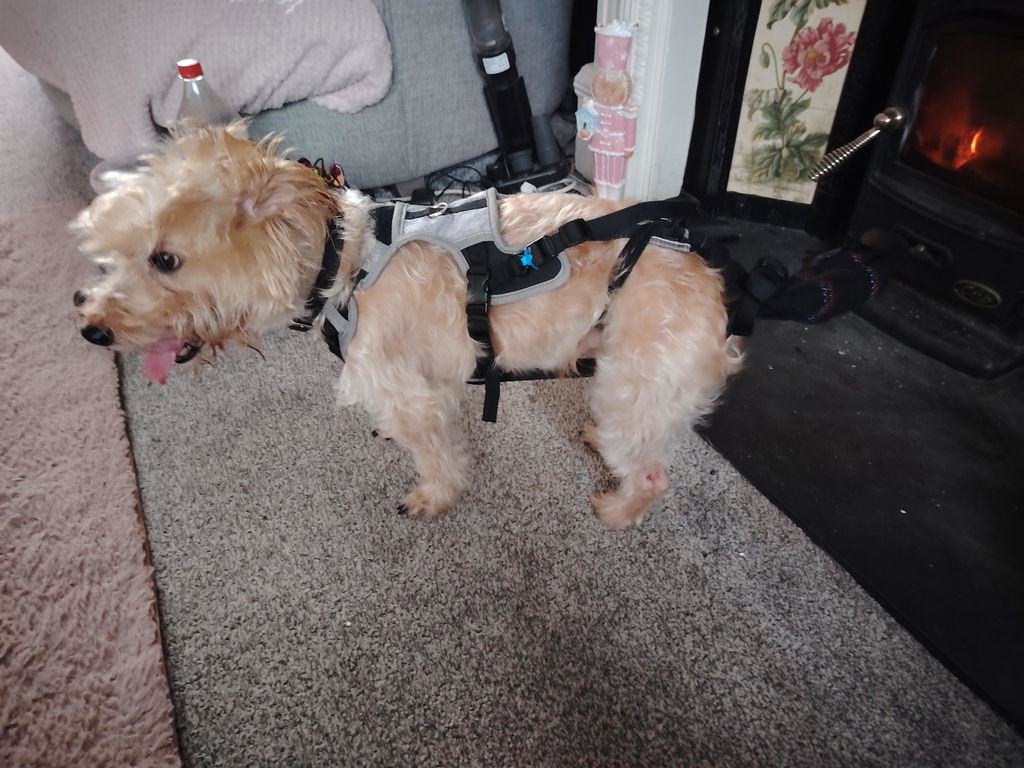
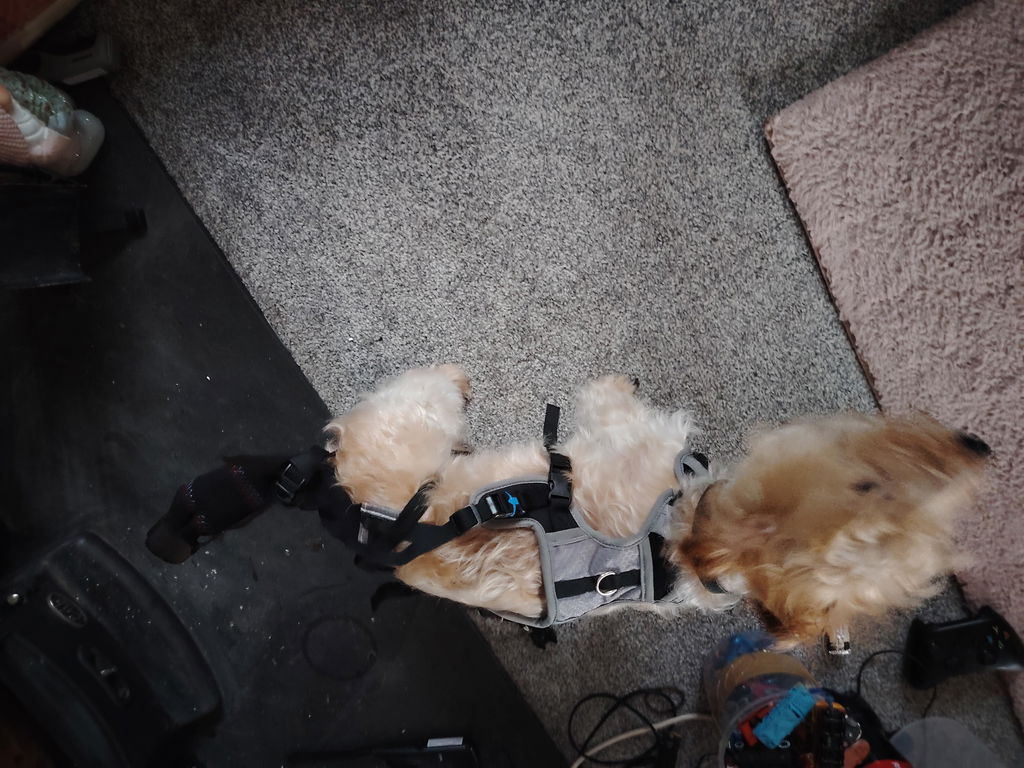
Unlike wraps and bandages alone, the K9 TailSaver uses a body harness that anchors the tail sleeve in place. This means it stays on even for active dogs who wag constantly — the key difference for true Happy Tail recovery.
Conditions the K9 TailSaver Also Treats
- Kennel Tail: Broken tails from kennel confinement.
- Tail Anxiety: Tail chasing and self-inflicted biting.
- Broken Tails: From accidents or getting shut in doors.
- Flea Bite Sores: Open wounds from persistent scratching.
- Post-Surgery Recovery: Protecting incisions after cyst, tumor, or accident surgery.
- Grooming Nicks: Minor cuts sustained during grooming sessions.
Why Tail Injuries Keep Reopening
Dog tails heal quickly when protected from self-inflicted injury. However, most dogs dislike anything on their tails and will work to remove it. Bandages and wraps are regularly chewed through or shaken off, leaving the wound re-exposed within hours of dressing.
The K9 TailSaver is specifically designed for security and comfort. Unlike cones, it fully encloses the tail tip. Dogs readily adjust to wearing it and can comfortably wear it around the clock during the healing window.
What to Do If Your Dog Is Chewing the K9 TailSaver
Some dogs might initially chew at the K9 TailSaver as they adjust to wearing it. This behavior usually subsides within two days and can often be traced back to an incorrect fit. See our Chewing & Compliance FAQ for a step-by-step adjustment guide.
When to Involve Your Veterinarian
Veterinarians familiar with the K9 TailSaver will often recommend it for tail injuries alongside — or in place of — traditional bandaging. If your vet is not familiar with the product, bring documentation or ask them to review the Vet & Safety FAQ. Antibiotics may still be needed for infected wounds; the K9 TailSaver protects the wound while medication does its work.
Frequently Asked Questions
How long does it take for a happy tail wound to heal?
Most wounds show significant improvement within 7–14 days when consistently
protected. Deeper or infected wounds may take 3–6 weeks.
Can my dog sleep in the K9 TailSaver?
Yes. The K9 TailSaver is designed for 24/7 wear during recovery. Remove only
for cleaning or when directly supervised outdoors.
Do I still need to bandage the wound?
A light non-stick dressing under the tail sleeve is recommended for actively
bleeding wounds. See the
Wound Care FAQ for dressing protocol.
Will the K9 TailSaver stay on an energetic dog?
Yes. The harness anchor system prevents the sleeve from sliding or being shaken
off — the core problem with bandages alone.