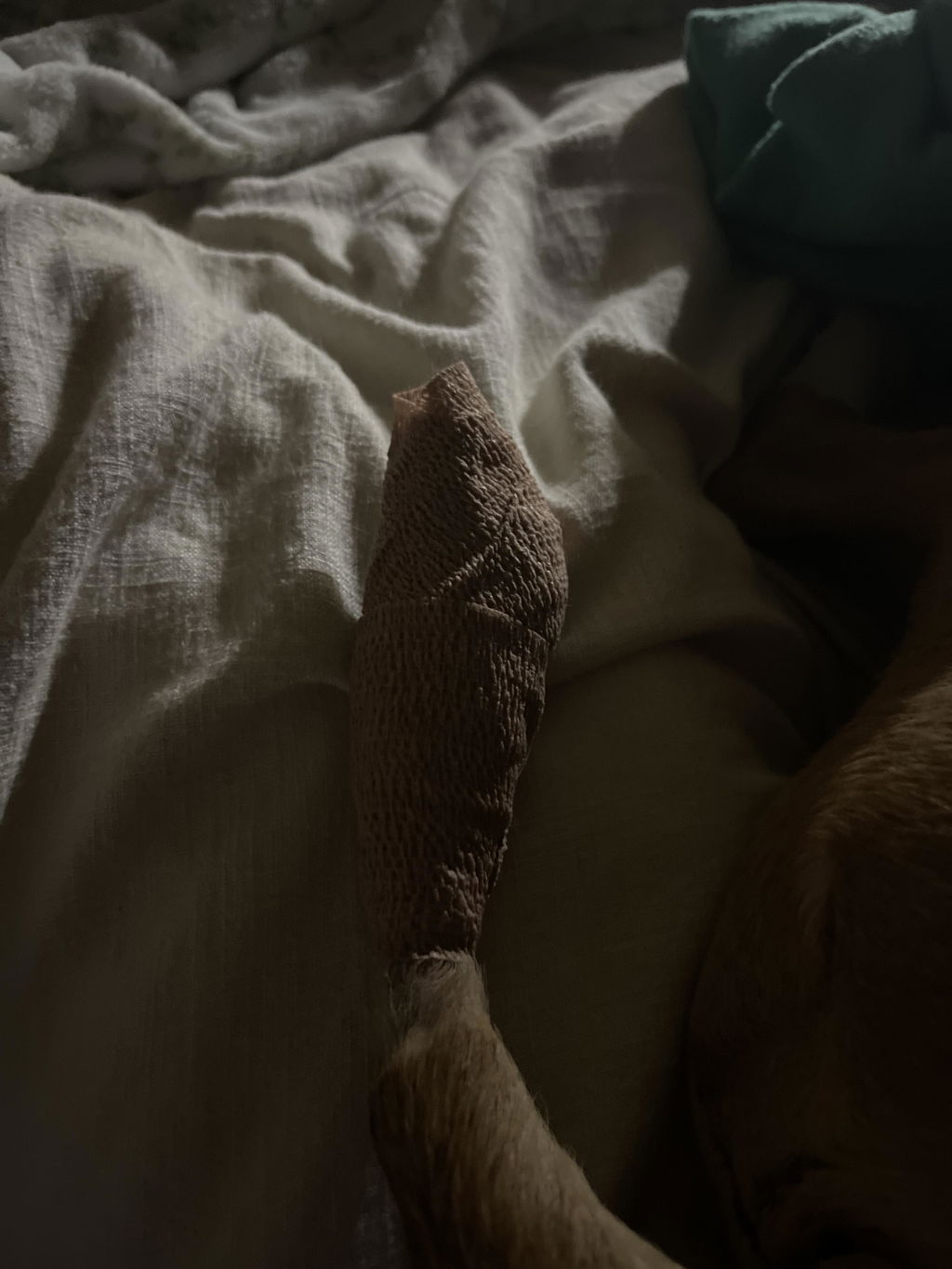
Happy Tail Syndrome: The Complete Owner's Guide to Treatment and Recovery
Happy Tail Syndrome is deceptively simple — the dog wags against a hard surface and splits the tail tip open — but the recovery is notoriously difficult. The tail never stops moving, which means every treatment that works for other wounds fails here. Bandages slip. Cones don't reach. The wound reopens daily. This guide covers why Happy Tail is so hard to treat, what actually works, and how to get your dog through recovery without amputation.
What Causes Happy Tail Syndrome?
The injury mechanism is straightforward: a dog wags its tail with enough force and frequency to repeatedly impact walls, crate bars, furniture edges, and door frames. This repeated impact — dozens or hundreds of times per day — creates a chronic wound at the tail tip that heals partially between wags but is torn back open before new tissue can solidify.
High-risk breeds are those with long, powerful tails and enthusiastic wag patterns: Labrador Retrievers, German Shepherds, Great Danes, Greyhounds, Weimaraners, Irish Setters, and similar large-breed dogs. However, any dog with enough tail momentum can develop Happy Tail.
Why It’s So Hard to Treat
The fundamental obstacle in treating Happy Tail Syndrome is that the human wound-care toolkit assumes the wound will be still between dressing changes. Tail wounds are never still. A single wagging session against a wall immediately after bandaging undoes hours of healing. The failure chain looks like this:
- Wound is cleaned and bandaged at the vet
- Dog returns home and begins wagging
- Bandage loosens within hours from tail rotation and moisture
- Dog licks the loosened bandage, either removing it or contaminating the wound
- Owner returns to vet; cycle repeats
This cycle is the defining feature of Happy Tail Syndrome treatment — and breaking it requires something that remains secured to the dog through continuous tail movement.
The Treatment That Works
Effective Happy Tail treatment requires three things simultaneously:
- Physical protection of the wound tip against further impact
- Prevention of licking and chewing that removes dressings and contaminates the wound
- A secure anchor that keeps the protective device in position through all activity
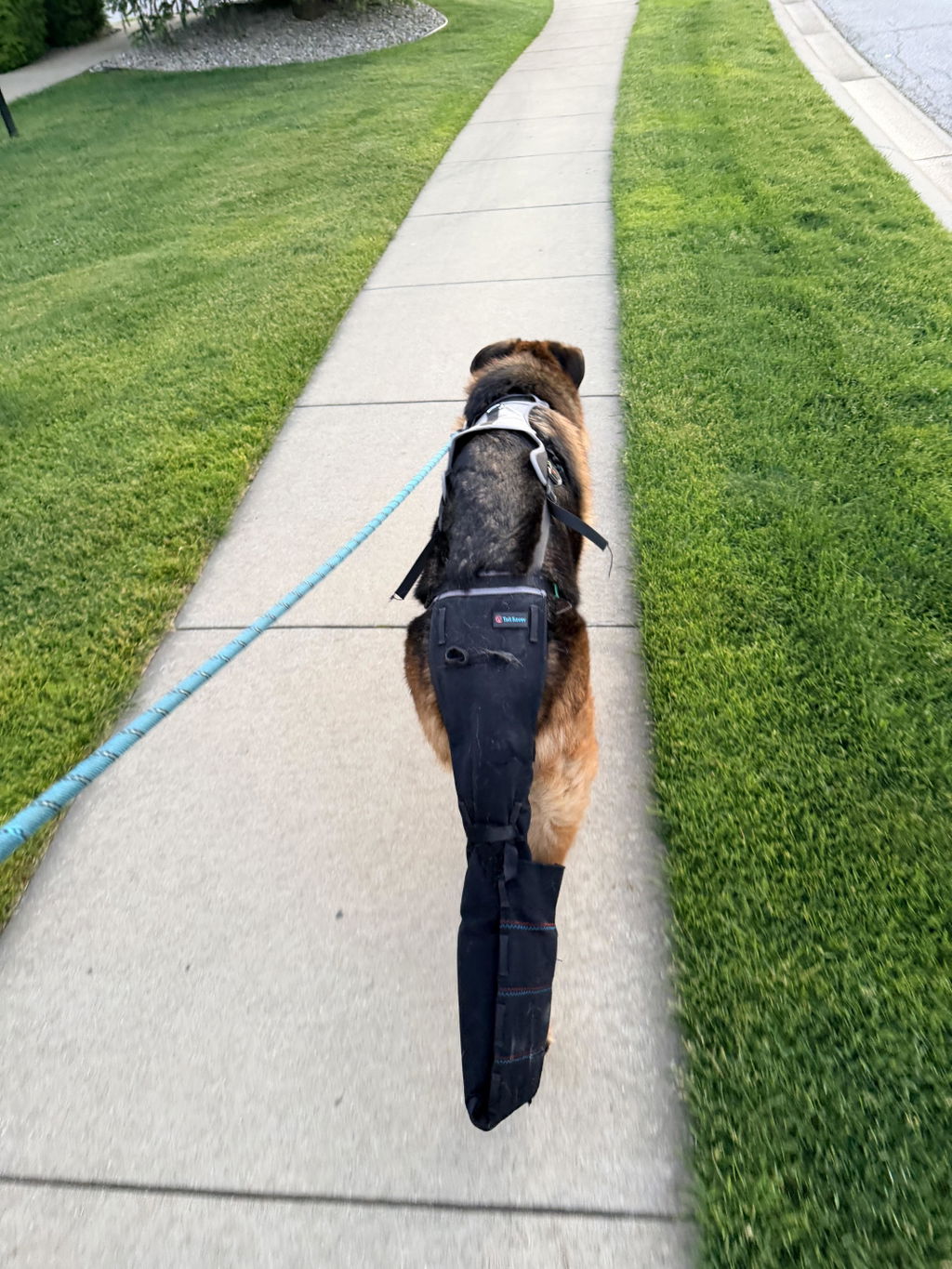
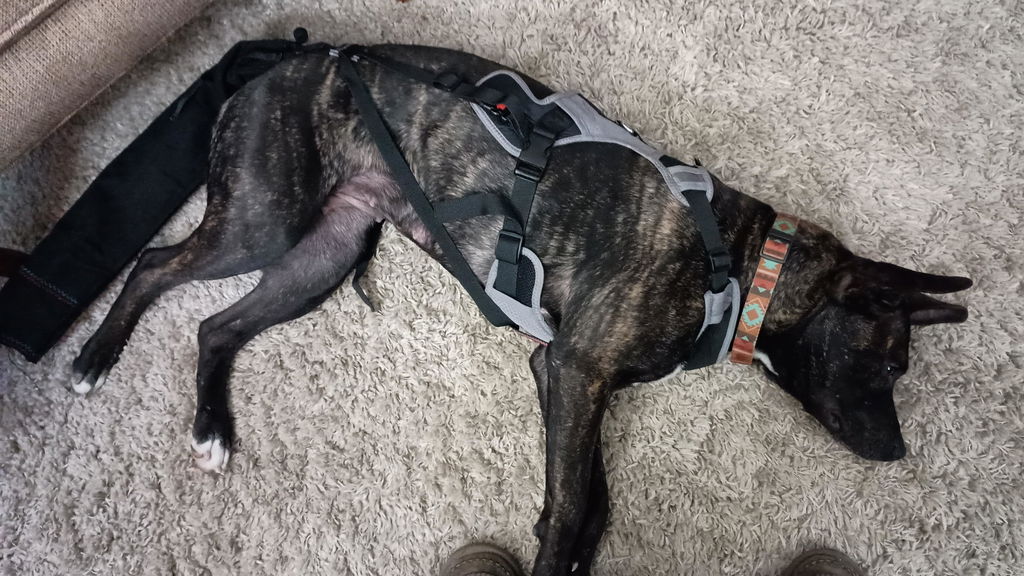
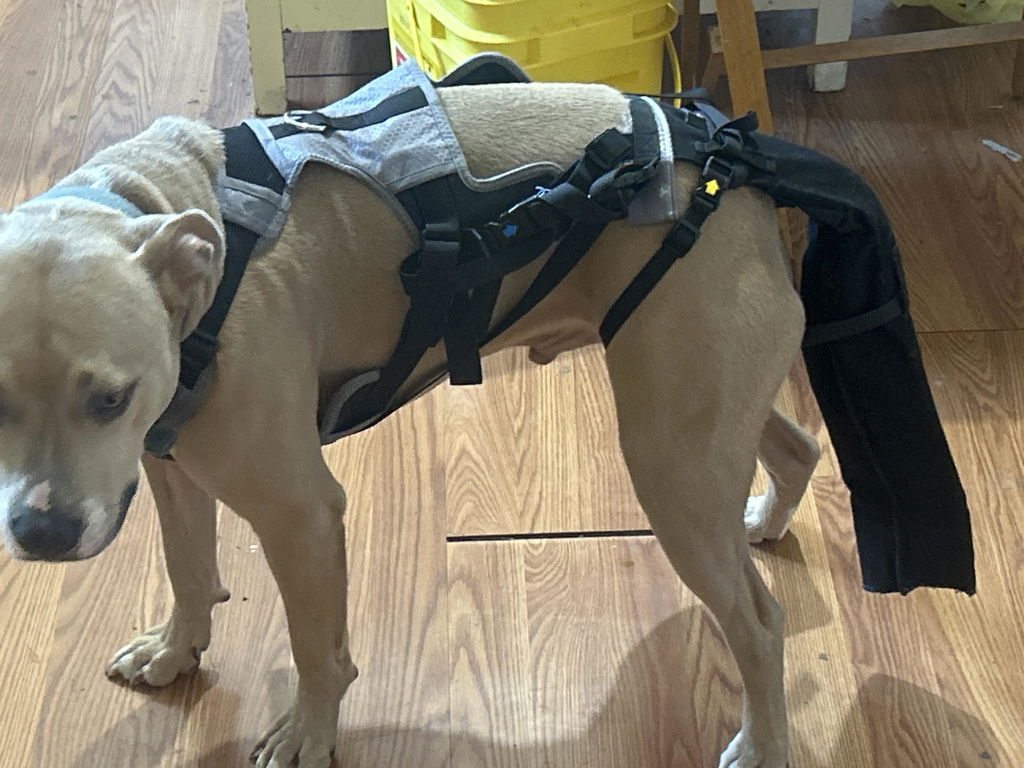
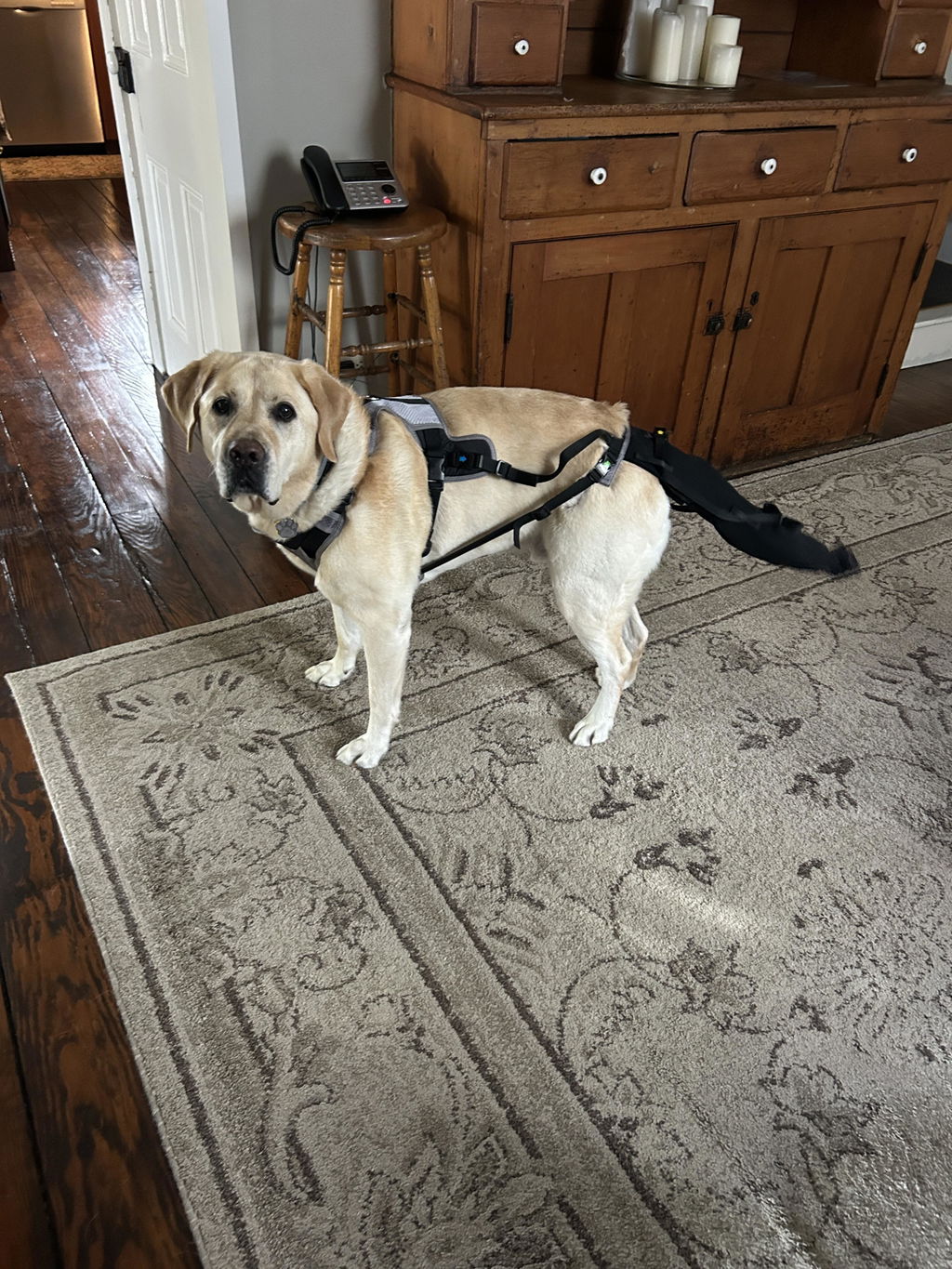
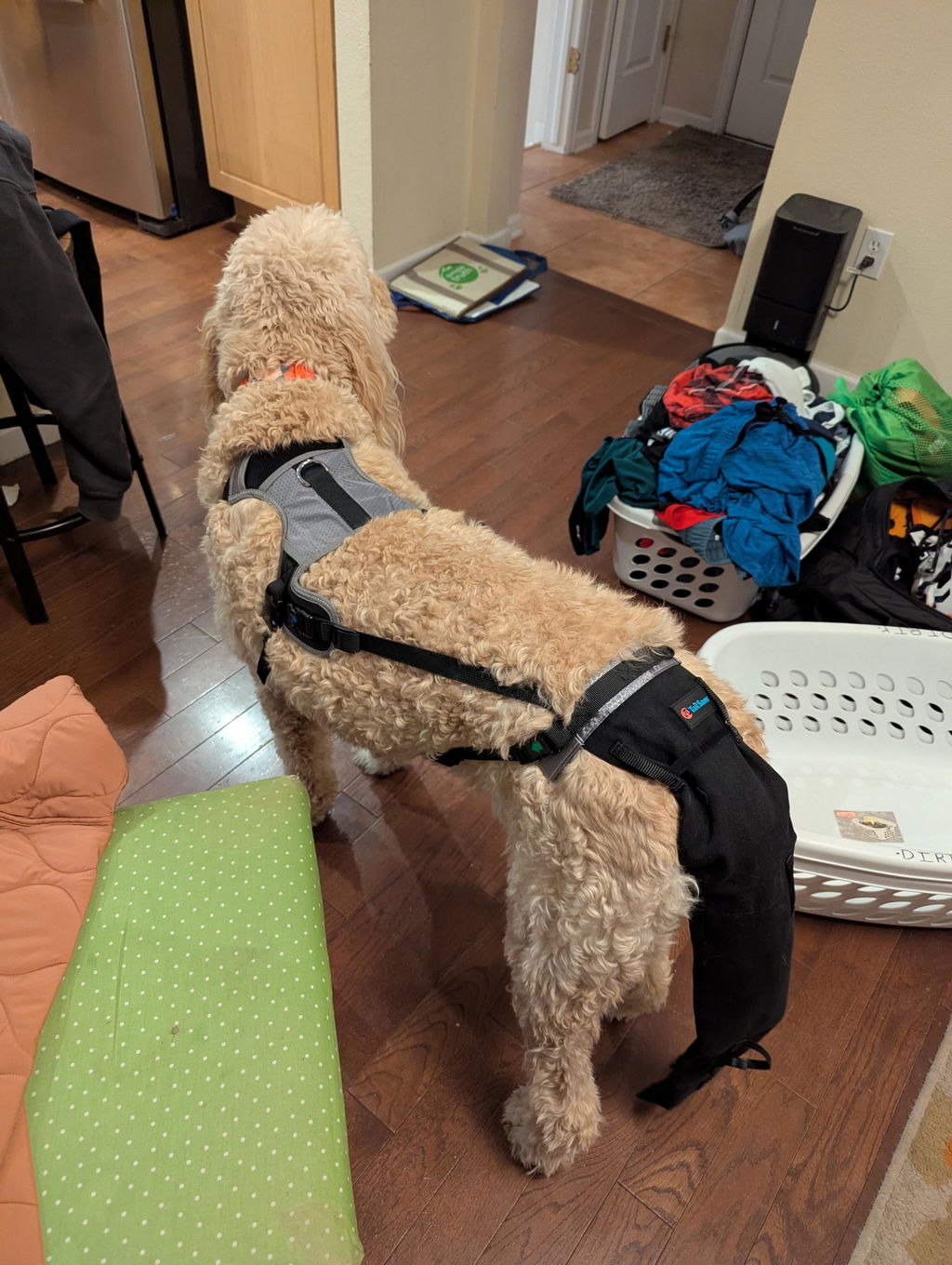
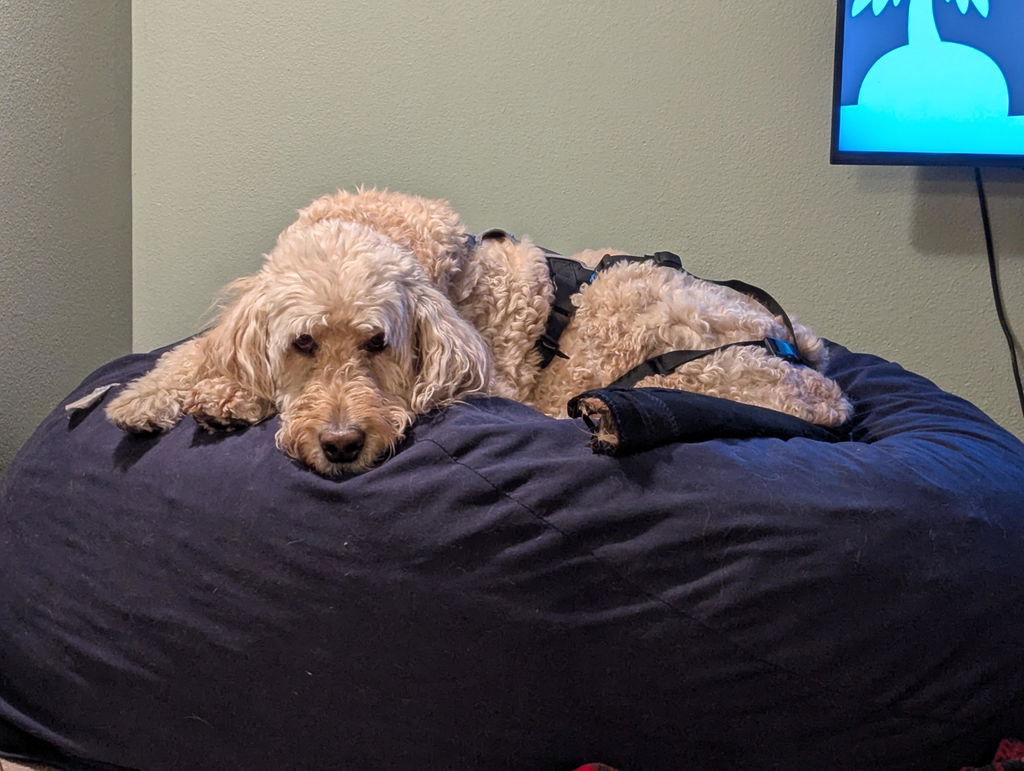
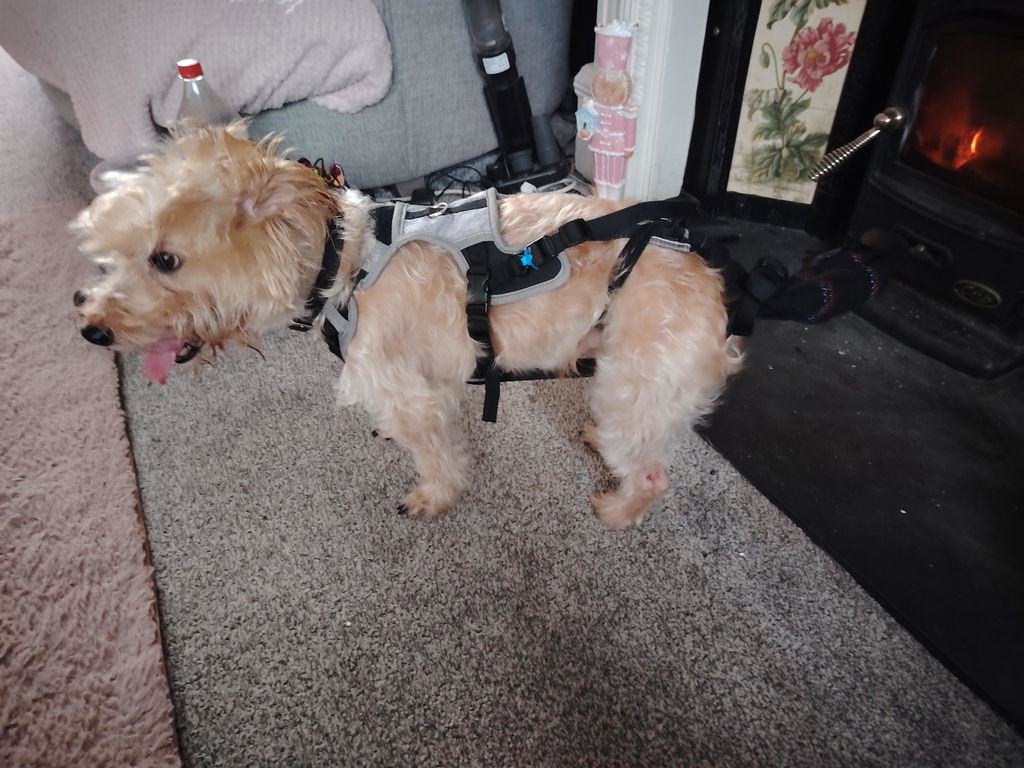
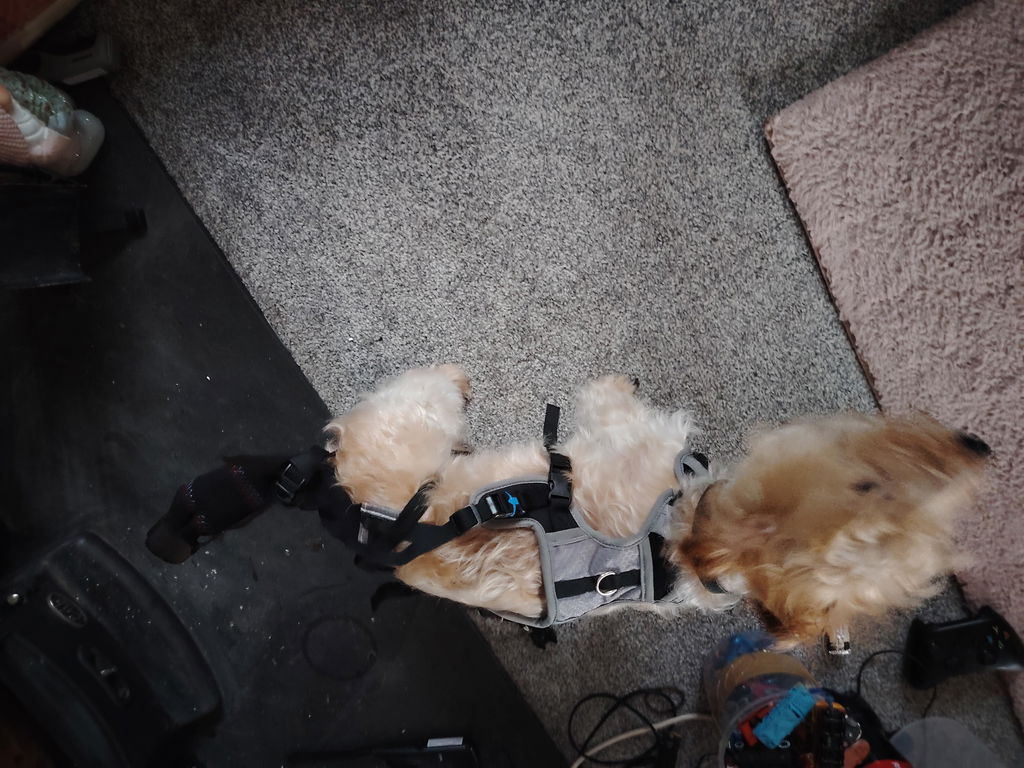
The K9 TailSaver® was built around all three requirements. A padded canvas sleeve covers the wound tip and any dressing placed underneath, while a full-body harness anchors the sleeve to the dog's chest so it cannot slide or be shaken off during wagging. Veterinarians who prescribe it report fewer return visits, faster wound closure, and dramatically improved owner compliance compared to bandage-only approaches.
How to Care for a Happy Tail Wound at Home
Immediate steps after an injury event:
- Calm the dog — excitement accelerates wagging and blood loss. Move to a quiet room.
- Apply gentle pressure with sterile gauze for 5–10 minutes.
- Do not wrap tightly — this restricts circulation on the tail tip.
- Assess the wound: superficial splits can be managed at home with a wound dressing and the K9 TailSaver. Exposed bone, deep tissue, or uncontrolled bleeding require immediate vet care.
Ongoing wound care during recovery:
- Clean the wound once daily with saline or dilute chlorhexidine rinse
- Apply a sterile non-stick dressing (Telfa pads work well) over the wound
- Slide the K9 TailSaver sleeve over the dressing — it holds the pad in place between cleaning sessions
- Inspect the wound during each cleaning for signs of infection: swelling, warmth, discharge, foul odor
When to Call the Vet
- Bleeding does not slow after 10 minutes of light pressure
- Bone, cartilage, or tendons are visible
- Wound shows signs of infection (fever, swelling, discharge, odor)
- Dog is in severe distress or lethargic
- Wound is not improving after 2 weeks of consistent protection
See the Vet & Safety FAQ for complete escalation guidance.
How Long Does Recovery Take?
With consistent protection from the K9 TailSaver, most Happy Tail wounds show significant improvement within 7–14 days. Full closure of a wound that has been chronic (reopening repeatedly for weeks) typically takes 3–6 weeks. The key variable is uninterrupted protection — every time the protection is removed prematurely, the timeline resets.
Can Happy Tail Syndrome Come Back?
Yes — Happy Tail is a behavioral and environmental condition, not one that resolves permanently after the wound heals. Dogs prone to severe wagging in hard-surface environments will re-injure the tail if the circumstances remain unchanged. After the wound has healed, consider:
- Padding wall edges and crate bars in the dog's primary space
- Using exercise pens rather than metal crates during confinement
- Keeping a spare K9 TailSaver on hand for dog's that are repeat sufferers
- Discussing with your vet whether partial amputation of the tail tip is appropriate for dogs who have experienced 3+ severe Happy Tail events
Treating Happy Tail Without Amputation
Amputation is often presented as the inevitable end-point for severe Happy Tail cases, but it is a last resort, not a first response. Many dogs that had been recommended for partial tail amputation have made full recoveries with consistent K9 TailSaver use. If your vet has suggested amputation, ask about a 4–6 week trial with consistent tail protection as a first step — many physicians support this approach before a surgical decision is made.