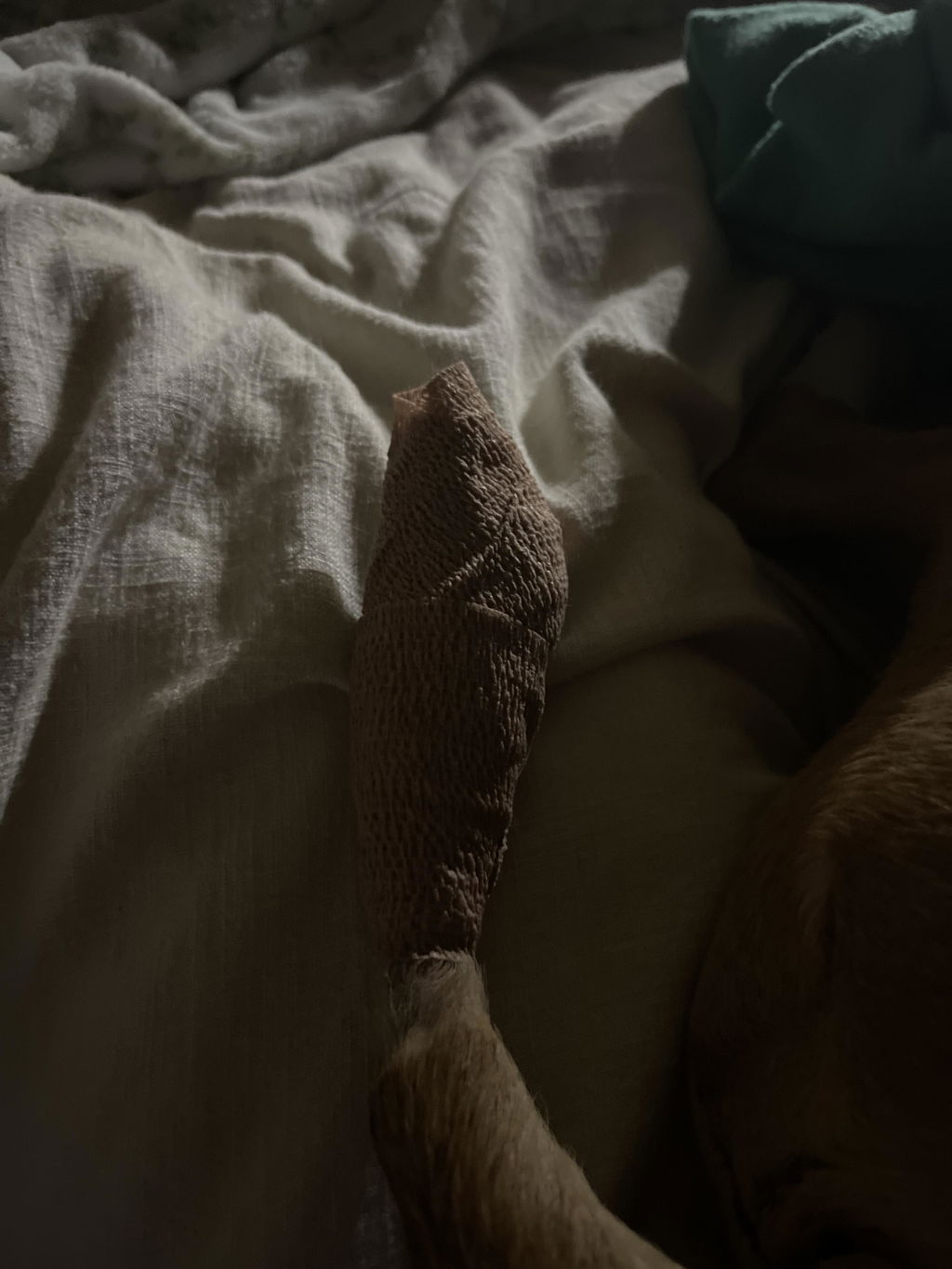
Dog Tail Wound Not Healing: Causes, Diagnosis & What to Do
Dog Tail Wound Not Healing: Why It Keeps Reopening and How to Break the Cycle
A dog tail wound that was cleaned and bandaged at the vet but continues to reopen days or weeks later is not a treatment failure — it is a mechanical problem. Dog tail wounds are uniquely resistant to standard wound care protocols because the tail never stops moving. Every wound healing principle that applies to other body locations is undermined by the constant wag, swing, and strike of an active tail. This page explains the specific reasons tail wounds fail to close, how to identify which reason applies to your dog, and the treatment approach that breaks the cycle.
Why Dog Tail Wounds Keep Reopening
Reason 1: Mechanical re-injury from wagging
This is the most common cause and the primary mechanism behind Happy Tail Syndrome. New tissue forming across the wound surface is fragile. It takes days of undisturbed growth to form a layer strong enough to survive a tail impact. Most dogs wag their tails against a hard surface before that layer is established. The impact tears the new tissue, reopening the wound and resetting the healing timeline.
Reason 2: Self-directed licking and chewing
Licking introduces bacteria, removes scabs and new tissue mechanically, and keeps the wound surface moist in a way that prevents epithelialization. Dogs fixate on wounds because licking provides sensory relief. Even a dog that is not an aggressive chewer will lick a tail tip wound hundreds of times daily if not prevented.
Reason 3: Bandage failure allowing repeated contamination
Standard bandages on tail wounds fail within hours. A failed bandage on an open wound acts as a contamination reservoir — the moist environment inside a failing bandage accelerates bacterial growth, and the constant contact with the raw wound surface delays healing. Multiple failed bandage applications worsen the wound environment progressively.
Reason 4: Secondary infection
A wound that has been repeatedly contaminated through licking, failed bandages, or environmental exposure develops a bacterial biofilm that prevents healing independently. In this case, antibiotics are required before wound closure is possible regardless of how well the wound is protected afterward.
Reason 5: Underlying systemic condition
Less commonly, a tail wound that fails to heal despite correct protection may indicate an underlying condition: diabetes, hypothyroidism, Cushing's disease, or immune suppression from medication. If you have been providing correct continuous protection for 4+ weeks with no wound improvement, ask your vet to screen for systemic healing impairment.
How to Identify Which Cause Applies to Your Dog
| Pattern | Most Likely Cause | Primary Fix |
|---|---|---|
| Wound reopens after active/excited periods | Mechanical re-injury (wag impact) | Harness-anchored impact protection |
| Wound is consistently moist, dog licks frequently | Licking and self-trauma | Lick-prevention sleeve + compliance training |
| Bandage slips, wound visible between changes | Bandage failure | Replace bandage with anchored sleeve |
| Wound has odor, discharge, warmth | Secondary infection | Vet-prescribed antibiotics + protection |
| No improvement after 4+ weeks of correct protection | Systemic condition | Vet bloodwork and systemic screening |
The Treatment Protocol That Works
Step 1: Rule out infection
Before starting protection, confirm the wound is not infected. Signs of infection: warmth, swelling beyond the wound margin, colored (yellow, green, grey) discharge, foul odor, or fever (dog is lethargic or off food). Infected wounds need antibiotic treatment before protection alone will drive healing.
Step 2: Apply a non-adherent wound dressing
Clean the wound with saline or dilute chlorhexidine rinse. Apply a sterile non-stick pad (Telfa or similar) over the wound. Do not use adhesive tape directly on dog tail skin — it creates contact dermatitis that further delays healing. The dressing is held in place by the sleeve, not by tape.
Step 3: Apply harness-anchored sleeve protection
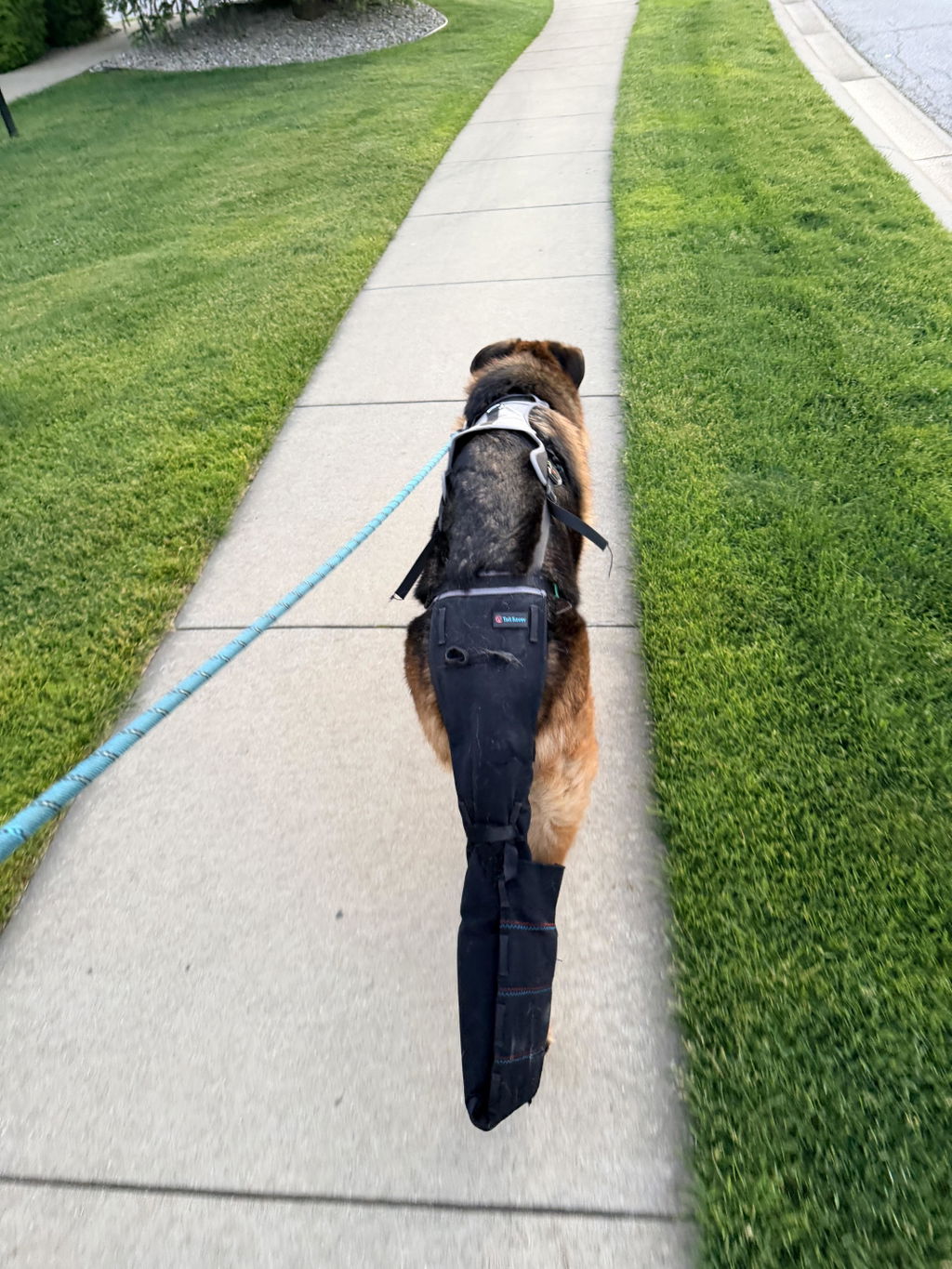
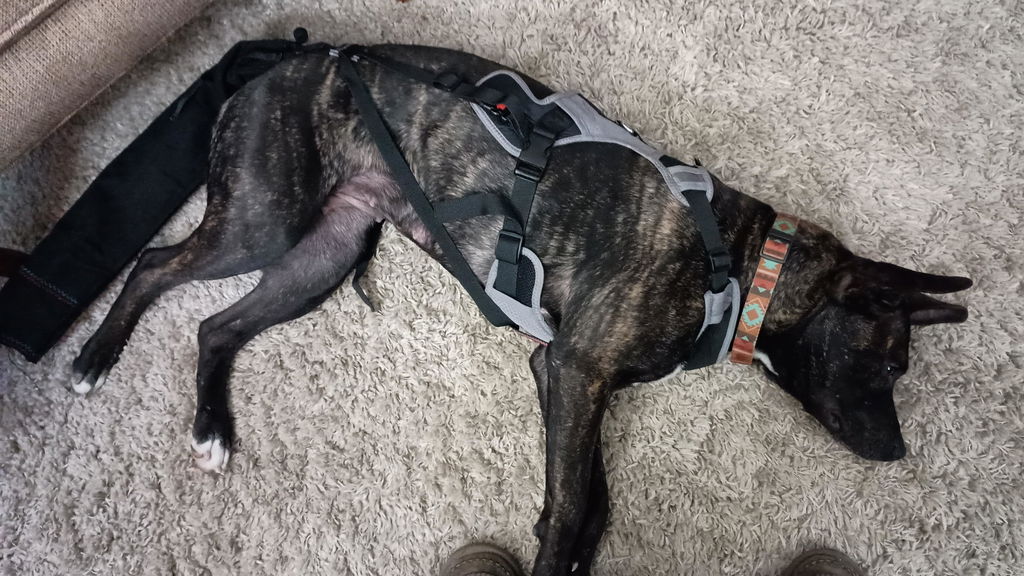
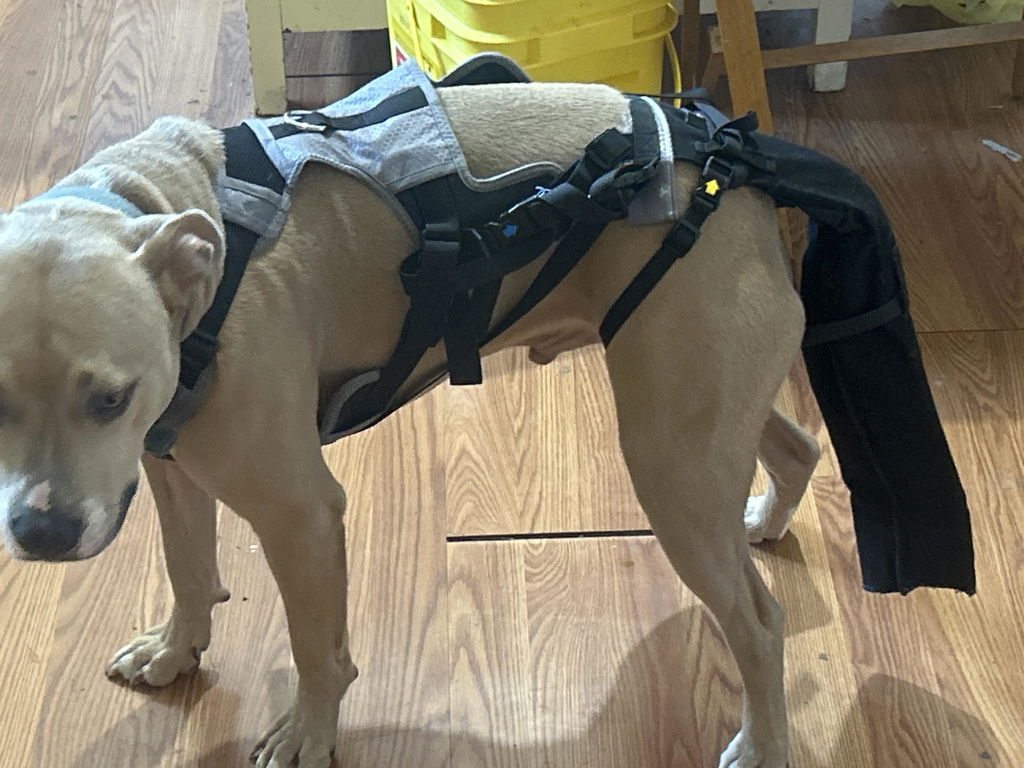
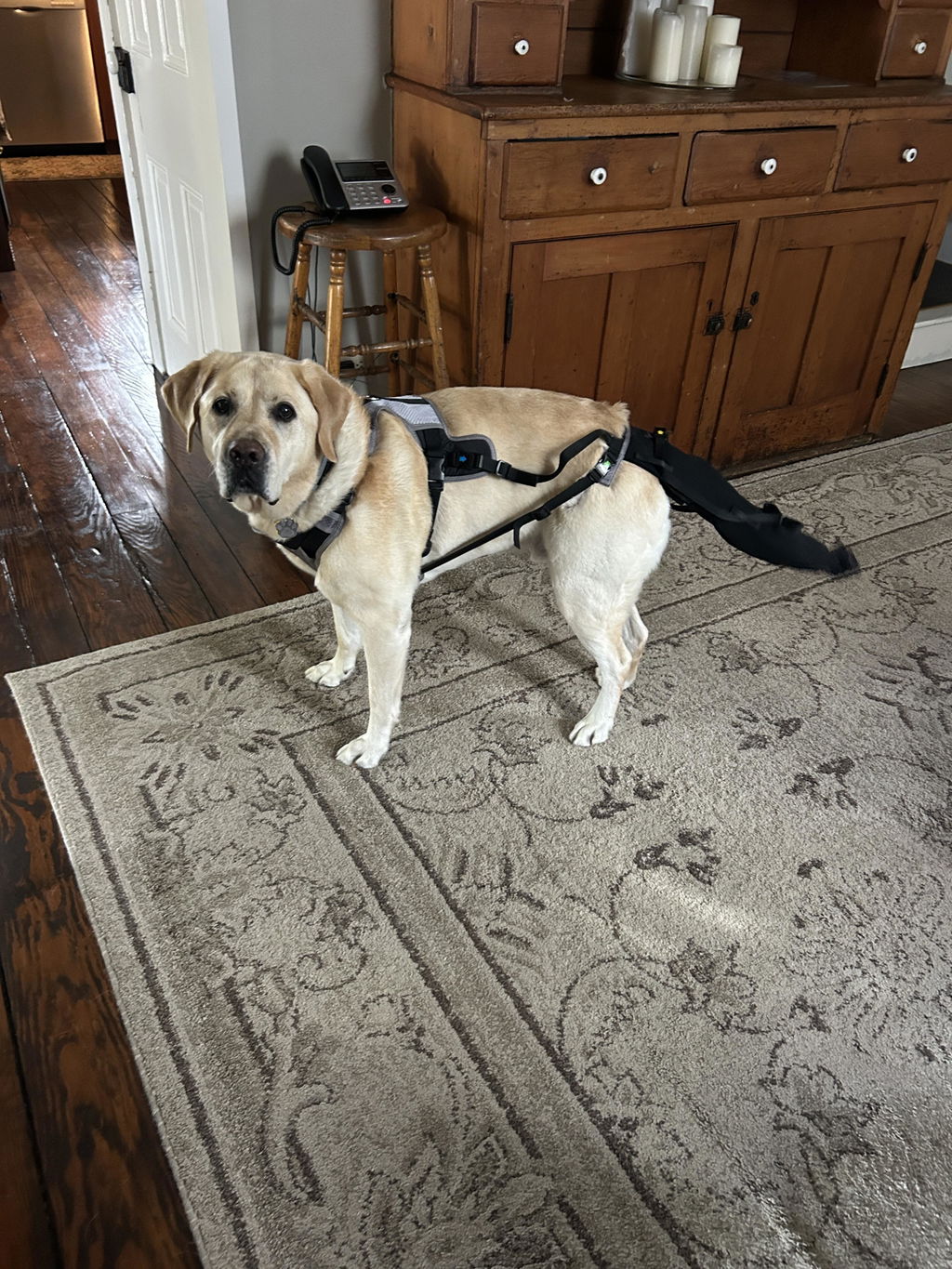
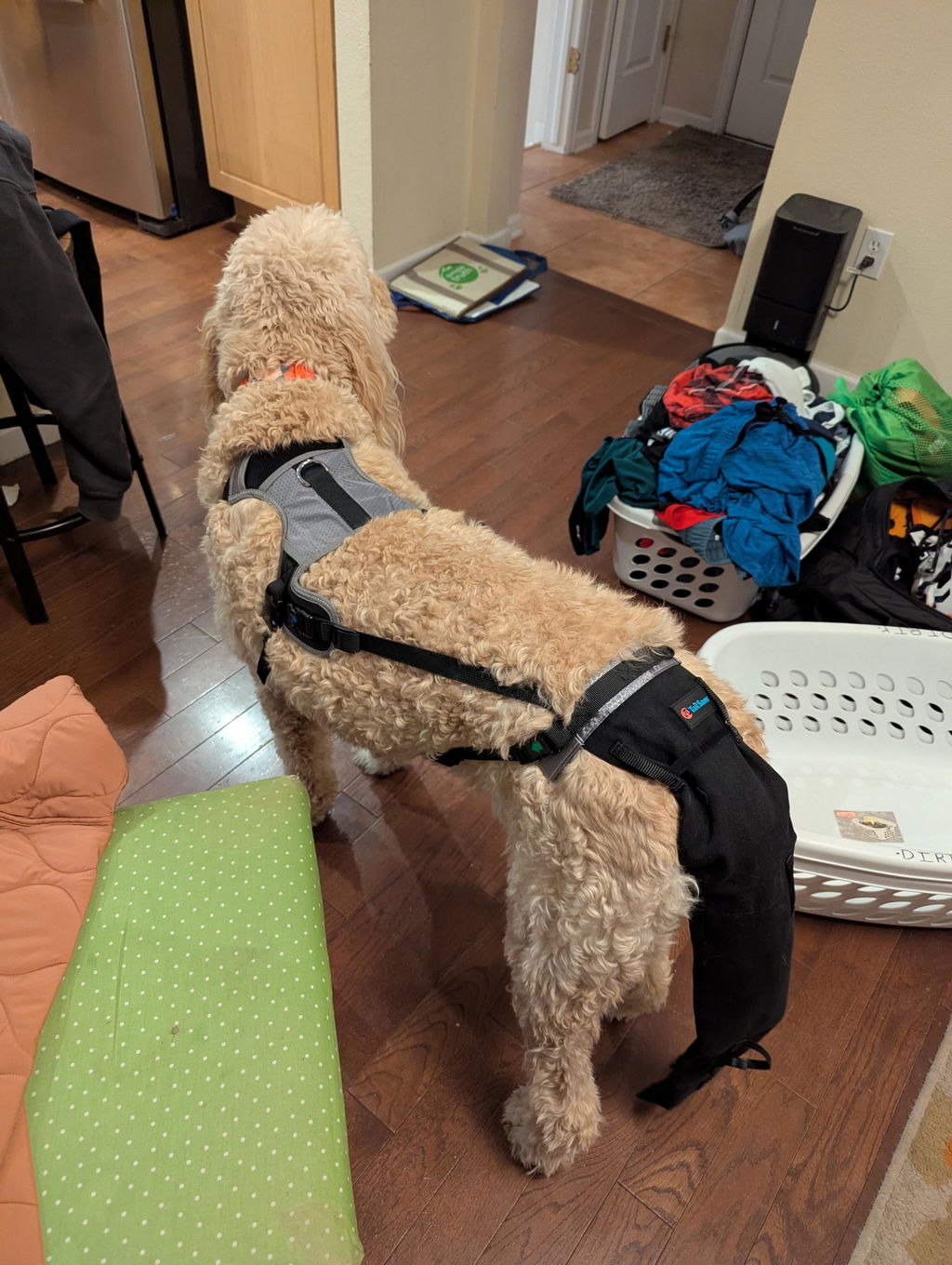
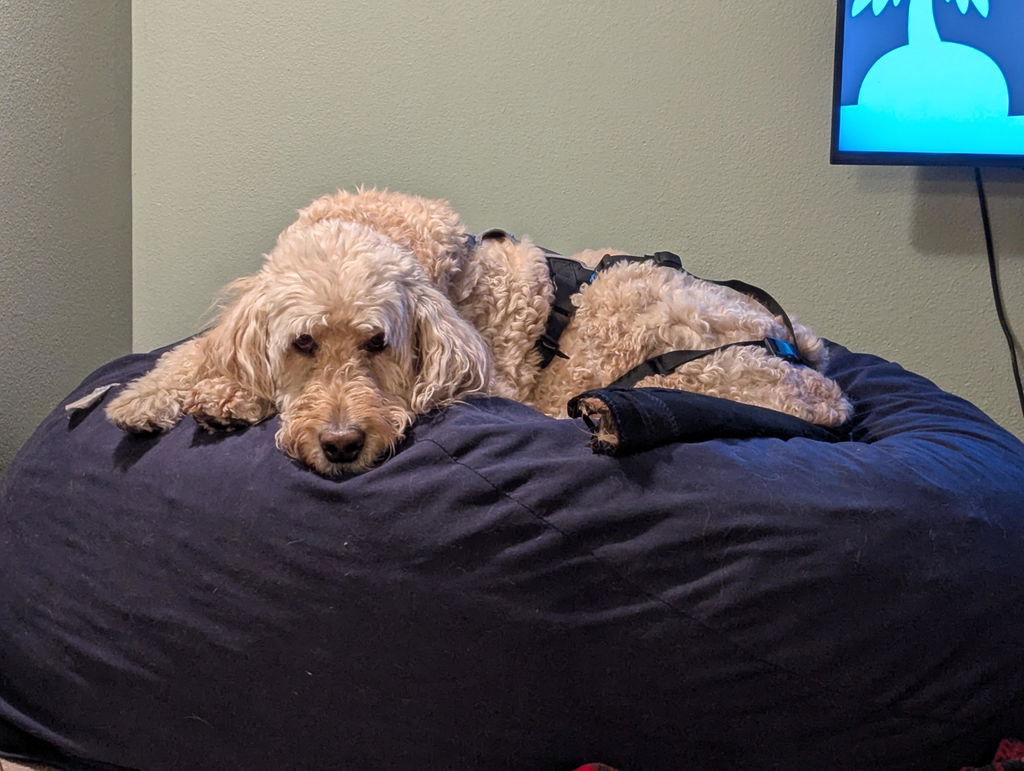
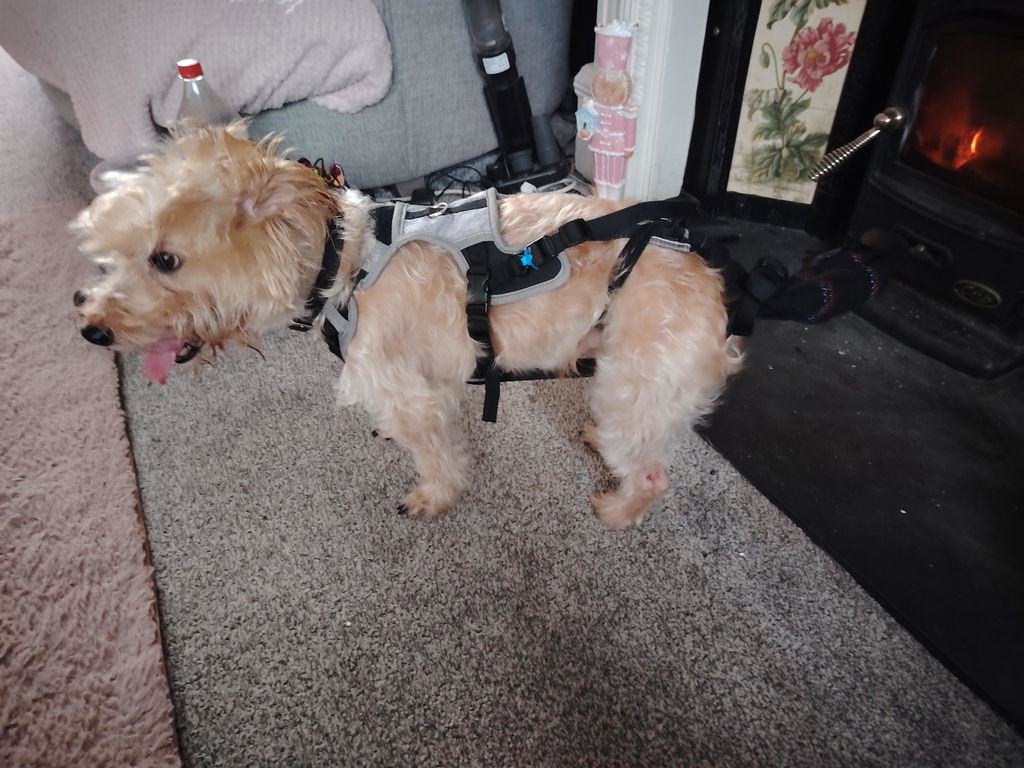
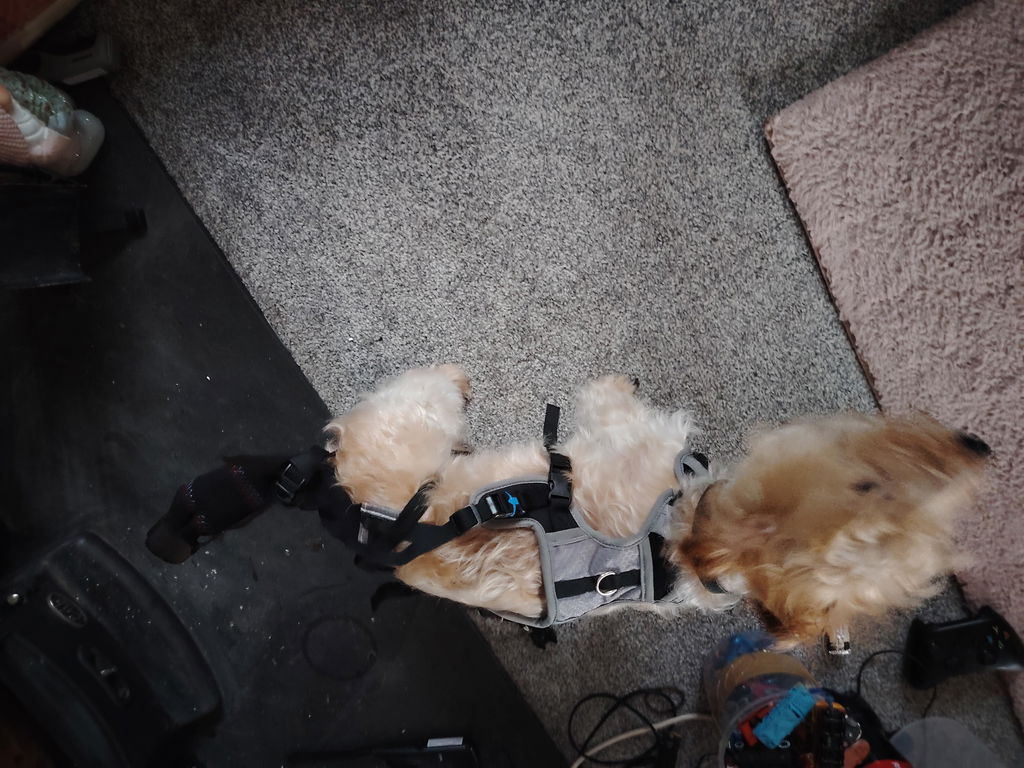
The K9 TailSaver® holds the dressing in place, prevents licking, cushions the tail tip against impact, and remains secured via the body harness through all activity. This is the only device that simultaneously solves all three mechanical causes of tail wound failure: re-injury, licking, and dressing displacement.
Step 4: Maintain without interruption until fully healed
Change the dressing and clean the wound once daily. Keep the sleeve in place at all other times. Do not remove the protection at night, during walks, or "just for a little while." Every unprotected period is a potential re-injury event.
Step 5: Confirm complete closure before discontinuing protection
The wound is fully healed when new, smooth epithelial skin has grown across the entire wound surface. There should be no remaining raw area, no discharge, and the new skin should be continuous with the surrounding healthy skin. Removing protection before this point is the most common cause of relapse.
When to See the Vet About a Non-Healing Tail Wound
Contact your veterinarian if:
- Wound shows infection signs (odor, discharge, warmth, swelling)
- Bone, cartilage, or tendon is visible
- Dog is not eating, is lethargic, or has a fever
- Wound has not improved after 4 weeks of correct continuous protection
- Skin edges are becoming callused and thickened rather than filling in
The Vet & Safety FAQ has a complete escalation guide with emergency thresholds and what information to bring to your appointment.
FAQ: Non-Healing Dog Tail Wounds
The wound looks smaller than it did but keeps re-scabbing. Is it healing?
A wound that is consistently re-scabbing is not making net progress toward closure.
Each disrupted scab sets the healing timeline back. True healing progress is visible
as the wound boundary shrinking consistently over days without setbacks.
My vet bandages it and says it looks good, but it reopens at home. What am I doing wrong?
Nothing. This is the normal pattern when protection is only present at the vet.
The wound needs continuous protection at home, not intermittent treatment. A
harness-anchored sleeve worn between vet visits is what actually drives closure.
Bring information about the K9 TailSaver to your next appointment.
Can I use Manuka honey or other wound agents to speed healing?
Some veterinary wound care products (medical-grade Manuka honey, silver gel
preparations) can assist healing in appropriate wounds. Ask your vet whether a
topical agent is indicated for your dog's specific wound type. Do not apply
topical treatments that are not specifically formulated for veterinary wound use.